

The global ripple effect of the war in Iran
The impact the war in Iran has had on Americans has been well documented.
Unsurprisingly, the conflict – now entering its third month – has impacted more than just the U.S. The closing of the Strait of Hormuz has disrupted oil prices across the globe, causing governments worldwide to scramble for solutions to ease the burden on their citizens.
Reactions vary by country, but one thing is consistent: the world is feeling the economic strain.
Below are five charts on how other countries are responding to the effects of the war and how the U.S.’ reputation has fared over the past year.
1. Concerns about foreign conflict, inflation tick up. Globally, military conflict between nations has risen significantly as an issue over the past month and is now at its highest point since tracking began in 2022. Concerns about inflation, which had been on the decline, saw an uptick as well. The economic impacts of the war are particularly pronounced in the Asia-Pacific, as more than 80% of the oil and liquefied natural gas that pass through the Strait of Hormuz go to Asia.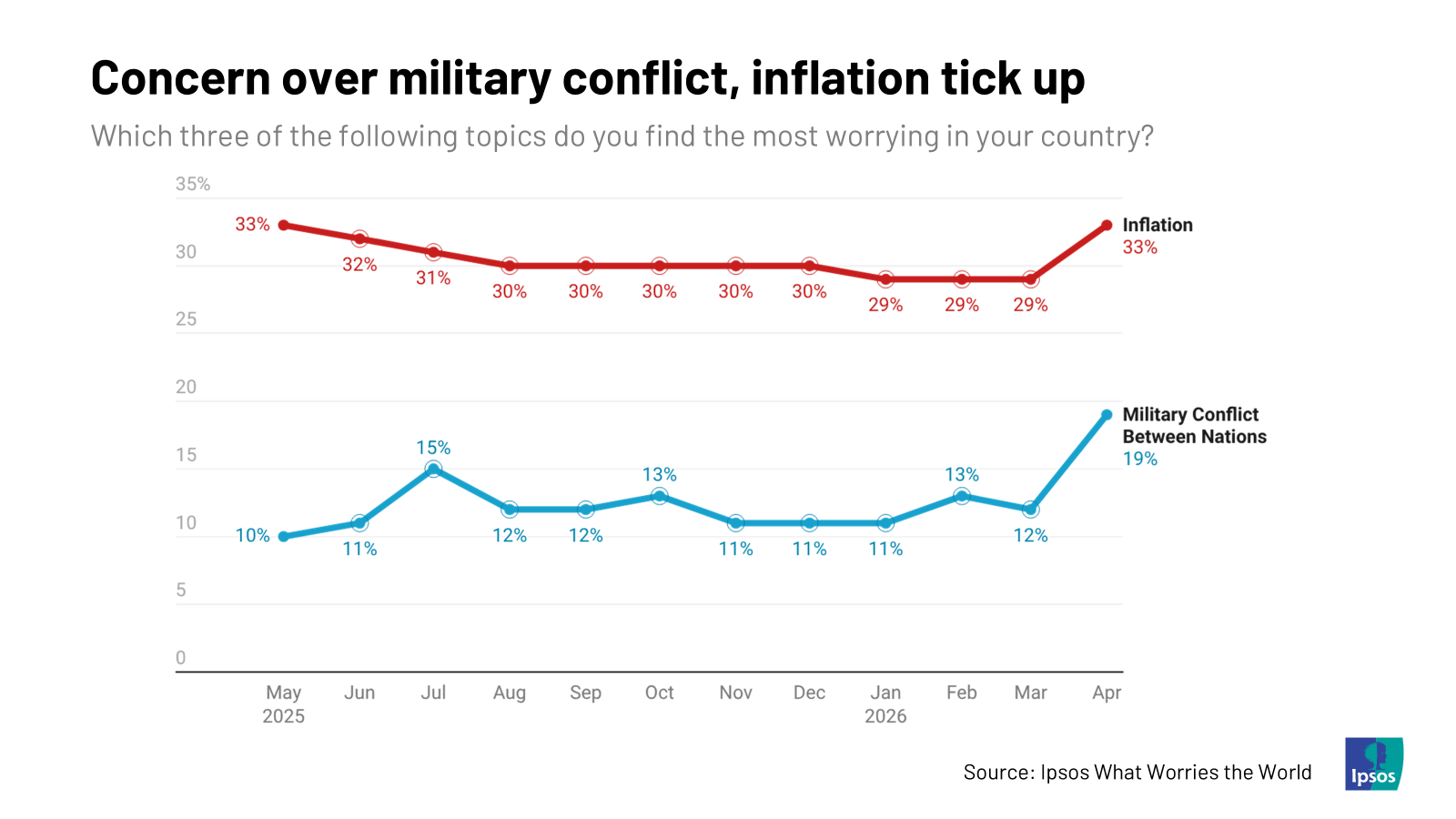
2. The economic impact. Ipsos’ Global Consumer Confidence Index showed its second biggest decline ever this past month, only behind April 2020, the first reading following the start of the COVID-19 pandemic. Sentiment is particularly muted in both the Asia-Pacific and Europe. Altogether, confirmation of the major impact the war has had on global markets.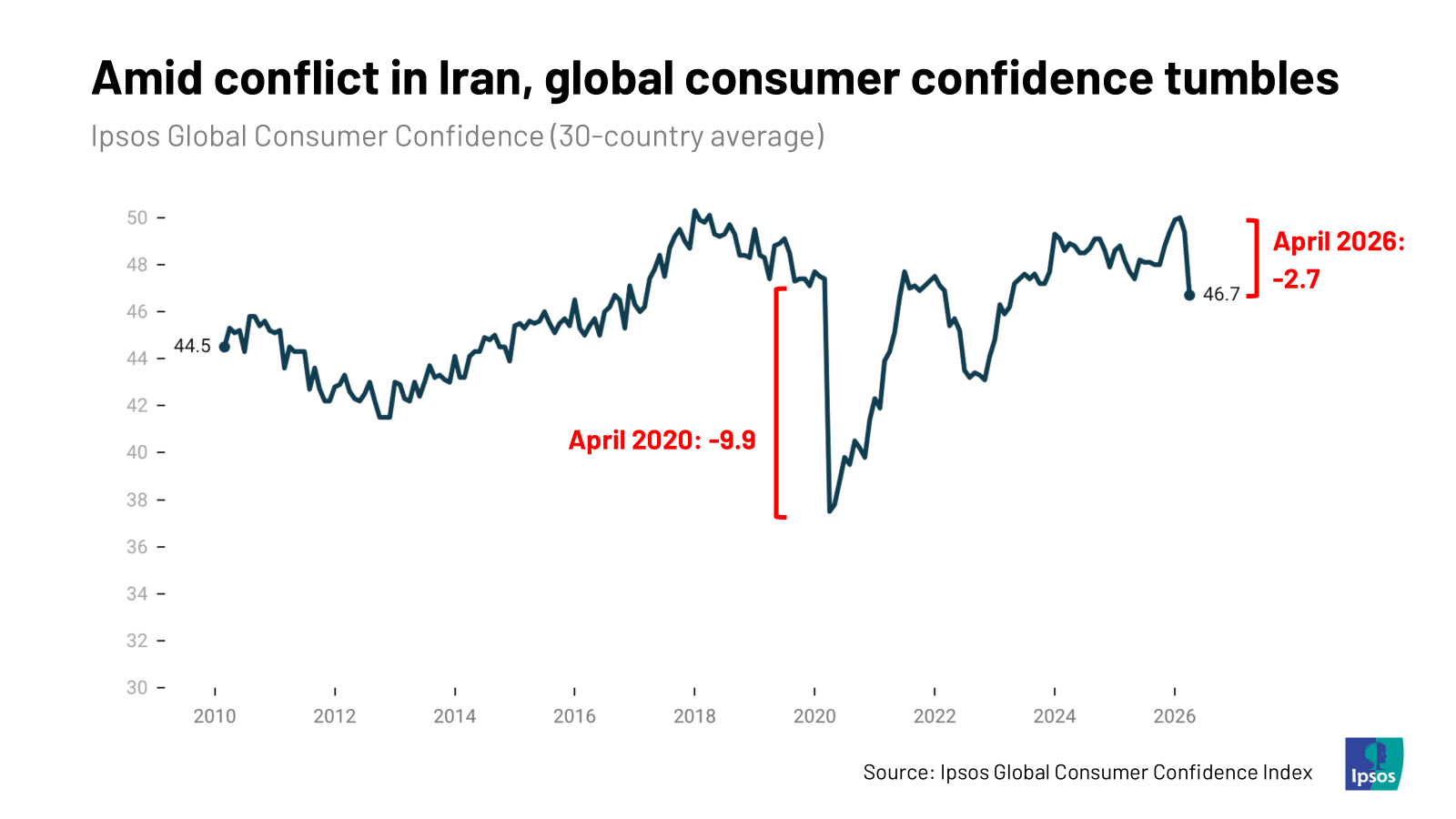
3. Not their conflict. In 30 out of the 31 countries polled, at least seven in ten say they want their country to avoid getting involved. This includes 71% of Americans.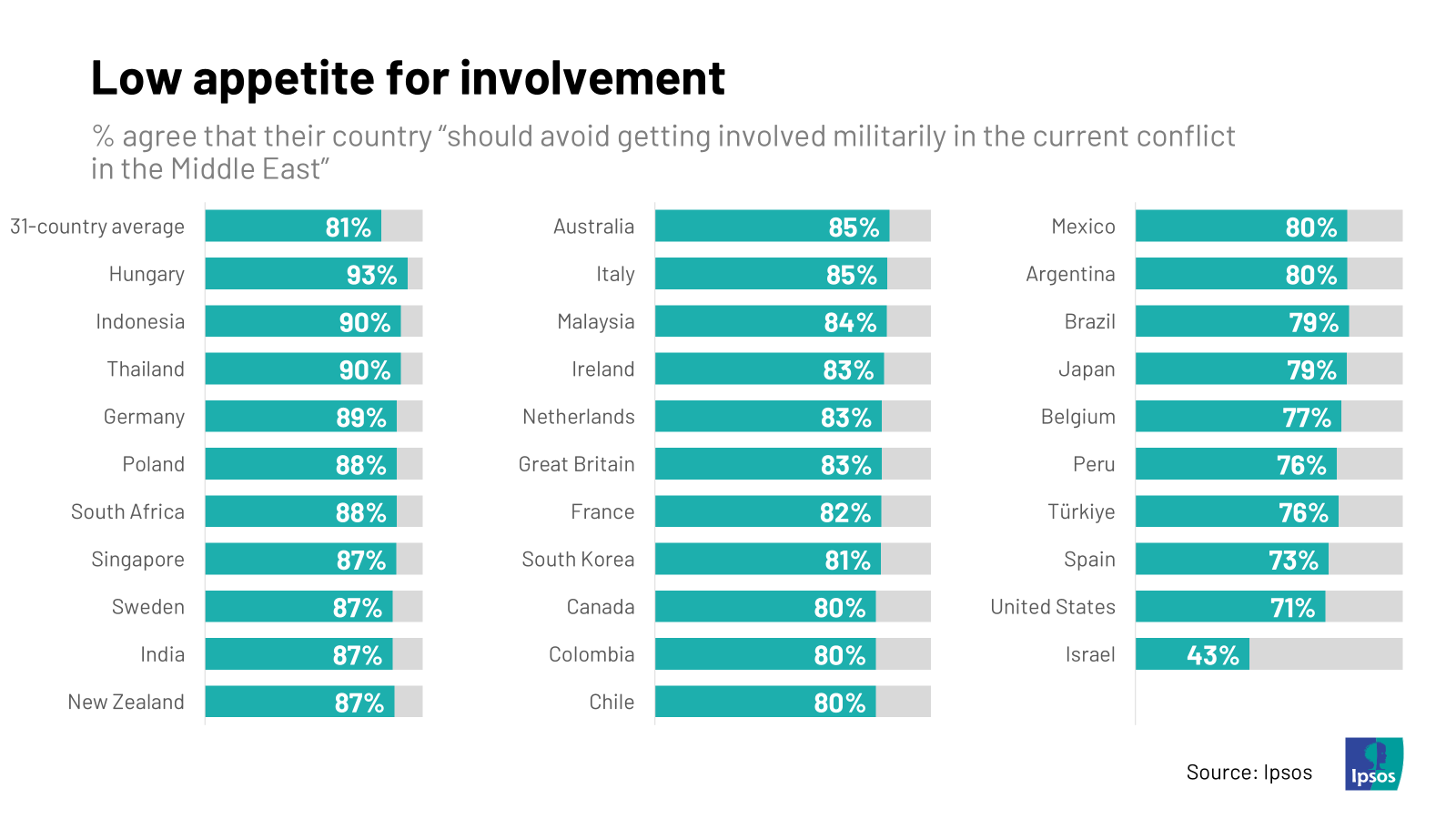
4. Few believe the conflict’s impacts are worth it. Just 30% globally believe that paying more for fuel and gas because of the conflict is worthwhile. Among some of the U.S.’ allies in NATO, this falls to under 20%.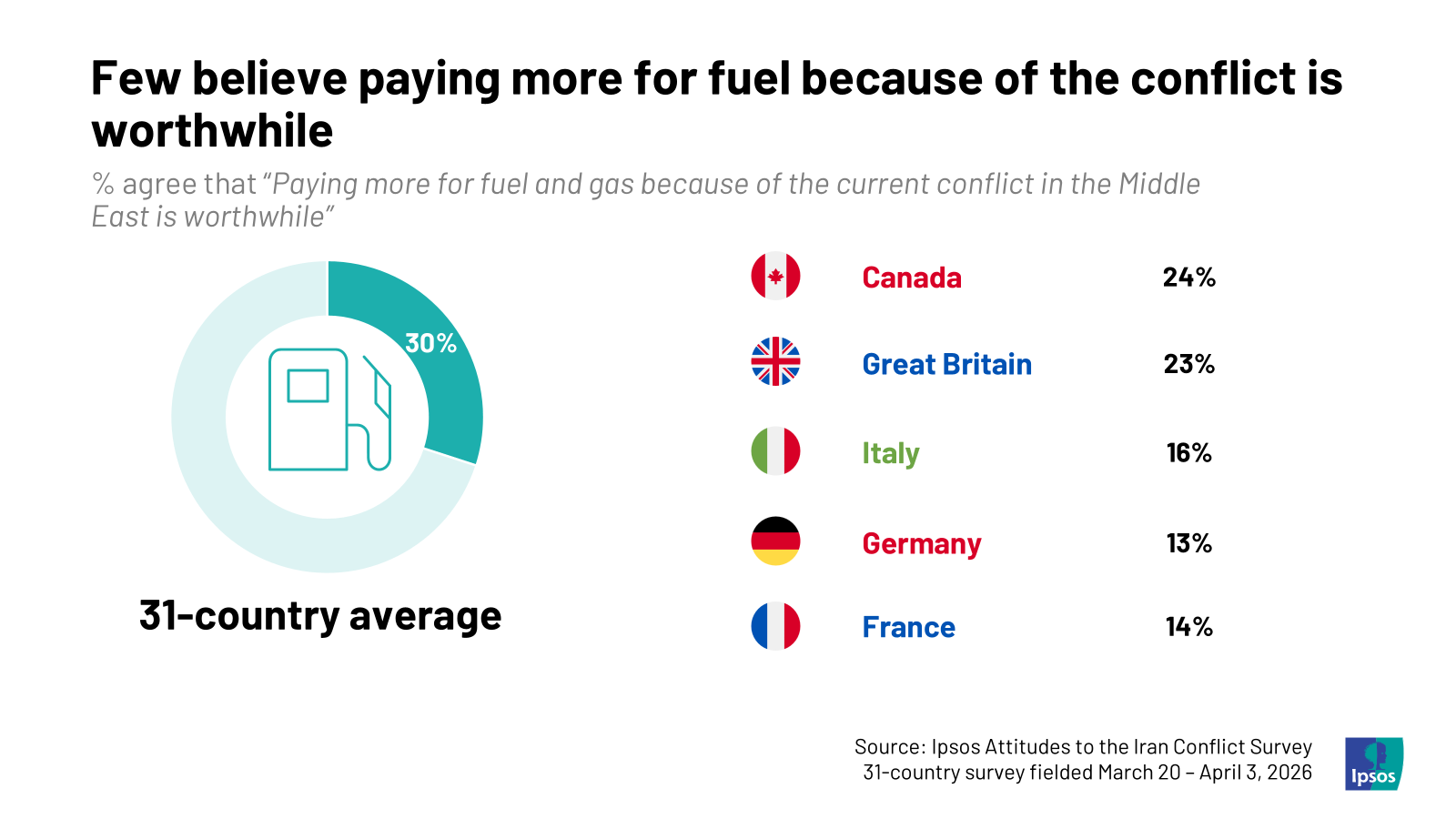
5. America’s reputation declines again. Across the 31 countries polled, the percentage who believe the U.S. will have a positive influence on world affairs fell 13 percentage points from October 2024 to April 2025. From April 2025 to April 2026, it dropped another 7 points. That’s a net decline of 20 points. Perceptions of America’s impact on the world have also dropped behind China’s. Watch this space.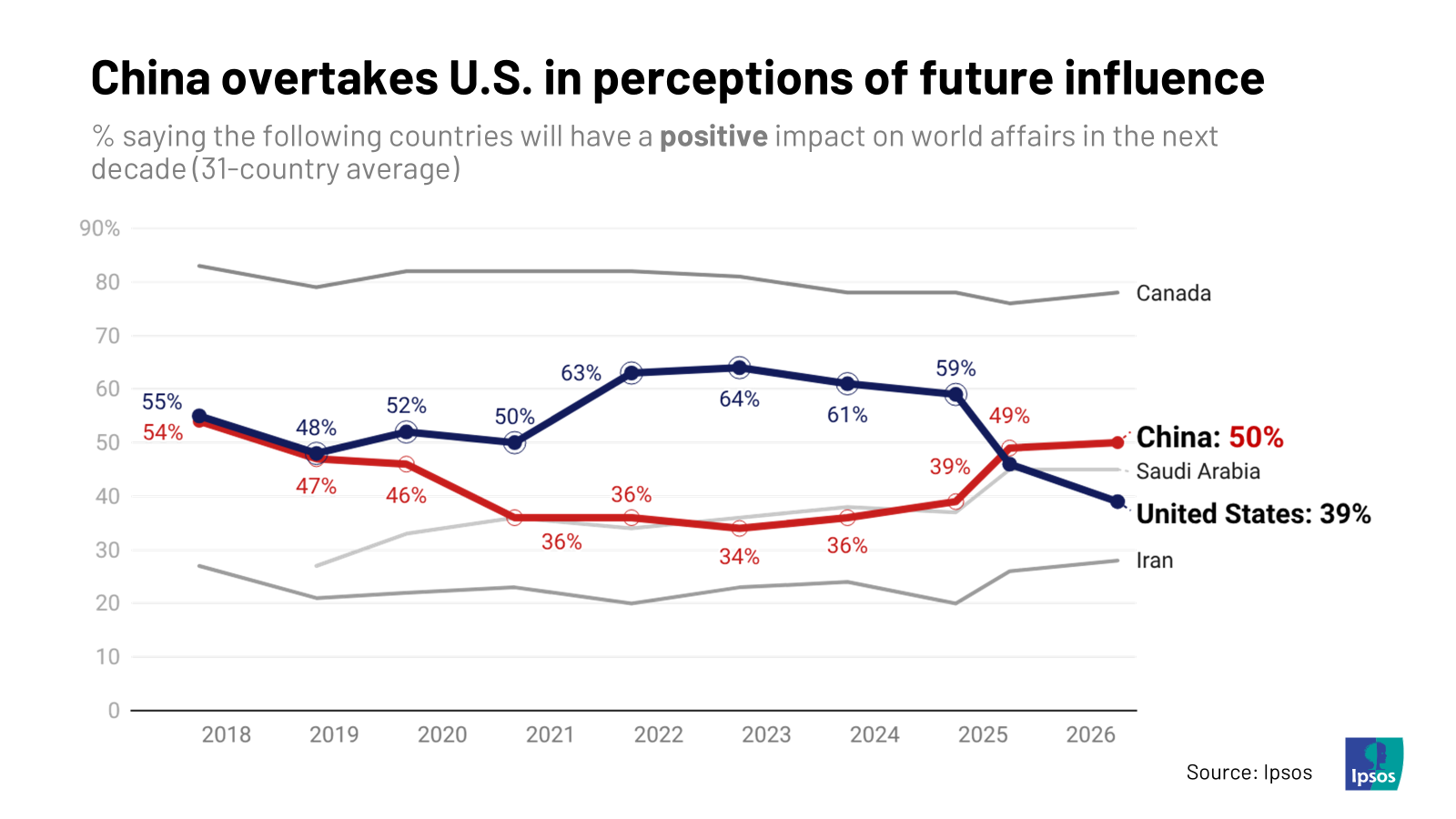
Declining views of America’s impact on the world – including among America’s allies – are hard to ignore.
Ultimately, for many across the globe, the economic impact is the primary lens through which they view the war. And right now, economic wounds are reopening.
For these global citizens, this conflict is not their own. But the economic consequences are.


