
Beauty Buying Behavior: Decoded
The coronavirus limbo of the past year has led to a shift in buying behavior, with some beauty brands pivoting to meet dynamic changes in consumer buying preferences and buying behaviors. But are these behaviors here to stay?
Historically, we have had the leisure of retail therapy where we can escape, explore and experience the delight of browsing store aisles, touching and trying on products to find that perfect shade or coveted beauty product that can bring a jolt of joy. However, recent research shows six-in-ten consumers remain concerned about the perceived risk of shopping at retail stores. This has led to explosive growth in Beauty eCommerce sales.
Download our paper for insights into how customers’ expectations for e-commerce have evolved, and how to make sure you’re living up to them. Expect to learn more about impacting behavior change dimensions: Motivation, Ability, Processing, Physical and Social.
Beauty Buying Behavior: DECODED
Is Your Omnichannel Strategy Ready to Delight The Engaged Post Pandemic Shopper? Are You Ready for the Buying Shift? The Coronavirus limbo of the past year has led to a shift in buying behavior, with some beauty brands pivoting to meet dynamic changes in consumer buying preferences and buying behaviors. But are these behaviors here to stay? Historically, we have had the leisure of retail therapy where we can escape, explore and experience the delight of browsing store aisles, touching and trying on products to find that perfect shade or coveted beauty product that can bring a jolt of joy. However, in our December 3, 2020 Global Essentials wave, six-in-ten consumers remain concerned about the perceived risk of shopping at retail stores. This has led to explosive growth in Beauty eCommerce sales. Here’s how customers’ expectations for e-commerce have evolved, and how to make sure you’re living up to them.
The Online Experience During COVID has Room for Improvement
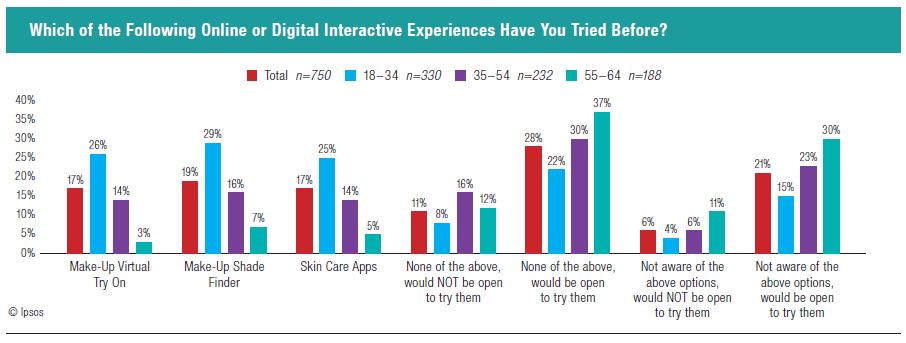
We analyzed 1.5 million mentions from Ipsos’ social intelligence software and discovered eCommerce mentions during COVID were more than 2× more negative (24%), compared to positive (10%). From our Ipsos online community, this negativity stems from delayed or damaged deliveries, virtual customer services, lack of availability, lack of immediacy, difficult returns processes and unmet product needs. A recent Ipsos study on COVID’s Impact on Beauty Buying Behavior shows one-third of respondents have purchased beauty products online, up from a quarter of respondents before the pandemic. Half the women mention they have not tried an online or digital interactive experience, though once they have, approximately 80% mention they will use it again.
There is No Replacement for the Real Experience
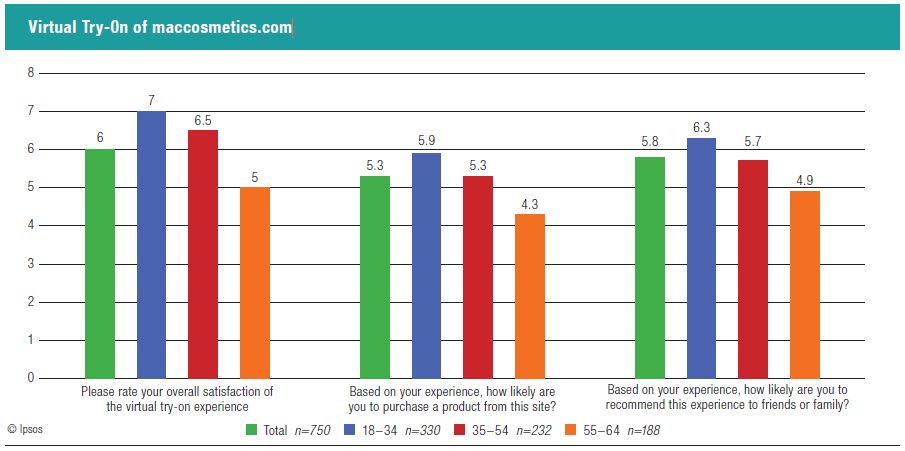
In our Beauty study, women tested the Virtual Try On via a MAC Cosmetics site. The oldest group scored the lowest satisfaction rates and lowest likelihood to purchase and recommend. While most found the experience fun, others found it difficult to navigate, confusing technologically or thought the site catered to a younger audience.
Leveraging Ipsos’ Behavioral Change Model — MAPPS — to Drive Digital Adoption
To overcome barriers to digital experiences, we apply our behavior change system called MAPPS, a model that sets out key dimensions that are important for behavior change. These include: Motivation, Ability, Processing, Physical and Social.

Digital Tools Don’t Align with Shopper Expectations
Regarding Motivation and the desired Outcome Expectations, there are frustrations with tone and shade matching, technology issues and doubt about image accuracy. Companies need to reassure consumers that tools are simple, easy to navigate, and provide accurate solutions. To overcome this Expectations barrier, companies need to reassure consumers that they have simple, easy-to-navigate design tools that result in the most accurate solutions. Further, where relevant, older women should see themselves leveraging these types of tools to aid their purchase behavior.
Beauty is an Emotional Engagement
Regarding Emotional barriers, women are not finding joy or having interesting experiences. Many found the experience creepy or spooky, and didn’t think they looked natural. To overcome the Emotional barrier, tools could offer positive commentary, much like the feedback in Fitness Apps that provide encouragement. What about live virtual assistants who can provide real time feedback?
If There is a Will, There is a Way
A driving force in digital tool adoption is the desire to want to be adventurous and conquer new beauty experiences. But for Internalization, women simply “don’t want to do it.” They indicate they like the in-store option so they can get a good idea about true colors. To overcome the Internalization barrier, the content female customers engage with should mention similarities to the in-store experience, with quantification of women stating how they were satisfied with their purchases and delighted with color accuracy.
Those Tools Are Not For Someone Like Me
It is imperative that women can identify themselves using digital experiences. Many noted that models didn’t have their same skin tone and they were faced with incorrect shade matching. To overcome the Identity barrier, companies should set up the call to action with verbiage about how easy it is to upload pictures and experiment with different looks in the comfort of their own home.
It’s as Easy as 1-2-3
One of the barriers is Self-Efficacy, or the belief they are able to do it. Some early adopters mention that they are amazed by the experience; however, several women mentioned they are not tech-savvy. To overcome the Self-Efficacy barrier, companies should hire a UX expert to communicate easy instructions and optimize app designs to drive greater compliance and repeat behavior. Video testimonials can validate ease of use of digital interactive tools. Simplicity is Key Many women claimed they do not have the Ability to figure out the tools. When the task is too complicated, women will abandon the effort and could associate disappointment with the brand or retailer. To overcome the Ability barrier, development of simple, intuitive navigation will increase the engagement and enjoyment of the digital experience.
Barrier Removal is Key to Establishing a New Beauty Routine
Some women struggle with how and where digital tools should fit into their experience when purchasing beauty products online. To overcome the Processing barrier, developers of digital tools should design multi-sensorial experiences with prompt navigation, incorporating sonic assets and pop-up pro tips.
You Have to Walk Before You Can Run
The Physical MAPPS dimension necessitates that consumers have access to digital tools. From the December 2020 Beauty research, we learn that only 33% of women ages 18 – 64 have tried an online or digital interactive experience. To overcome the Physical barrier, companies should guide women to leverage their digital tools/Apps on their mobile devices where it is easier to access their photos and camera for easier navigation.
Do You Know How to Drive FOMO?
Social Norms signal what society expects is desirable behavior. To drive adoption, brands and retailers must overcome hesitancy permeating the beauty marketplace.
To overcome the Social/Cultural Norms barrier, companies can highlight the delighters women are experiencing:
- Efficiency in making a beauty purchase from the comfort, privacy and safety of home
- Trying something new that she wouldn’t have likely tried in front of others in-store
- Fun, entertaining experience using new beauty technology
- Mastery (through tutorials) in applying products she may not have used
- Monetary and time savings
Built into the tool should be positive affirmations to encourage users to spend time experimenting with different looks. The tool must be easy-to-navigate, with easy-to-interpret instructions and multi-sensorial engagement. And most importantly, women should be able to find themselves in the tools, thus women of all ages should be featured in communication related to the digital, interactive tools. Women rely on and trust expert advice and most importantly, women have cited confidence booster as a reason to buy in-store. Knowing what makes them look and feel better while being validated by an expert. Is there a replacement for this sensation? The beauty industry is positioned uniquely to satisfy our constant, deep-seated desire to feel good about ourselves. Question is what is “best” for your brand?


![[WEBINAR] Global Voices of Experience 2026](/sites/default/files/styles/list_item_image/public/ct/event/2026-02/thumbnail-global-voices-experience.jpg?itok=NN6W-9Ft)