
Shifting Autonomous From ‘Scary’ to ‘Safe’ for Drivers
New Ipsos research finds that 52% of drivers experience a distracted driver on the road with drivers talking on their phone (71%), texting (69%) or reading their smartphones (43%). Given the increasing incidence of driver distraction, autonomous should not be a scary word.
In our latest paper, we offer tips and insights to show how marketers can help consumers associate autonomous vehicles with safer roads, thus overcoming any existing barriers to adoption.
Download our latest research now, or click here to watch our recorded webinar.
KEY FINDINGS:
- Driver distraction is real and is getting worse.
- The industry needs to do more to promote the safety of autonomous and ADAS features to reduce accidents.
- We think that promoting the safety of these features will help lead to greater adoption.
This July, Tesla released a major self-driving update—the Full Self-Driving Beta—to subscribers for $10,000. This release for beta users came after multiple delays, and early reviews indicate it has advanced capability compared to Tesla’s Autopilot Driver-Assist System.
The new beta feature is classified as a level 2 autonomous vehicle, which means it is not self-driving, nor does it do anything like what its name implies. The approach to the vehicle by Tesla CEO Elon Musk, is also a change: Musk warned drivers the system can “do the wrong thing at the worst time,” and that people should drive “paranoid.”
The unique approach from Musk, along with a feature title and capability that aren’t congruent, has major implications for auto dealers and to drivers, many of whom may feel flummoxed. Ipsos took a deep dive into Autonomous & Advanced Drive Assist Systems (ADAS) features to provide fresh insights to vehicle clients and drivers.
When using Tesla’s Full Self-Driving Beta or Autopilot as a driver, you always need to be engaged and aware while driving. This need to be engaged does not instill confidence—and, frankly, is scary to many drivers. Tesla’s approach is controversial in developing an autonomous solution, including the naming of AutoPilot and Full Self-Driving. Both feature names are a bit misleading, but Tesla has done a great job marketing autonomous vehicles by promoting their AutoPilot feature through non- traditional methods with PR, tweets and social media. This has all been done without a traditional marketing budget.
Driver distraction is a danger to others— and drivers need help
According to a recent Ipsos poll, drivers experience a distracted driver at least 50% of the time on the road, with drivers talking on their phone, texting or reading their smartphones.
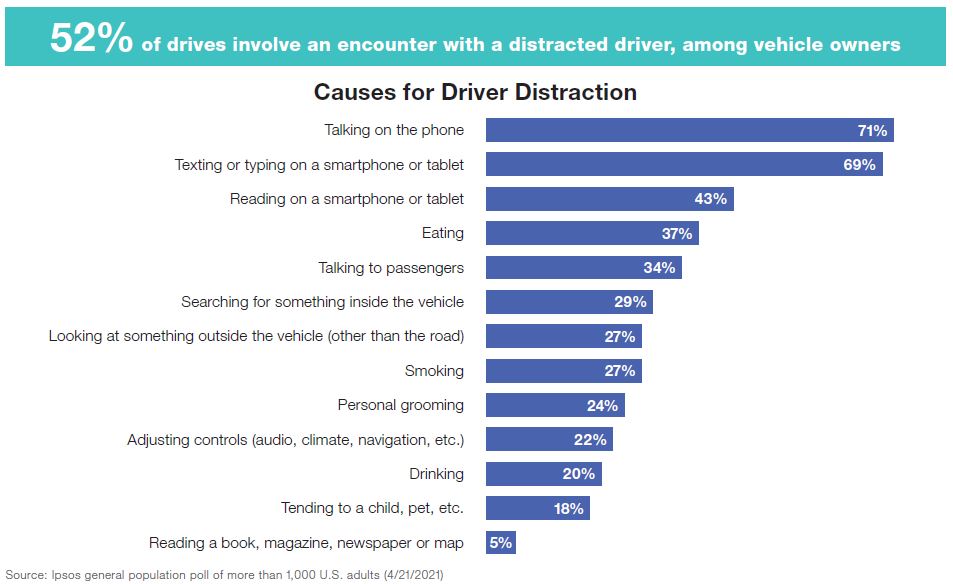
Why not share the evidence of the accidents avoided?
An analysis of the National Motor Vehicle Crash Causation Survey, conducted by the National Highway Traffic Safety Administration (NHTSA), shows that driver error is a factor in 94% of crashes. The Highway Loss Data Institute and Insurance Institute for Highway Safety study shows the overall effect of ADAS technologies by comparing police-reported crash rates and insurance claims for vehicles with and without various ADAS technologies.
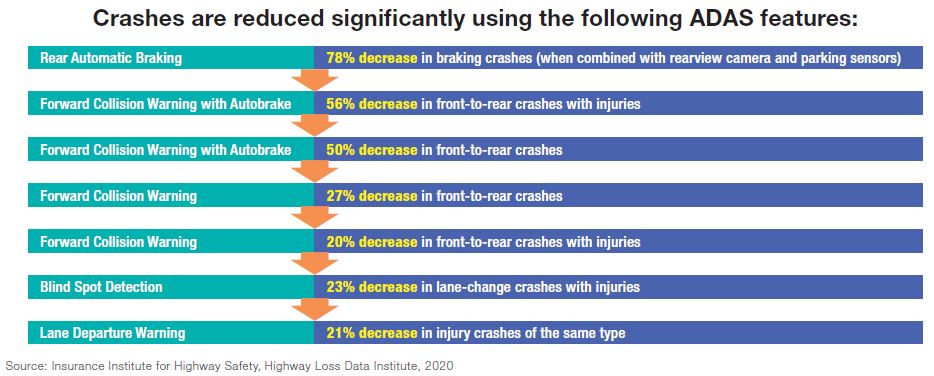
When multiple ADAS features are working together, they create a semi-autonomous experience for drivers and can reduce crashes. From our syndicated Ipsos Mobility Navigator study, U.S. vehicle owners over the last couple of years have increased their experience with semi-autonomous.

U.S. vehicle owners indicated how they use semi-autonomous by illustrating they have used Tesla AutoPilot or a combination of ADAS features. Some of their quotes:
- “Tesla Model 3 owned by a friend used the feature for a short period of time with me inside the car.”
- “Toyota Prius Prime has several auto features: park assist, lane departure, cruise control with distance, speed adjustment while in traffic and sensors to avoid contact.”
- “Lane departure, driver fatigue, automatic distance monitoring of car ahead in cruise control mode, lane conflict warnings.”
Experience with semi-autonomous has a significant impact on future interest

Consumers are hesitant with autonomous driving. Even as Tesla leads the way with headlines on their AutoPilot and Full Sell-Driving features, many interested consumers also have read news coverage of Tesla accidents when AutoPilot has been enabled. However, they haven’t heard enough about the accidents that have been avoided or the lives saved using the AutoPilot. Along with this, data from the NHTSA shows that using ADAS features reduces accidents. Drivers are distracted and need help. The key to improving this is education and awareness of the safety improvements and accident avoidance that ADAS and semi-autonomous provides. OEMs and software providers should focus their marketing on the safety improvements that ADAS provides. This will generate trial of ADAS and semi-autonomous, which will lead to increased demand for semi-autonomous in the future.
Autonomous should not be a scary word
When consumers think of “autonomous vehicles,” they should associate autonomous with safer driving and being protected in a busy world. Ipsos continues to monitor the accep-tance of autonomous and ADAS, along with the advanced features and trends impacting the automotive and mobility industry. The 2021 Mobility Navigator will be the fifth year of monitoring these key mobility developments and activi-ties. We look forward to sharing our results from this syndicated study.


![[WEBINAR] Global Voices of Experience 2026](/sites/default/files/styles/list_item_image/public/ct/event/2026-02/thumbnail-global-voices-experience.jpg?itok=NN6W-9Ft)