What Happens to Impeachment When Americans Don’t Trust their Elected Officials
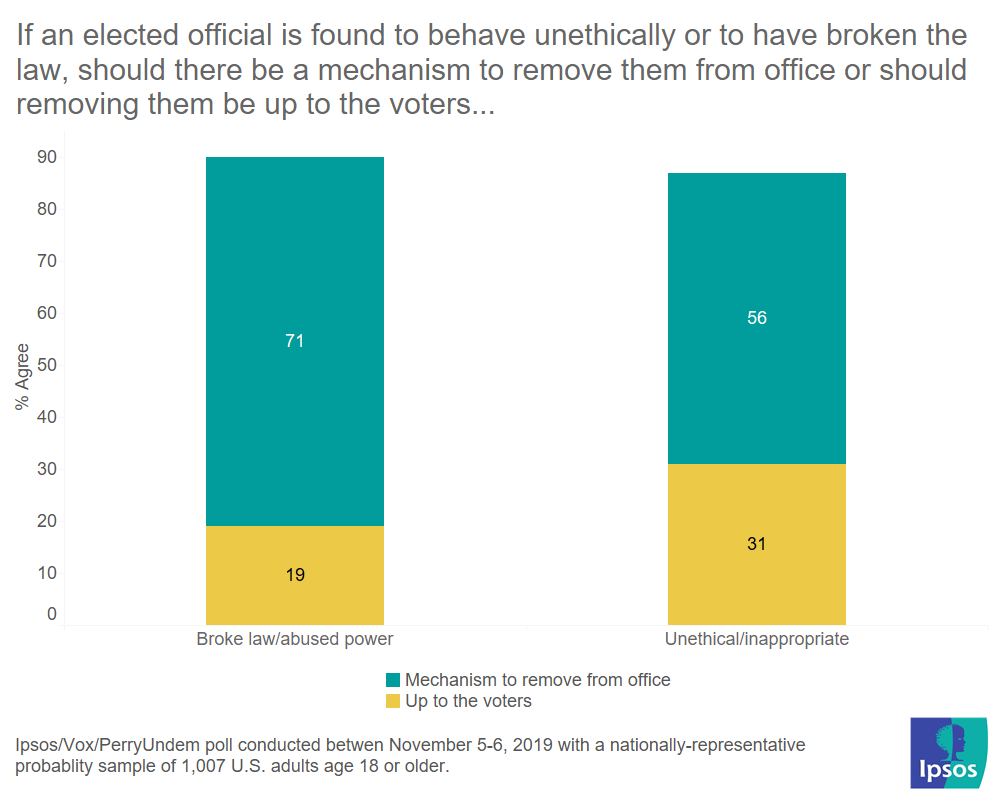
However, most Americans support—in principle—the idea of removing bad actors from their positions of power. This survey finds that if a politician acted unethically or inappropriately, a bare majority of people (56%) believe that there needs to be some way to remove them from office. Americans are keener to oust politicians from their posts if they broke the law or abused their power. When that scenario was posed to respondents, seven in ten people supported a removal mechanism (outside of an election) to boot an official from office.
While there is widespread support for impeaching officials who have abused their power or broken the law, Americans disagreed about how often impeachment should be employed. Among people who think impeachment is a viable way of removing someone from office, 37% believe this power should only be used occasionally, while just over 50% think it should be used for all types of bad behavior.
These low expectations of elected officials tie into long-running trends about declining trust in American society and contributes to the decline of our institutions.
In a broad sense, how Americans measure what is normal for an elected official informs their support for how to remove them from office when they act out of line. Explicit questions about President Trump’s behavior in the survey indicate where the public stands on these issues. Specifically, 44% of Americans agree that “a President of the U.S. pressuring another country to investigate a political rival is something presidents do all the time,” including 65% of Republicans. What Americans view as normal from their elected officials acts as an important reference point for judging how and when to remove a politician from office. The normalization of bad behavior we see in this research raises the bar for what an impeachable offense is.