
Brazil round two
This Sunday, October 30th, Brazilians will head to the ballot box for the second time, to pick their next president in a hotly contested and close competition.
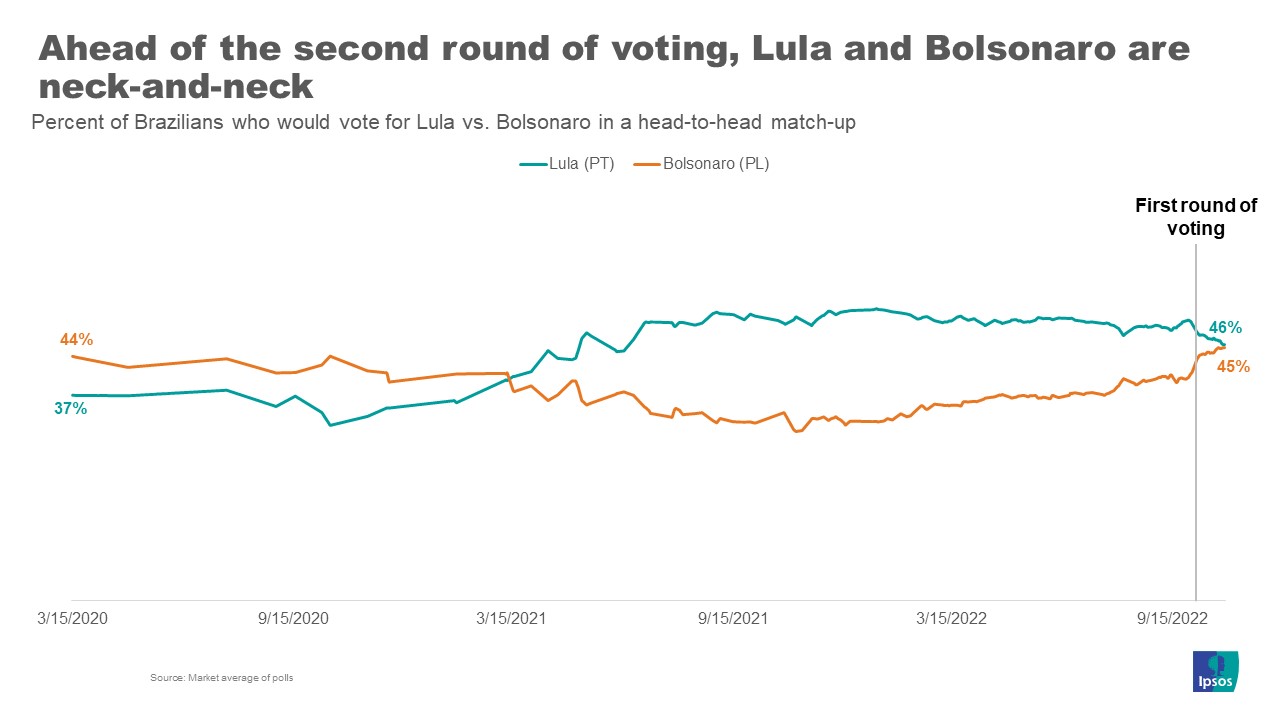
The first round of voting, which we have previously discussed in the lead up to that election, happened in early October and sent the election to a run-off after no candidate won a majority of the vote. Lula won 48% of the vote, while the incumbent president, Bolsonaro, won 43% of all votes cast. Bolsonaro has gained ground since that first round of voting.
After that initial round, election polling in Brazil has faced serious skepticism, largely because Bolsonaro performed better than some expected. Many say the polls missed and argued to regulate polls or disavowed them all together.
Yet, polling in Brazil turned out to be okay on the whole in the lead-up to the first round of voting. The market average of polls had Lula ahead by seven points going into the first round of voting. He came out ahead of Bolsonaro by five points.
So, what happened? For starters, the polling in Brazil had a lot of variability. While some polls had Lula ahead by 14 points, another had Bolsonaro ahead by 15. We have never seen a spread so large. Such variance distorts the picture and lends to heightened uncertainty.
Given the complicated scope of the race thus far and polling’s place in it, this week we explore the longstanding political and economic factors playing into the race, and where each candidate is in the polls.
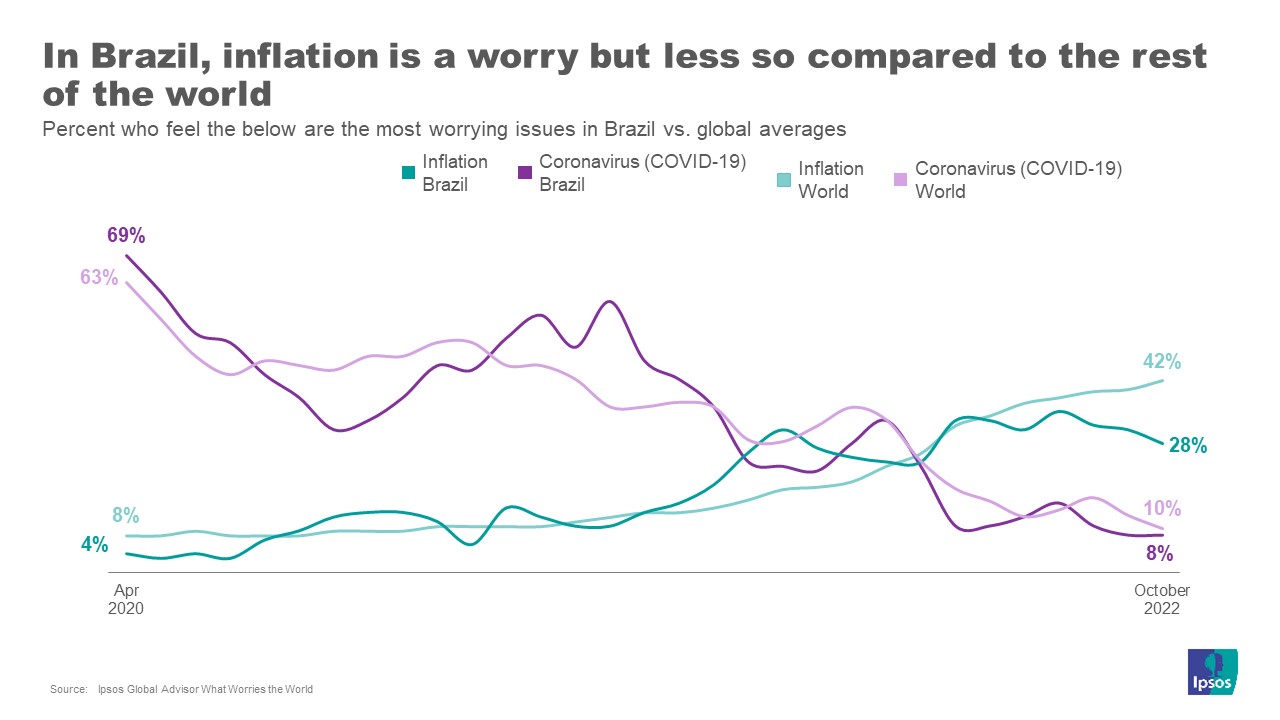
- Inflation is a worry, but less so. Brazilians are no longer concerned with COVID. Instead, inflation is now a bigger concern. But, still, inflation is less of a worry in Brazil than it is globally. Will the shifting issue landscape offer cover for President Bolsonaro? We will see.
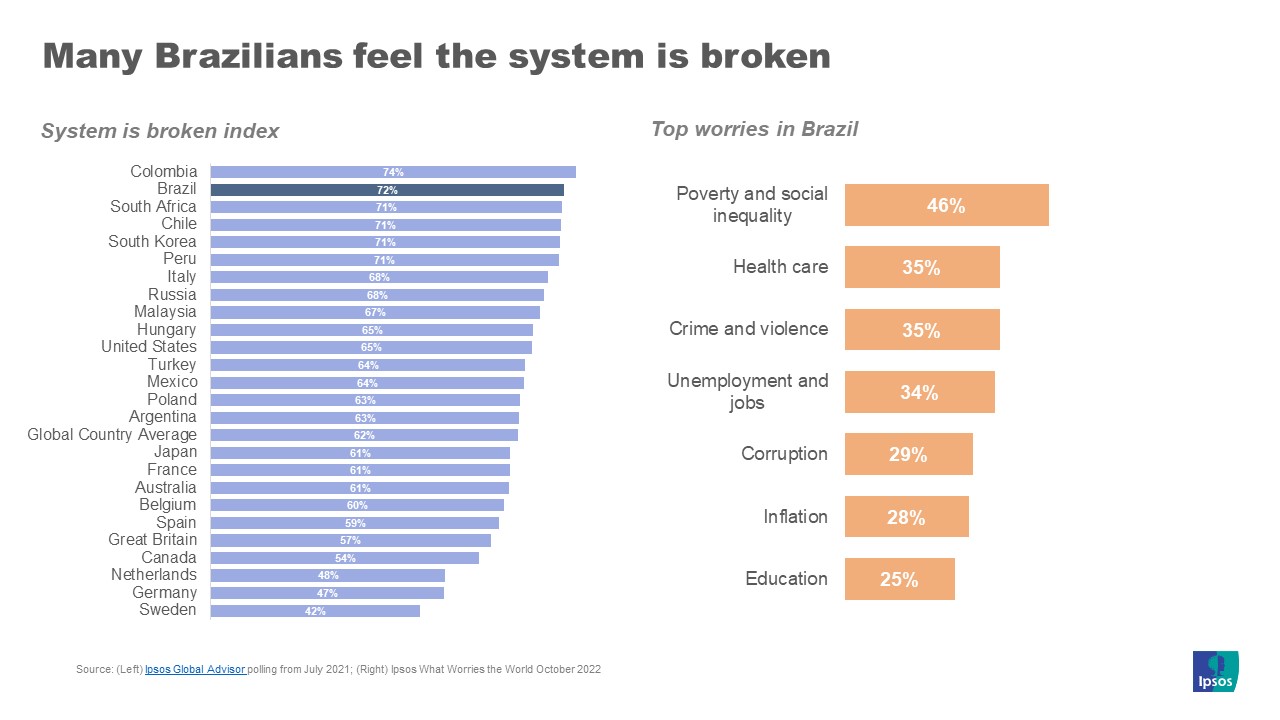
- System is broken. Beyond COVID and inflation, Brazilians are worried about poverty and inequality. Most believe the system is broken. This may be good news for Lula, given his brand as a champion of the working class. But Bolsonaro is credible on his agenda too. It seems like a draw.
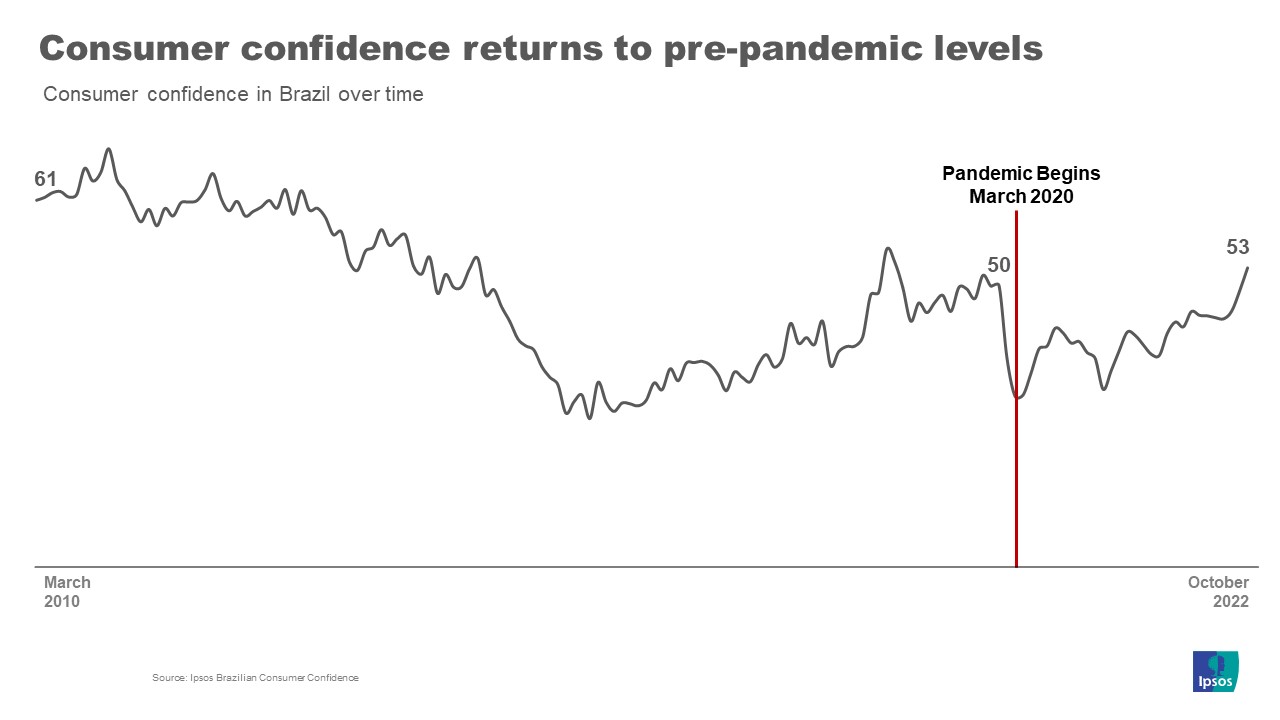
- Too little too late? Consumers are just now beginning to feel as confident as they were before the pandemic. This rebounding confidence is likely good news for President Bolsonaro, the incumbent. But did this come too late in the game for his campaign?
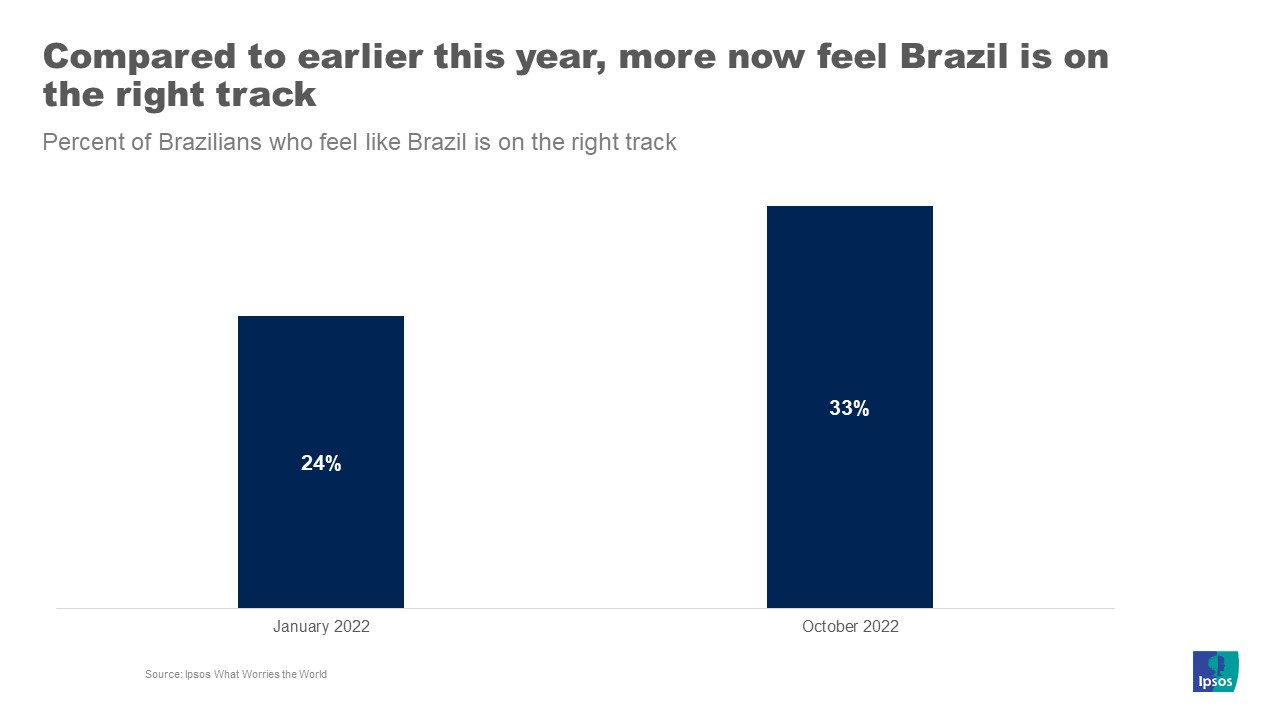
- Still not on the right track. Despite rebounding confidence, many still don’t feel the country is on solid footing. But, compared to January 2022, more Brazilians now feel the country is on the right track.
- Race tightens. Round two of voting happens this Sunday and the latest market average shows a tightening race between Lula and Bolsonaro. No candidate won a majority in the first round of voting. Since then, in head-to-head polling, Bolsonaro has gained some ground on Lula. The race is close.
Following the shifting pandemic and economic landscape, the central question of the election has shifted from whether voters want things to change to whether they want things to stay the same. In elections where voters prefer continuity, the incumbent has much higher chance of winning than in change elections.
But is it too little too late for Bolsonaro? We will see.


