
Changing norms around free speech?
Free speech is a fundamental American right. Yet, free speech has become a fraught issue in recent years. The solution can not lie in law and legal precedent alone because free speech finds its sustenance in underlying social norms and beliefs, a much messier process.
There have been other moments of intense crisis for the Frist Amendment and the public’s relation to it. Sociologist Samuel Stouffer showed in no uncertain terms how deeply Americans valued free speech during the Red Scare, a moment of heightened hysteria in the 1950s when Senator Joe McCarthy and Congress attempted to root out alleged Communists in the government. Even with that backdrop, Stouffer found in his 1955 book that Americans supported the right of public expression, even for the most socially contemptible groups.
Does that hold true today?
In our opinion, this is one of the fundamental questions of the day. What are the limits of free speech? Are the boundaries shifting? And, if so, will these shifts be just normative? Or will they be institutional?
We won’t be able to answer all these questions here. But we take a stab at understanding these ideas in five data points.
- Hate’s Ascension. Over the past decade, hate crimes have started growing. Notably, most hate crimes are motivated by racism. The growth in hate crimes is an indicator of the growing animosity across the country. This is our backdrop.
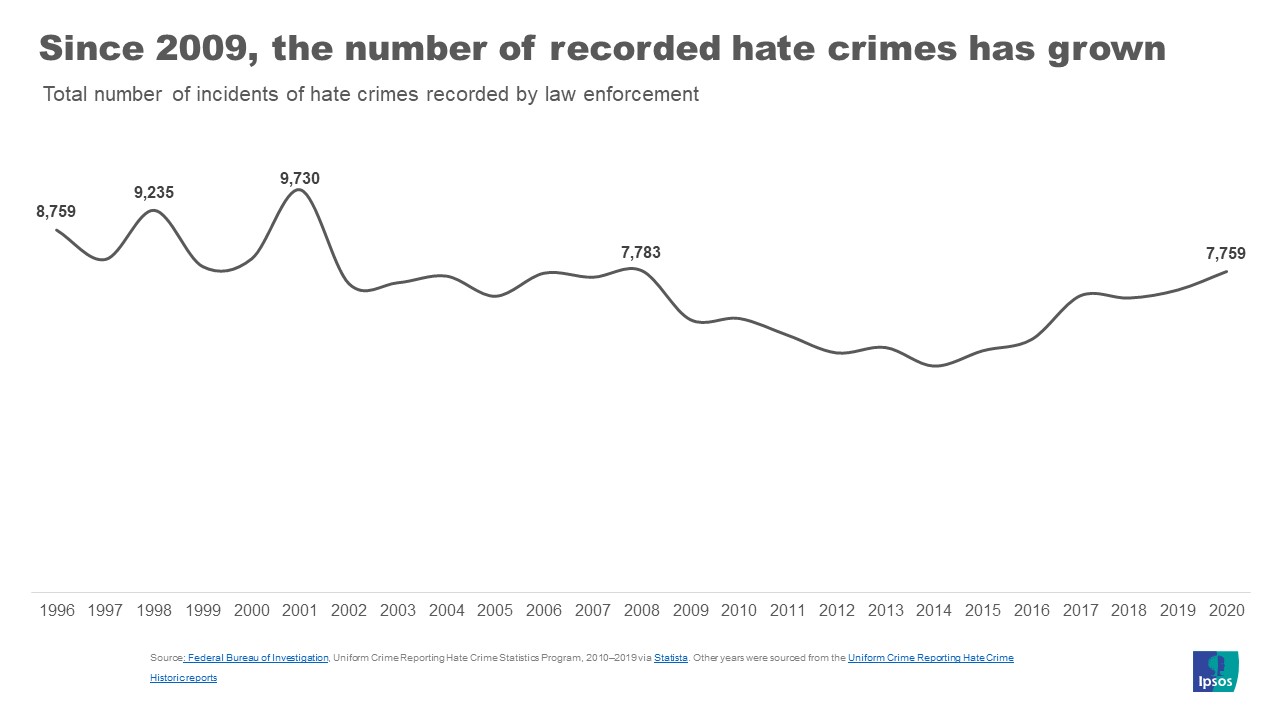
- Increasing acceptance. At the same time, there is a growing tolerance for diverse perspectives. Despite what some might think nowadays, people are increasingly accepting of divergent views. Yet, racist speech is the one place where Americans have become less tolerant. Particularly, after 2016, as hate crimes began to rise, Americans became less accepting of racist speech. How synonymous is racist speech and hate speech for the public? Where does one end and the other begin?

- The Racism exception. Compared to the mid-1970s, most groups have grown less tolerant of racist speech. Black Americans have not moved on this issue. Notably, neither have Republicans. Norms are changing. How do institutions respond?

- A New Norm? People don’t have a strong understanding of how racist or bigoted speech factors into the First Amendment, as Knight Foundation/Ipsos polling finds. Even as people have become more accepting of free speech, racist speech presents a place where norms are shifting. The gray area here for the public may fuel this shift. What happens next? We will see.

- Consensus of Dissensus. Outside of free speech, Democrats and Republicans are moving further apart on most issues. Partisans are living in different bubbles. Can free speech survive in a polarized world? How does one come to consensus in such an age?
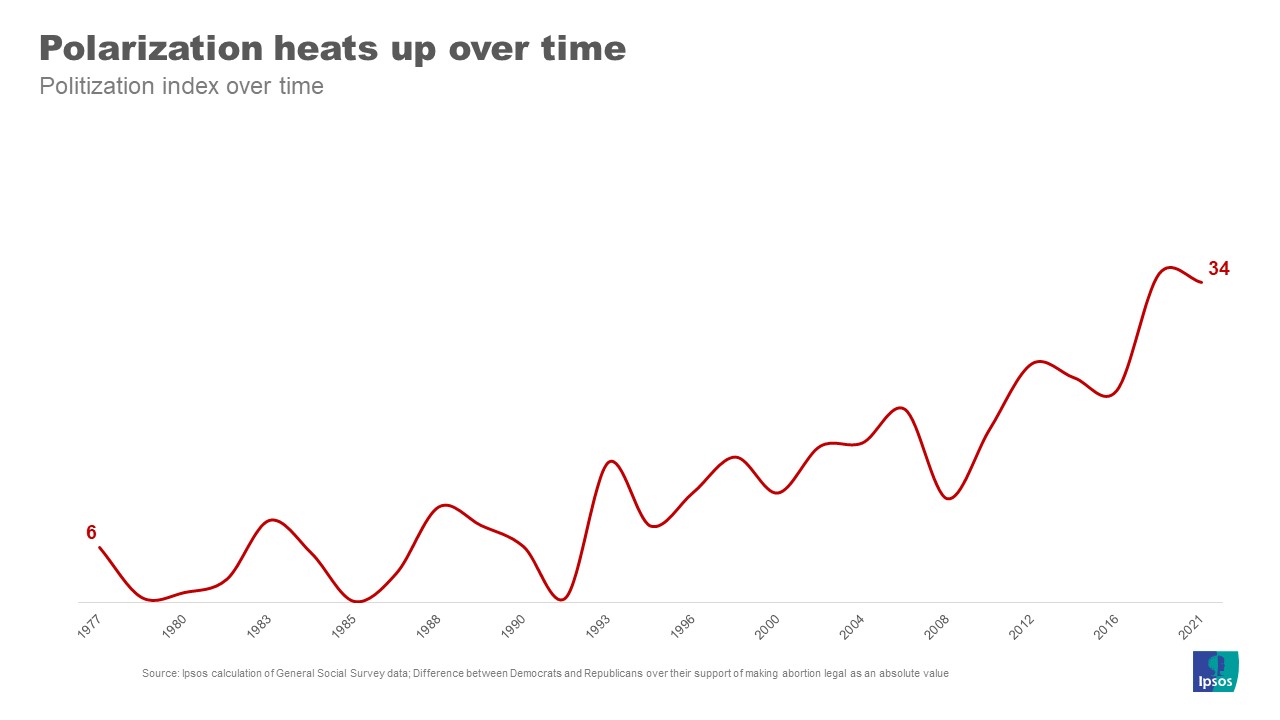
Encouragingly, Americans value free speech and have grown more tolerant across many forms of speech. Yet, our norms are changing, and red and blue America continue to move apart on the issue.
Like we mentioned at the top, free speech is more than just a set of laws or precedents. Its lifeblood is embodied in values and norms that people come to understand and practice. Given the increasing polarization threatening our country, these norms matter. Where does the consensus lay? It is hard to say given that this is a moving target.


