Guns in America
May 14th. May 24th. July 4th.
What are these dates? They are the dates of the deadliest mass shootings in the U.S. this year, the Buffalo massacre, the Uvalde shooting, and, most recently, the Highland Park shooting. Between just these three shootings, 40 people died, and another 49 were injured.
Gun violence looms over the American psyche. Around the country this past weekend, people mistook fireworks for gunshots, causing several dangerous stampedes and public panics.
While there is some legislation moving at the federal level, people are afraid. Did you know that gun sales go up after each mass shooting? As NPR/Ipsos polling shows and we've discussed, gun reform, in theory, is popular. Yet, here we are, again.
Here are five data points that explore the entangled relationship between America and guns.
- Stockpiling. While fewer American households have guns than did in the early '70s, the number of federal background checks has soared in the past two decades. Where are all the guns going? Well, to an increasing few it seems.

- National Epidemic? At the same time, more Americans are dying from firearms than ever before. The role guns play in mass shootings is unignorable. Though, the problem extends well beyond mass shootings. Guns are the leading cause of death for American kids. They play a violent role in suicides and homicides. The data is clear.

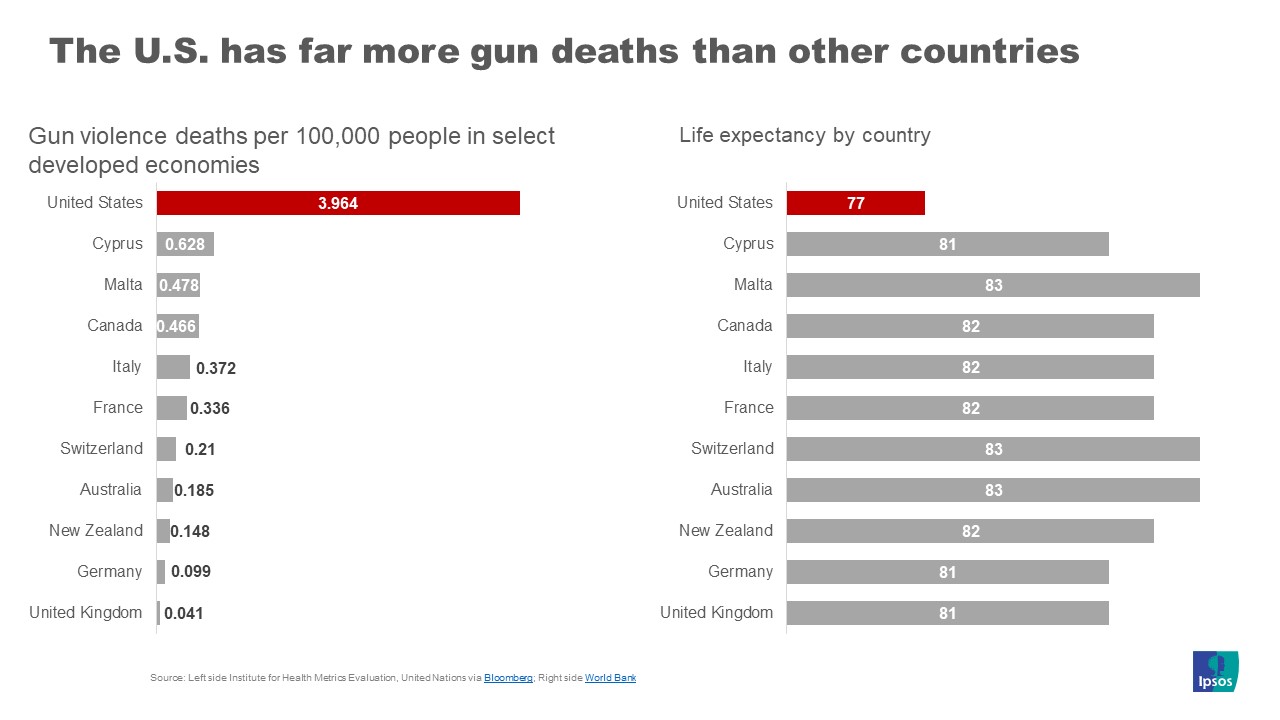
- American Exceptionalism. This problem is unique to America. Most other developed economies aren’t struggling with gun deaths like the U.S. A reporter asked Senator Ted Cruz about this following the Uvalde shooting, stirring a heated response from the senator. Look at the numbers. Really this isn’t a form of exceptionalism? This is more than correlation.
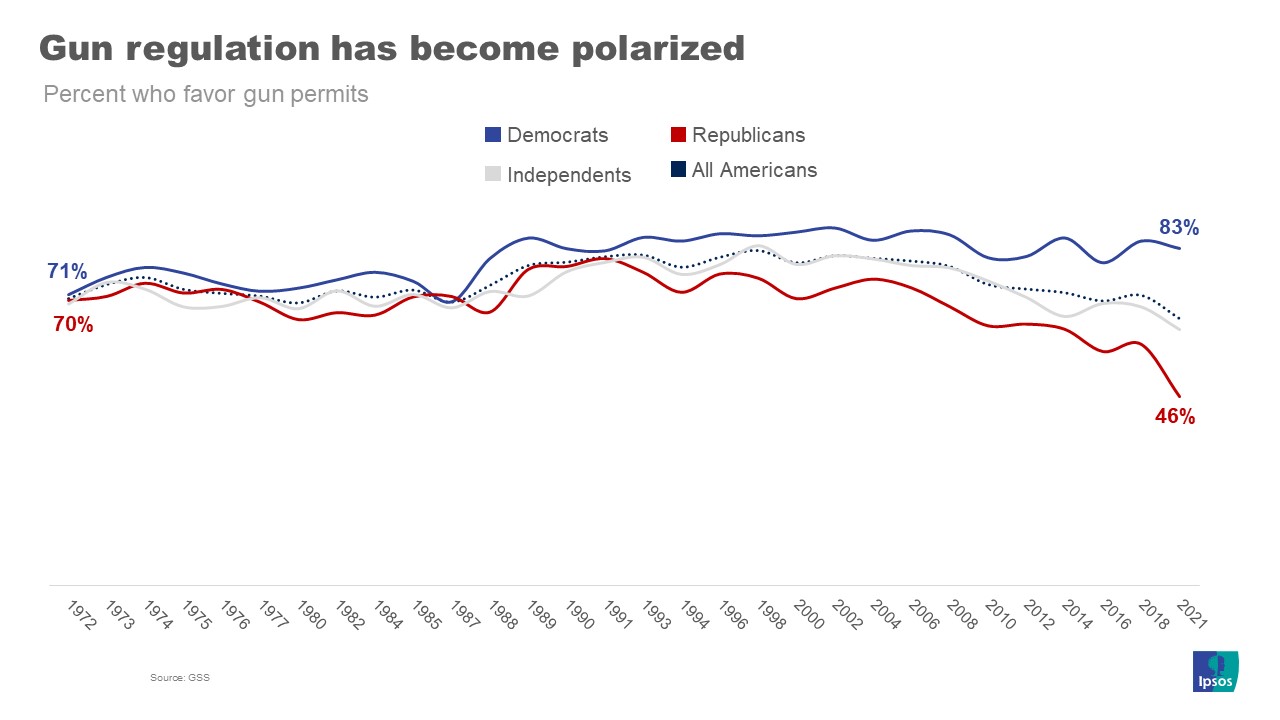
- Growing Divide. Partisans have moved farther apart on gun control. In the early ‘70s, Republicans and Democrats favored gun permits at roughly the same rate, winning majority support from both parties. Now, there is over a 30-point divide on this question, with Democrats favoring gun permits far more than Republicans. Here it is again: a tale of two Americas. Guns act as a dividing line in our cultural wars.
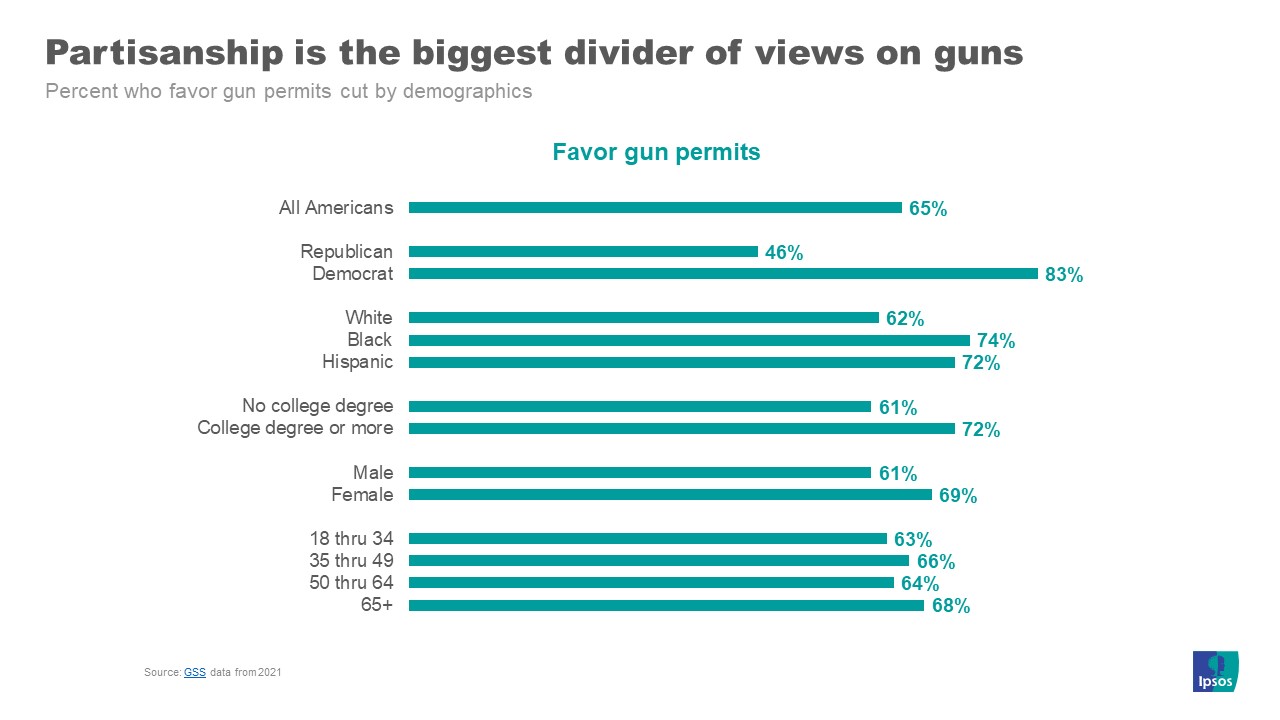
- It’s All About Partisanship. When understanding who favors gun permits, no other demographic comes close to partisanship in revealing the social schism around guns. College education and race also drive differences here, but not to the same extent as party affiliation. Guns are a cleavage today in America.
Guns are a central fault line in American politics, something that’s become increasingly true over the past few decades. At the same time, guns have become deadlier. What will Washington do? Are these solutions going to make a dent?
Might our own American exceptionalism be the end of us? We will see.