Four ways that views of the economy have changed (and one way it hasn’t)
The economy has overshadowed all other issues in 2026. From rising gas prices to trade wars to interest rate hikes, the economic landscape has drastically shifted since the start of the year.
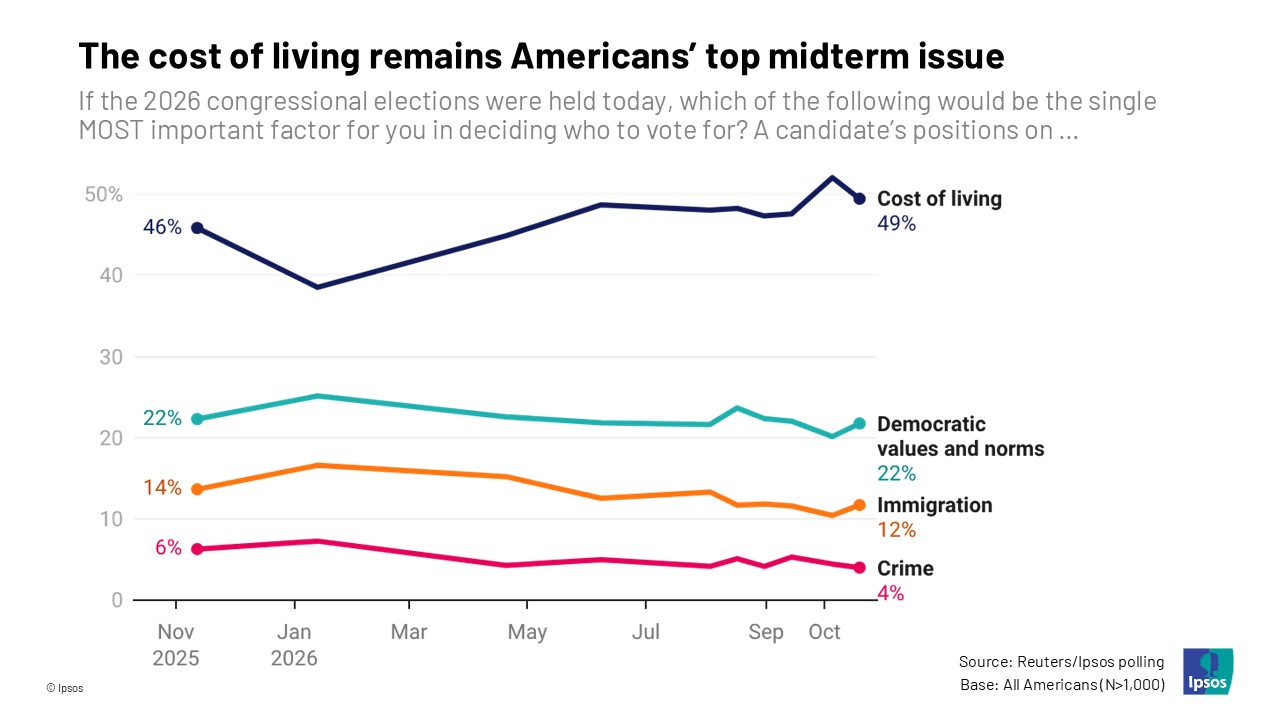
About two weeks out of the midterm elections, cost of living concerns remain top of mind, as they were two years ago.
Below are five charts on how views of the economy have (or haven’t) changed in 2026.
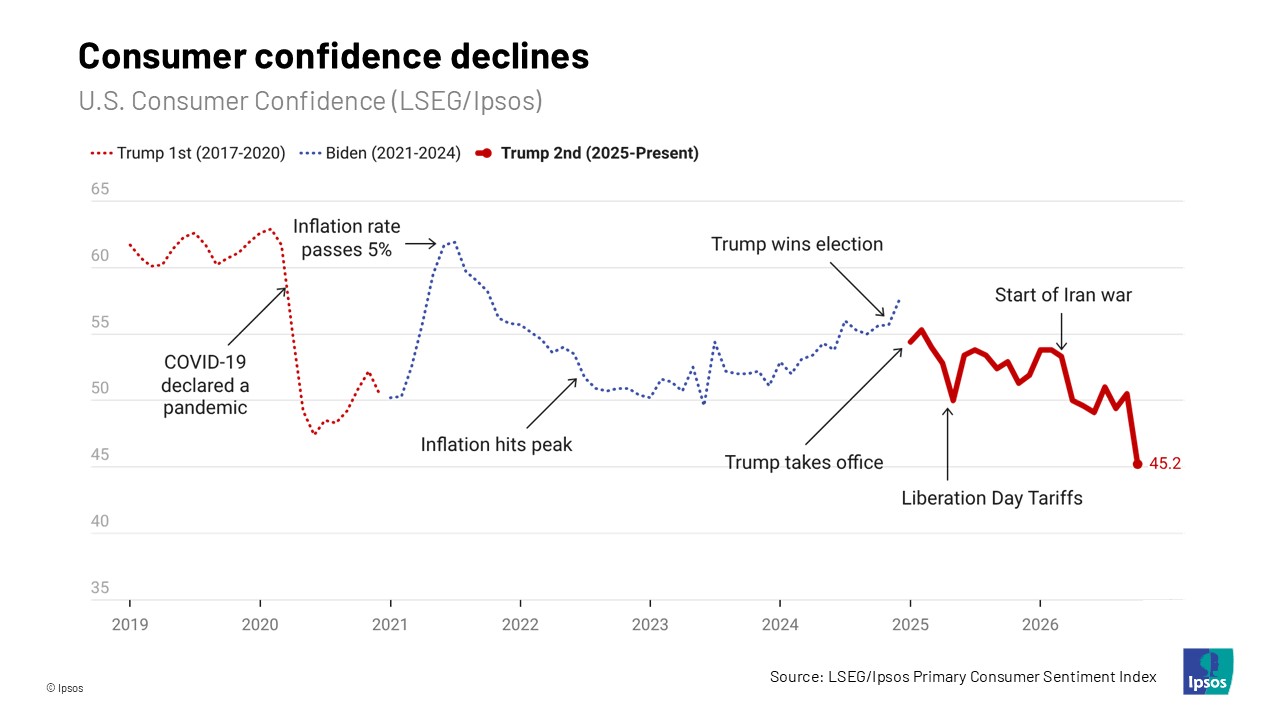
1. Confidence down. In October, the LSEG/Ipsos U.S. Primary Consumer Sentiment Index saw its steepest month-over-month drop since April 2020 – which was due to the COVID-19 pandemic – and fell to its lowest point since October 2011. Consumer confidence had seen some turbulence in 2025, before generally returning to post-election levels. However, in 2026, it has been on a generally negative downward slope, coinciding with the start of the Iran war.
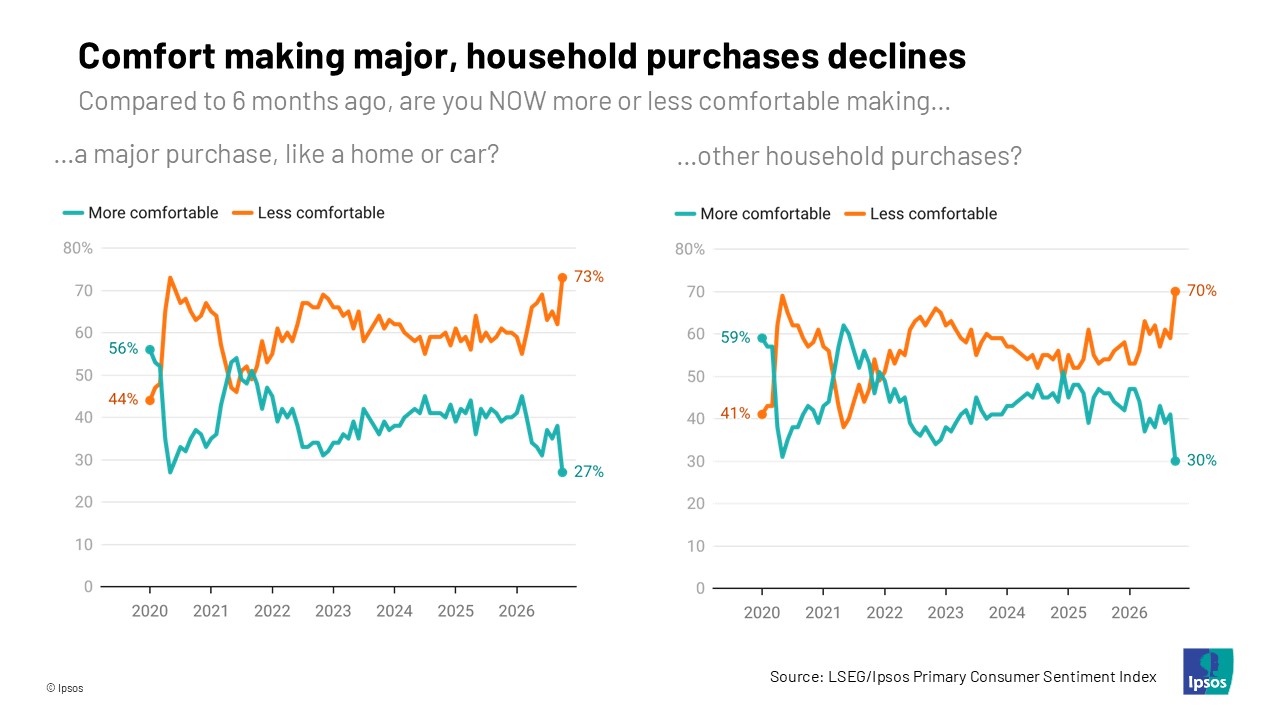
2. Purchasing comfort. Compared to 2024 and 2025, Americans are much less confident about making both major and household purchases. Now, these levels are at or below COVID-19-era levels.
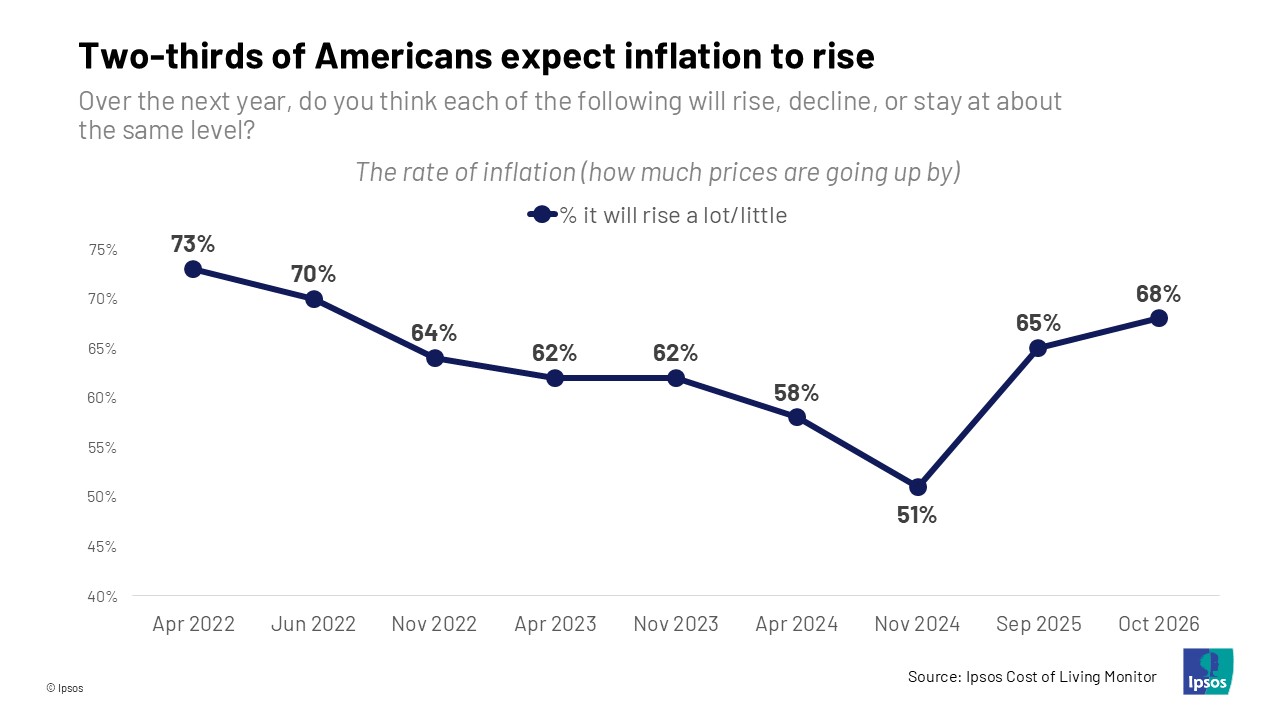
3. Expectations for inflation return. In an Ipsos survey conducted in late October and early November 2024, more than a year removed from a historic wave of inflation, the share of Americans expecting inflation to continue rising dropped about 20 percentage points below peak inflation levels. But now, even as the rate of inflation is far lower compared to 2022 levels, two-thirds of Americans expect inflation to rise over the next year.
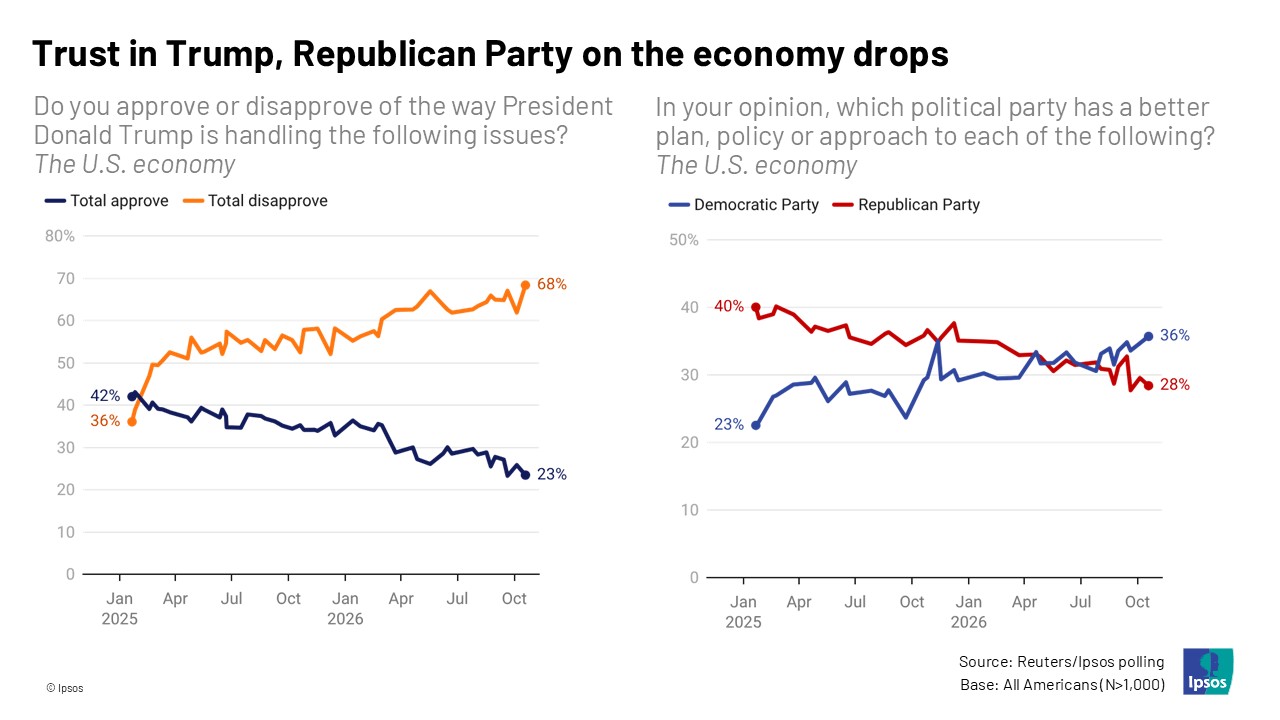
4. Flip in economic trust. Trump’s approval rating on the economy has nearly halved since the start of his presidency. Meanwhile, Democrats have gained an edge over Republicans on the U.S. economy, after being double digits underwater at the start of 2025. This story also holds true for the cost of living. The political figures Americans have more trust on when it comes to the economy have shifted.
5. What hasn’t changed? In 2024, the economy, inflation, and the cost of living dominated voters’ concerns. That remains the case today. The economy, inflation, the cost of living – however you want to phrase it – remains the dominant political concern of the day.
The polling paints a consistently negative picture of how Americans feel about the economy today. But while an election might be a temporary outlet for Americans to vent economic frustration, the country’s pocketbook malaise likely won’t end there. Watch this space.