
Women and the workforce
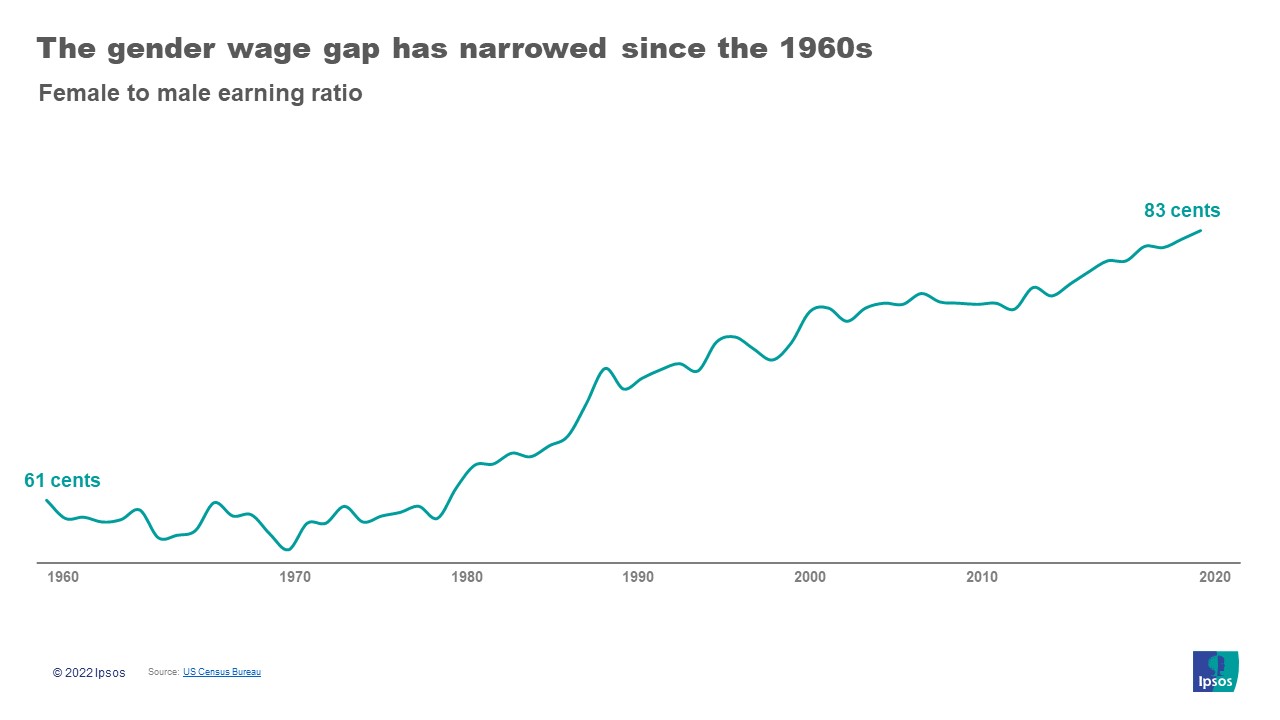
In America, women earn approximately 83 cents to every dollar that a man makes, in very generalized, broad terms. Though the gap narrows or widens when other factors, like age, industry worked in, or race and ethnicity, are brought into account, this is a real disparity with meaningful implications for financial security and earnings potential.
Below, on the heels of International Women’s Day, we take a closer look at where women stand on work, financial security, and parity in the workforce as year two of the pandemic draws to a close.
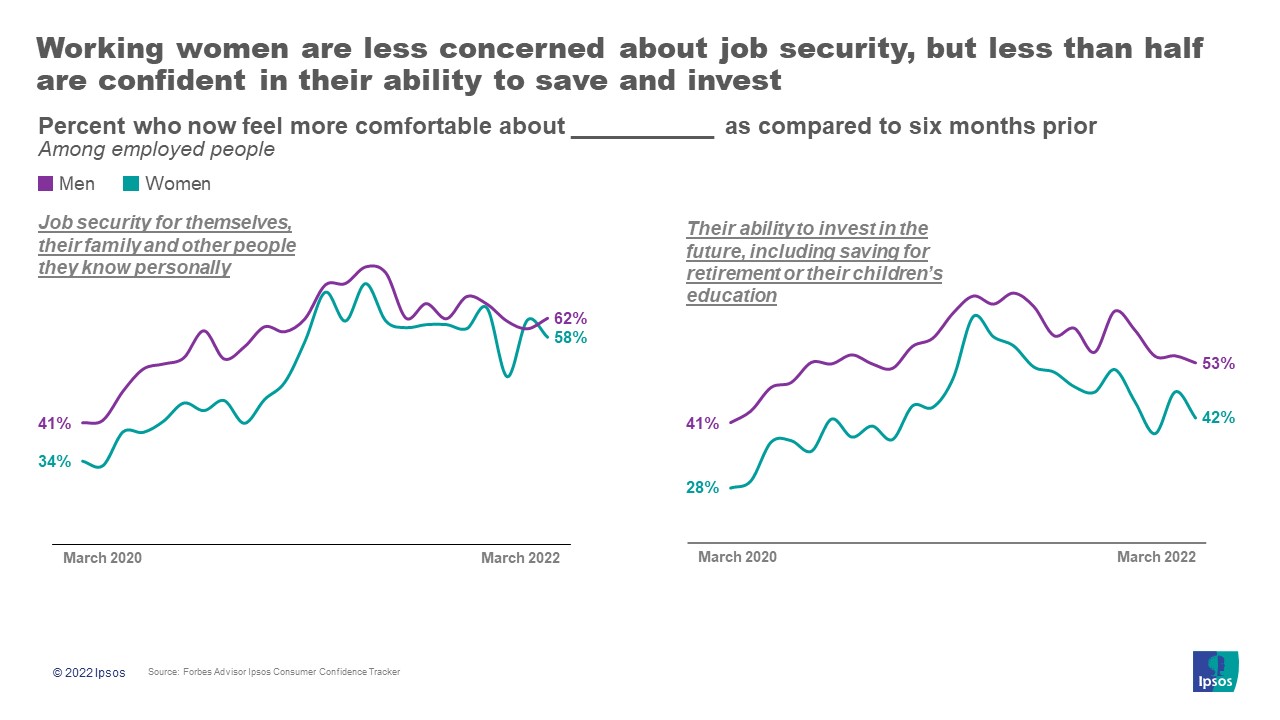
- Pandemic perspectives. The pandemic threw many aspects of life into disarray. Female participation in the labor market, which dropped to the lowest point in over 30 years has staged a partial recovery. But that sense of unease about both job security and ability to save is still present, more so for working women than for men.
- Gender wage gap. This comes as women continue to earn cents on every dollar that a man makes. While this disparity becomes more or less noticeable across certain industries, in more general terms it tends to get worse with age and is even worse for women of color.
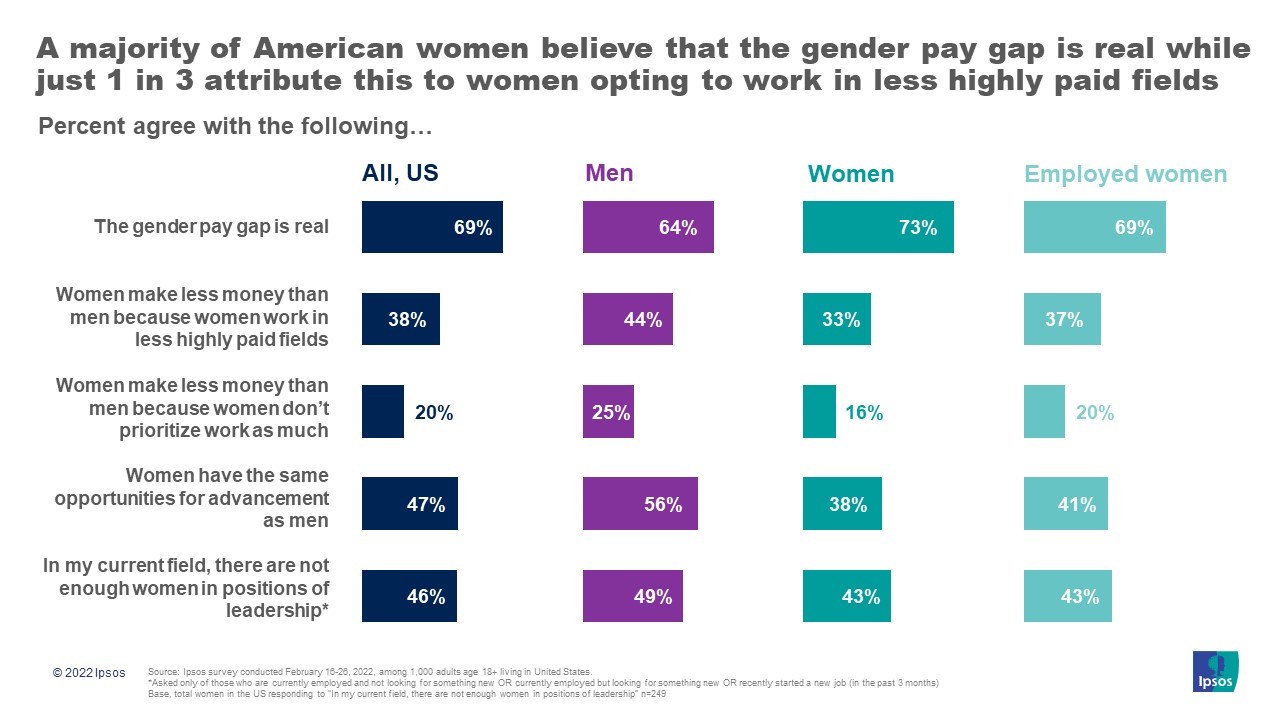
- Acknowledging the gender pay gap. While most Americans acknowledge that the gender pay gap is real, there is less agreement on other aspects of gender parity in the workforce among men and women. For instance, a majority of men believe that women have the same opportunities for advancement as men, while just two in five women agree.
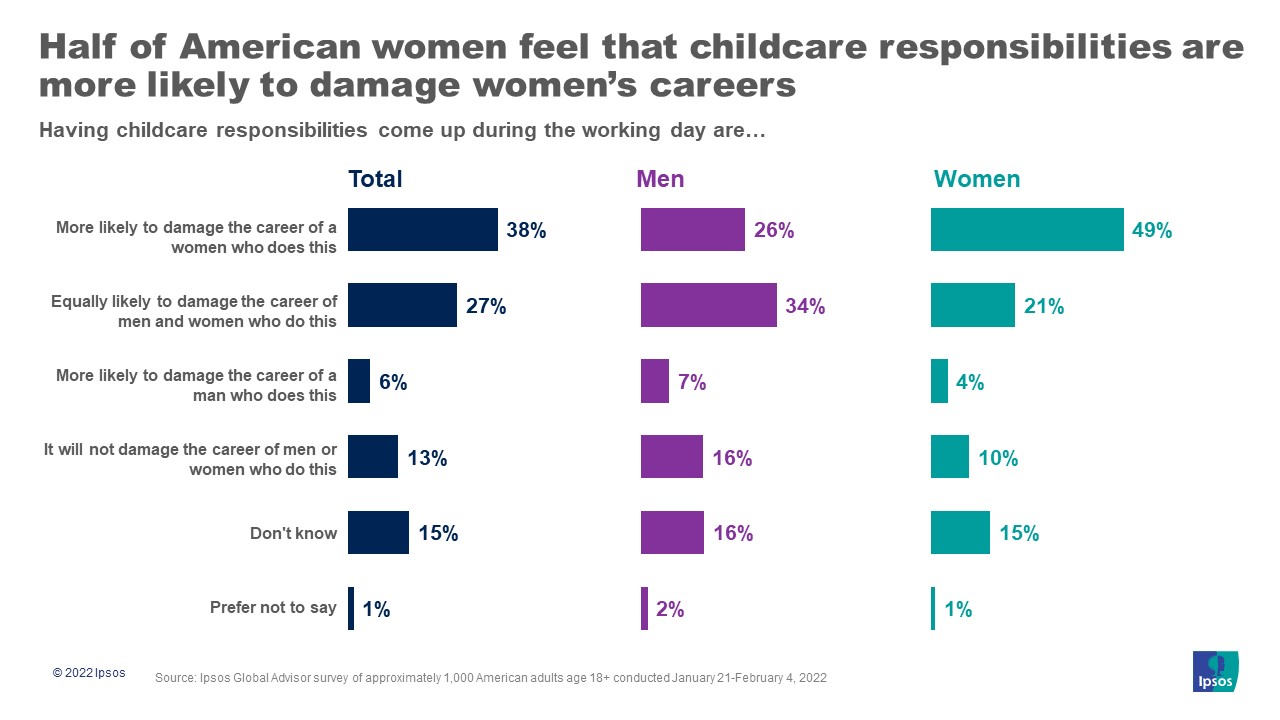
- Childcare responsibilities. Though it’s one piece of a much larger puzzle, research highlights just how much of a price women pay in terms of their career and earning potential after having children. This opportunity cost is echoed in our own survey research. Just under half of American women believe childcare responsibilities are more likely to negatively affect a woman’s career.
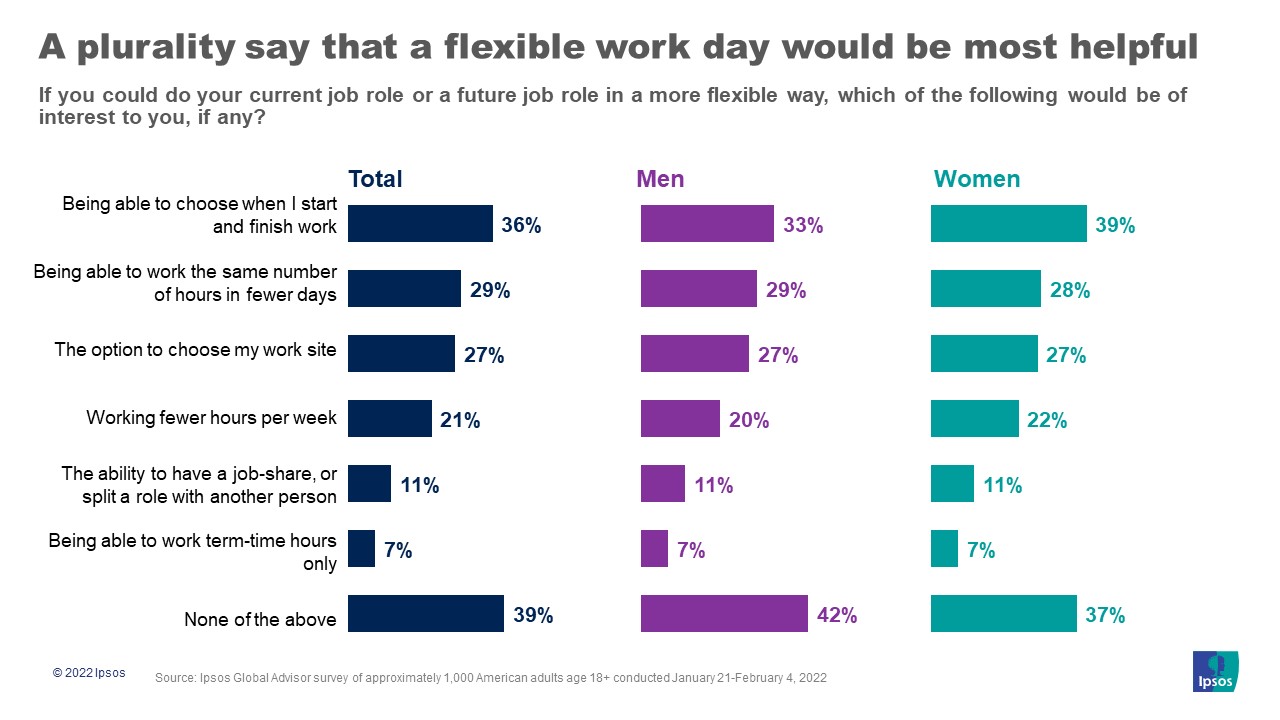
- Greater flexibility. Equalizing the workplace isn’t solely about compensation. Generally, experts agree that adding more flexibility into the traditional workday is one key way to retain women at their organization, as the burden of parenting and other household responsibilities too often tends to fall on their shoulders. But adding more flexibility to the workday is an attractive proposition for both men and women, as our recent Global Advisor polling shows.
Making the workplace more equitable for women isn’t just about addressing the persistent wage gap between men and women. It’s also about providing equal opportunity for men and women to advance, even in a context where structural barriers still exist and childcare responsibilities still disproportionately fall to women.
When it comes to addressing the gender wage gap, the first step for businesses is to take a hard look at the numbers and adjust accordingly. Beyond that, creating a more flexible work environment could help lift some of the burden around childcare and other responsibilities that, again, typically fall on women.
But flexibility should not be seen as an exclusive benefit for mothers. As our research shows, many workers want some form of flexibility in their working lives. When we survey job hunters, we consistently find that higher pay, better benefits, and more flexibility are the top motivators getting people out onto the job market, regardless of gender.
The pandemic has already altered the traditional 9 to 5. Keeping some of that flexibility moving forward – whether offices opt to go remote, hybrid, or fully in-person – promises to make work more worker-friendly. The challenge now is for businesses to make the most of those opportunities.


