
The days may be getting shorter, but summer is still Britain’s favourite season
Shadows are getting longer and days shorter, we’re on the verge of the Autumnal equinox on or around the 22nd of September. But the great British summer is still the favourite season of most Britons, according to a new Ipsos survey.
We polled a nationally representative sample of 1,082 adults across Great Britain through our i:omnibus research platform, asking respondents to name their favourite season.
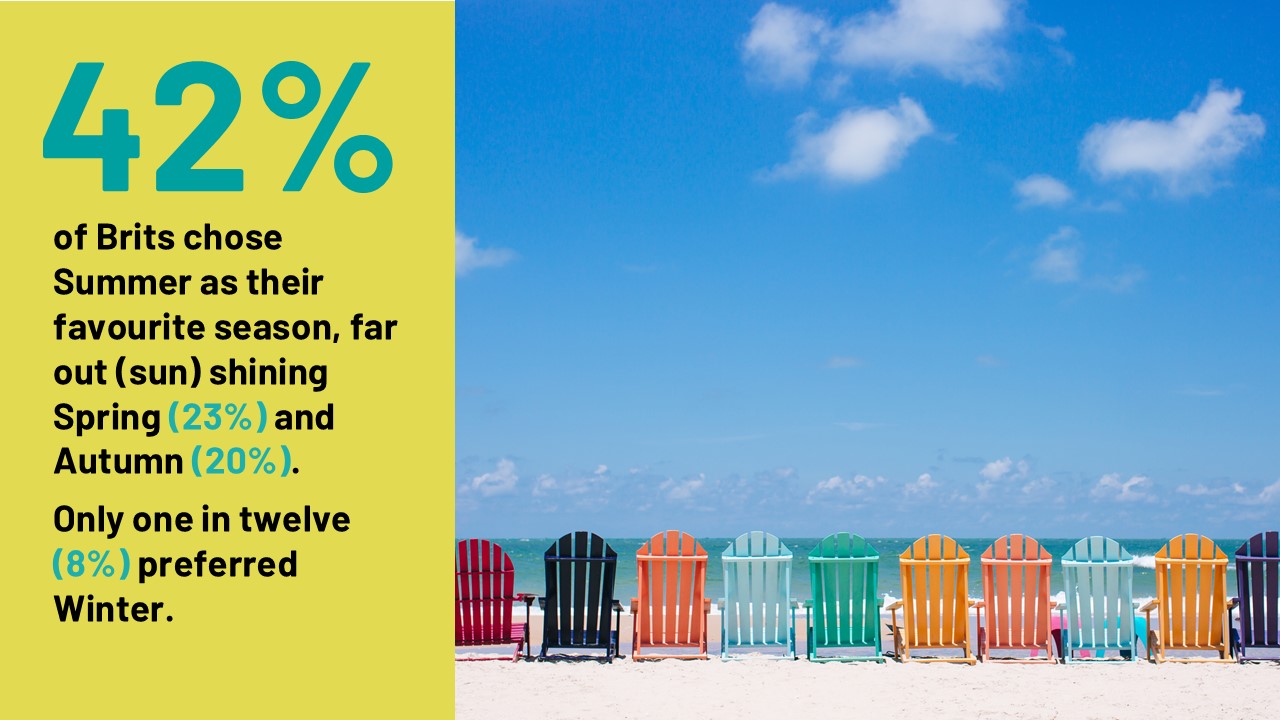
Our research found 42% of respondents basked in the glory of Summer, naming it as their favourite season. Spring enchanted 23% of participants, whilst 20% selected Autumn. Unsurprisingly perhaps, Winter was the least favourite season, with its frosty charm favoured by just 8% of Britons.
Men were more likely to favour Summer (47%) compared to Women (38%).
Interestingly, Gen Z adults (17%) had a stronger pull towards Winter whilst the Baby Boomers preferred the fresh shoots of Spring (36%).
Technical note
- Ipsos interviewed a representative quota sample of 1,082 adults aged 18-75 in GB using its online i:omnibus between 13th - 16thSeptember 2024. The sample obtained is representative of the population with quotas on age by gender, region and working status. Data are weighted to the known offline population proportions for age, working status within gender, and for region, social grade and education, to reflect the adult population of Great Britain.
- Note on Generation demographic, The age ranges for the generations are as follows: Baby Boomers: aged 57-75, Generation X: aged 43-56, Millennials (Generation Y): aged 27-42 and Generation Z: aged 18-26.
- Data are weighted to match the profile of the population. All polls are subject to a wide range of potential sources of error.


