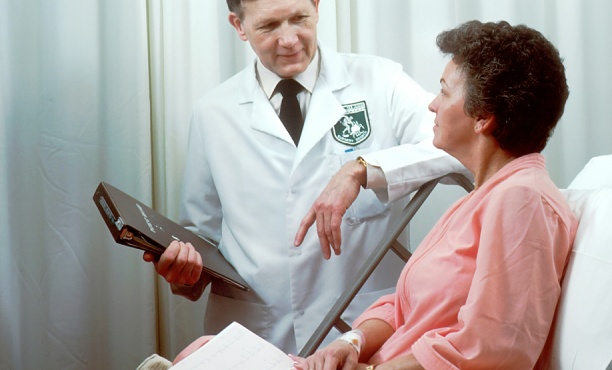
Nurses believe the Government is achieving key health targets in certain priority areas according to a MORI Social Research Institute survey for the Royal College of Nursing (RCN). Most nurses working in cancer care believe that patients are now benefiting from improved treatments, reduced waiting times and more specialist nurses. However, in contrast, the wider nursing population is more divided about whether increased investment has led to significant improvements for most other patients.
New research by the MORI Social Research Institute for the Health and Safety Executive (HSE) has been published, looking at attitudes towards health and safety issues. The report — 'Attitudes towards health and safety: a quantitative survey of stakeholder opinion' — looks specifically at:
Nine in 10 men (89%) men aged 40+ do not know the medical purpose of a PSA (Prostate Specific Antigen) test, according to research by the MORI Social Research Institute.
A survey from MORI reveals that the public would be happy to let nurses care for less serious conditions at night instead of insisting on being treated by a doctor.
One in five smokers (21%) aged between 15-54 have a persistent smoker's cough, yet half (48%) do not realise that it could be an early warning sign of a potentially serious lung disease. These are some of the findings of a major new MORI survey released for the British Thoracic Society COPD Consortium.
Three quarters of people in Britain (76%) see cancer as a national health priority, according to new research from MORI. The survey, commissioned by CancerBACUP, aims to help determine Britain's attitudes to cancer.