
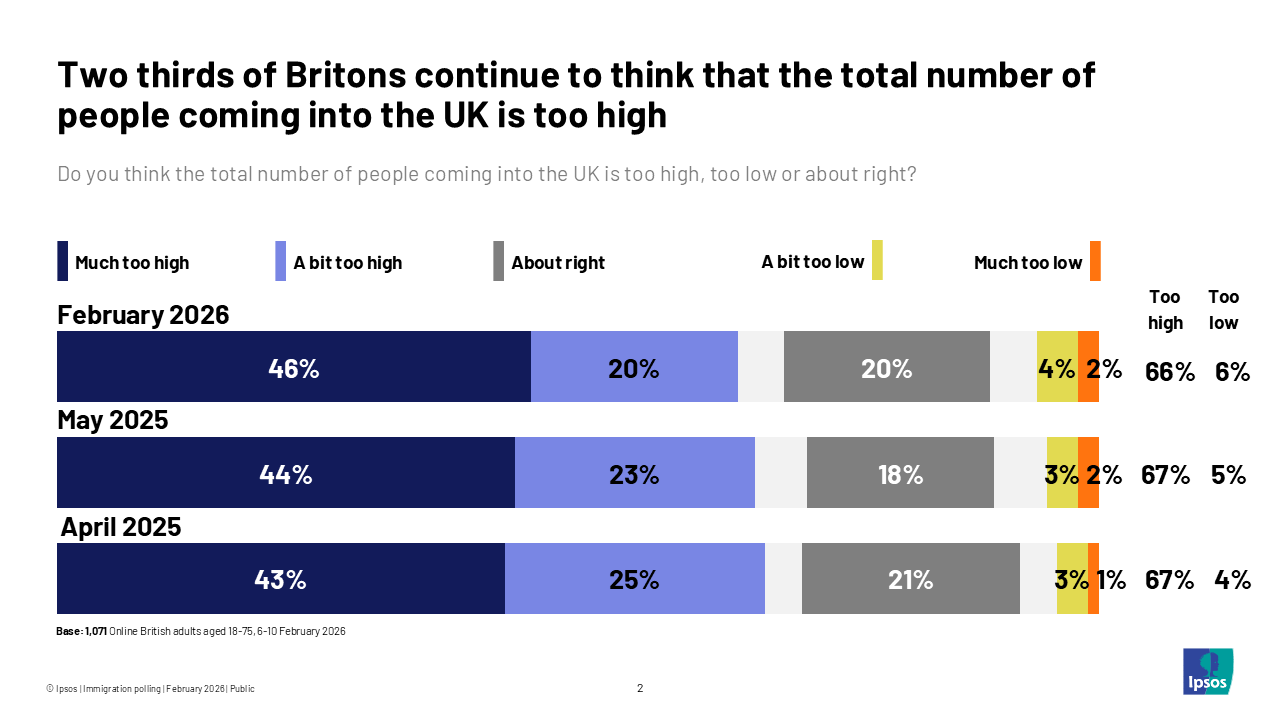
Two thirds of Britons believe the total number of people coming into the UK is too high
New data shows that two-thirds of Britons believe the total number of people coming into the UK is too high.
Two thirds of Britons believe the total number of people coming into the UK is too high
- Concerns particularly high over asylum numbers, with poor border control and welfare benefits seen as the main drivers of excessive immigration.
- At least half lack confidence in any of the main political parties to have the right immigration policies overall, though Reform UK is most trusted to make it harder to enter the country illegally.
- Public confidence in the Conservatives on immigration has improved since 2025, but most still distrust them.
Key findings
Views on UK immigration levels: 46% indicated that immigration levels are 'much too high' or 'a bit too high.' This sentiment has remained consistently high, with minor fluctuations, since the last surveys in May and April 2025.
- The public are most critical of asylum-seeker numbers, with work and study related immigration slightly less of a concern: Regarding those seeking asylum, 67% perceive numbers to be excessive. Similarly, 56% feel that family-based migration levels are too high, while views on work and study-related immigration show slightly less concern, with 43% and 39% respectively deeming these levels too high.
- Perceived drivers of excessive immigration: among those who felt total immigration numbers were too high, the role of poor border controls (61%), welfare availability (59%), and human trafficking / smuggling networks (45%) were identified as key influences driving this.
- Trust in political parties to have the right immigration policies: At least half lack faith in any major party to have the right immigration policies, with Reform UK (36%) and the Green party (31%) the most trusted. Reform UK is more trusted to make it harder to enter the country illegally (46%), a change of +4ppts since May 2025. The Conservative party has seen an increase in trust on both measures since last May, up 5ppts to 26% trusted to have the right immigration policies overall, and up 7ppts to 30% trusted to make it harder to enter the country illegally, but the majority still distrust them in this policy area.
- Views on the impact of immigration: While 1 in 3 (33%) acknowledge the positive cultural contributions of immigrants, more than half view immigrants to have had a negative impact on housing availability (61%) and crime levels (54%).
Commenting on the findings, Gideon Skinner, Senior Director of UK politics at Ipsos said:
Our latest polling shows that immigration remains high on the agenda for the British public, and the complex concerns that underpin this. While there is recognition of some of the contributions made by immigration, there is a persistent view that numbers remain too high, especially for asylum, with weak border controls and access to welfare benefits seen to be the main driver of this. Reform UK remain most trusted to implement a harder stance on illegal immigration, and the Conservatives are also showing signs of improving public perceptions of their immigration policy, albeit still from a low base. However, the overall lack of confidence in any of the main political parties to appropriately manage immigration underscores the need for more nuanced policy conversations about how the public best envisage the benefits of immigration being balanced against the negatives.
Ipsos interviewed a representative sample of 1,071 adults aged 18-75 across Great Britain. Polling was conducted online between the 6th-10th February 2026.
Data are weighted to match the profile of the population. All polls are subject to a wide range of potential sources of error.


