Over 8 in 10 Britons concerned about impact of Iran conflict on fuel/energy prices as belief in the special relationship falls
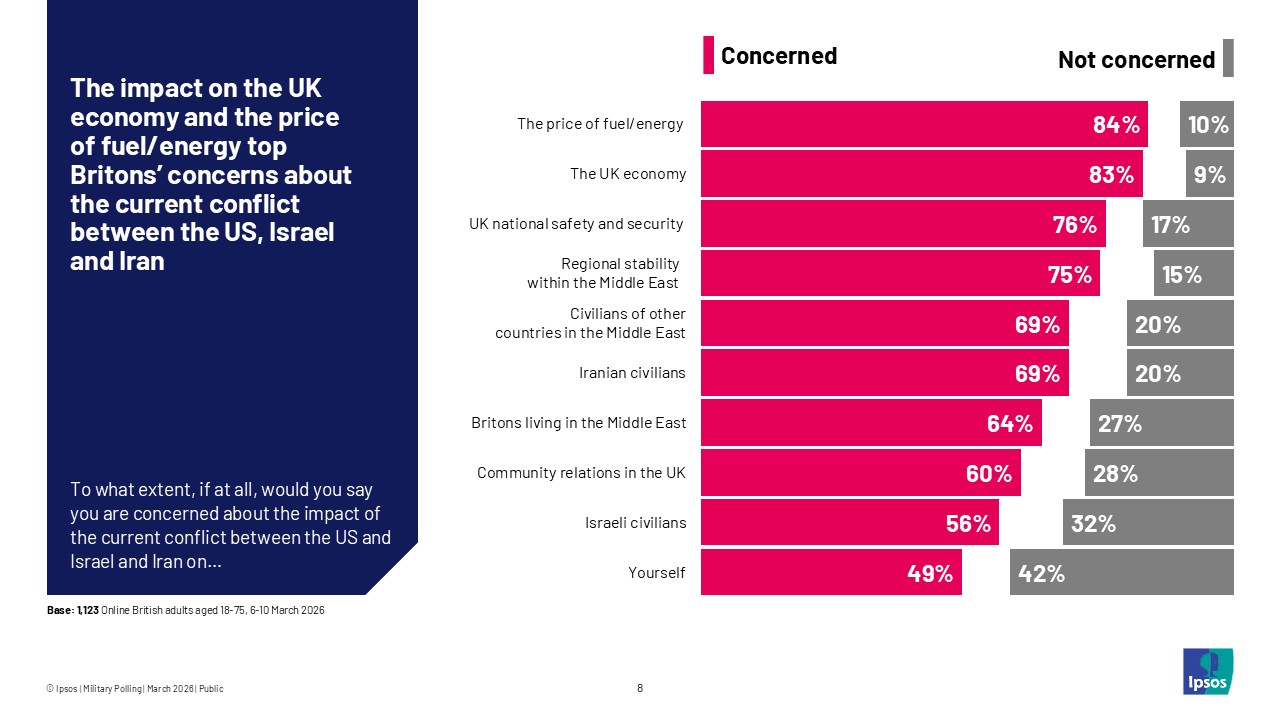
- Over 8 in 10 Britons (84%) of Britons say they’re concerned about impact of US/Israel-Iran conflict on fuel/energy prices.
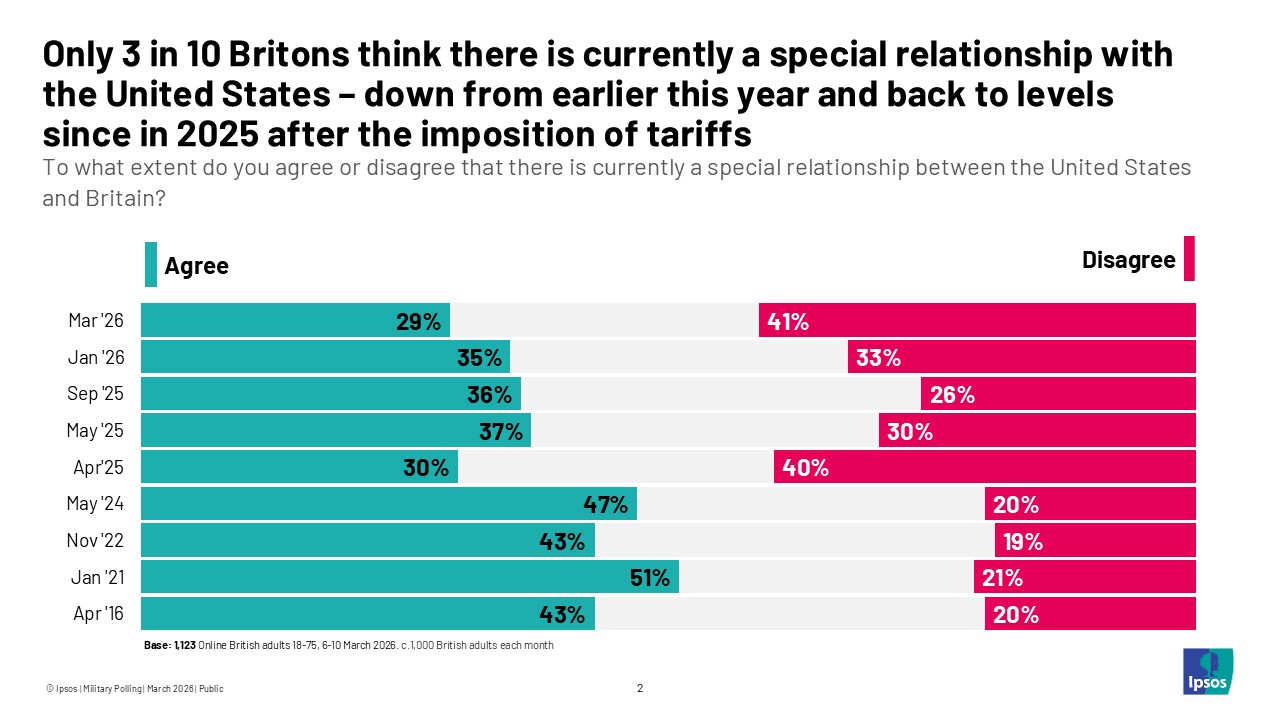
- Just 3 in 10 (29%) agree there is currently a special relationship between the US and Britain, down 6ppts since January and back to levels seen in April 2025 after the imposition of tariffs.
- Just over half (56%) of Britons disapprove of US military strikes on Iran.
Attitudes towards the US/Israel/Iran conflict:
- High level of concern, especially over economic impact: Over four in five Britons express concern about the impact of the US/Israel-Iran conflict on the UK economy (83%), and specifically the price of fuel/energy (84%, with 49% very concerned). This is slightly higher than the level of concern over the economic impact of the conflict between Israel and Iran in June 2025, and in line with levels of concern at the start of the Ukraine conflict in 2022.
- There are also high levels of concern over the impact on UK national safety and security (76%), regional stability in the Middle East (75%), and civilians in Iran and other countries in the Middle East (both 69%).
- Disapproval of US actions and concern over UK government response. Just over half (56%) of Britons say they disapprove US military strikes against Iran, higher than the 43% of US adults who disapproved in a Ipsos US poll 6-9 March. 21% of Britons approve of strikes (vs 29% in the US), while 23% are unsure. At the same time 60% think Donald Trump is doing a bad job handling the conflict.
- A majority of 2024 Labour (67%), Conservative (52%), Liberal Democrat (69%) and other party (76%) voters disapprove of US military strikes against Iran, but Reform UK 2024 voters are more likely to approve of US strikes (53%).
- UK Government response: Only 1 in 5 think the UK Government (20%) and Keir Starmer (21%) are doing a good job handling the conflict between the US, Israel and Iran. Around 4 in 10 think they are doing a bad job (41% and 45% respectively). This is worse than public perceptions between 2022-25 of how the UK Government was handling the Russian invasion of Ukraine.
- Support for diplomacy: Over 6 in 10 (63%) Britons support the UK government using diplomacy with US, Israel, Iran, and other countries to de-escalate the situation.
- Other actions: Other potential UK government actions garner varying levels of support:
- Implementing stricter economic sanctions against Iran: 50% support, 16% oppose
- Britain sending jet airplanes to attack Iranian military bases, if Iran attacks British military bases in the Middle East: 42% support, 30% oppose
- Maintaining diplomatic ties with Iran: 36% support, 18% oppose
- Britain sending jet airplanes to help defend US military bases in the Middle East against Iranian attacks: 29% support, 37% oppose
- Giving permission for the US to use British military bases as a base to launch attacks on Iran or Iranian missile bases: 29% support, 41% oppose for each option
- Britain sending weapons to help the US and Israel fight Iran: 24% support, 44% oppose
- Sending British troops to the Middle East to support the US and Israel in military action against Iran: 16% support, 56% oppose
The special relationship
- Belief in the special relationship has weakened: 3 in 10 Britons (29%) agree there is currently a special relationship between the US and Britain, 41% disagree. This is fall from 35% agree/33% disagree in January, and back to levels last seen in April 2025 after the imposition of tariffs.
- Starmer’s handling of the relationship: 24% think Keir Starmer is doing a good job handling the UK’s relationship with President Trump and the United States, 45% say a bad job. This is marginally better than January this year (21% good job), but worse than September 2025 (29% good job).
Defence policy and spending
- Defence spending: Half of Britons (48%) think government spending on defence and the Armed Forces should be increased, up 5ppts since April 2025. 27% want it to stay the same and 11% decreased. However when asked if they support increased spending on defence if it meant trade-offs views change, particularly if increased defence spending meant an increase in the taxes they personally pay (20% support, 51% opposed), or a decrease in spending on public services (25% support, 43% opposed).
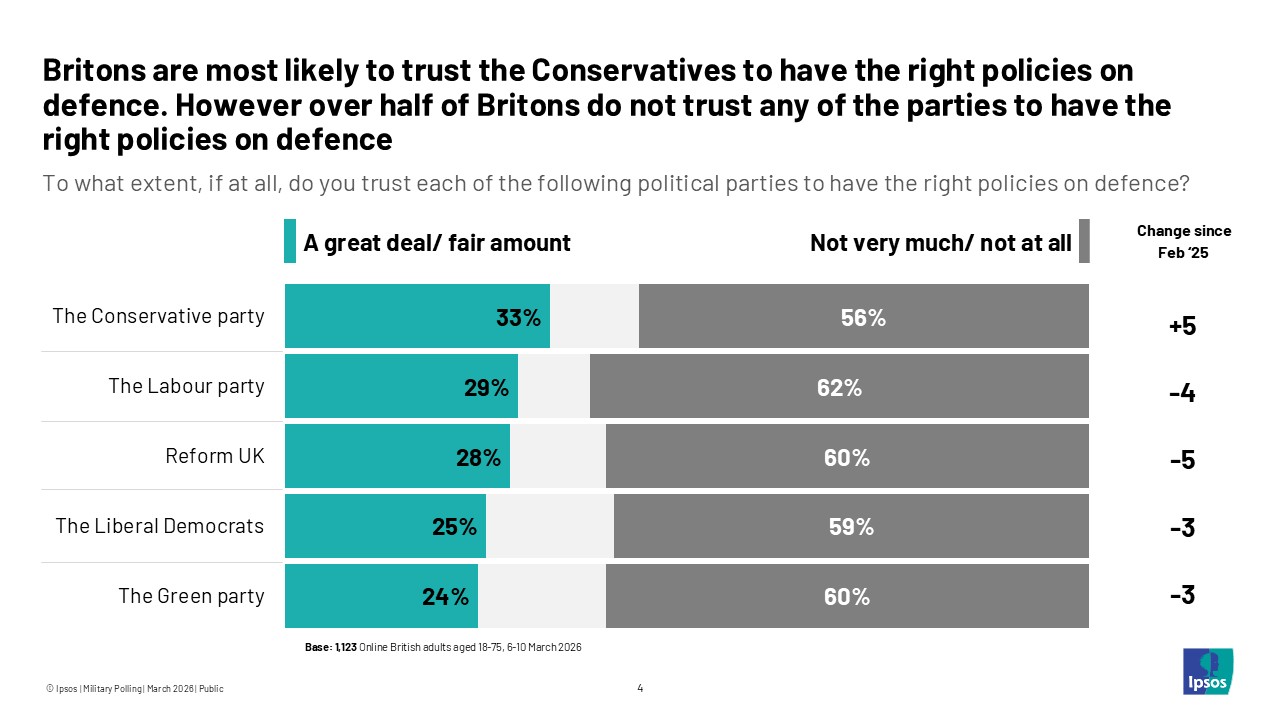
- Best party on defence: 33% say they trust the Conservatives at least a fair amount to have the right policies on defence, more than other parties and up 5ppts since February 2025. However a majority say they don’t trust any of the parties very much on this issue.
- Leaders’ willingness to use force: 61% of Britons say Donald Trump is too willing to use military force to advance US interests, but views are different towards Keir Starmer. Britons are split between whether the PM is not willing enough to use military force to advance UK interests (30%) or is about willing enough (29%) – just 12% think he is too willing to use force.
- The role of the British military: Almost half (48%) think British armed forces should intervene abroad only when British interests are threatened (up from 32% in August 2021), while 14% say they should intervene when other people’s rights and freedoms are threatened, and 19% that they should not intervene abroad at all and only be used to defend British territory.
Commenting on the findings, Gideon Skinner, Senior Director of UK Politics at Ipsos said:
These figures demonstrate the high level of concern among the British public over the conflict in Iran, particularly over its potential impact on the economy and the cost of living via fuel and energy prices. The government will need to respond to these concerns, as well as to worries over the effects on security at home and in the Middle East, and for the civilians affected. Britons also want the UK government to focus on diplomacy to de-escalate the situation, but they are much less likely to support military involvement (unless in response to Iranian attacks on British bases). This comes against a backdrop of disapproval for the US strikes and Trump’s actions, but also concern that the special relationship is being damaged – and less confidence in Starmer’s ability to handle transatlantic relations than a year ago.
There are also challenges for the Government domestically. The argument for more spending on defence in principle is slowly winning Britons over but there is still more convincing to do, especially if it requires more to be taken from ordinary people in taxes. Over the last few years we have also seen public opinion move to favouring British military action abroad only when British interests are directly threatened (rather than on behalf of others), but unlike their views of Trump people are more likely to think Starmer is not willing enough to use force than too willing, though some also think he gets the balance right. At the same time the Conservatives are improving on defence policy and are now the most trusted on the issue, but no party has the confidence of the majority.
Notes to Editors:
- For media queries, please contact [email protected]
- Ipsos interviewed a representative sample of 1123 adults aged 18+ across Great Britain. Polling was conducted online between 6-10 March 2026.
- Data are weighted to match the profile of the population. All polls are subject to a wide range of potential sources of error.