
Comparing U.S. and global attitudes toward AI
The U.S. is largely seen as the frontrunner in the global artificial intelligence race.
Americans themselves aren’t so optimistic about the technology.
Below are five charts on how Americans feel about the current and future impact of AI on society, and how Americans’ views on the technology stack up against the rest of the world.
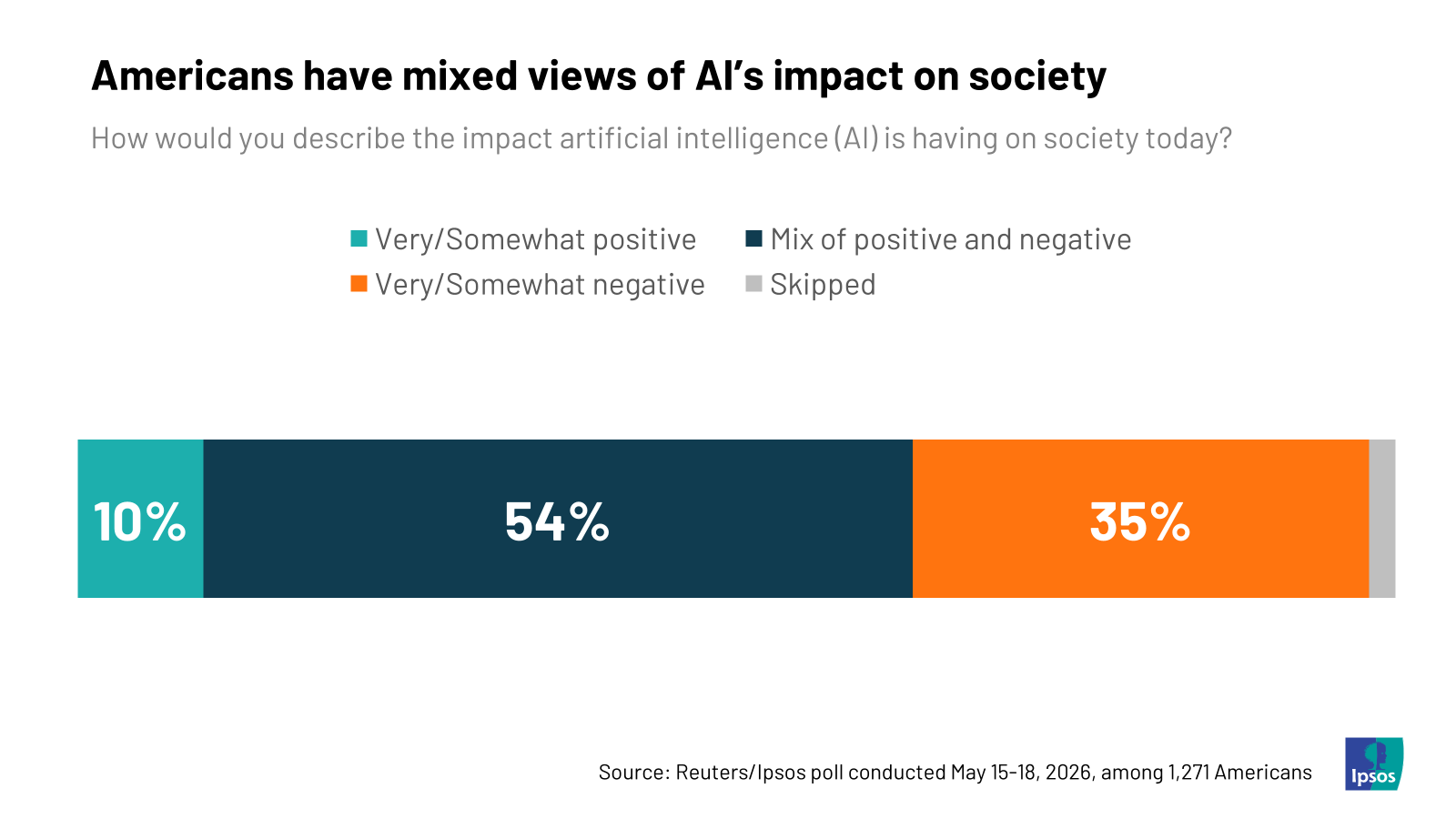
1. It’s complicated. Broadly, a majority of Americans feel AI's impact on society today is mixed, but the country tilts negative (35% negative vs. 10% positive). The American public recognizes AI's upsides exist alongside the downsides – but leans toward the negatives.
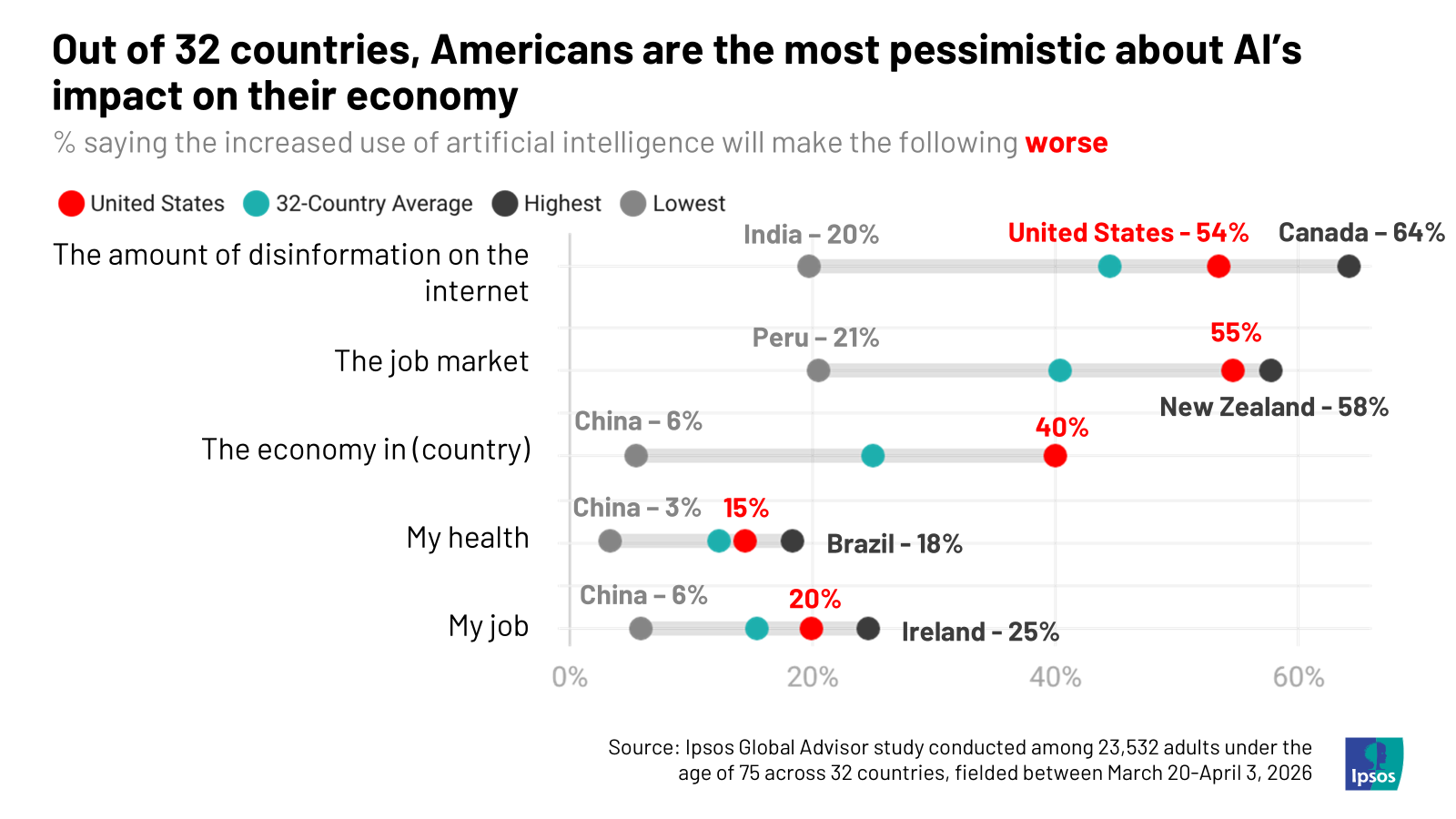
2. Near the top of the list. Majorities of Americans have pessimistic views toward the impact of AI on internet disinformation and the job market, outpacing most of the 32 countries surveyed in the Ipsos AI Monitor 2026. Americans were also the most likely to feel AI will make their country’s economy worse. Not every country is pessimistic about AI. Americans clearly are.
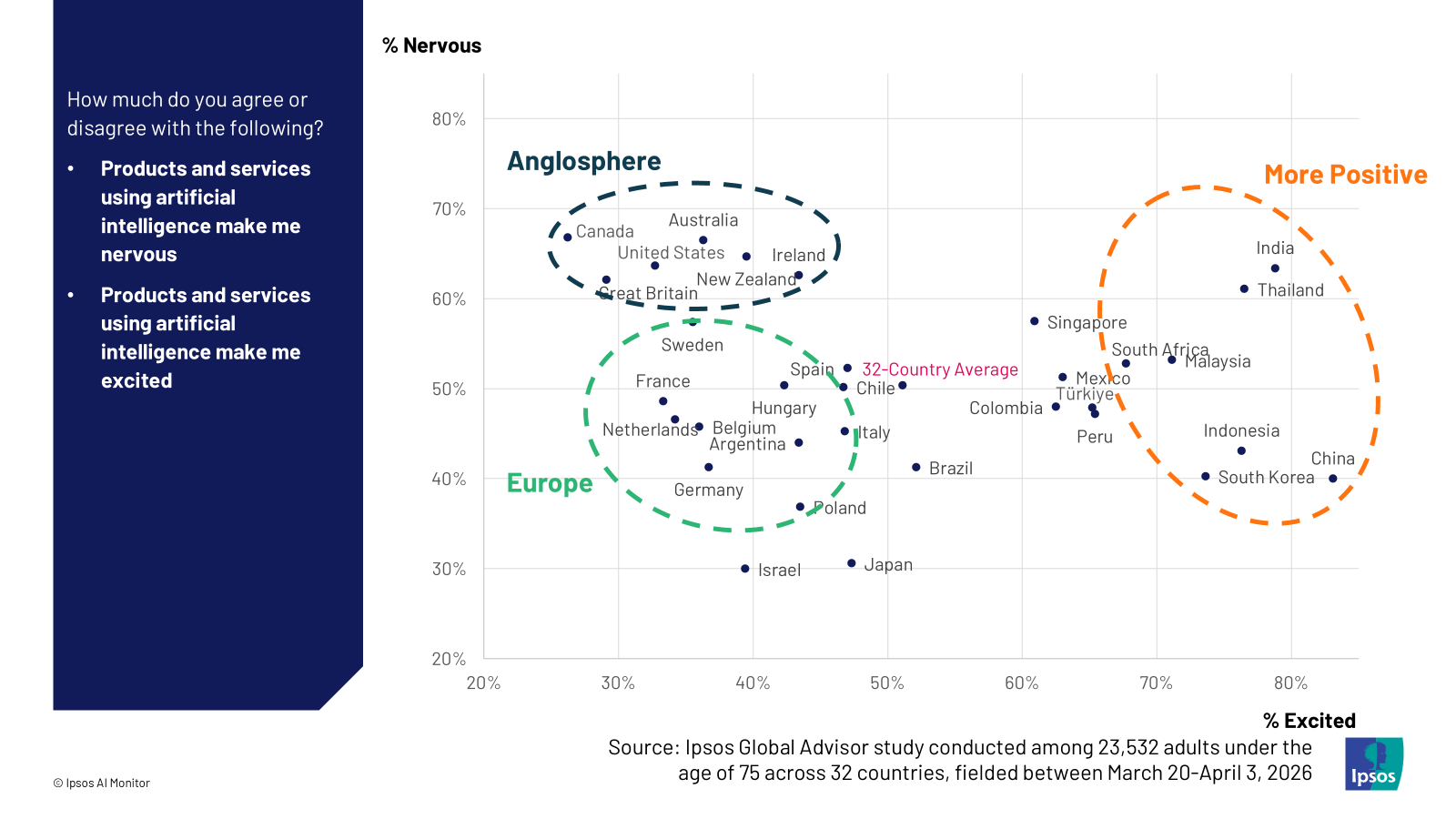
3. The Anglosphere. The pessimism isn’t uniquely American. Consistent with international Ipsos polling from 2025, the U.S. sits alongside other countries in the Anglosphere – such as Canada, Australia, and Great Britain – in being more nervous and less excited about the technology.
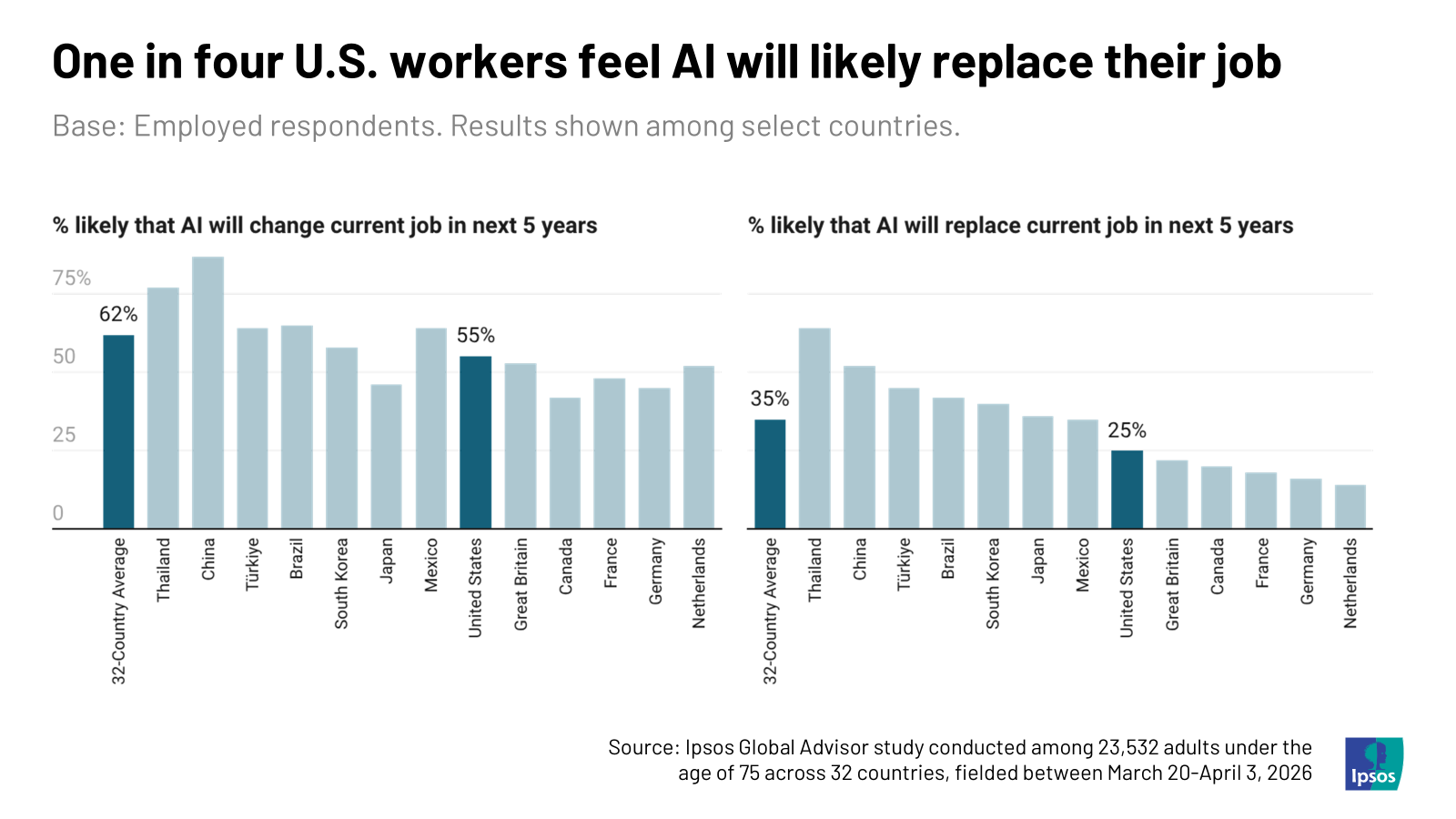
4. Views among workers. In line with global workers, a majority of the American workforce expects AI to change how they do their jobs within the next five years. In addition, half (49%) say AI has saved them time at work, compared to 62% on average across the 32 countries. But despite many Americans’ expectation that AI will negatively impact the job market, American workers are less likely than the global population to expect AI to replace them personally.
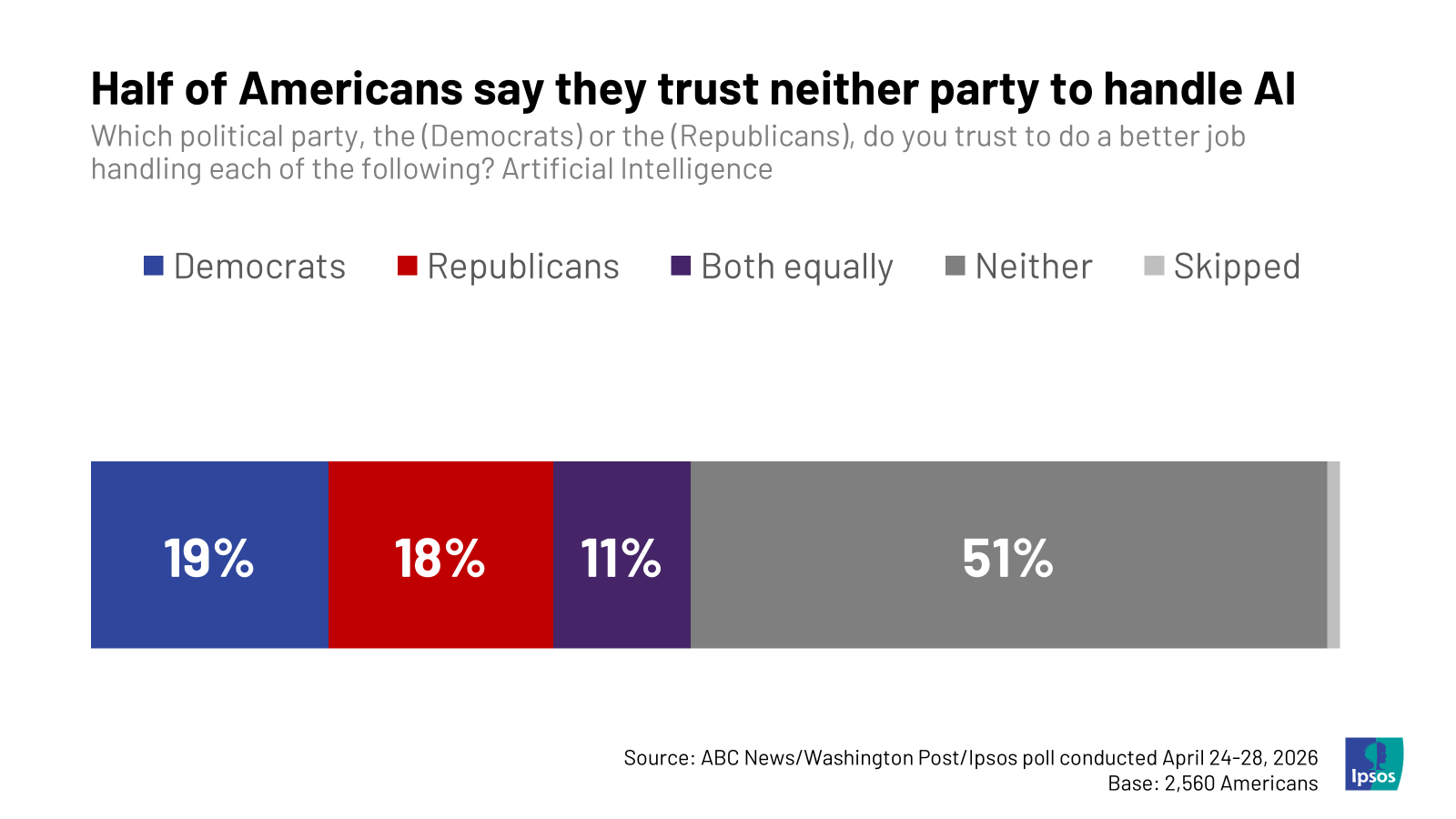
5. On AI, neither party is satisfying Americans. When it comes to domestic politics, neither Democrats nor Republicans have a significant advantage on AI. This will be a trend to watch. Will Democrats or Republicans be the first to win the country’s trust?
Americans aren’t inherently anti-technology. Americans, along with much of the global population, largely acknowledge that they “cannot imagine life without technology.”
So why are Americans so negative about AI?
Put simply, AI is built on weak social pillars. Despite growing adoption, many feel that AI poses a risk not only to their jobs, but to humanity as a whole. Amid a backdrop of widespread systemic distrust, the technology feeds into Americans’ belief that the economy is “rigged for the rich and powerful.”
Until Americans feel the upsides of AI clearly outweigh the downsides, views of AI will likely remain negative. If AI is here to stay, so too is the backlash.