How Americans feel about corruption
Nobody likes political corruption.
A clear, bipartisan majority of Democrats, Republicans, and independents alike all feel upset by examples of political corruption.
However, Americans disagree on some of the details.
Below are five charts on how Americans feel about political corruption.
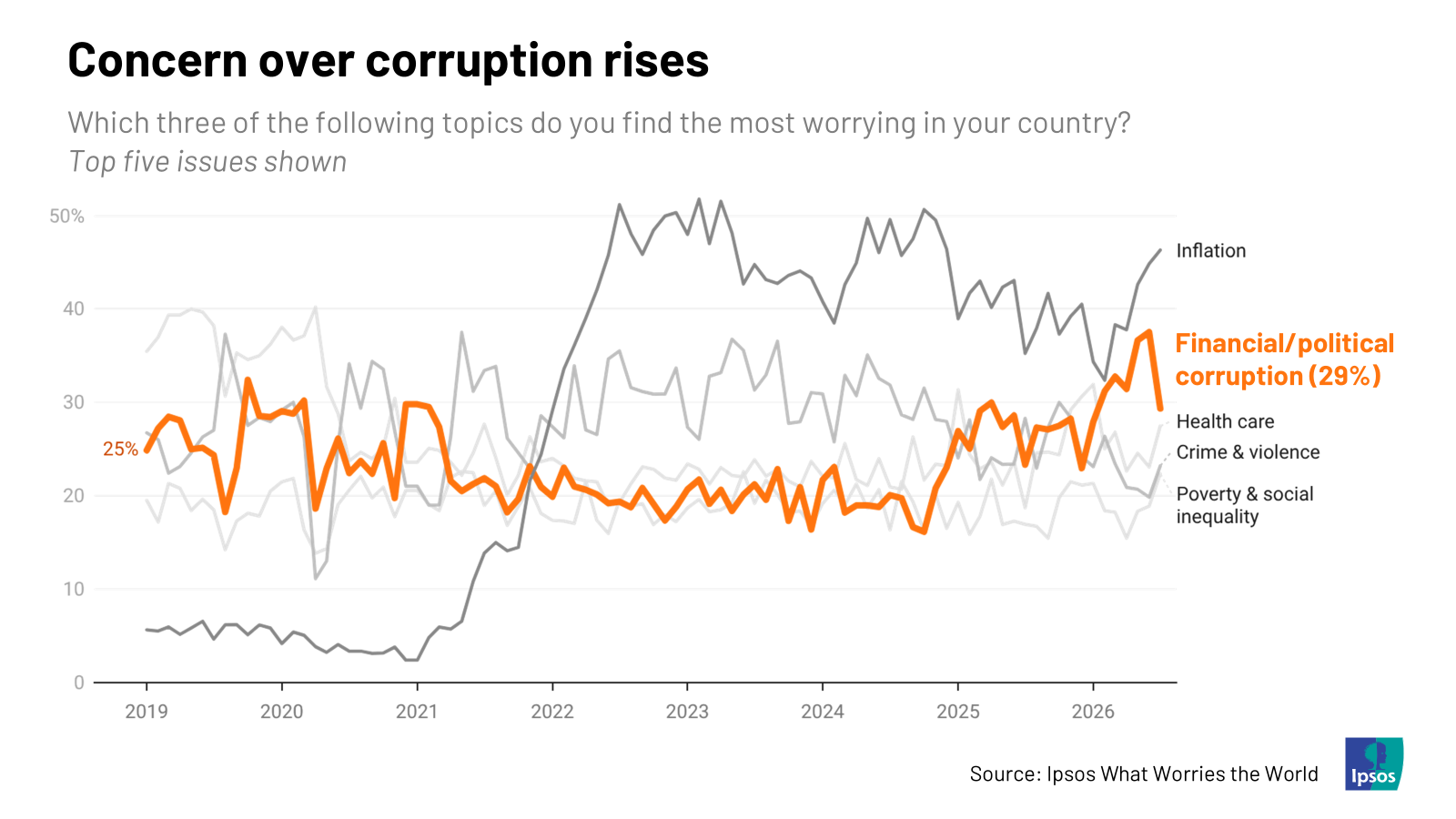
1. Uptick in concern. Over the past several months, Americans’ concern about political corruption has increased, now ranking second behind inflation. This rising concern over corruption makes it poised to play a larger role in the political discourse in the midterms and beyond.
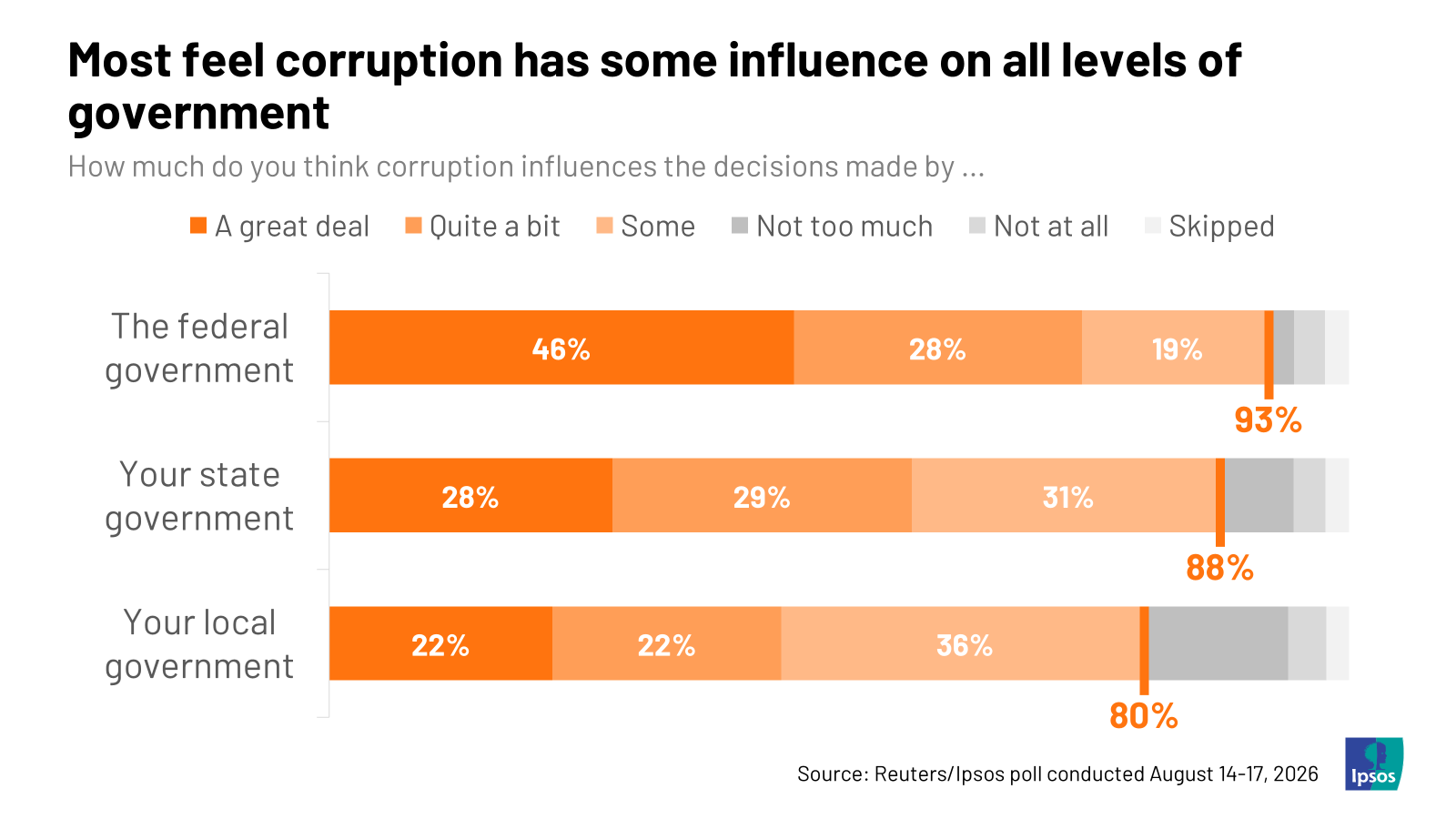
2. Americans feel corruption is pervasive. Americans are more likely to feel corruption plays a greater role in the federal government than in their state or local government. This is unsurprising: Americans generally have greater trust in their local government than the federal government. However, feelings of corruption are hardly exclusive to D.C. Large majorities feel that corruption plays at least some role in all levels of government decision-making.
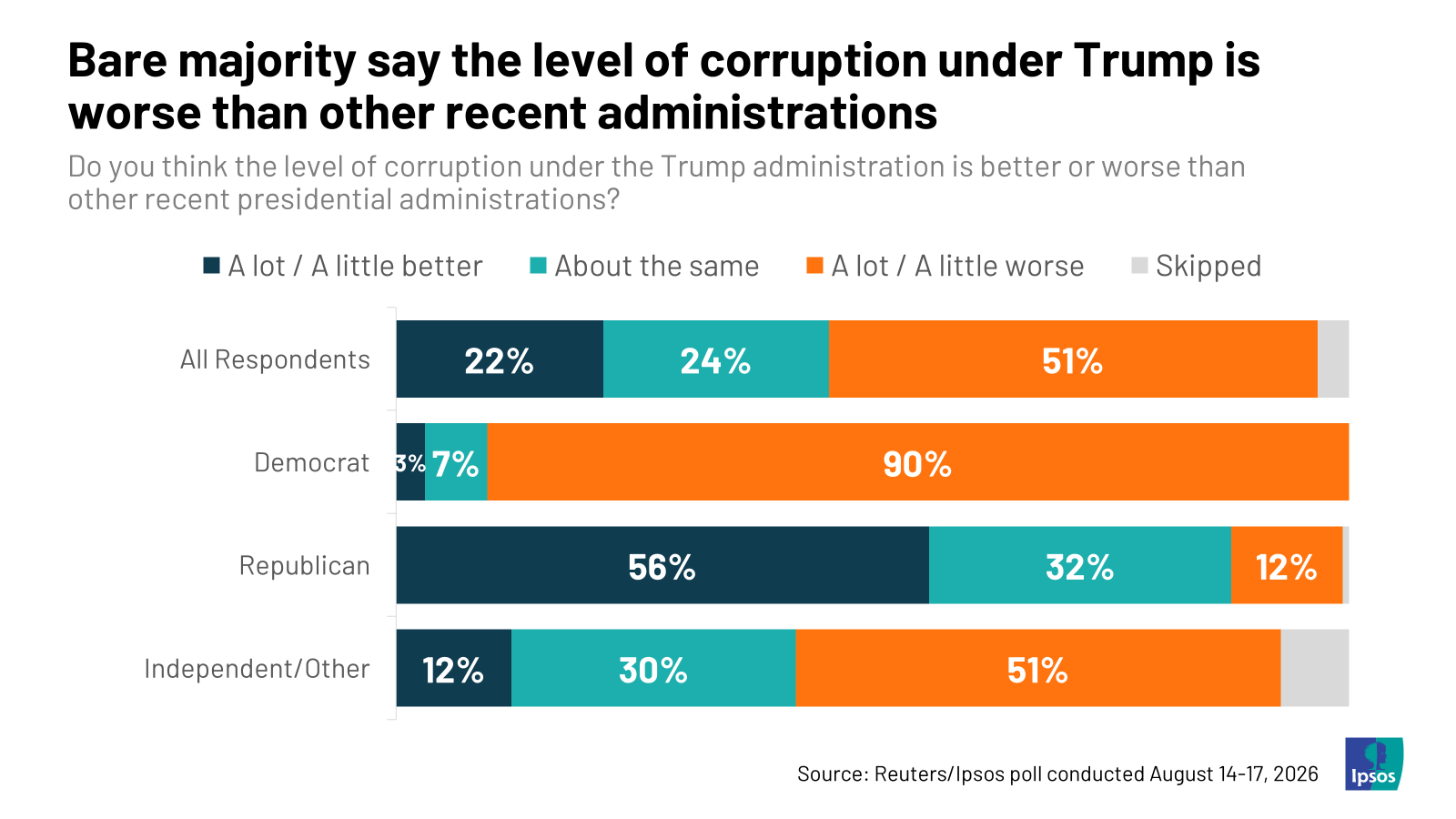
3. Is corruption better or worse under Trump? A bare majority say corruption has gotten worse, but Americans are still split across familiar partisan lines. Few Republicans feel corruption has gotten worse under Trump, while Democrats largely feel corruption has gotten worse under Trump.
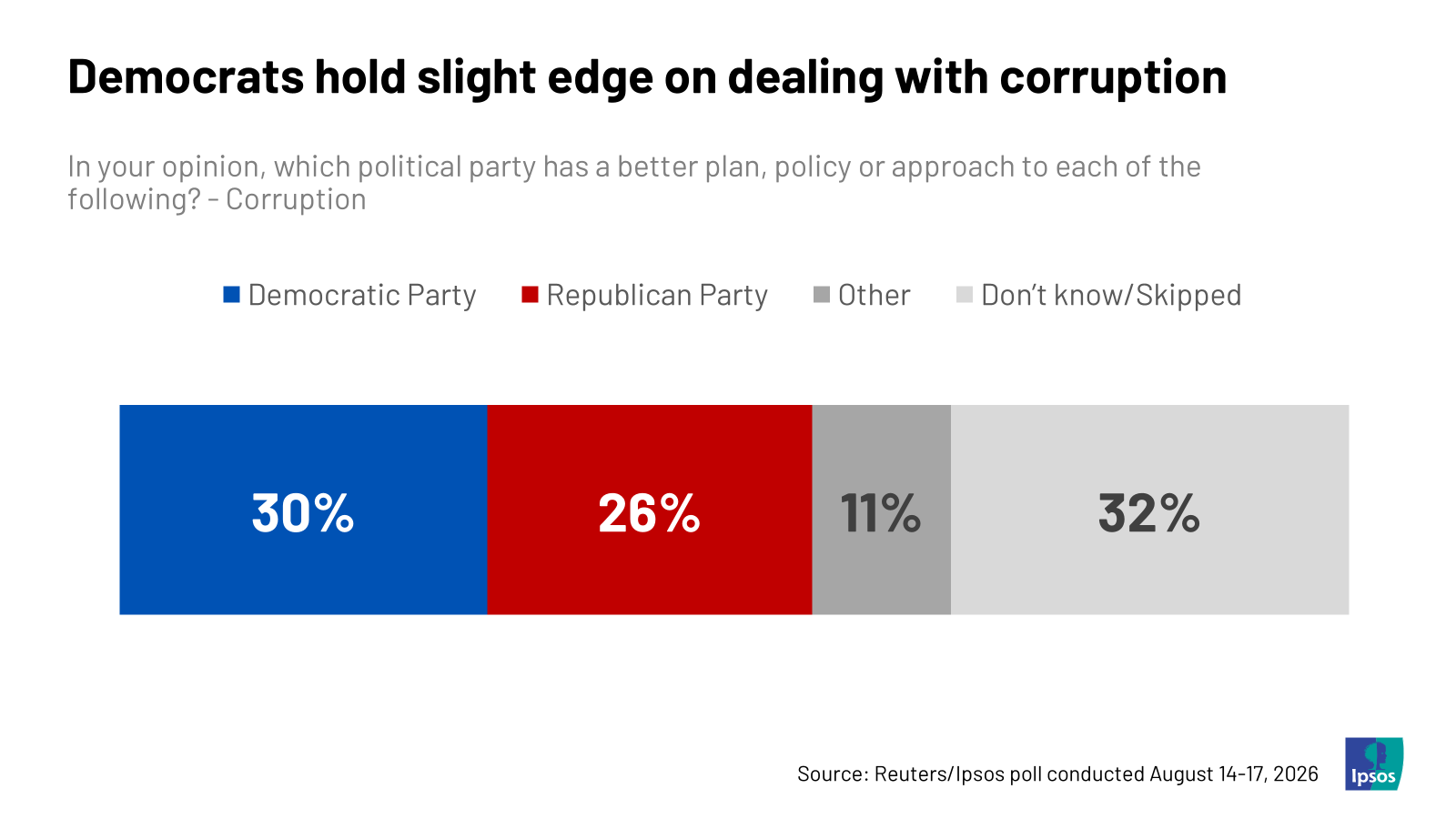
4. Divided views on who's best suited to address corruption. When asked which political party is more corrupt, Americans are slightly more likely to see the Republican Party as more corrupt than the Democratic Party (49% vs. 41%). However, there's no clear agreement on which party is better suited to fix the problem.
5. Americans don’t think corruption needs to be part of politics. Few feel corruption is part of how politics gets done. Far more feel it can be eliminated with strong regulation and enforcement.
While there are significant gaps over who the biggest offenders are or which political party is better suited to handle corruption, the anger corruption evokes is bipartisan.
At the same time, neither the Democratic nor Republican Party, both of whom are increasingly unpopular, have a clear advantage when it comes to addressing corruption. This leaves the lane open for anti-corruption-minded outsiders. Watch this space.