The midterms are over. What’s next?
The 2026 midterm elections have (for the most part) come to a close.
In the coming months, attention will shift to the inauguration of the newly Democratic-controlled Congress. Shortly after, the 2028 presidential race will begin to kick into gear.
Below are five charts on what Americans expect from the next Congress and an early look at the trends and names to watch in the 2028 presidential race.
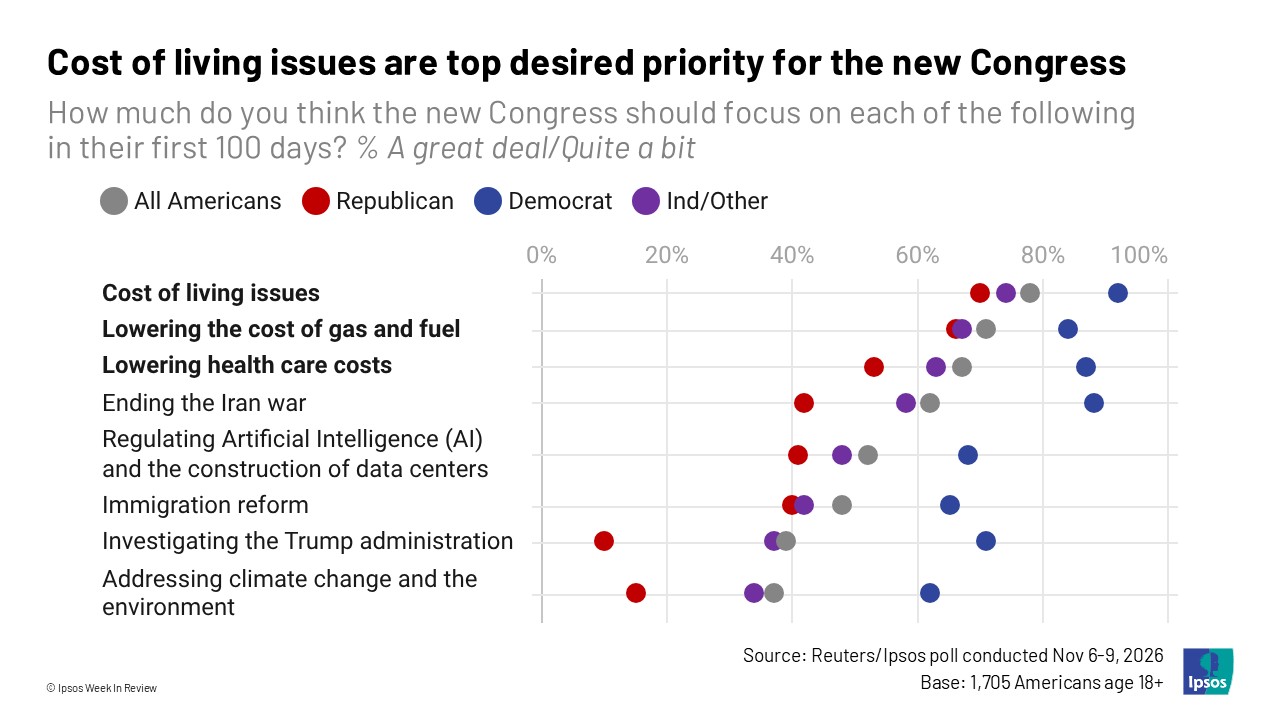
1. For the next Congress, the top priority is clear. The cost of living was a clear motivating factor for voters in the 2026 midterms. Across partisan lines, it remains the top issue that Americans want the next Congress to address, more so than issues like AI regulation, immigration reform, or investigating the Trump administration.
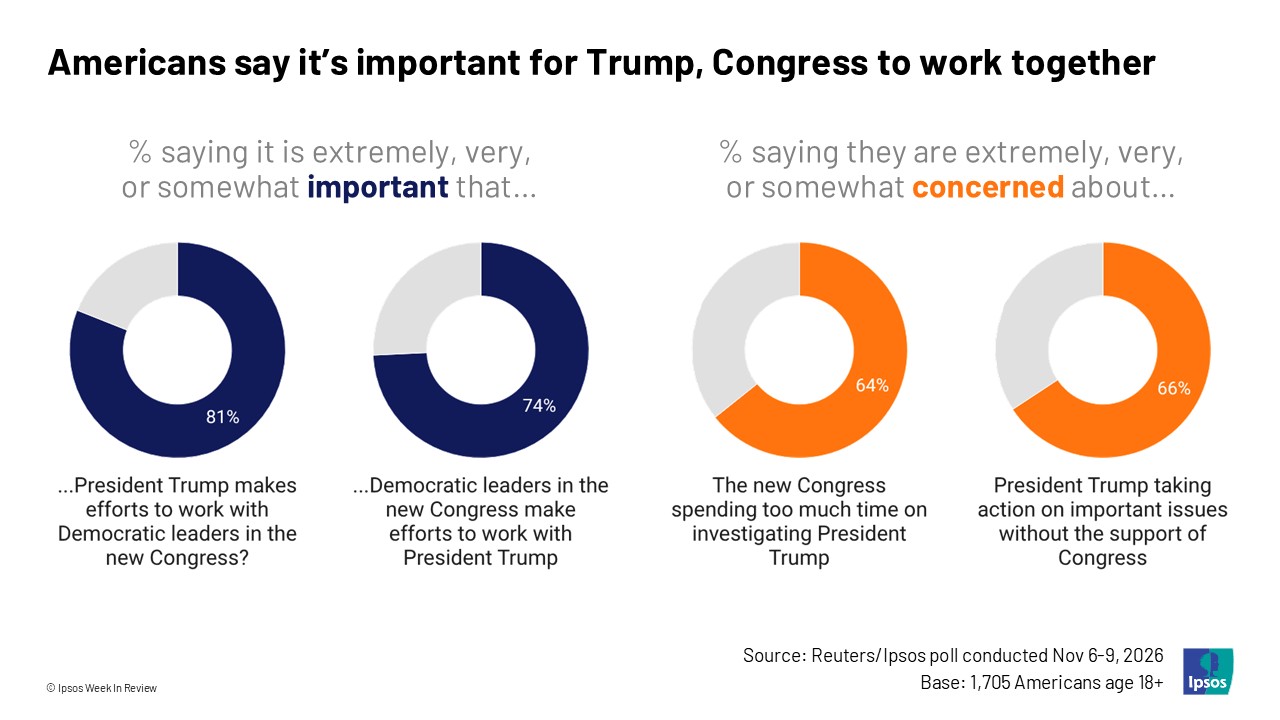
2. Hopes and fears for the next Congress. Majorities of Americans want Trump and Democratic leaders to work together – but are concerned Congress might get caught up in investigating Trump or that Trump will take action without the support of Congress. Trump will govern with a Democratic Congress for the first time in his White House tenure, meaning we may see a new power dynamic between the two branches of government. Watch this space.
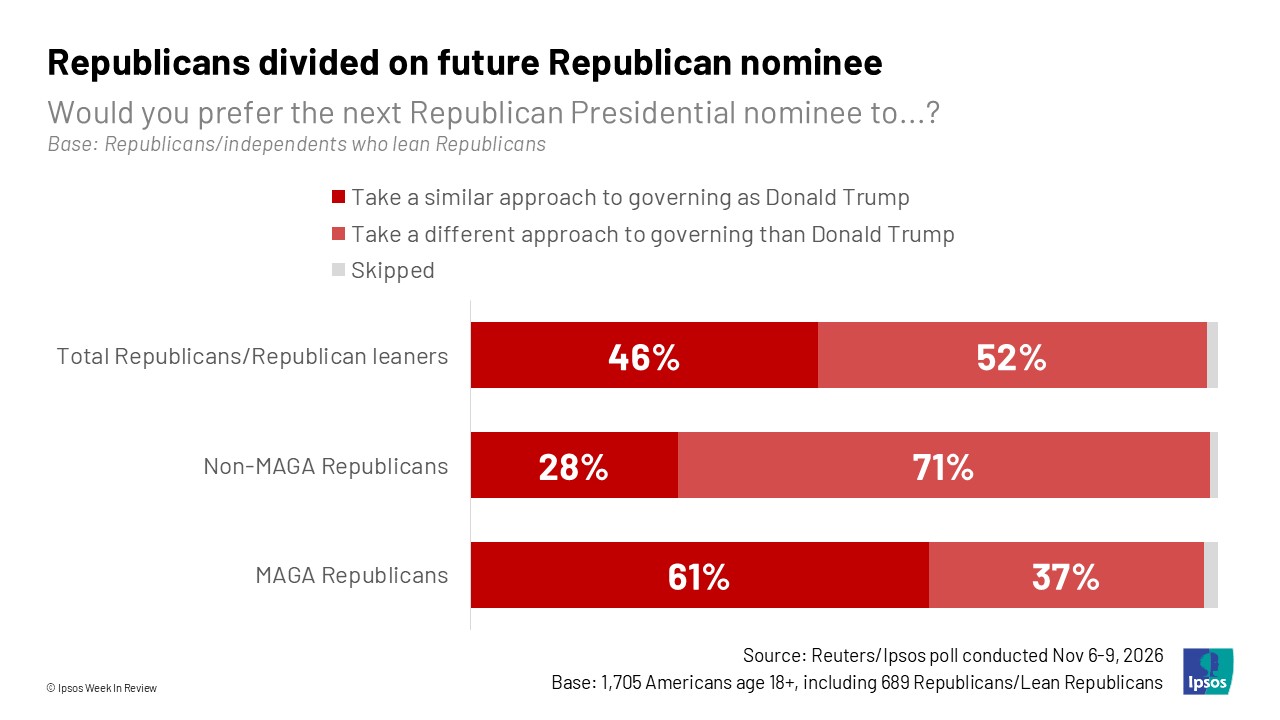
3. A crucial question to answer for Republicans. How should the next Republican presidential candidate approach governing? Republicans right now are divided between following in the footsteps of Trump or taking a new direction. MAGA Republicans, unsurprisingly, are more likely to prefer the former. Trump’s successor would likely have to balance the desires of both factions.
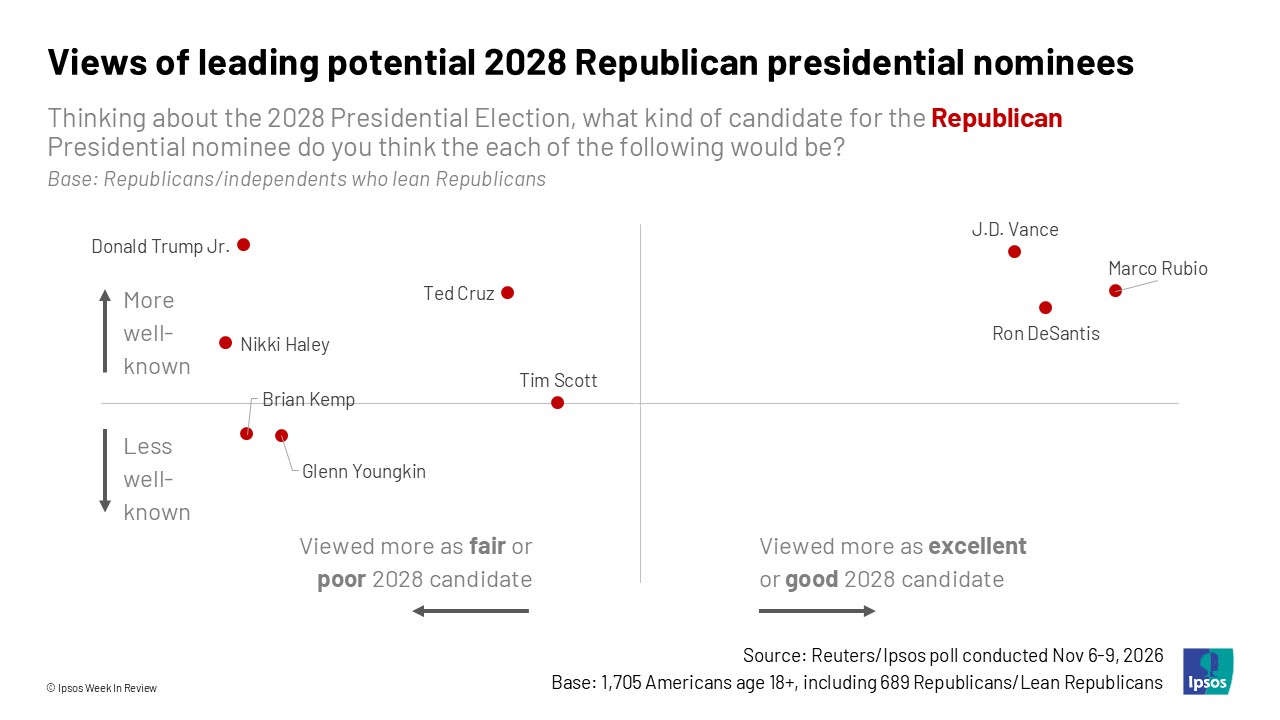
4. Republican 2028 field has clear frontrunners. On the Republican side, frontrunners such as JD Vance, Marco Rubio, and Ron DeSantis are well known and thought of as good candidates among Republicans. That’s not to say an outsider couldn’t emerge. But they would face an uphill battle to get there.
5. Democratic 2028 field is open. Among the Democratic base, no potential presidential candidate is both widely well-known and widely thought of as a great candidate. Figures like Kamala Harris, Gavin Newsom, and Alexandria Ocasio-Cortez have widespread name recognition among Democrats but are not widely seen as strong candidates. Conversely, figures like Pete Buttigieg, Jon Ossoff, and Mark Kelly are not as well-known, but are seen as strong candidates among those that do know them. Can someone rise to the occasion? Or will a new figure emerge from the mist?
Based on what we know about presidential approval and the main issue, if the 2028 election were held today, the political environment would likely be unfavorable for a Republican candidate. But if the past two years prove anything, it’s that two years is more than enough time for the political environment to turn upside down.
Critical questions to watch going forward: Over the next two years, who gets blamed if the cost of living doesn’t improve? Or, who gets credit if the cost of living improves? Will the war in Iran end? If so, how quickly can Republicans recover if gas prices go down? Economic issues are the country’s top concern right now. But will another issue – perhaps AI – take over as the defining issue of 2028?