Cliff’s Take: American Alienation

Close to half of all Americans have received at least one dose of the vaccine by now. We are getting closer to something resembling our old ways.
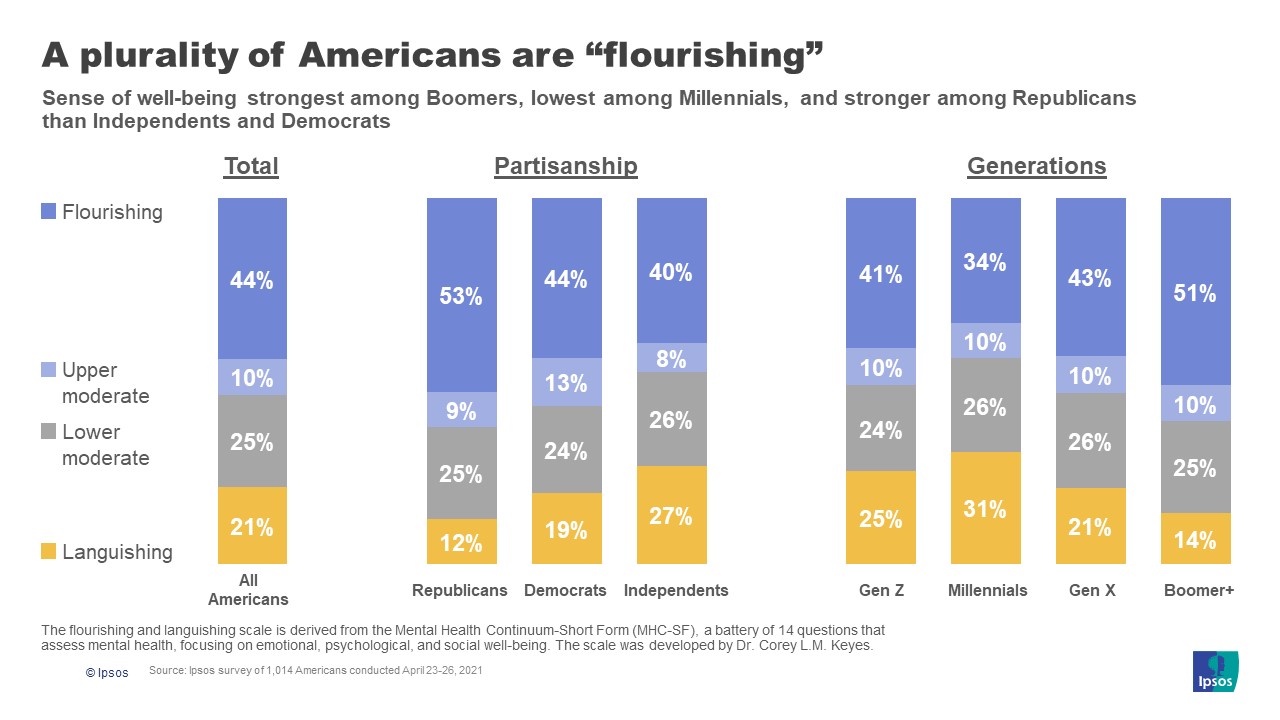
Consumer confidence is still pretty solid—holding right around late March 2020, pre-lockdown levels. A plurality of Americans are “flourishing” emotionally. And Biden's job approval numbers are holding steady and strong. The question, of course, is how long this will last?
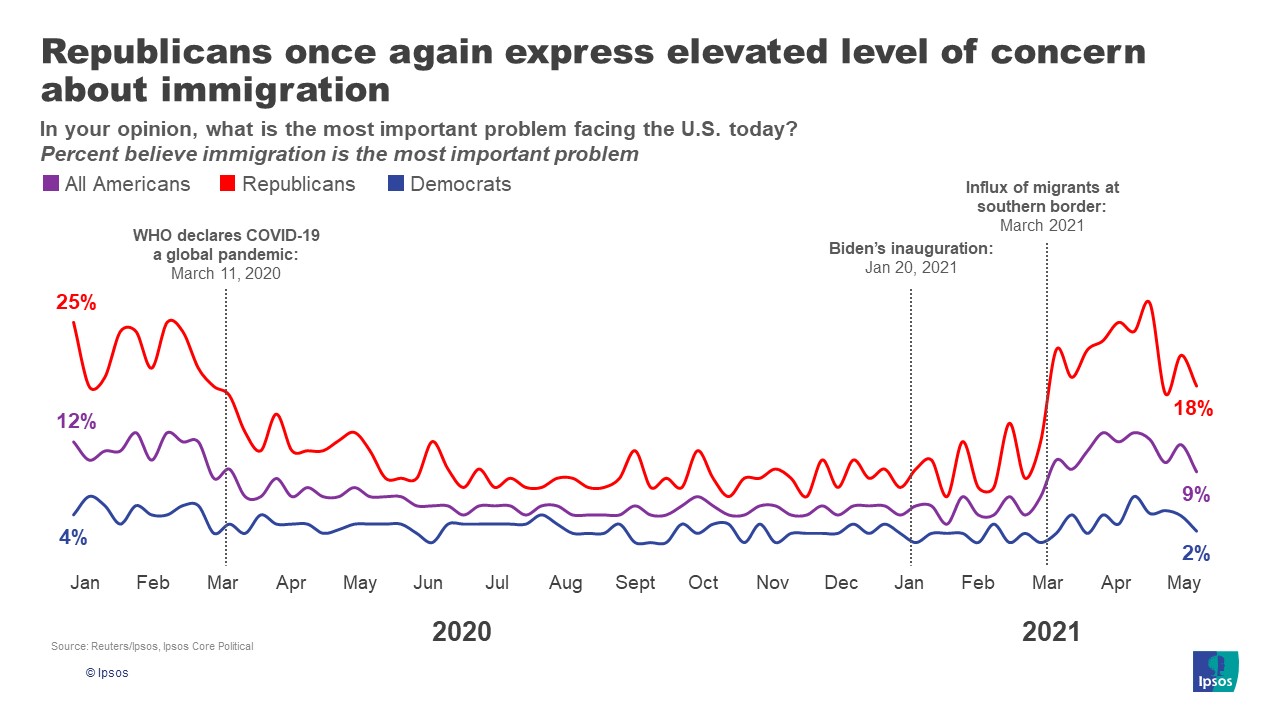
As the old issues fade away, “once and future” problems like immigration and social inequality come back from their long COVID slumber.
How Americans feel about immigration rests on a complex set of interwoven factors, as the data show. The same applies to how they see themselves and their own place in society.
This is because America is in a state of flux, and old norms and identities are being challenged and questioned in a way they haven’t been in our lifetime. Hence, the fractured, polarized nature of society today.
Below, I detail the most relevant polling highlights of the week.
- Immigration agenda. For Republicans, COVID took the focus away from immigration. With COVID passing on and some nudges from the border, immigration is now a top concern again for the GOP. This will be our America into the future.
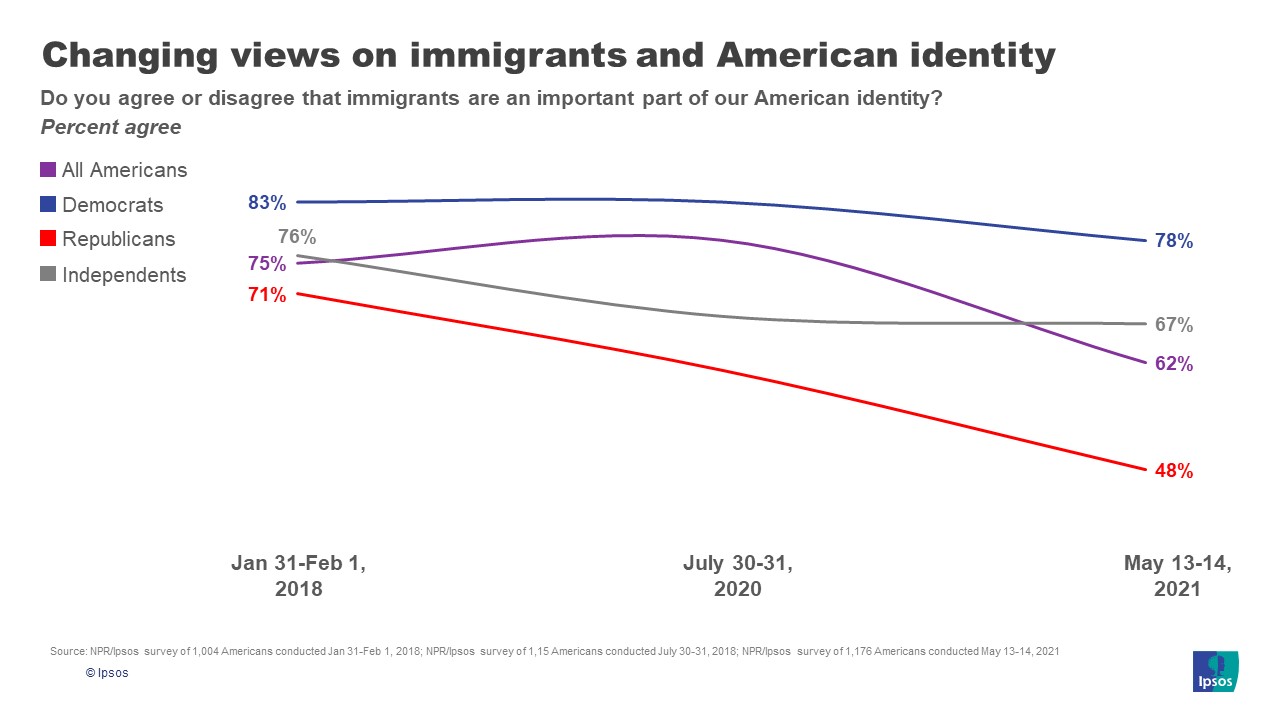
- The immigrant experience. Could it be that the backlash against immigration is a proxy for a larger identity crisis? America is a nation of immigrants; we have been since our inception. While this basic fact is undeniable, our sense of where the average immigrant fits into the national self is mutable and variable. Look at the data. America’s views have shifted considerably in just two years.
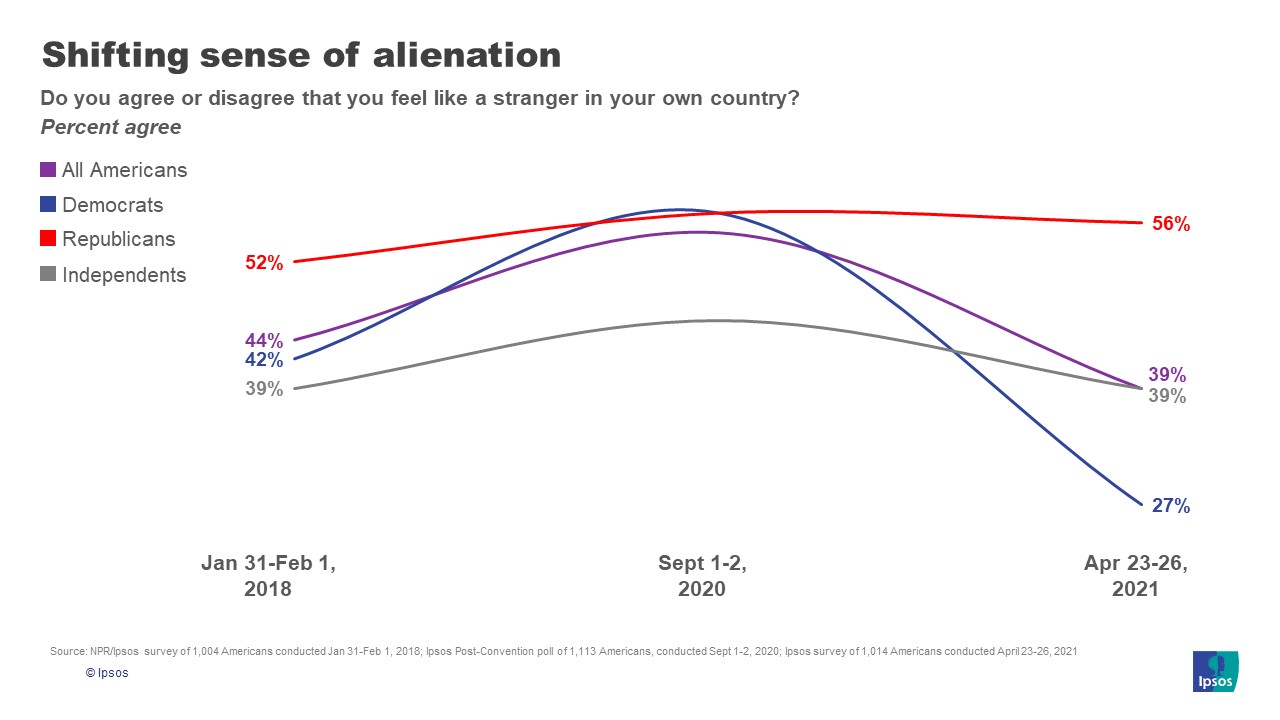
- Partisan stranger. America is changing rapidly, and not everyone feels at home here anymore. The recent Biden victory reassured Democrats that all is well or, that at the very least, things are trending up. But the Republican estrangement from America hints at something more profound and cannot solely be attributed to the result of a singular election. Changing demographics is the likely answer in my view; we are on our way towards becoming a majority minority country. This will be the organizing principle of our politics into the future.
- Flourishing in the doldrums. Enough of the doom and gloom. Let’s not forget that with our COVID reemergence, we are also going through an emotional renaissance. All our indicators suggest that even the most COVID-anxious among us are beginning to feel more secure. However, like everything in America, our emotional well-being is not equally distributed. Republicans and older Americans are flourishing emotionally; Democrats and Millennials are less so.
- Nostalgic blues. Again, America is changing—attitudinally, behaviorally, and demographically. This is an empirical fact. Change is stressful; change is disconcerting. Many feel left behind. Look at the data. An absence of community can be profoundly debilitating. Many of your fellow Americans feel this today. Let’s remember that this shapes our politics.
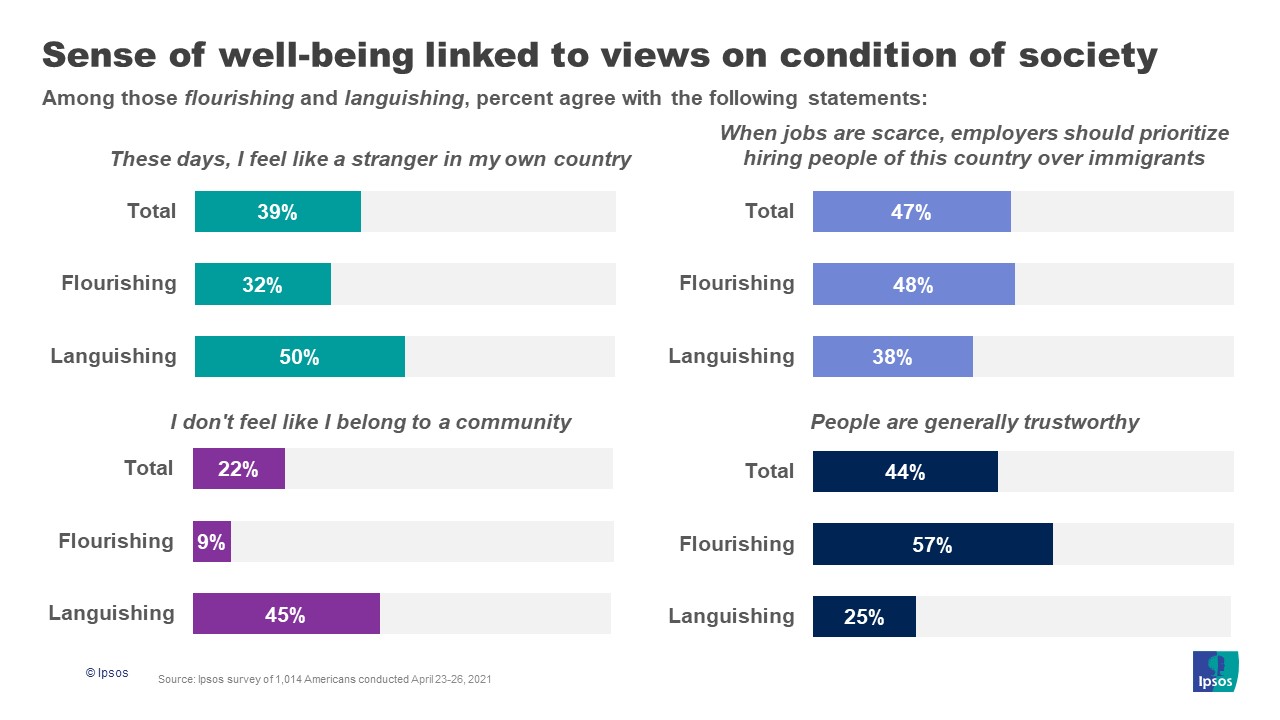
Well, this week we saw once again that we live in two Americas—one red and the other blue. I feel like a broken record saying this, but it’s true. This week’s data underscore the degree to which immigration cuts to the core of who we are as Americans and to the most profound depths of our insecurities.
For more on America’s fault lines, check out my recent POV, written with colleagues Robert Petrin, Nicolas Boyon, and George Mason University’s Justin Gest.
Again, be safe, and be sane.
For more information, please contact:
Clifford Young
President, U.S.
Public Affairs
+1 202 420-2016
[email protected]
About Ipsos
Ipsos is now the third largest market research company in the world, present in 90 markets and employing more than 18,000 people.
Our research professionals, analysts and scientists have built unique multi-specialist capabilities that provide powerful insights into the actions, opinions and motivations of citizens, consumers, patients, customers or employees. Our 75 business solutions are based on primary data coming from our surveys, social media monitoring, and qualitative or observational techniques.
“Game Changers” — our tagline — summarizes our ambition to help our 5,000 clients to navigate more easily our deeply changing world.
Founded in France in 1975, Ipsos is listed on the Euronext Paris since July 1st, 1999. The company is part of the SBF 120 and the Mid-60 index and is eligible for the Deferred Settlement Service (SRD).
ISIN code FR0000073298, Reuters ISOS.PA, Bloomberg IPS:FP