Inflation nation
The Bureau of Labor Statistics released another grim report on inflation this week. While the Consumer Price Index, the mechanism through which the BLS measures inflation, is down slightly it is still higher than it has been in decades. For this past month, it is nearly double what it was last year, when many still thought this was all transitory.
Many experts expect inflation to be with us into the near-term. Given that, this week we take a look at inflation; how people are dealing with the rising costs of goods, who they believe is driving this, what their expectations for the future are, and, as always, the political implications of it all.
The inflation update in five charts below.
- The long haul. How do consumers think about the future of inflation? Most around the world believe inflation will rise in the next year. Sizeable minorities feel it will increase a lot. The U.S. ranks lower on this global list. Still, three in four Americans expect inflation to rise over the next 12 months. Inflation has been baked into the consumer calculus.

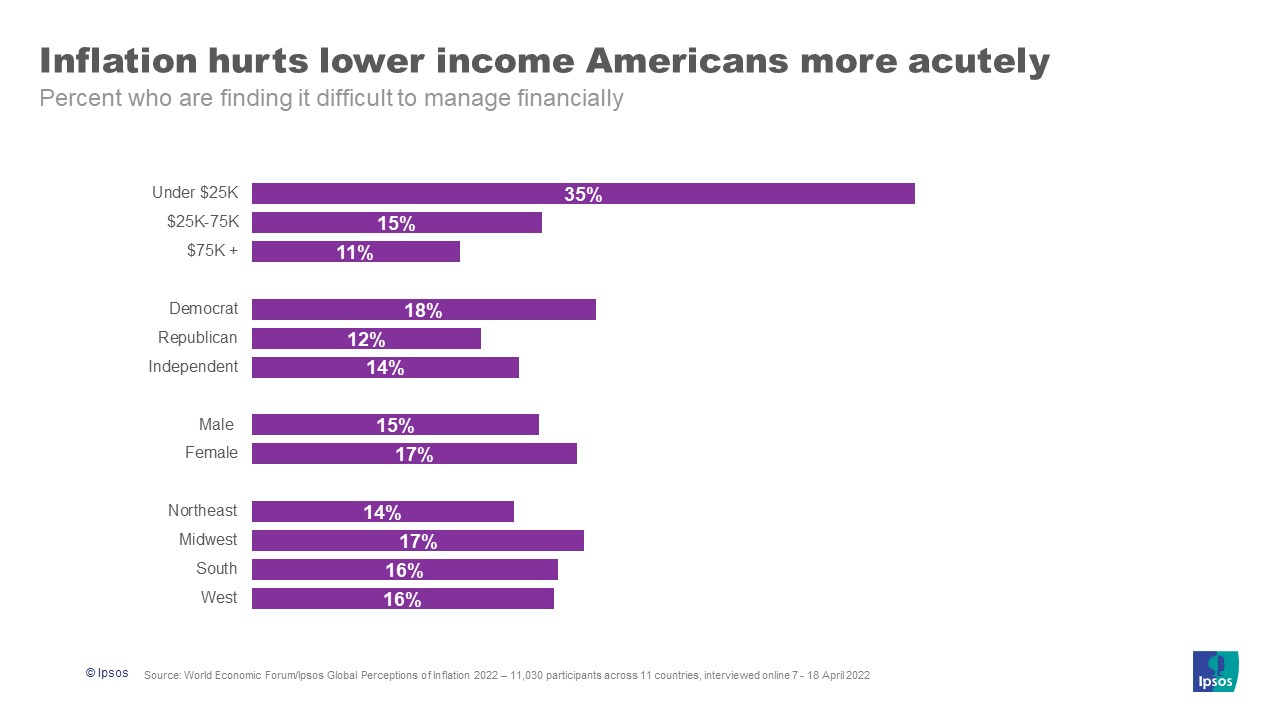
- All things are not equal. Inflation’s impact is greater for least affluent consumers since essentials make up a larger portion of their budget compared to the more affluent. Stretching that same dollar becomes more of a challenge. Look at the numbers. People making under $25K are finding it difficult to manage financially, more so than any other demographic. This is the inequality of inflation in clear relief.
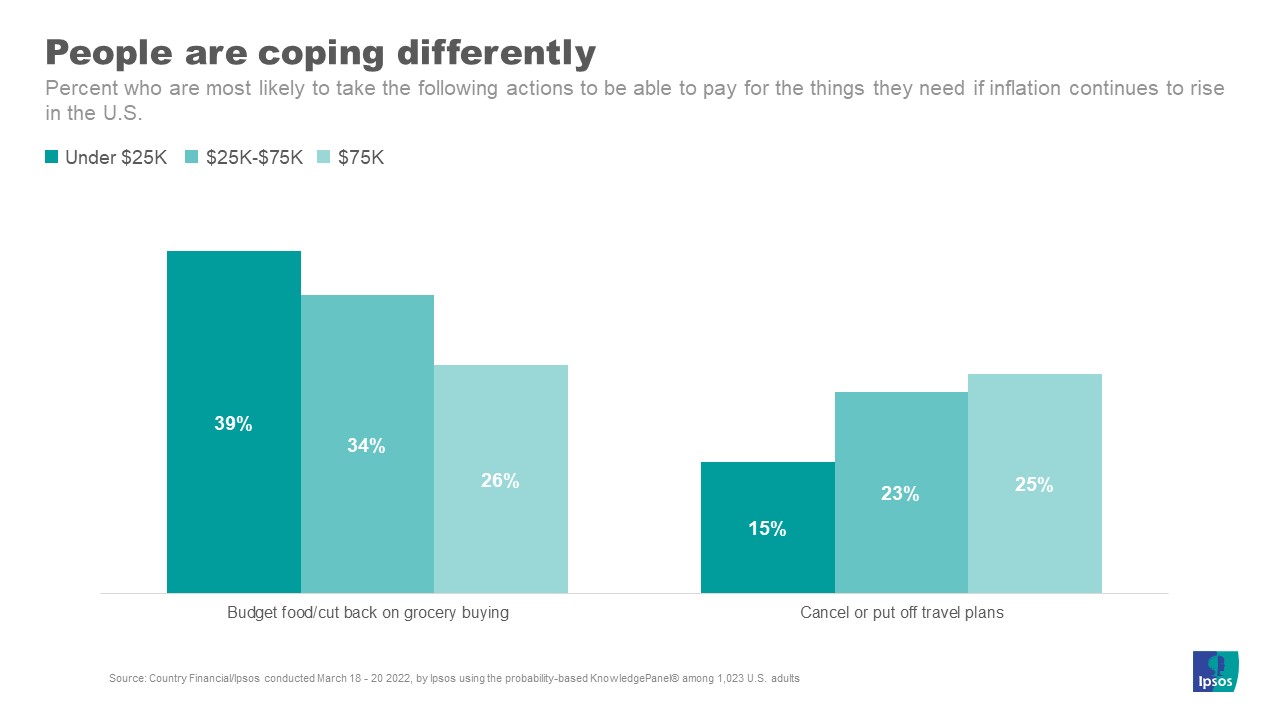
- Differential Adaptation. Because income plays such an important role in people’s experience with inflation, consumers of differing income levels adapt and cope with higher prices through different strategies. For lower-income Americans, it’s all about budgeting and cutting on the basics. For higher-income Americans, scaling back discretionary spending is the focus. Differing strategies; differing realities.
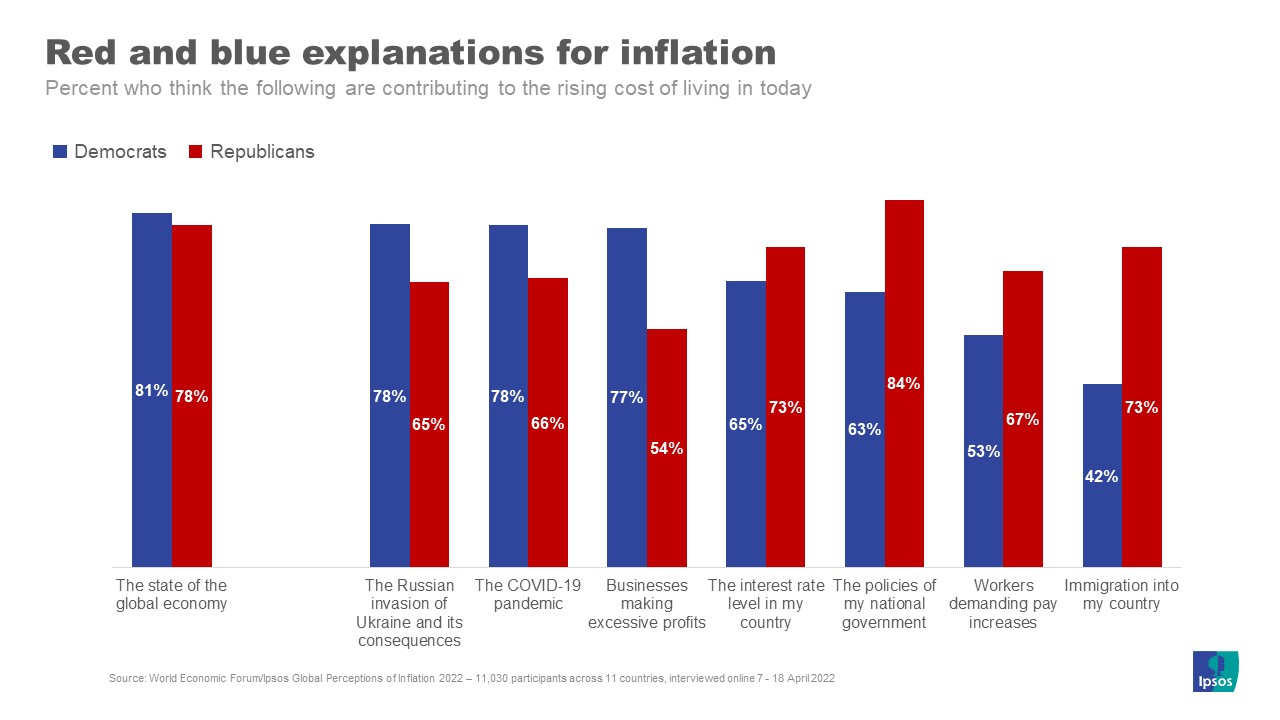
- Inflationary blame game. Despite income driving experience with inflation, partisanship drives the narratives around it. Take a look at the data. Red America feels that national policy (read: Biden) and immigration are to blame for inflation. Blue America thinks the war in Ukraine and the pandemic are to blame. Same divides, different issues. Partisans can only agree on one thing—the global economy (inflation in practical parlance) is in shambles. Two Americas. One red; the other blue.
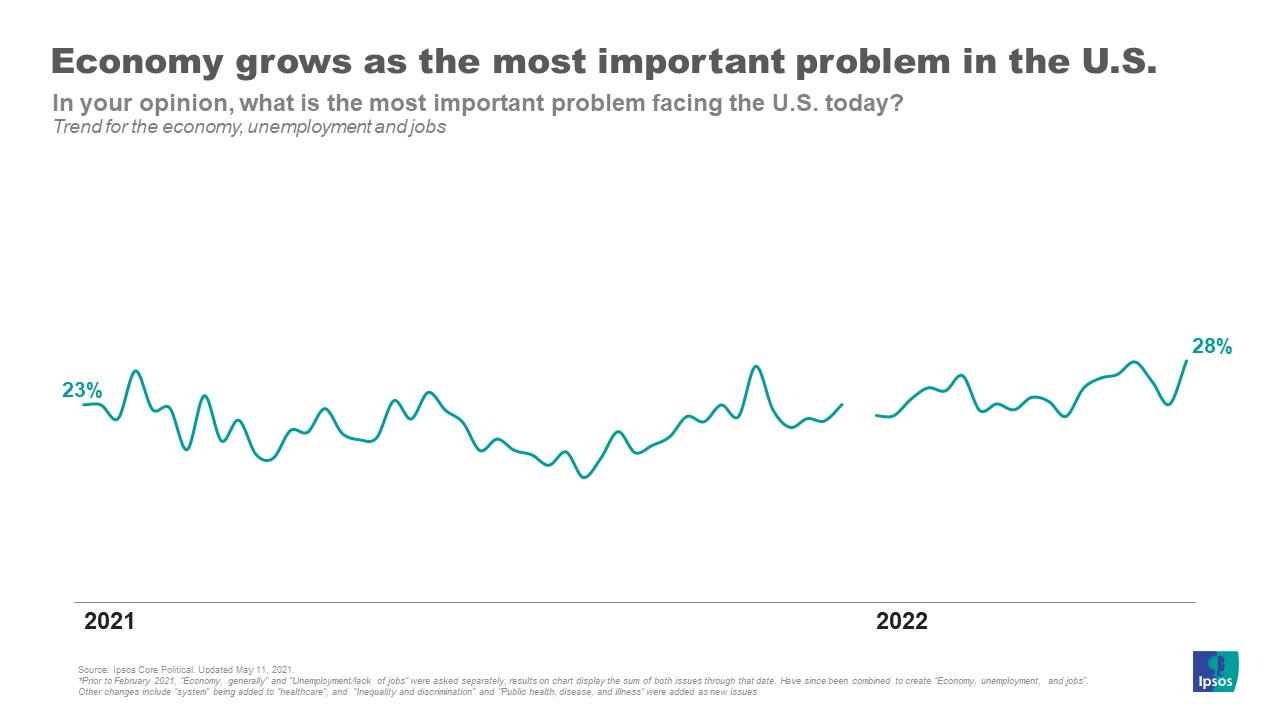
- Biden’s Challenge. With people bracing for inflation to rise and changing their behavior, the Biden administration is looking at a difficult economy for his party to run on heading into the midterms. The economy has grown as the main issue over the past year. Biden is weak on what he needs to be strong. Credible answers? Doubtful.
Consumers and experts believe inflation will be with us for the time being. What does that mean? Tighter budgets are in store for lower-income Americans, while cutting back on good and services that are more nice-to-have than need-to-have will be the coping strategy for higher-income households.
On the political side, expect more jousting over why inflation is here as the parties vie for narrative control heading into the midterms. As the economy grows as an issue, Democrats and President Biden may have a harder time asserting their point.
So the net takeaway: out of the COVID frying pan (for now) and into the inflation fire. And Americans will adapt both economically and politically as a result.