The Inside Track: 2022 Midterm Elections February Highlights
The Inside Track 2022: America the Uncertain webinar series will present in-depth analysis of the latest public opinion data on current trends and recent events influencing the political landscape. Read on below for highlights and key insights from this month’s webinar.
What you need to know:
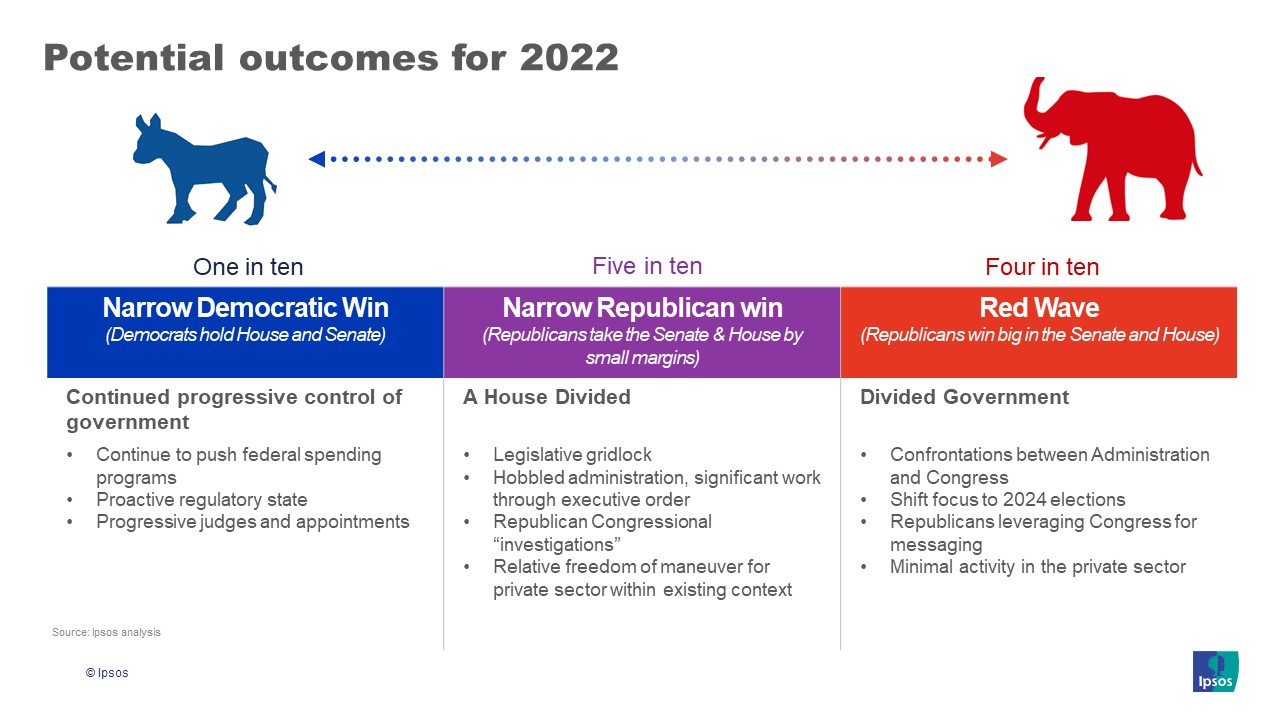
American public opinion trends currently point to Republicans gaining seats in both the Senate and House as the most likely outcome in the 2022 midterms.
- Given the historic precedent and the current context, Democrats have a roughly one in ten chance of retaining majority control of the House and Senate.
This comes as a majority of Americans say they believe that the country is headed on the wrong track and disapprove of President Biden’s job performance.
- Even Democrats are skeptical about the trajectory of the nation despite their party holding the White House, majority control of the House and a tie-breaking vote in the Senate, with just 46% of the belief that it’s on the right track.
A plurality of Americans point to the economy as the most urgent issue facing the nation.
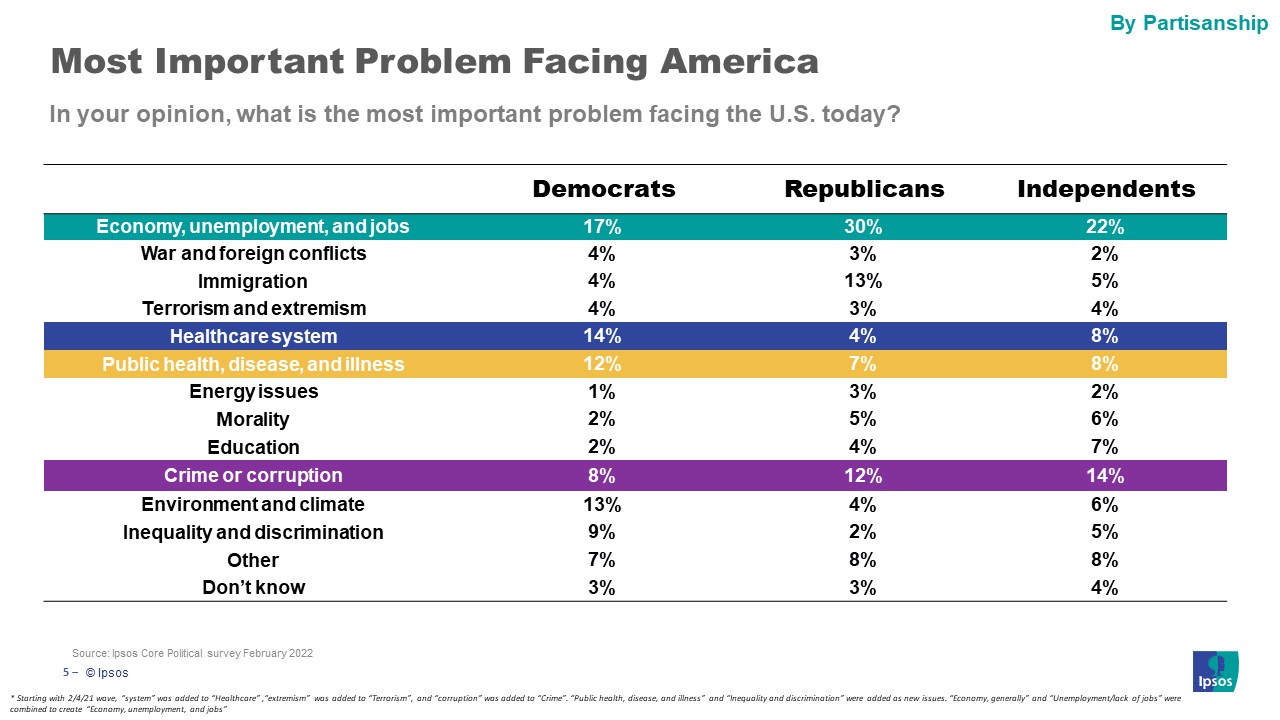
- Partisans emphasize different issues, with Republicans and Independents most focused on the economy and Democrat attention divided among a range of issues including the economy, public health, and the environment.
Americans are increasingly learning to live with COVID. A majority are doubtful that it will be eradicated within the next year.
- This comes as the public indicate lower levels of satisfaction with how President Joe Biden has handled the pandemic, the issue he was once deemed strongest on.
Deep dive:
The economy is the dominant issue of the day
The public is in a general state of malaise, with a majority of the belief that the country is headed off on the wrong track. While Democrats are more positive than Republicans, even their optimism is muted, as less than half say that the country is headed in the right direction.
Against that broader context, views on what the most pressing issue of the day is are somewhat muddled. While a plurality point to the economy as the primary issue, it is not so dominant as it was following the Recession. Meanwhile the pandemic, once the frontrunner, has slid to second place.
Partisan views are determinative of where people stand on the main issues of the day. Republicans are most focused on economic issues, immigration, or crime and corruption. Democrats’ attention is scattered across a range of issues such as the economy, healthcare, public health and the environment.
Consumer confidence is muted
Consumer outlook is currently middling – below pre-pandemic levels of optimism but holding above the worst of the pandemic. Current sentiment is likely a reflection of anxiety about the Delta and Omicron variants, and the looming conflict between Russia and Ukraine.
A closer look at consumer and jobs sentiment reveals that views are shaped by other factors, such as partisan identity and income level. At the start of the pandemic, Americans across the income spectrum were concerned about their job security, but as the pandemic has worn on, views have improved most among more affluent households.
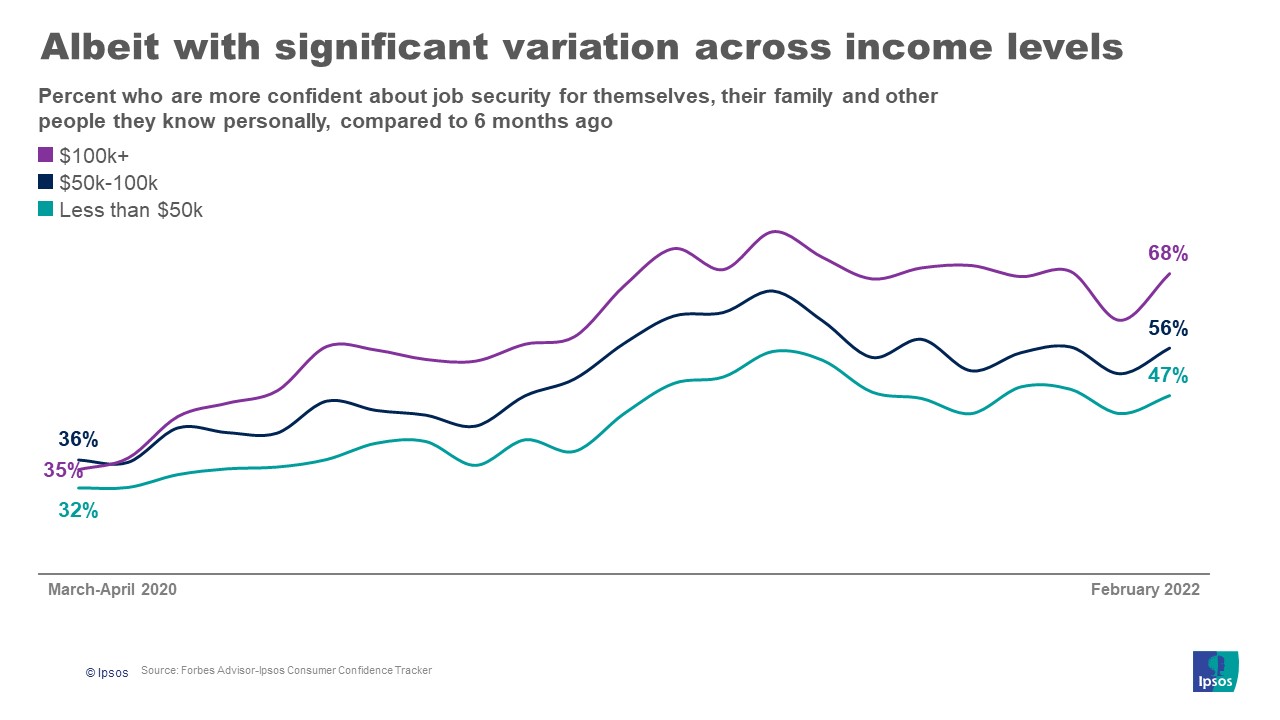
This underlines the inequal effect of the pandemic and its disproportionately negative impact on less affluent groups. It also serves as useful context for understanding the divided issue landscape – less affluent Americans remain more preoccupied with bread-and-butter issues, while the affluent have the bandwidth to worry about more niche issues.
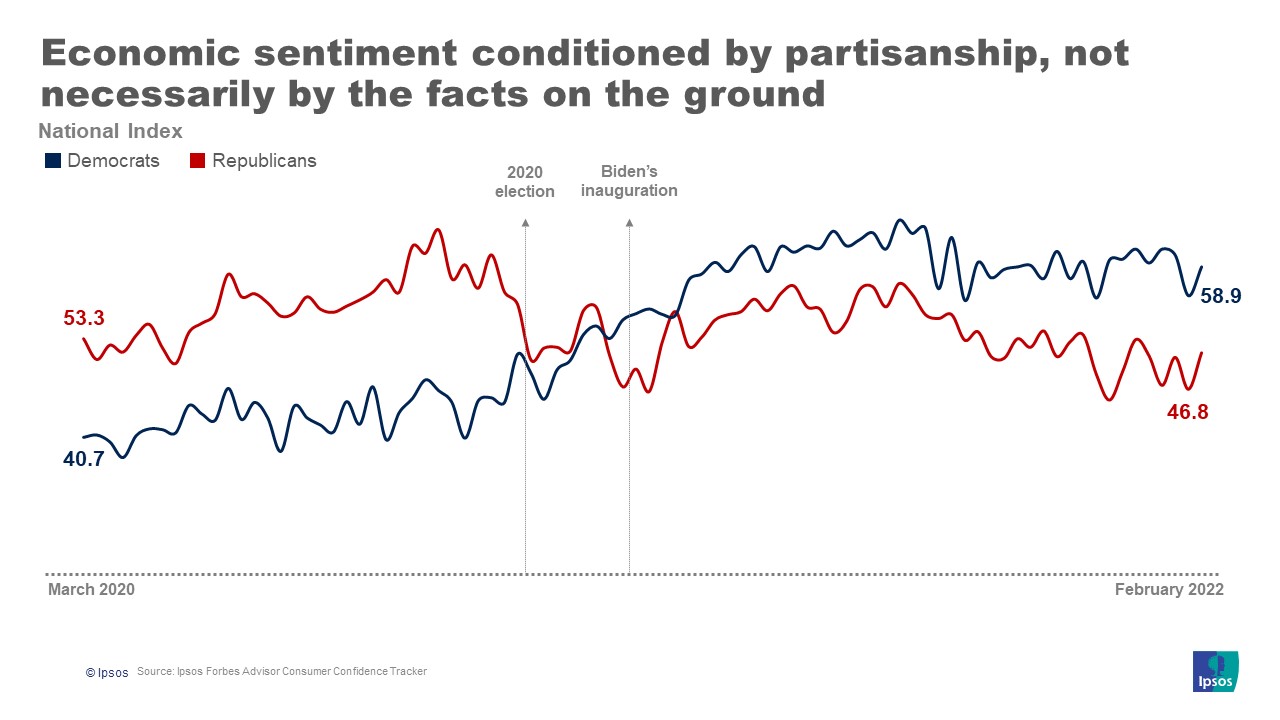
Partisanship is also critical to understanding views of the economy, as Forbes Advisor Ipsos consumer confidence data underline the connection between consumer outlook and partisan identity. Prior to the 2020 election, Republicans were more optimistic about the future of the economy, a trend that reversed once Biden was inaugurated.
This dynamic suggests that to a certain extent, material circumstances aren’t always the only element influencing how people feel about the economy. Instead, perspectives are increasingly clouded by partisan sentiment, suggesting that outlook on the economy might not improve for some groups until their preferred party returns to power.
Americans are learning to live with COVID
Americans remain somewhat cautious about COVID even as case rates decline. However, all signs point to the public growing increasingly accustomed to the pandemic, with a majority of the belief that the pandemic will not be eradicated in the next year.
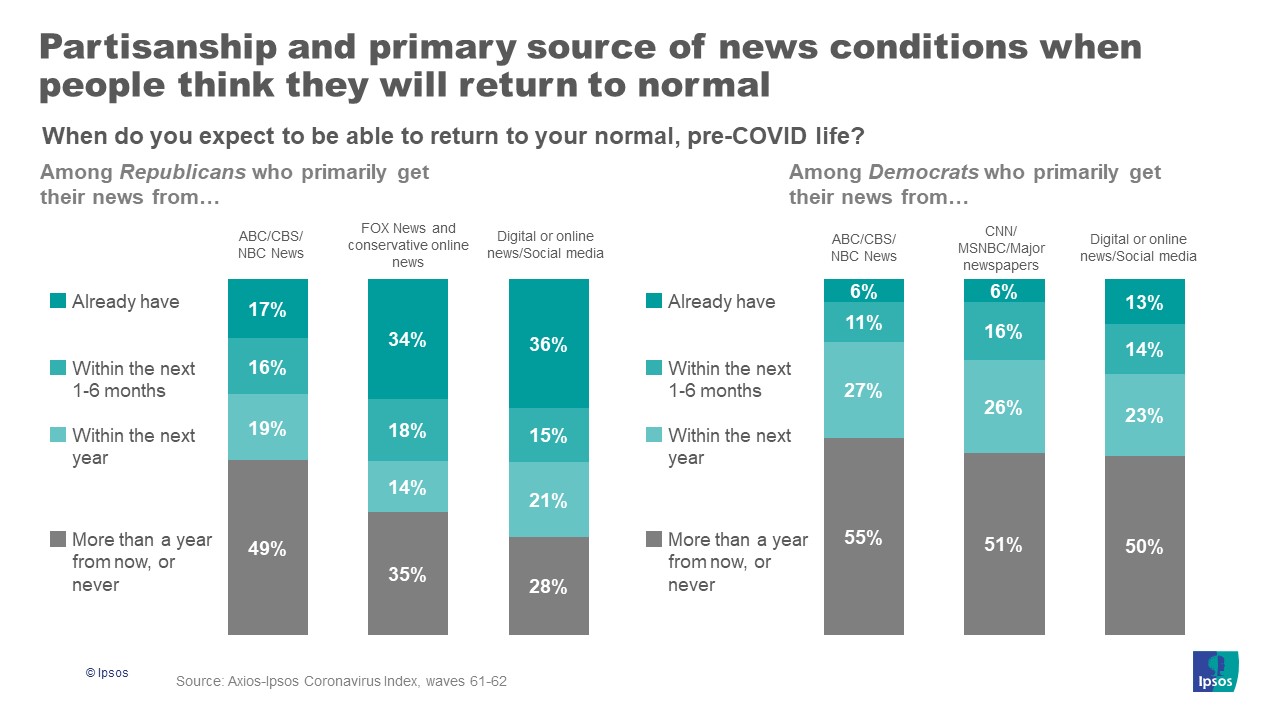
At the same time, Axios-Ipsos Coronavirus Index tracking data underscores the nation’s bifurcated response to the pandemic. While close to half believe that a full return to normal is more than a year away, one in five believe that it is already here. Nor does the public agree on how to handle the COVID pandemic moving forward. Democrats generally prefer to proceed with caution, while Republicans are more open to loosening restrictions altogether.
While partisanship is one of the primary dividing lines in views on COVID, news consumption is another, related factor at play. Republicans who get their news from mainstream news sources, such as ABC, CBS or NBC, show more caution about COVID, particularly as opposed to Republicans who primarily get their news from FOX or conservative online sources. In other words, where people consume their news impacts how they see the world.
Misinformation and free speech are critical issues
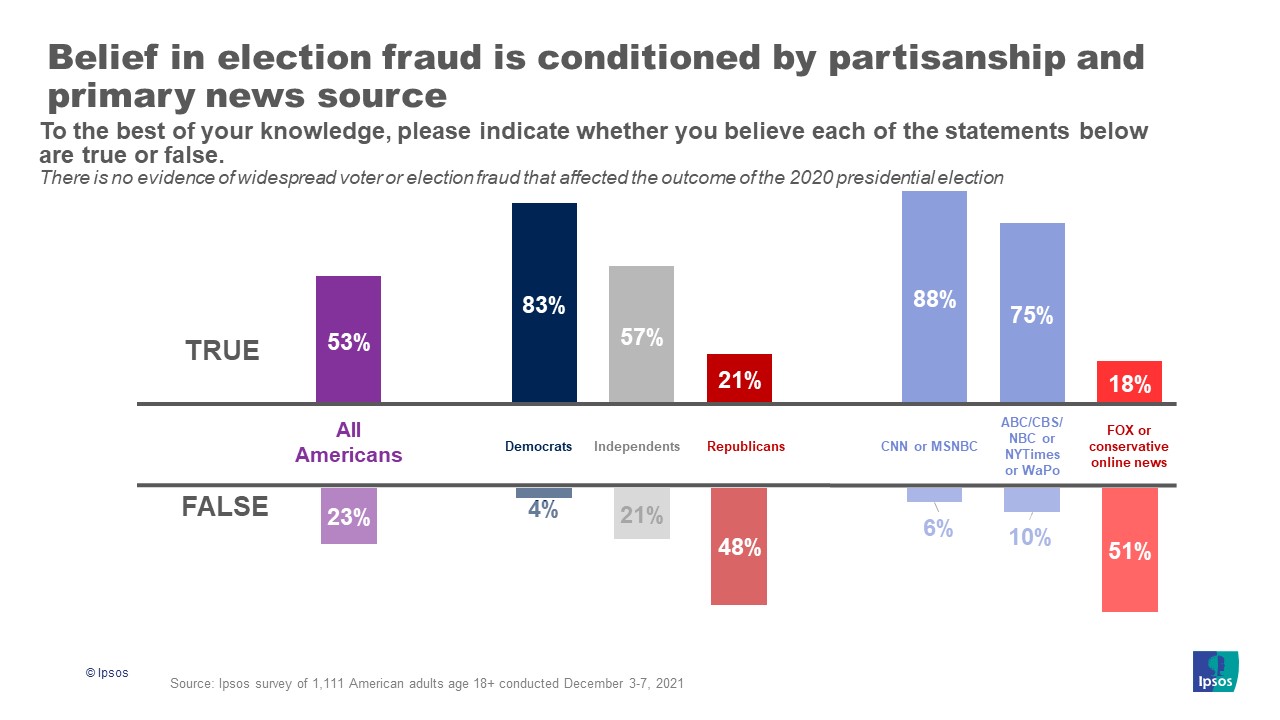
Related to this alternate information landscape is the problem of misinformation. Within the US, one of the primary points of contention centers around the 2020 election, which a significant number still believe was fraudulent. Partisanship and news consumption mediate views on multiple issues.
As Americans’ sense of reality grows increasingly distorted, perspectives on free speech are also in flux. Partisans are divided around whether free speech is secure and what forms of speech should be tolerated. As Ipsos’ polling with the Knight Foundation underlines, Americans feel that the “other” – that is, people who differ from them politically or come from a different racial and ethnic background – have an easier time expressing themselves than they do.
This sense of persecution, whether real or imagined, is driving much of the animosity seen in present-day debates about free speech and what the limits of expression should be.
2022 midterm forecast
Given the current context, the most likely outcome for the 2022 midterms is Republicans gaining seats in the House and Senate. This comes as the public cools on Biden, most notably in how they perceive his handling of COVID, which previously was his primary pillar of support. Beyond this, public views of Biden are more negative than positive across a range of issues including handling of the economy. This cooling of public sentiment will be a drag on Democrats on the ballot in 2022.
Historical precedent suggests the party in the White House loses seats in Congress 9 times out of 10 since 1946. Biden’s currently low approval ratings do not suggest that Democrats will be able to buck this trend this year.