
How public opinion on the Iran war has evolved
It’s been roughly seven weeks since the start of the Iran war.
So far, the U.S. has avoided a major escalation in the conflict, recently reaching a ceasefire agreement with Iran and reopening the Strait of Hormuz. And according to recent reporting, a resolution to the war may come sooner rather than later.
But regardless of how quickly the war concludes, its effects on public opinion are already clear.
Below are five charts on how Americans view the war, its economic fallout, and what their reaction says about long-term trends in public opinion.
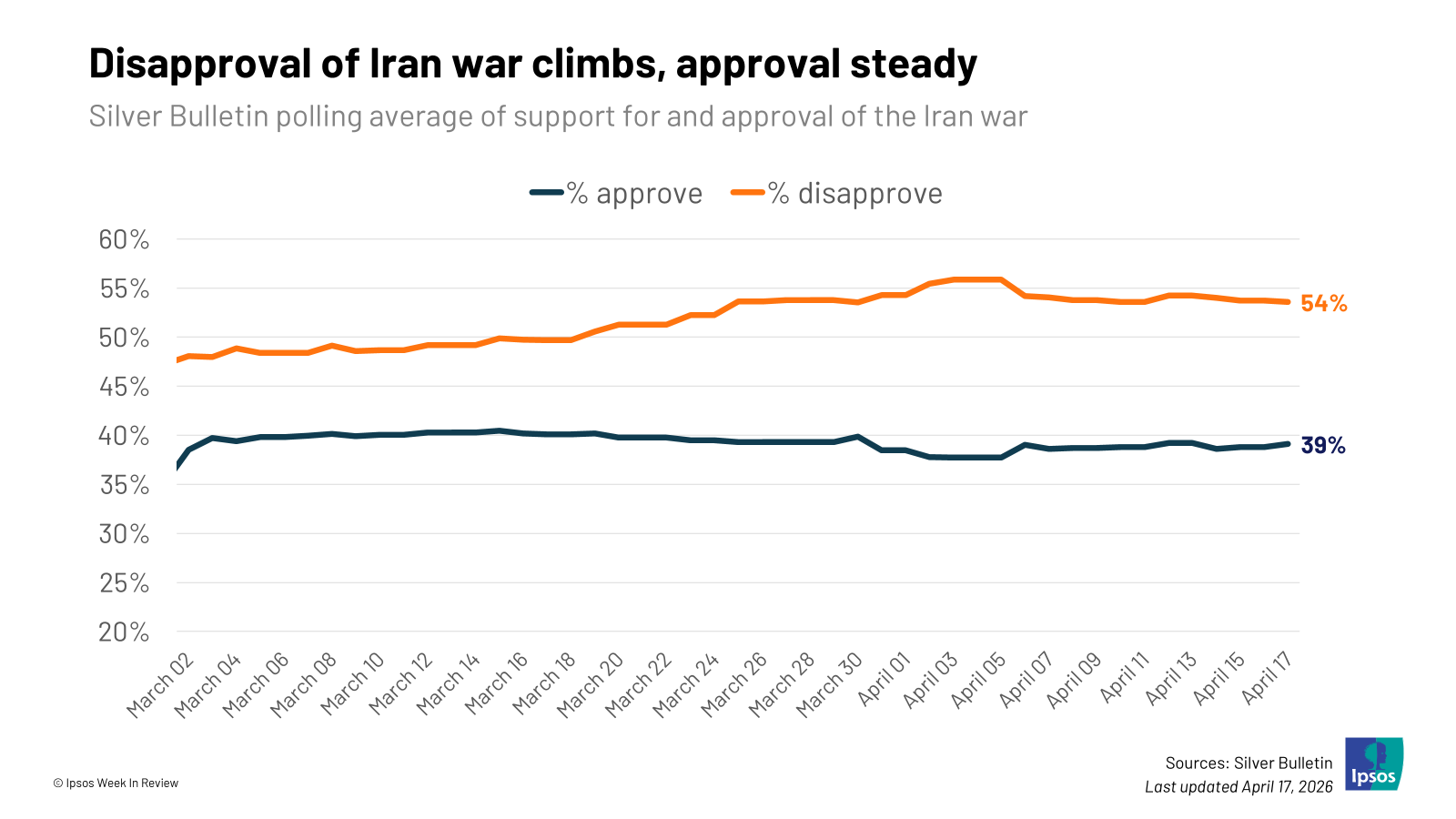
1. Steady support, growing opposition. According to polling averages, support for the war has been mostly stable, at just below the 40% mark. At the same time, as undecided Americans formed opinions on the war, disapproval has climbed.
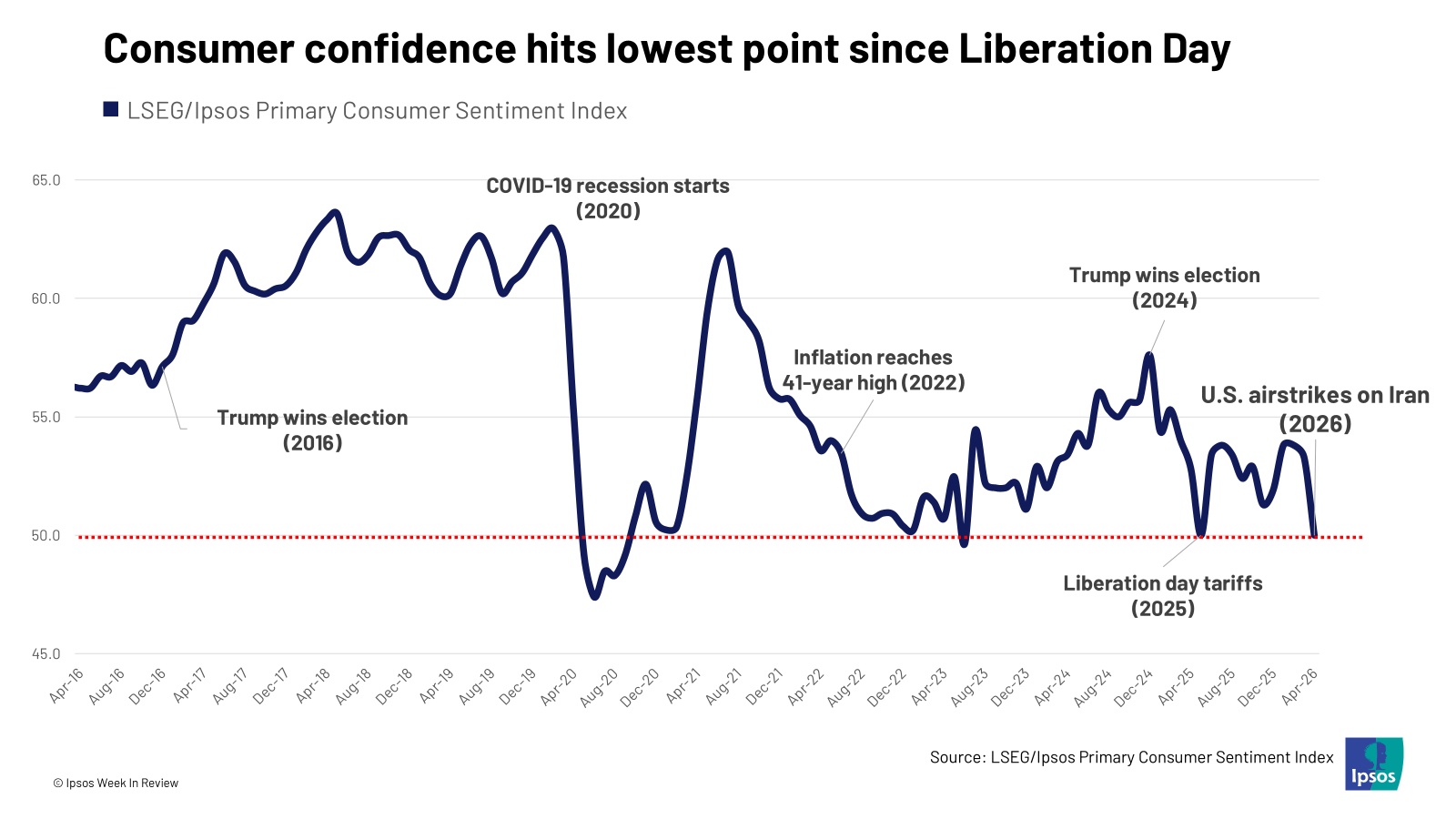
2. Major impact on economic sentiment. Gas prices remain near the highest point since Russia’s invasion of Ukraine. The closure of the Strait of Hormuz brought about another wave of heightened economic uncertainty. Half of Americans say the war has had a negative impact on their finances. All of these factors have contributed to one of the steepest month-over-month drops in consumer confidence since the start of the COVID-19 pandemic.
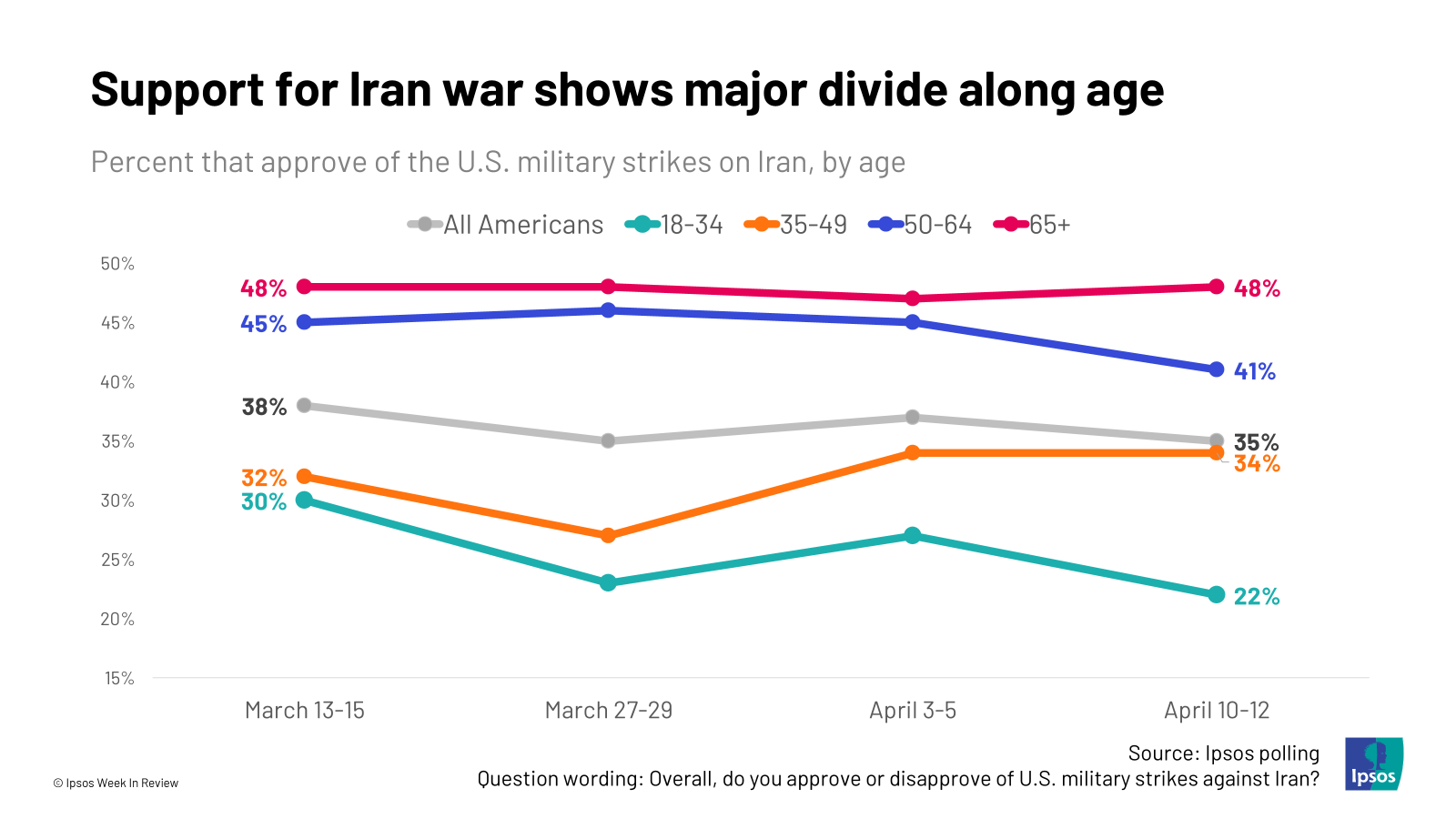
3. Wide generation gap. Older cohorts are more split on the war, while younger generations largely oppose it. There are other factors at play – namely, partisanship – but this is an important reminder that the nation is increasingly turning against American intervention abroad. As these younger cohorts age into political power, these views will increasingly shape American foreign policy.
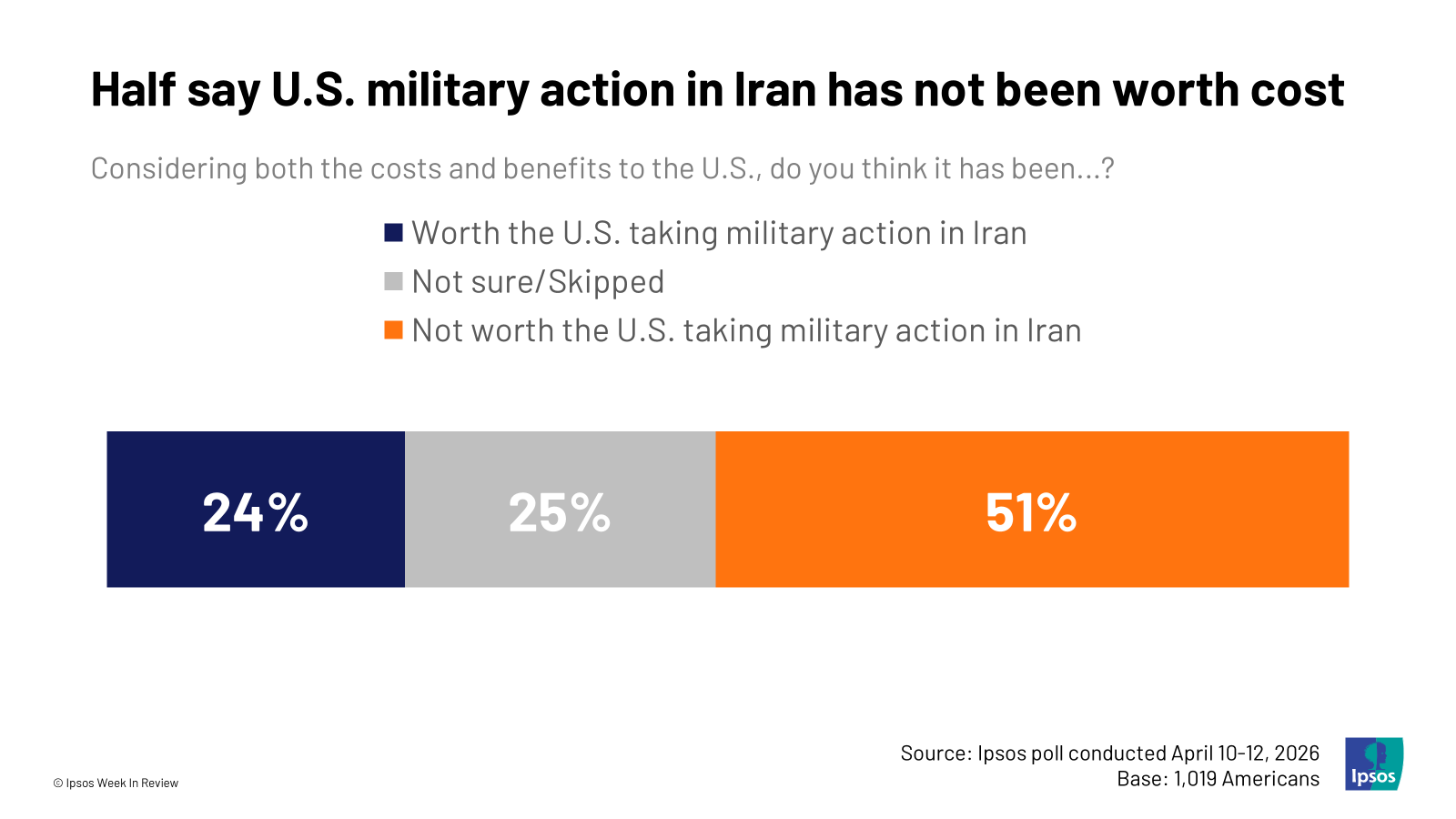
4. Few feel it has been worth the cost. Americans may be able to weather economic uncertainty and rising gas prices if they are on board with the cause. But unlike the early days of the Afghanistan or Iraq wars, there was no galvanizing event anchoring public support. A resolution favorable to the U.S. could change this, but until then, economic grievances will shape how Americans view the war.
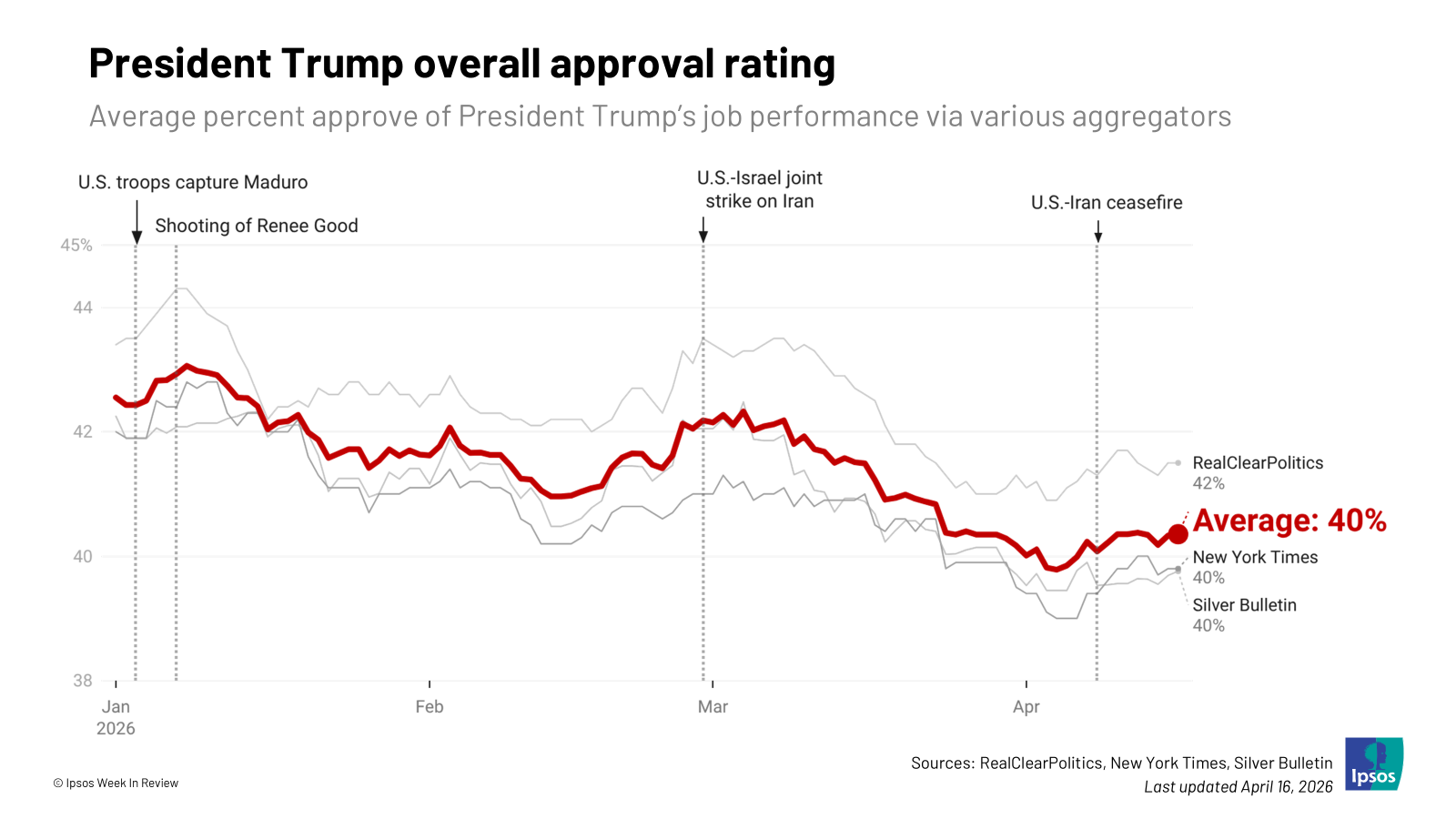
5. Trump nears the danger zone. Trump's approval rating has dipped roughly two to three percentage points. He's still holding onto his core base, but the overall trend shows a slow, consistent decline since the start of his second administration. Dipping below 40% would be a major tipping point. Watch this space.
America's reaction to the war underscores two forces that will shape politics for years to come: the political weight of affordability and a fading appetite for intervention among younger Americans.
For the Trump administration, ending the war is one thing. Winning back public opinion will be another battle.