

Pressure at the pump
One of the most visible domestic impacts of U.S. military strikes on Iran is at the gas pump.
Over the past few days, gas prices have skyrocketed due to Iran's blocking of the Strait of Hormuz.
Of course, war and military conflicts carry human costs that dwarf any economic measure. But for American households already stretched thin, what happens at the pump will shape how they experience this conflict.
Below are five charts on how far gas prices have risen, how Americans are responding to the rise in gas prices, and what might come next.
1. Before the conflict, gas prices weren’t squeezing consumers. Even though inflation is far down from its 2022 peak, consumers still say they have been experiencing price increases in their grocery bills, electricity bills, and overall household expenses. As recently as February, gas prices were a key exception to continued rising prices. Skyrocketing gas prices will change that.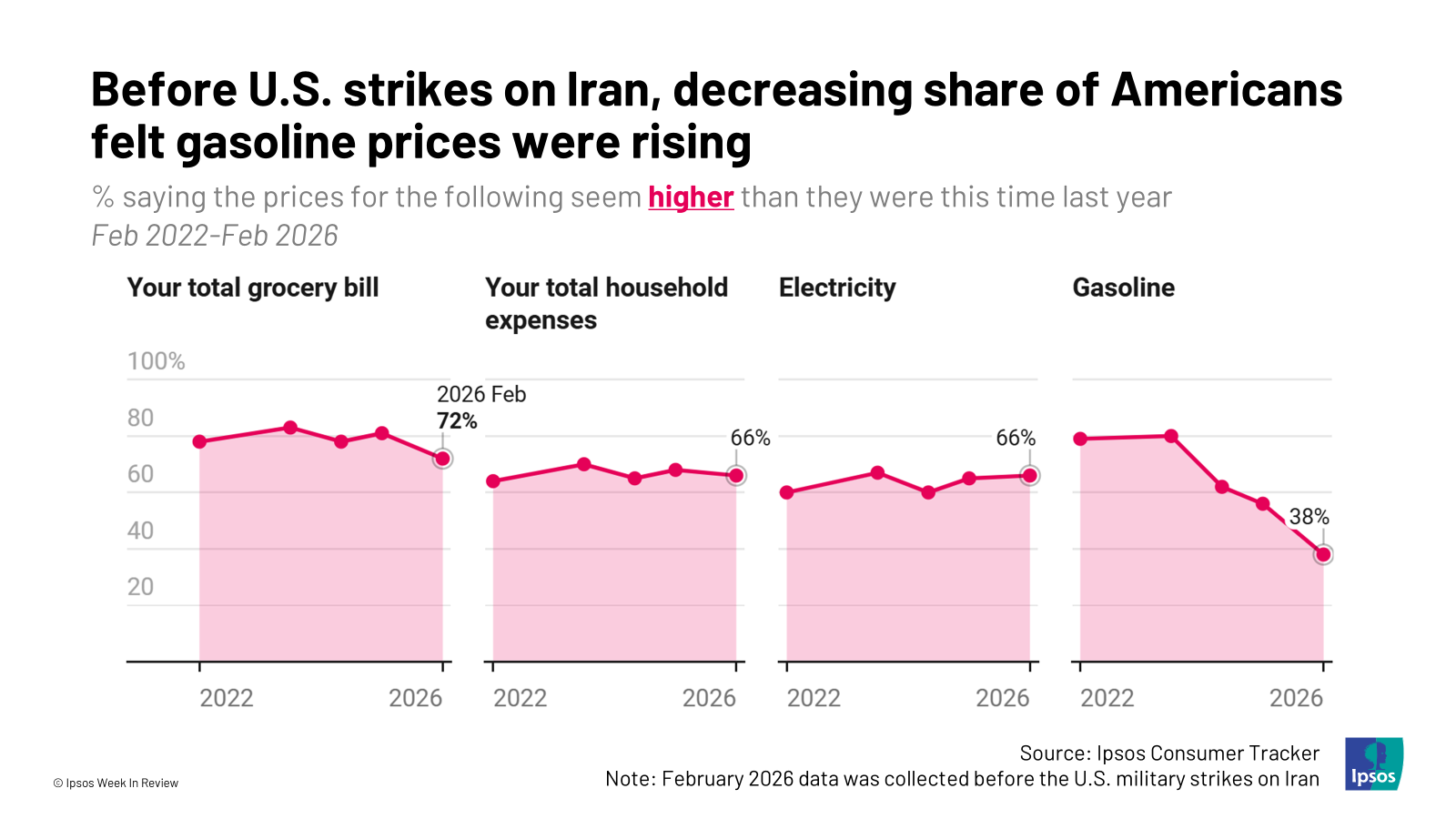
2. Pressure at the pump? Gas prices are still below the all-time highs reached during the first few months of the Ukraine War, but the recent jump in prices has been significant. Americans have noticed. 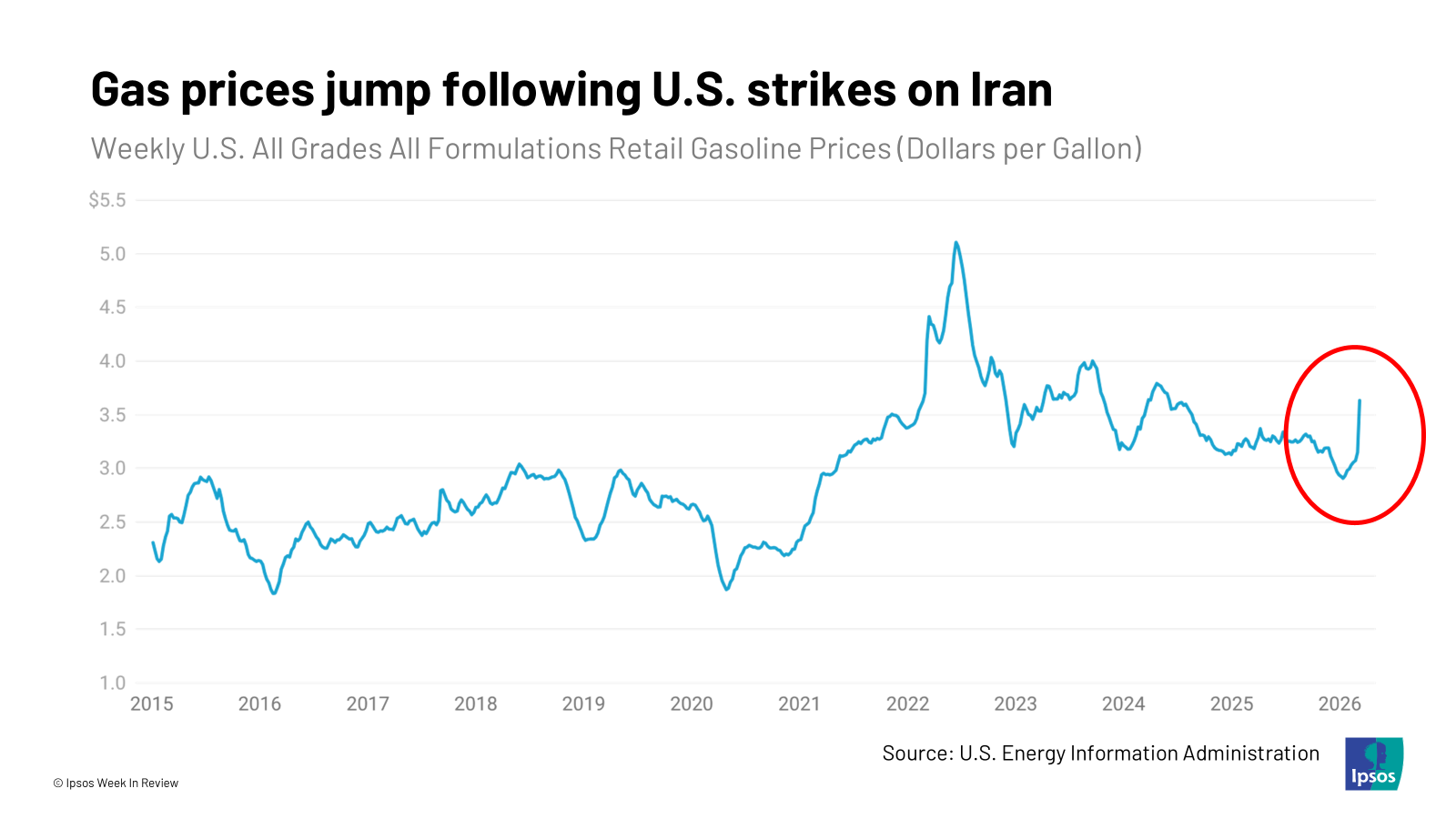
3. How consumers are dealing with gas prices. The vast majority of Americans are feeling the spike in gas prices. Over half are driving less or are changing how and where they shop to deal with current gas prices. If this shift continues, it could ripple through the broader economy. Right now, rising gas prices will just be another reason for Americans to continue tightening the belt.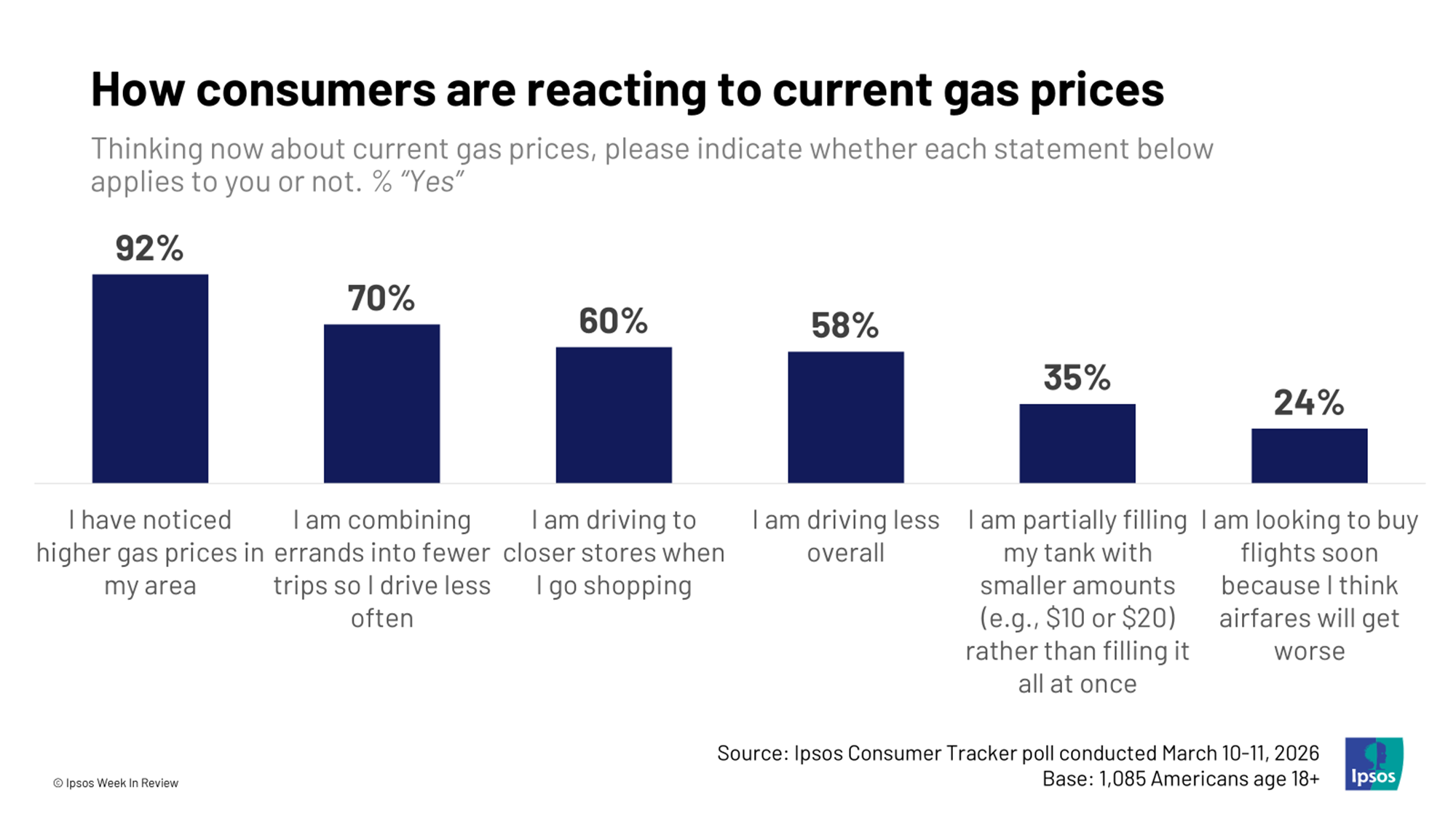
4. Is there light at the end of the tunnel? Most Americans aren’t optimistic. Roughly two in three Americans predict that gas prices will rise due to the conflict and expect the conflict to go on for an extended period of time.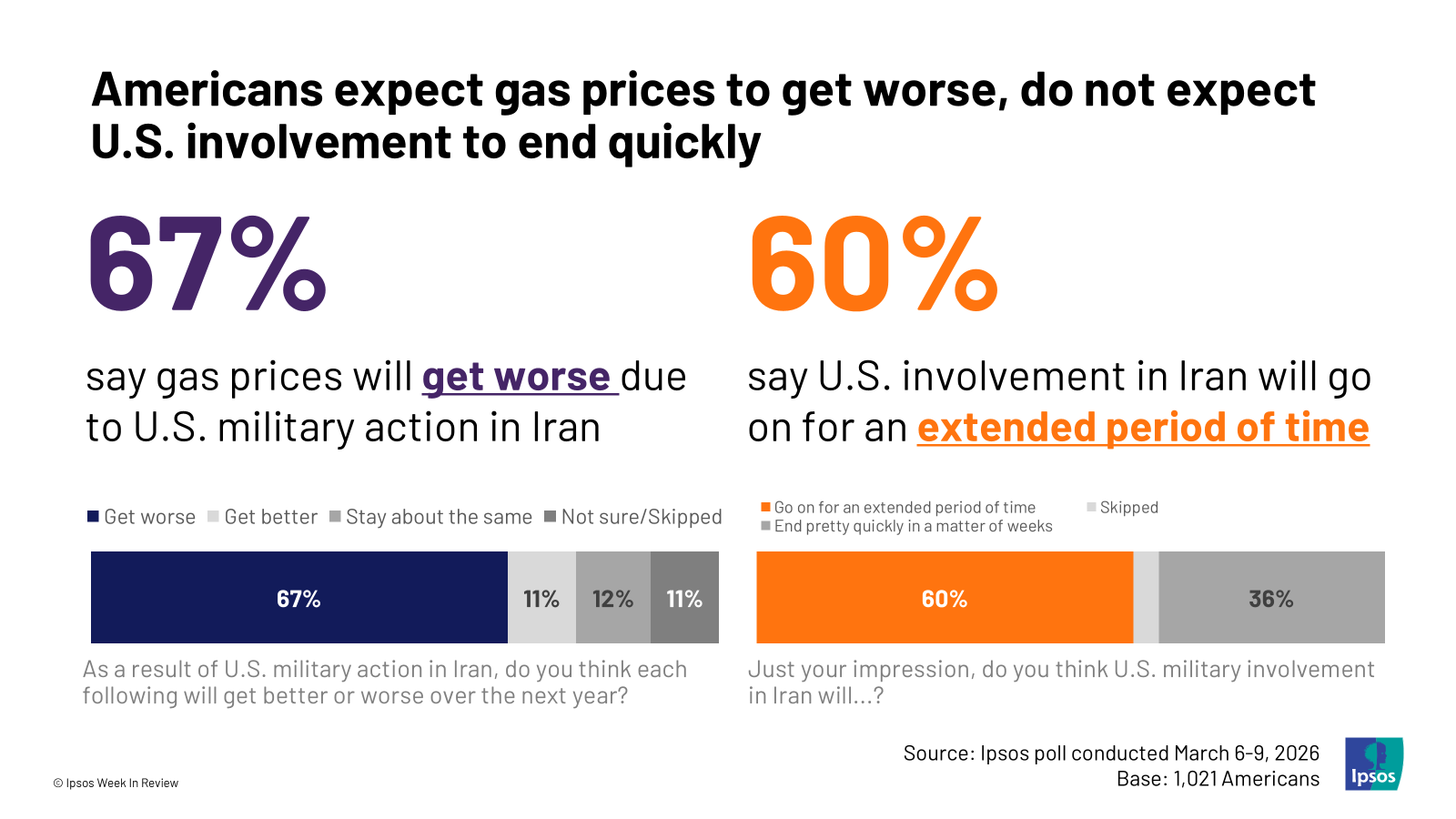
5. Consumer sentiment. If recent history is any indicator, even a modest bump in inflation could leave consumers feeling the impact for far longer: now almost two years removed from the 2022 wave of inflation, consumer sentiment remains relatively muted, especially compared to pre-pandemic levels. Further price shocks could deepen the malaise.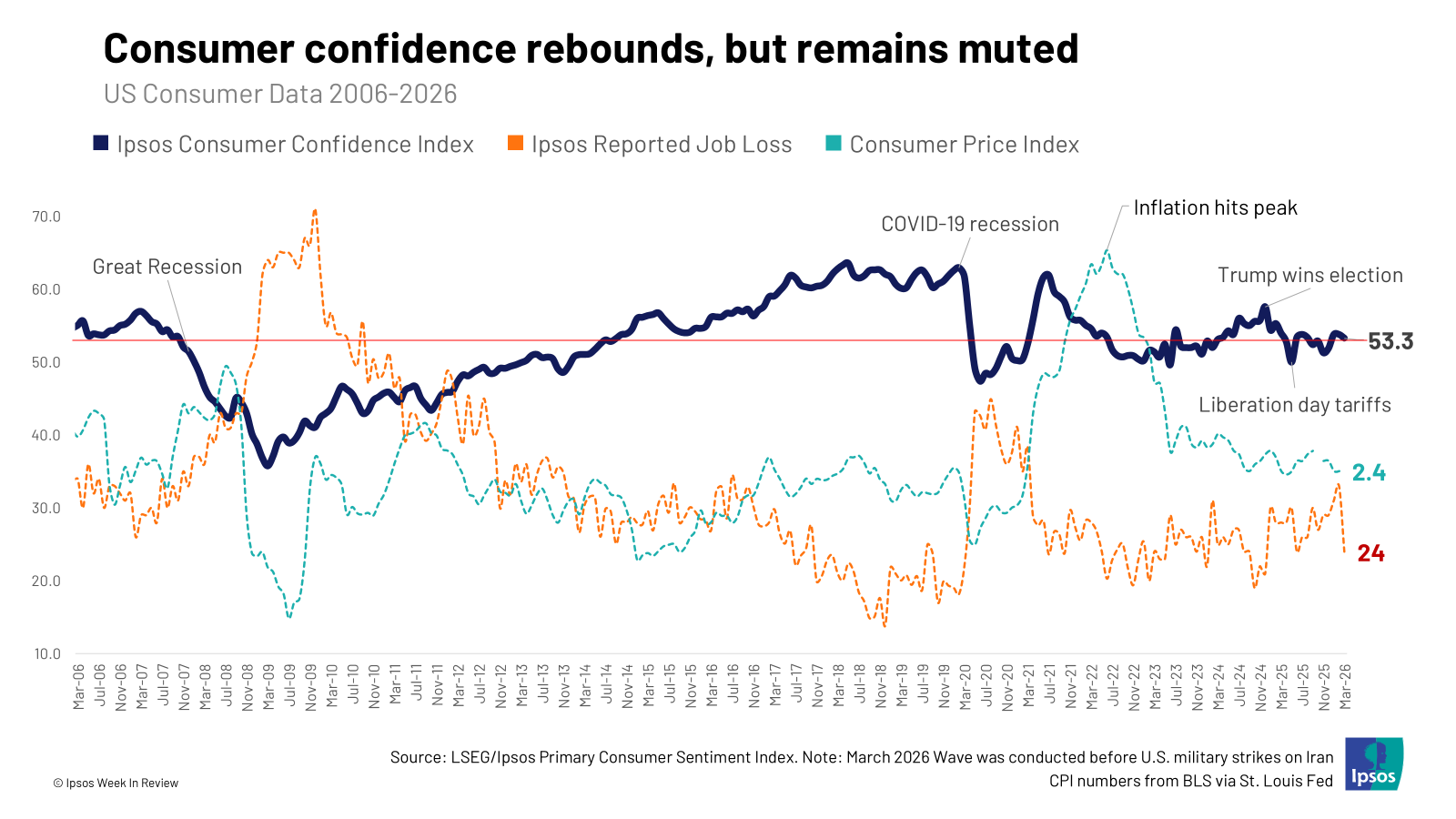
The Trump administration has been active in trying to bring oil prices down. But if oil futures prices are any indication, markets aren't expecting relief anytime soon. And there are warning signals that the price increases could stretch beyond gas – if the conflict continues, the cost of food and other goods could also rise.
Americans already don't have a lot of room to spare. With consumer sentiment still recovering from the 2022 inflation wave, even a modest sustained increase could weigh heavily on household budgets in the months ahead.


