Voices of Ukraine: Documenting Life During Wartime
Nine months of war have left Ukraine’s healthcare system battered and depleted.
The World Health Organization estimates that there have been more than 600 attacks on healthcare facilities1 throughout Ukraine since February 24th. Many hospitals and other parts of the country’s critical health system infrastructure are heavily damaged or destroyed. Those still intact have been overwhelmed by people seeking care for trauma and injuries resulting directly from the war.
During a time of increased need, an exodus of medical personnel has resulted in a shortage of doctors, nurses, and caretakers. For most, leaving was not a choice — they fled shelling and were forced to evacuate to the western regions of Ukraine or abroad.
Disrupted supply chains, inaccessible stockpiles, and destroyed caches of medicine and medical supplies have left hospitals, health facilities, and pharmacies struggling to provide care to the sick and wounded.
Doctors trained to work in traditional healthcare facilities and sterile operating rooms must now provide direct care in the field or conduct surgeries in basements, bomb shelters, and other non-sterile environments never meant to serve as healthcare facilities.
Olga and Nadia, Chernihiv
The windowless basement of a hospital in Chernihiv is one such makeshift facility.
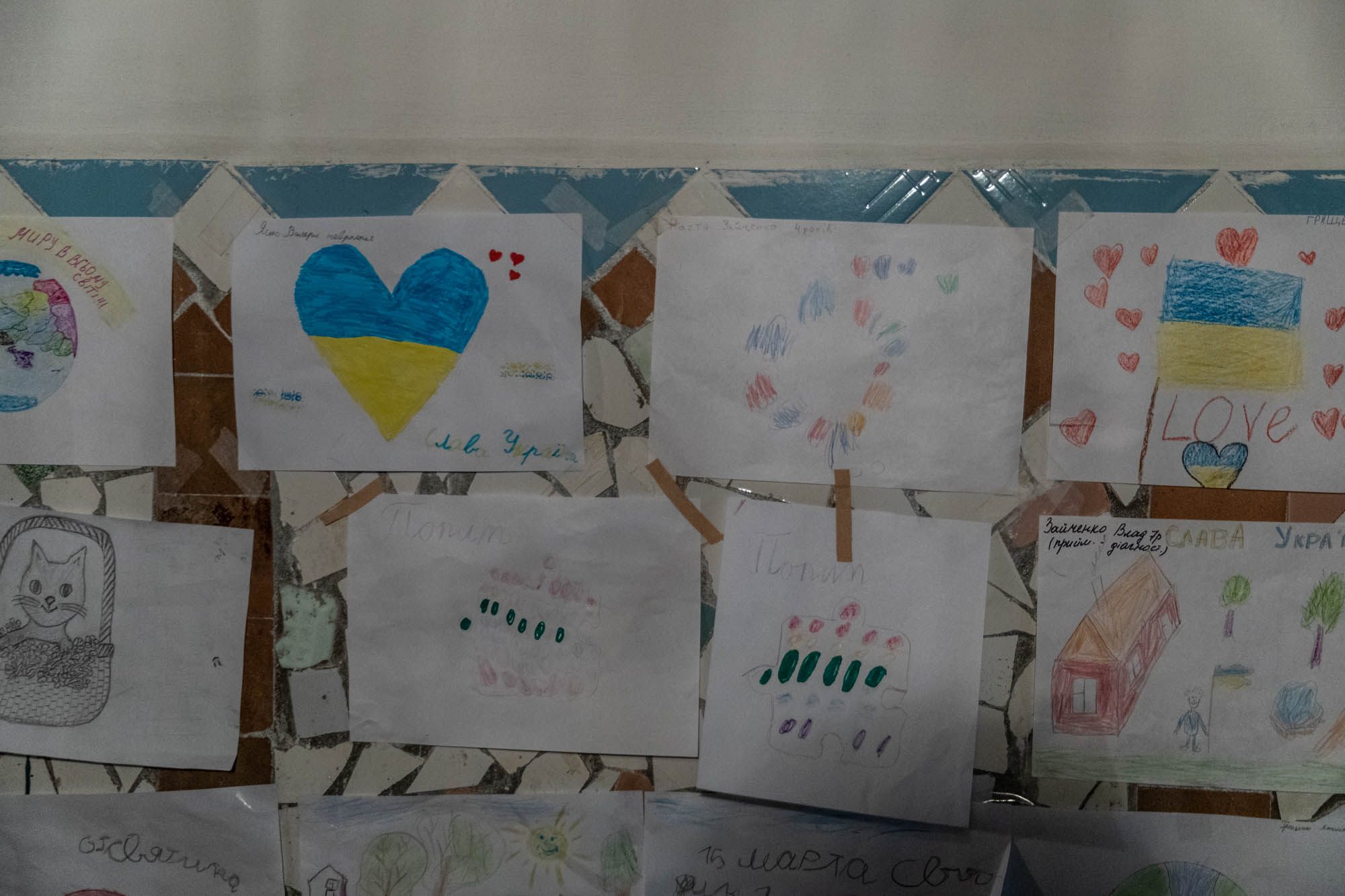
Drawings decorate the concrete hallway; colorful Ukrainian flags, hearts, and messages of hope contrast sharply with a dismal scene. Beds now occupy rooms that once just held medical supplies; most patients are children.
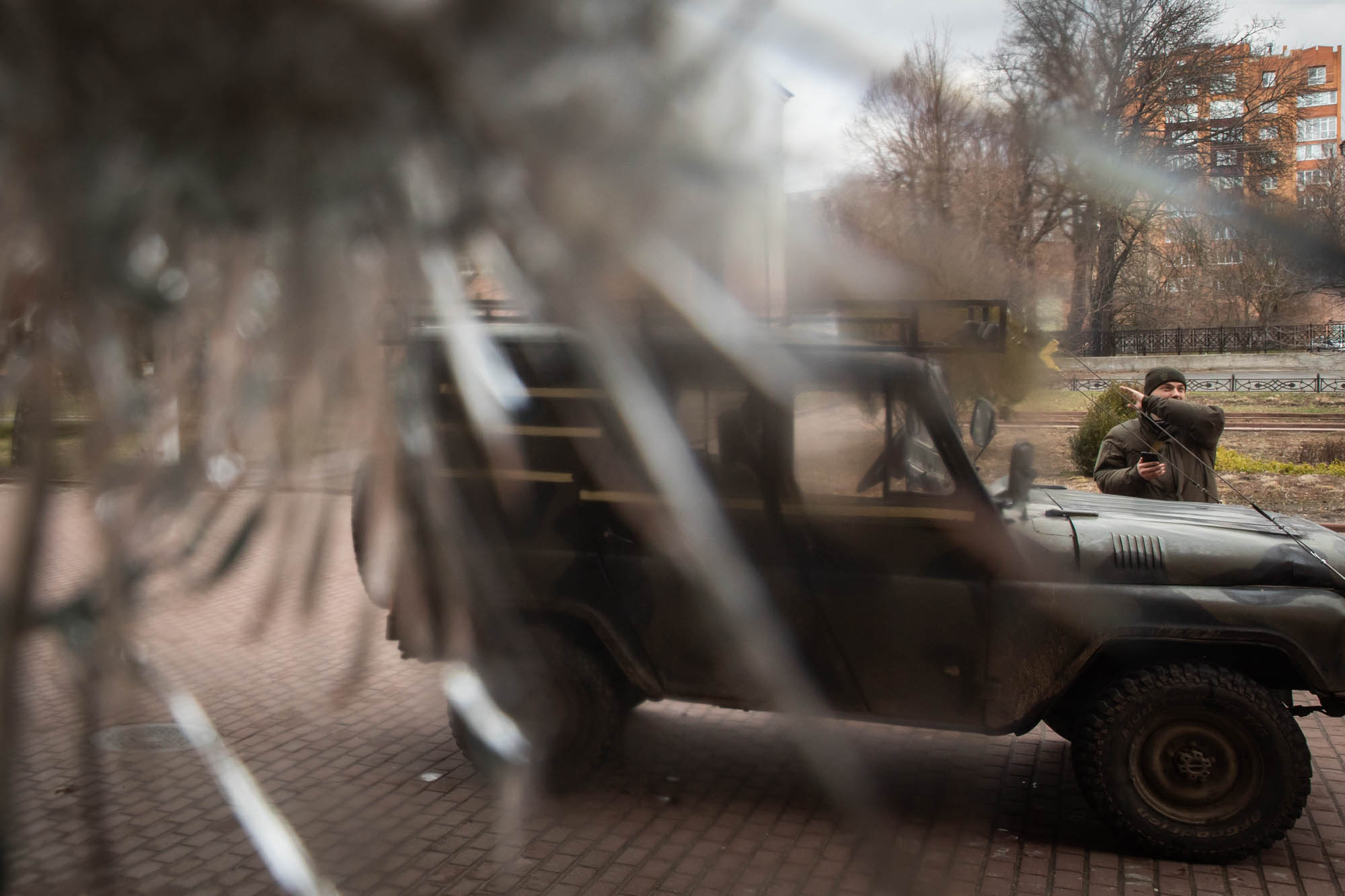
Military vehicles patrol outside the hospital, whose windows and walls bear the marks of weeks of shelling.
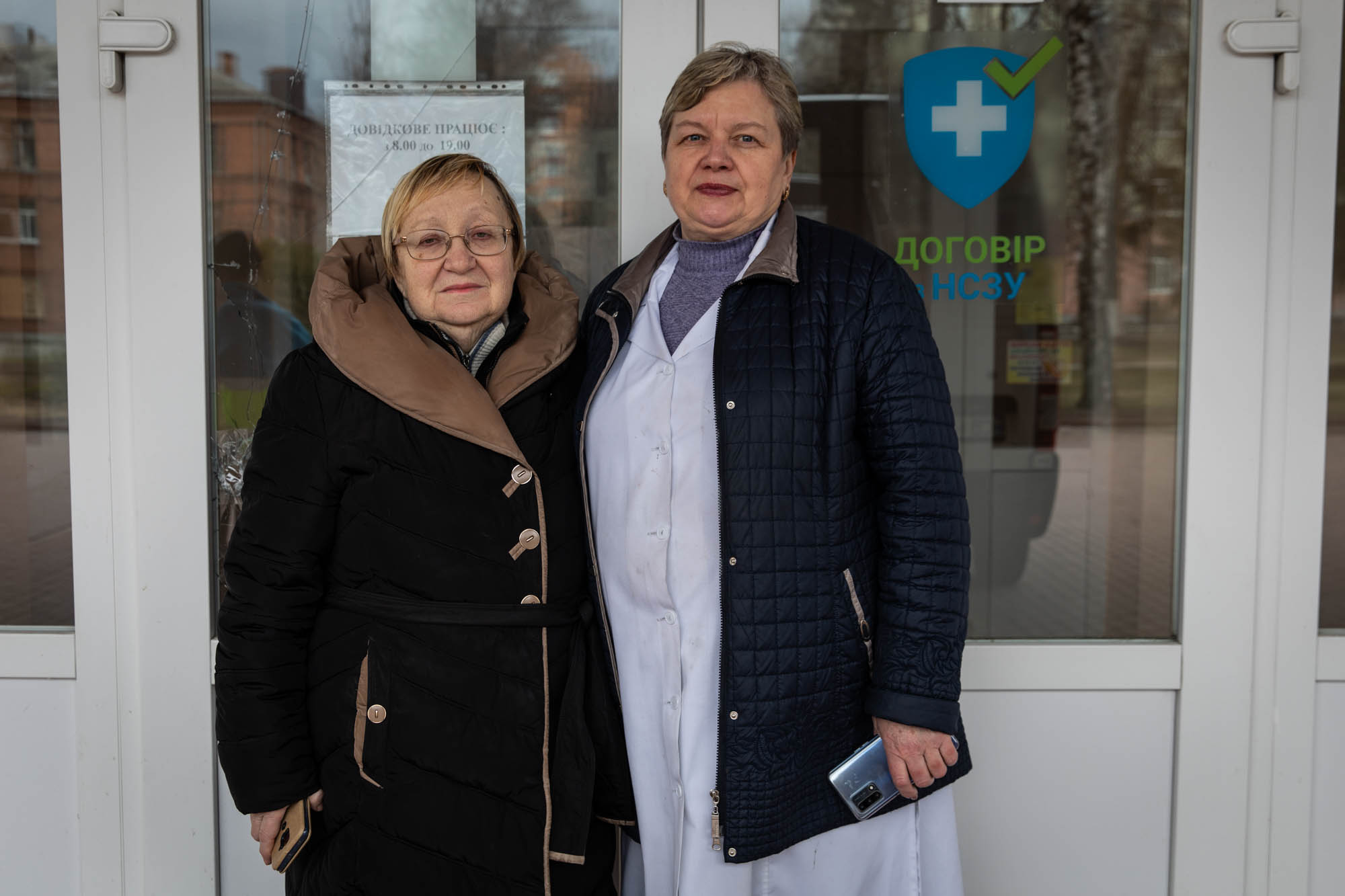
Olga and Nadia serve on the nursing staff in one of Chernihiv’s hospitals. The city was besieged for more than a month. Olga and Nadia worked at the local hospital through the occupation. For weeks, more than 150 patients were forced to remain in the hospital basement without food, water, and electricity. Doctors had limited access to basic services. Nadia painfully recalls that despite the staff’s efforts, some patients “did not survive.”
Most patients were evacuated from the hospital’s basement when the city was liberated. Those who were too sick to leave or waiting for an upcoming surgery remained in the hospital. Despite the damage to the hospital and the limited access to medicine and equipment, Nadia and Olga remained behind to care for their patients.
Zhenia, Chernihiv
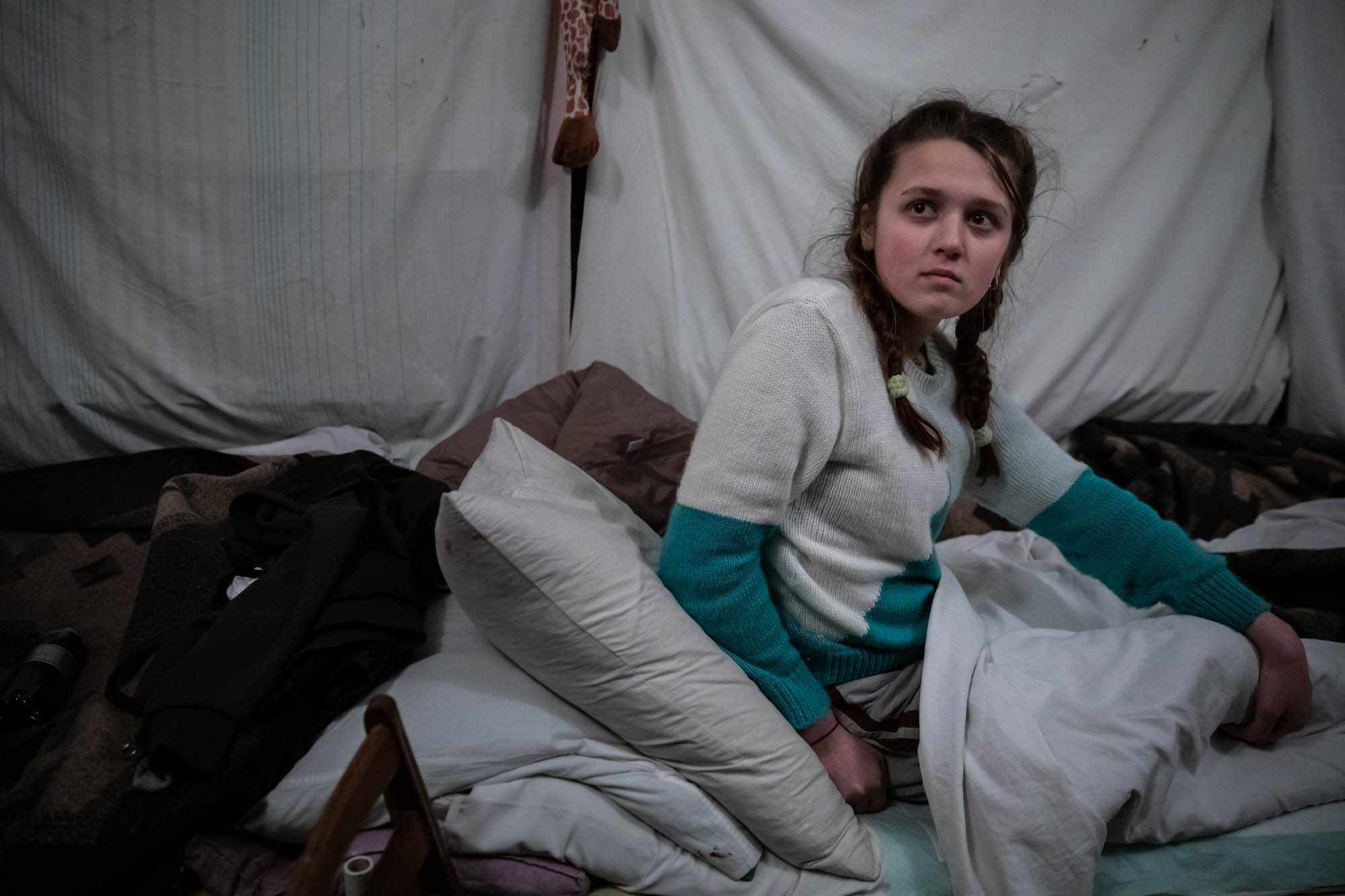
Among those patients is Zhenia, age 15, waiting for surgery. Her bed is a makeshift bunk; all of the hospital’s beds were destroyed or occupied by patients suffering a more critical condition. Zhenia was out with friends when an explosion hit a small shopping complex; the blast broke both her legs. Yet, Zhenia is fortunate–two of her friends did not survive. Zhenia was told that she’d undergo surgery followed by months of physical therapy if there were no further attacks and the doctor was not needed in another city.
It is difficult to know how many civilians have been injured and killed since Ukraine’s invasion. As of October 10, 2022, the Office of the United Nations High Commissioner for Human Rights registered 15,592 civilian casualties3 – those killed or injured - but states that “the actual figures are considerably higher.”
Alexander, Mykolaiv
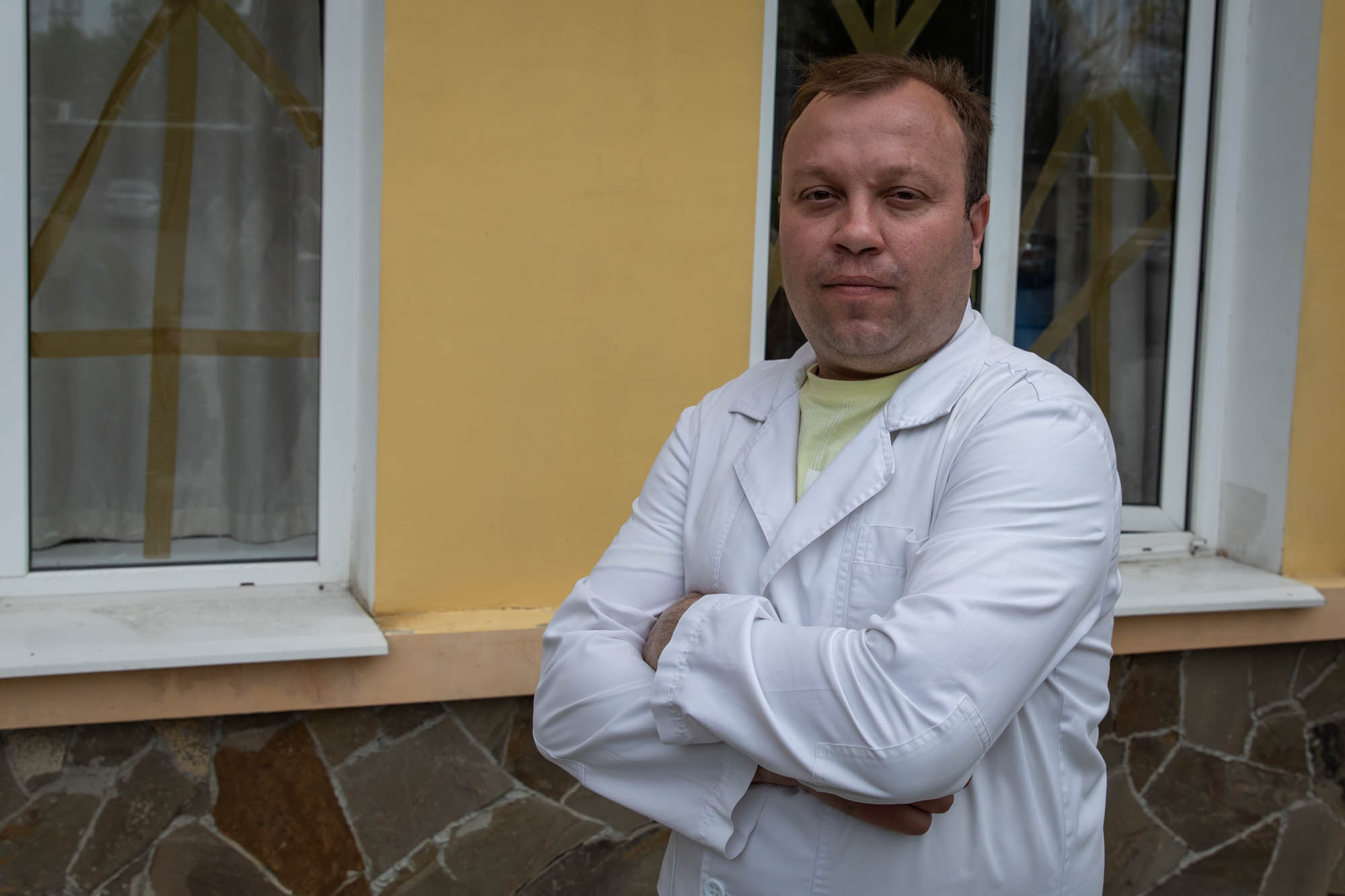
Beyond the issue of treating the wounded, estimating how many children have been born in Ukraine since February 24th is difficult. According to Save the Children, more than 63,000 babies were delivered in Ukraine during the first two months of the war – often in cramped, unsanitary conditions under air raid sirens and bombs. Many maternity hospitals on the front lines closed down, leaving those pregnant with few options and no guarantee for safe deliveries.
Alexander, an obstetrician and the director of a maternity hospital in Mykolaiv, is one of the few remaining physicians in the city. For him, there was no question of what to do when the war broke out. Alexander’s decision was easy: he would remain in Mykolaiv. “I never thought to leave. There are many women still here who need care […] war children are born every day. I must do what I can to help.”
Despite Alexander’s resolve, the challenges are apparent. Many of his colleagues and fellow specialist left Mykolaiv. The hospital is severely understaffed, and the conflict has had tangible consequences on the population. The stress has caused many women to go into pre-term labor, resulting in complications. These complications are especially challenging because of the smaller staff size and the frequent lack of medicine, equipment, and clean water.
Alexander works day and night. He sleeps in the hospital basement, which doubles as a bomb shelter. The arrangement suits him since he is close by whenever he is needed. The hospital has already been attacked. Alexander asks us to not disclose its name and location for fear of future attacks.
Despite the harsh challenges, Alexander’s biggest concern is the lack of water. A month into the war, a missile damaged critical infrastructure that supplied water to Mykolaiv. Since then, hospitals have fully relied on clean water delivered by volunteers. This has posed additional challenges for doctors already operating with restricted resources and under the constant threat of attack.
Alexander’s determination is strong, but he is worried that, with limited resources, hospitals can’t continue to provide adequate care to those in need. Despite this, he is hopeful that together, Ukrainians will persevere. “Every day, people are suffering, yet every day people come together, organize, and solve problems. It inspires and gives me strength to continue my work.”
Salam and his volunteers, Chernihiv
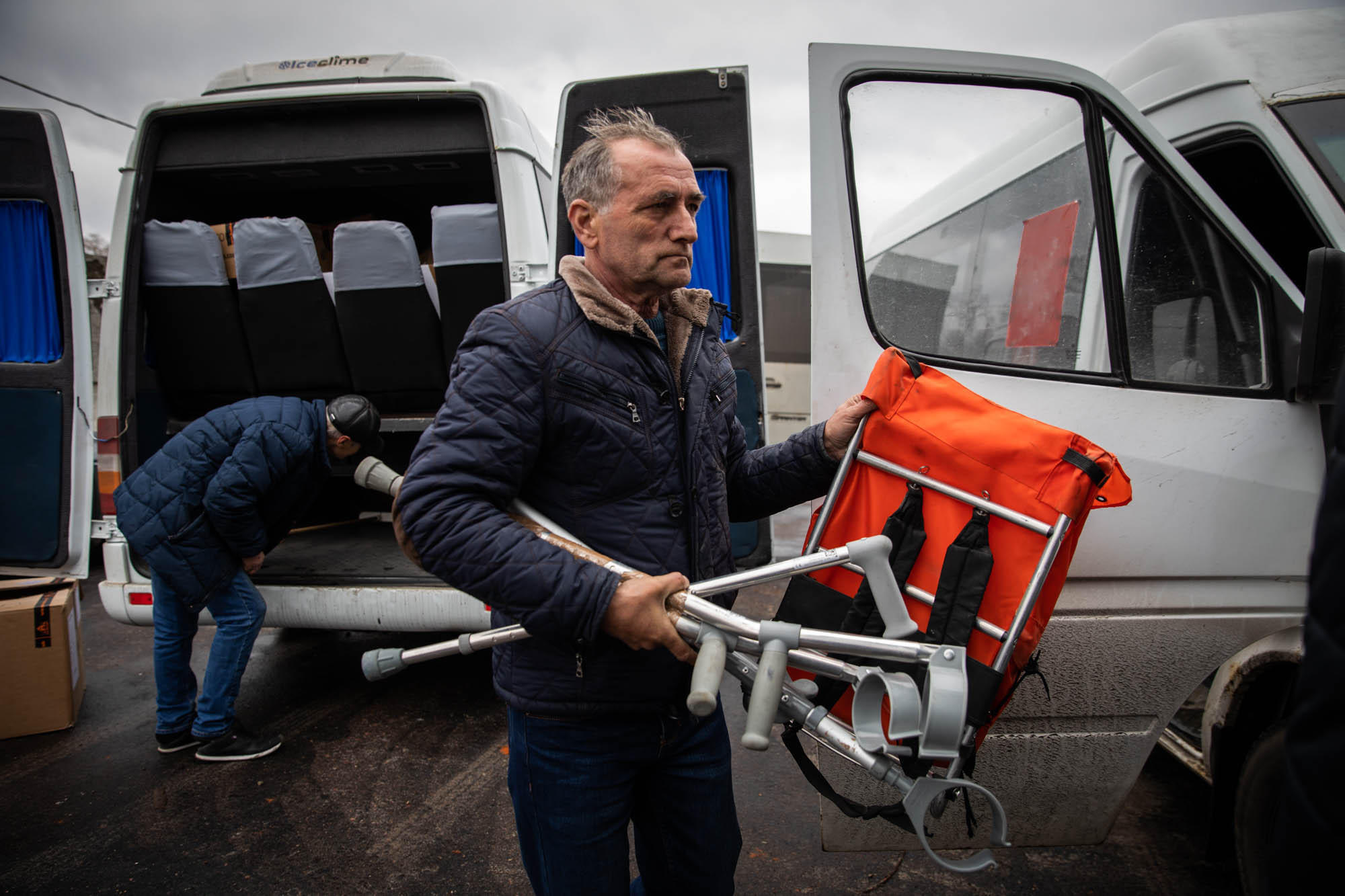
Our interviewers met with Salam, his NGO is focused on evacuations and humanitarian aid, has delivered medication and critical supplies to some of the most dangerous cities of Ukraine, including Kherson, Mykolaiv, Irpin, Chernihiv, Zaporizhzhia, Odesa, and throughout the Donbas region.
To get to the front lines, Salam has built a network of relationships and coordinates with local and military officials to ensure passage and delivery. “We always go to the front to deliver the aid; if supplies do not reach people who need them most, then what good do they do?” Salam says.
Individuals and organizations from around the world donate the medication and supplies. Occasional monetary donations allow Salam to meet specific needs. But, most donations are an assortment of items and he has little influence over what is included in them. “I don’t choose. I just take everything we have and deliver it where it’s most needed at the time."
Salam struggled to name just one item when asked what was most needed. “We need everything, especially what helps people with injuries caused by the war. There is also a need for medication for chronic conditions that people have been unable to find or afford.”
A medication that one could easily get from a pharmacy during peacetime is now difficult to find. Even when available, it is often unaffordable due to rising costs and pervasive unemployment.
Salam’s efforts are representative of a vast international humanitarian aid effort; since February, organizations and individuals from around the world have organized and raised money to send everything from medical supplies and fleets of ambulances to surgical tools, oxygen tanks, defibrillators, pharmaceutical medications, and other critical equipment. For cities on the front line, like Chernihiv, with limited access to medicine and medical supplies, aid provided by volunteers served as a lifeline allowing many hospitals to continue to function and provide lifesaving care.
Salam’s NGO efforts are ongoing and evolve as the needs and locations of those most affected by the war change. “The situation is changing all the time,” Salam says. “It seems that one week there is peace, and I don’t hear anything and then suddenly it starts again, and it’s a crazy war where people are dying.”
Mental Health Treatment Center, Kharkiv
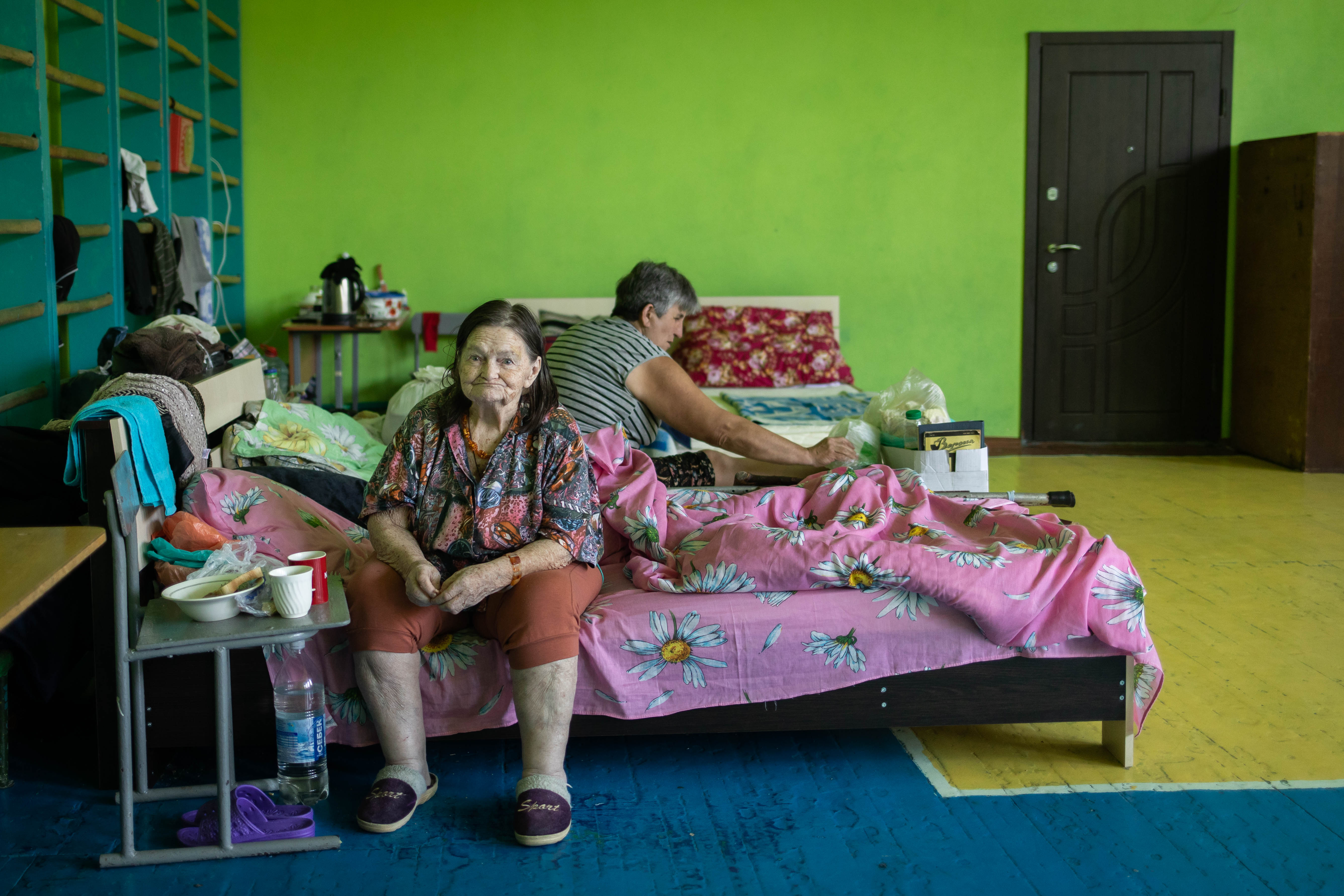
A school gymnasium outside of Kharkiv was turned into a dormitory with more than 30 beds to provide temporary shelter for displaced persons with mental health and psychosocial needs. The building is one of many similar sites across Ukraine. Some patients read, others talk quietly amongst themselves, and others stare into the distance. Most have fled the fighting in the East. Many are elderly, with neither family nor the financial means to go elsewhere. Some suffer from chronic conditions exacerbated by the war, while other people grapple with the onset of symptoms incited by the stresses of the conflict. Professional mental healthcare at the makeshift facility is sparse; many experts have fled the country, and those who remain are often needed for more urgent cases.
Although the greatest needs and often the most traumatic experiences are endured by those living in occupied and front-line cities, Ukrainians everywhere are suffering the severe impact of war. Residents all around Ukraine live under constant threat of rocket attacks, fear for their personal lives and lives of their loved ones, and feel anxiety for their future. Elderly people especially suffer from separation with their home communities. Since October attacks on the infrastructure intensified, many Ukrainians endure their days without electricity, water or heat.
According to Ukraine’s Ministry of Health, an estimated 15 million Ukrainians “will need psychological support in the future, of which about 3 or 4 million will need to be prescribed medication.” These include a very diverse range of people with very different needs. For example, some conditions include civilians with physical war wounds, those who’ve suffered sexual and gender-based violence, those struggling with loss and separation, those with chronic conditions often left untreated, and people with all kinds of trauma caused by the war.4 Several international organizations are scaling up their mental health support programs, as medical system in Ukraine has no capacity to cope with the scope of the mental support needed. Mental, emotional, and psychological scars will be among the most devastating and long-lasting legacies of this war.
Winter Approaching
Ukraine’s healthcare system is facing mounting challenges. Inflation is soaring, unemployment is rampant, and medicine is inaccessible and unaffordable. Over four million refugees have returned to Ukraine after spending months in other countries. The upcoming winter, recurring blackouts, and the latest escalation in fighting could introduce more challenges to the health system.
The Ukrainian health system has proven itself to be resilient and adaptable. But after eight months of fighting and a cold winter approaching, it is uncertain how much more it can endure.
For more from this series, please visit our Voices of Ukraine mini-site.
[1] https://www.rferl.org/a/ukraine-health-care-winter-infrastructure-who/32083502.html
[2] https://www.newyorker.com/news/dispatch/the-siege-of-chernihiv
[3] Out of total 15,592 civilian casualties, 6,221 killed and 9,371 injured.
[4] https://news.un.org/en/story/2022/10/1129792