
Where Americans stand on the cost of living
While the cost of gas has largely stabilized in recent weeks, it remains roughly 50 percent higher than it was before the start of the war in Iran.
For Americans, the spike in gas prices is just the latest cost-of-living shock that’s affecting how they go about their daily lives. This is driving a rise in dissatisfaction over the cost of living – and that’s having implications for President Donald Trump.
Below are five charts on how Americans’ views on the cost of living have evolved and what this means for Trump and the Republican Party going forward.
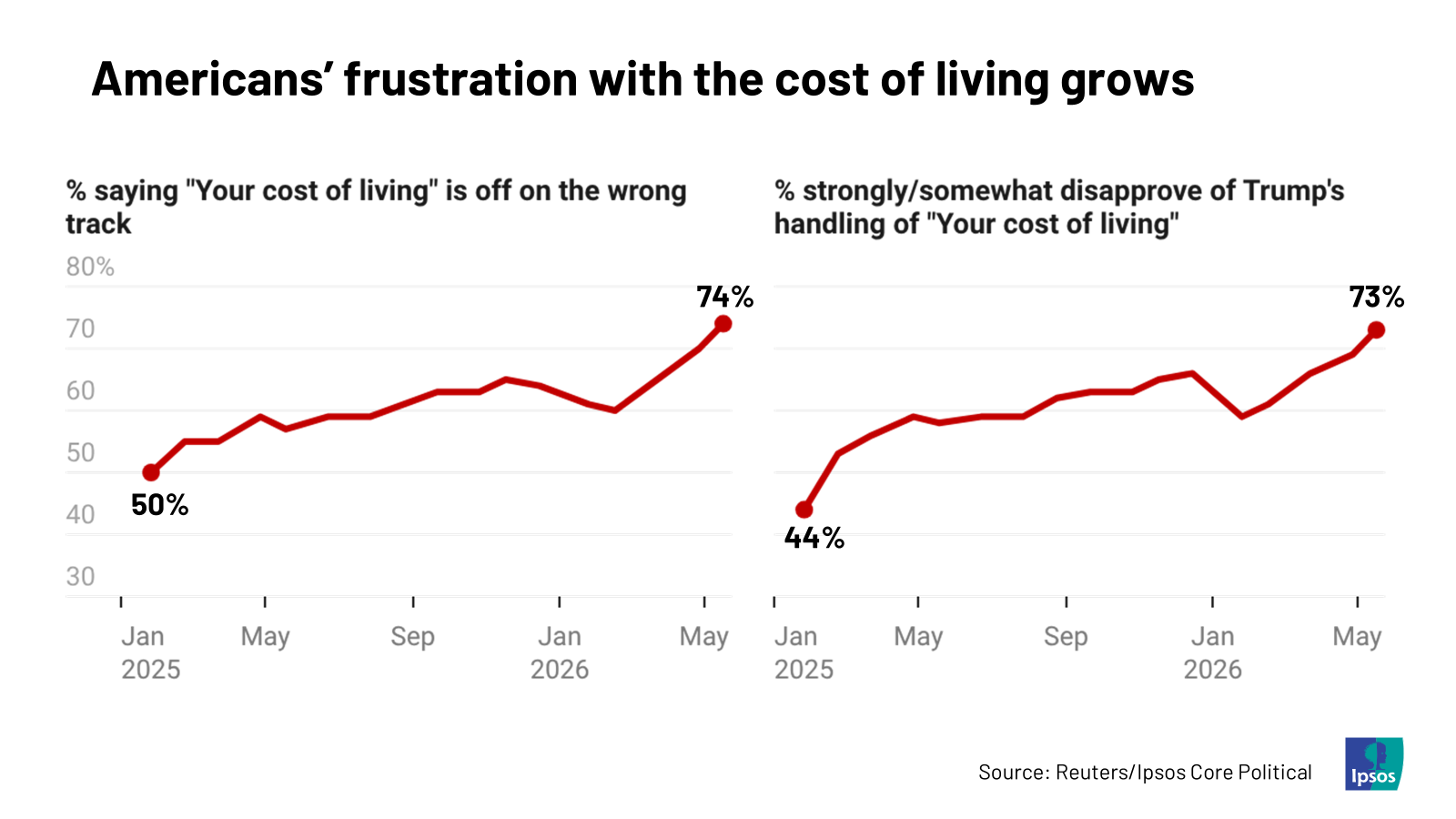
1. The wrong track. Amid rising inflation, Americans have only grown more frustrated with their cost of living. From mid-February to mid-May, the share saying their cost of living is on the wrong track grew from 60% to 74%.
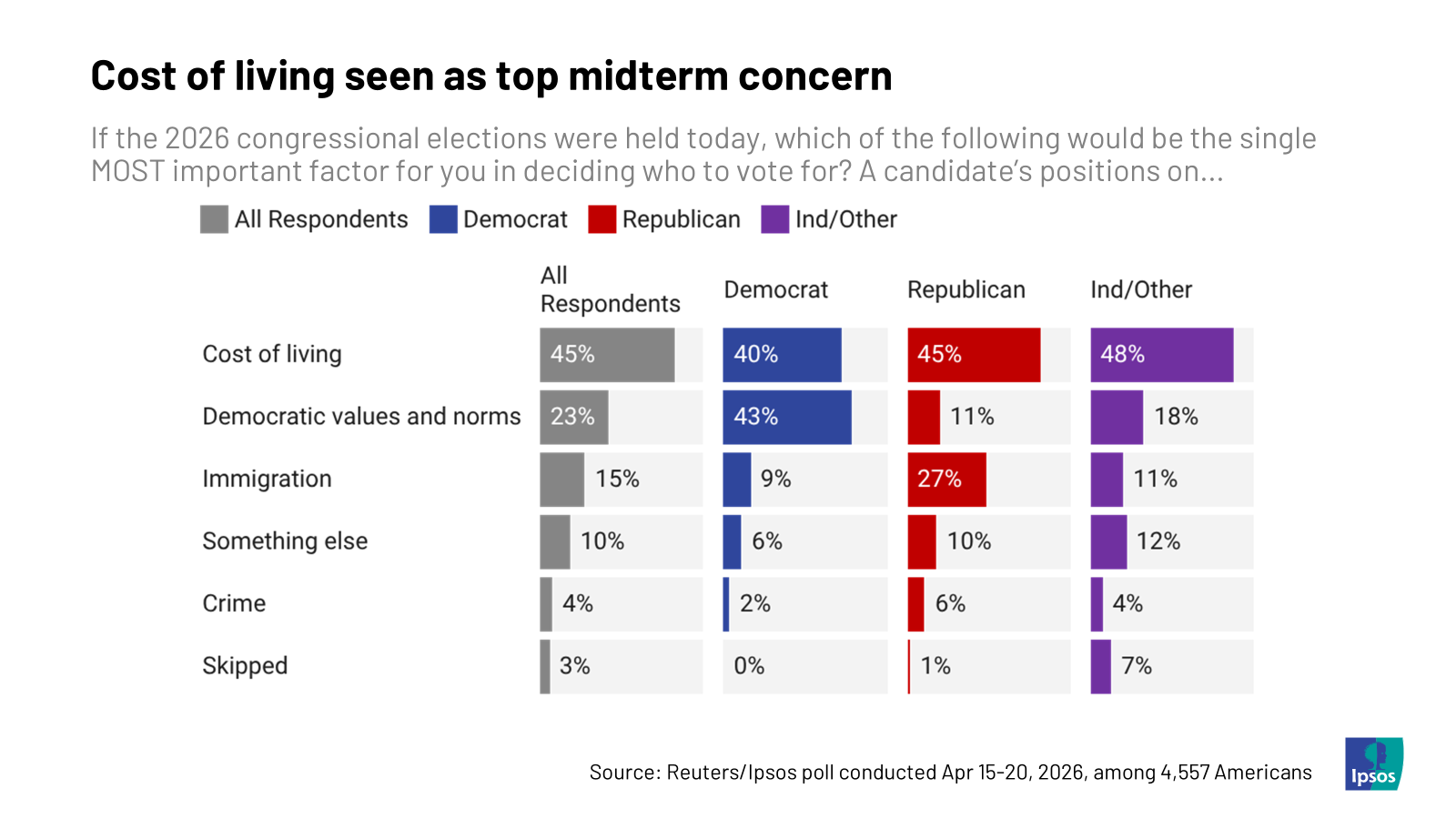
2. Cost-of-living concerns remain a top midterm concern. A plurality says a candidate’s position on the cost of living would be the most important factor in deciding their midterm vote. Americans’ dissatisfaction with their personal finances cannot be ignored.
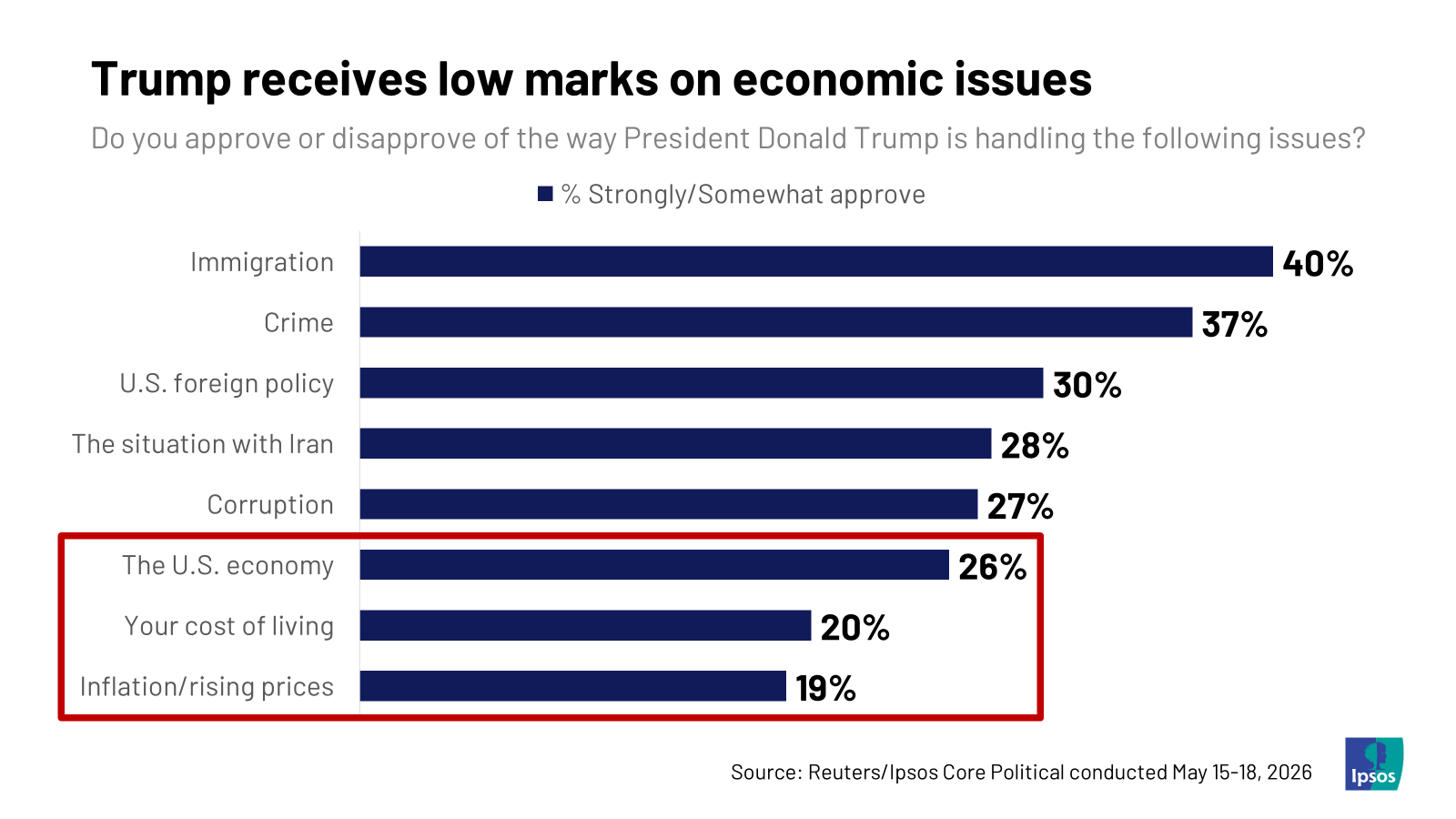
3. The president’s biggest vulnerability is the economy. Remember, the economy and inflation were what propelled Trump to victory in 2024. Addressing inflation was also Americans' top hope for Trump’s first 100 days. Trump’s relative strength on the economy has turned into a weakness.
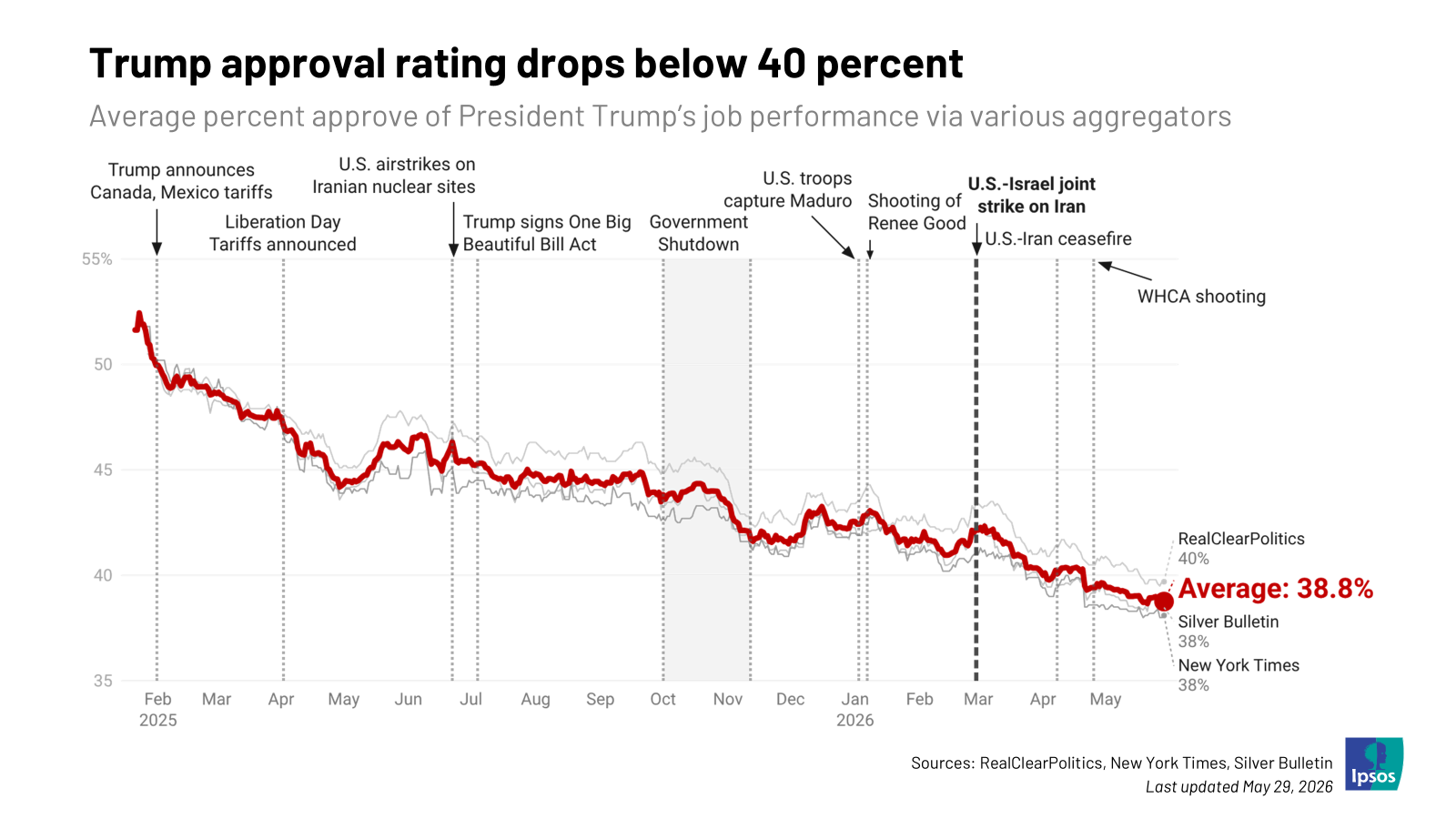
4. Danger zone. With Trump’s approval ratings falling under 40 percent and as dissatisfaction with Trump’s handling of the cost of living grows, Trump has fallen below the political inflection point. Historically, this is the range where governing becomes materially harder and presidential credibility begins to weaken. Watch this space.
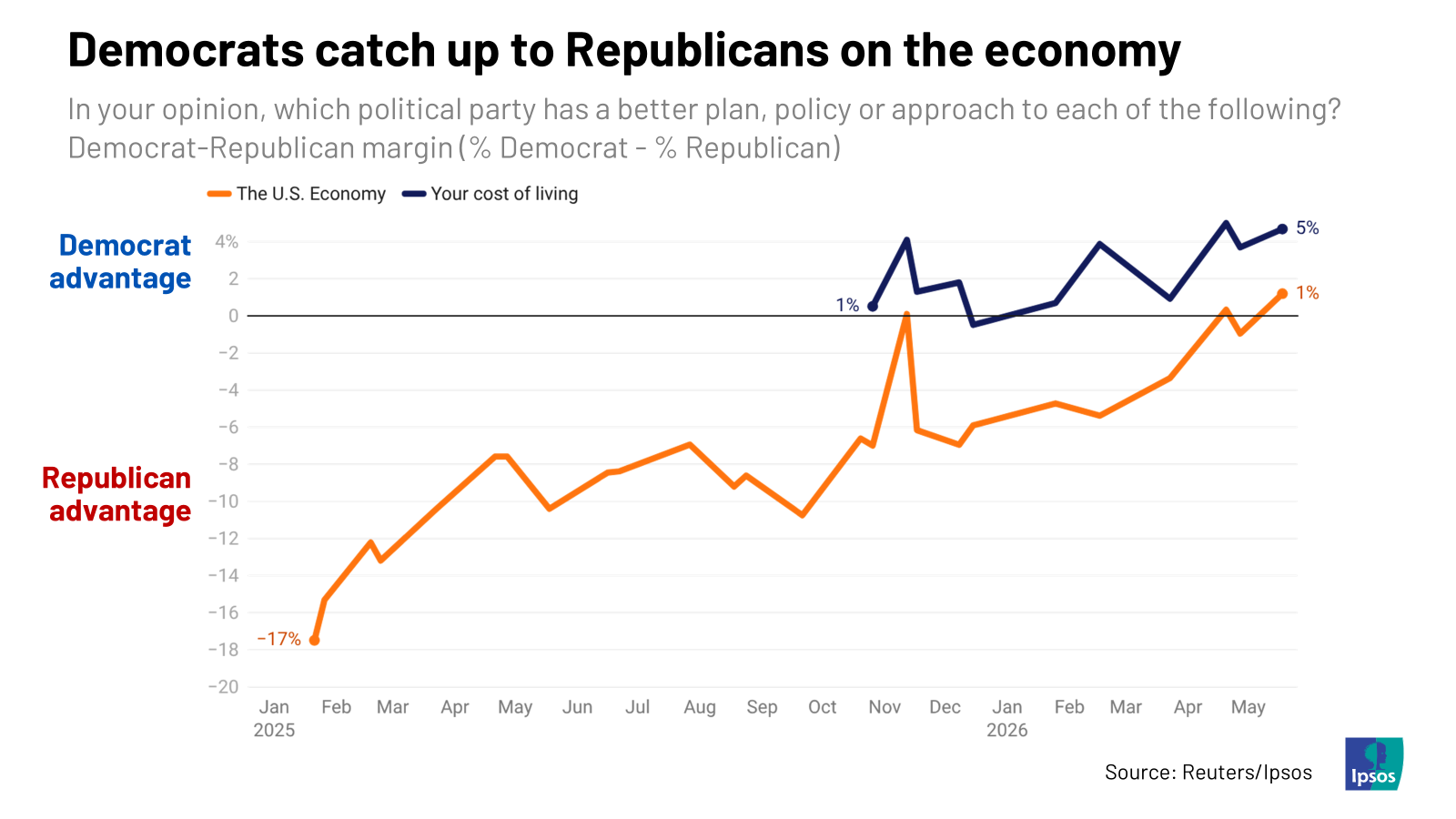
5. Cost-of-living issues have also hurt the Republican Party. The gap between Democrats and Republicans on the economy has shrunk dramatically from the start of Trump’s administration to now. Democrats even have a slight advantage on the cost of living. Clear signals that Americans are taking out their frustrations about the cost of living both on the president and on the party in power, much like they did to Democrats in 2024.
Last year, economic uncertainty and tariff-related inflation were likely key drivers in Trump’s approval ratings declining from his personal bests in the low 50s and high 40s to a more familiar zone in the low 40s. Now, rising gas prices may be behind Trump’s recent three-point decline in approval, driving his approval ratings beneath 40 percent.
Low approval ratings and the persistent effects of inflation point to a difficult midterm environment for Trump and congressional Republicans, even with redistricting changes. In addition, the political damage caused by large energy price spikes often lingers and approval ratings often do not fully recover after sustained inflation shocks. How long will the fallout of the war in Iran last? Only time will tell.


