Voices of Ukraine: Documenting Life During Wartime
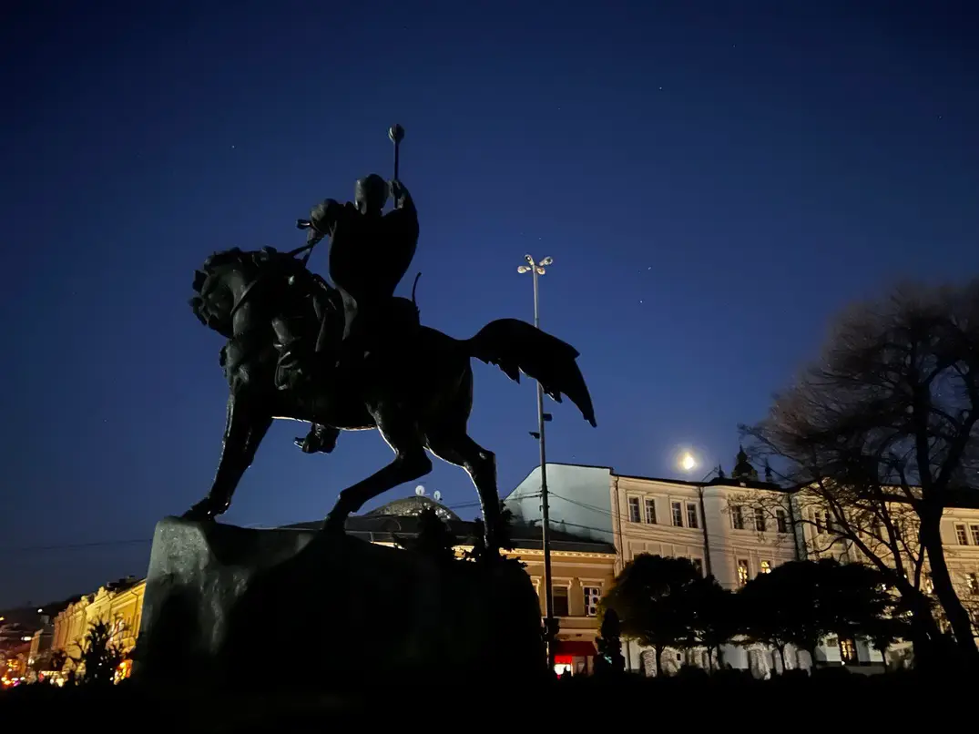
After nine grueling months of fighting, Ukraine has withstood significant destruction. Lately, critical energy facilities have been the biggest casualty, routinely targeted to withhold electricity from millions of Ukrainians. According to Volodymyr Kudrytskyi, CEO of Ukraine’s leading electrical company Ukrenergo, “virtually all large non-nuclear power stations in Ukraine have been hit”.[1] Roughly 40 percent of the country’s energy infrastructure is damaged, and 16 regions across the country have been left without power or electricity for extended periods.[2]
To combat the electricity shortages, energy companies have implemented scheduled power cuts, and the government imposed additional restrictions on electricity distribution.[3] Blackouts have become a daily occurrence. In cities throughout Ukraine, civilians are often without electricity for periods of four to 12 hours. In most instances, electricity outages lead to the loss of water, heat, internet and cell phone connection. In some cities, like the newly liberated Kherson, there is no power or water at all. As winter descends and temperatures drop well below freezing, there is widespread fear that the continued blackouts will become life-threatening.
Frequent power outages have profound consequences on Ukrainians’ lives. “Our entire lives are centered around when we have electricity,” explains Svitlana from Kyiv. Electricity is essential to access water, to bathe, cook and keep clean. When the power goes off, so does the water. Collecting and storing water becomes a priority.
Schools also operate around power outage schedules. School days are divided into two shifts – morning and afternoon. Students rotate shifts between in-person and online learning based on daily air raid alerts and electricity availability. Often, classes are held in basements.
In this installment, we meet four families living in major cities from different parts of Ukraine – Kharkiv, Kyiv, and Lviv. Their stories provide a glimpse into the daily challenges ordinary Ukrainians face, how they navigate their new reality and their hopes for the future.
Svitlana, Kotsyubynske, Kyiv Oblast
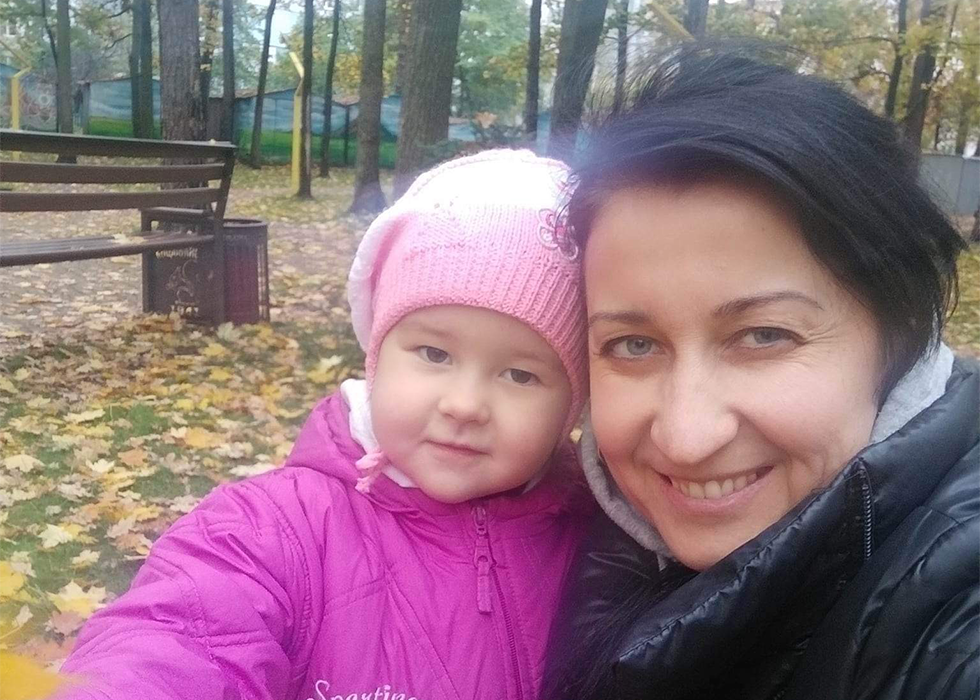
For Svitlana and her family, air-raid sirens are a part of daily life.
“Every day, we hear sirens,” says Svitlana. “It’s impossible to make plans or go anywhere because, at any time, an air raid siren can strike. If people are out and the air siren sounds, they have to run to the subway station to hide. There are no bomb shelters in Kotsyubynske [a neighborhood in northwest Kyiv where Svitlana lives], so we hide with my daughter in basements. We never know which place is safe or where a rocket might fall. It’s sheer horror. It can drive you crazy, but I have to hold it together if only for my [daughter] Alina’s sake.”
Svitlana lives with her parents and her two-year-old daughter, Alina. Her husband has been fighting on the front since the start of the war.
A commercial lawyer, Svitlana had her own firm and managed her own clientele. When the war started, she lost all her clients. She has not been able to find any new clients since. “In all honesty,” she explains, “my job is just not necessary during war.” Once professionally active, today, Svitlana’s life largely consists of caring for her daughter.
Frequent power outages have become part of daily life for Svitlana and her family. “Our entire lives are centered around when we have electricity,” Svitlana explains. “Usually, electricity is on when we wake up. If it’s on, I collect enough water for the day and bathe Alina. Then I start to cook. I make sure to make meals that don’t need to be reheated again. I try to do as much as possible in the morning before the power goes out.”
Svitlana and her family have developed strict routines for living under the power crisis, but the situation continues to worsen. “They [the power company] turn off the electricity constantly, every day, for four, eight, 12-hour stretches. Before there used to be a schedule, but now it’s random. Now we don’t know when the power will go off and come back on. We can’t plan around it.”
Air raids and power outages are just the beginning of a long list of changes Svitlana and others in Kyiv have endured since the start of the war. Many, like Svitlana, lost their jobs and are left without any source of income. Those who are still employed struggle to keep up in the workplace due to constant blackouts and power outages.
A recent Ipsos survey found that 56% of Kyiv’s residents have experienced significant income loss at a time when inflation in Ukraine is at an all-time high of 27%.[4][5] Stark decreases in income coupled with a national economic crisis have had a devastating effect on the ability of ordinary Ukrainians to meet their most basic needs.
“It’s really hard,” confides Svitlana, “We are surviving on my parent’s pension, the money my husband sends from the front and my savings. We have learned to live on a lot less, but I honestly don’t know what we will do when my savings run out.”
When asked about her plans for the future, she blinks away tears as she responds, “I have no plans, no prospect…we all live for only one day, the day this war ends, and Ukraine is free again.”
Vitali and his family, Kharkiv
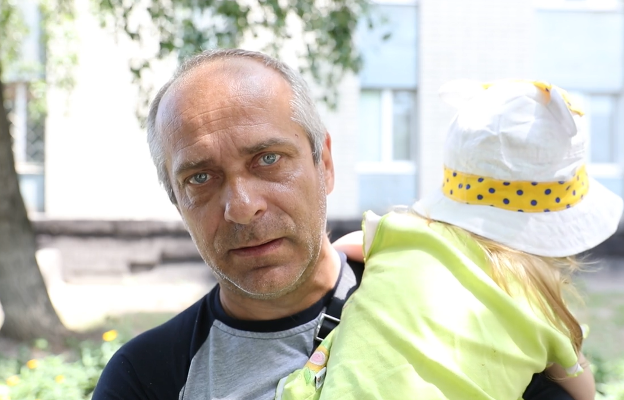
For more than two and a half months, Vitali, his wife Anastasia, and their two children, Slava and Vitalina, hid in the cold concrete basement of their apartment in the Saltivka district of Kharkiv.
Outside, the bombing was relentless and unpredictable. Throughout the day and into the night, destructive and deadly strikes hit residential structures, transportation systems, and commercial buildings.
Food and water were scarce, as anyone venturing above ground risked death. What little they had often went to the children; most days, Vitali and Anastasia simply did without.
Few areas of Ukraine have been as heavily and as consistently shelled as Kharkiv, Ukraine’s second-largest city, located less than 45km (28 miles) from the Russian border. In May, after nearly three months of war, Vitali and his family were evacuated from the besieged Saltivka district and relocated to Kharkiv’s city center.
Today the family of four lives in a makeshift shelter for internally displaced persons (IDPs); the building once served as a school. They have a warm bed, a roof over their head, and three meals a day. They are extremely grateful to the volunteers for saving their lives and giving them a place to stay.
But Vitali knows this won’t last forever. Like many, Vitali and his family lost their home and their jobs. They have no money and no place to go. In war-torn Kharkiv, work is hard to find. Vitali worries about his children’s future, their safety, and how he will provide for his family.
Taras and Oksana, Lviv

Taras and Oksana are small business owners in Lviv. The husband-and-wife team runs a vacation rental company and provides short-term rentals to tourists. For years the company flourished, but in February, Ukraine’s borders closed, and the tourism industry became another casualty of the war. Although traditional tourism has ceased to exist, Lviv has welcomed more than 240,000 IDPs.[6] Since March, the majority of Taras’ tenants have been IDPs – families and young adults who fled the fighting in other parts of Ukraine. These families rely on people like Taras and Oksana for a place to sleep. Like others in the industry, Taras and Oksana have significantly reduced their prices to accommodate IDPs staying in Lviv for extended periods.
Like for Svitlana in Kyiv, blackouts have increasingly become a reality for Taras and Oksana over the past few months. When power outages occur, the couple’s biggest concerns are for their tenants.
“The blackouts are harder on some – the elderly, young children,” Taras explains. “Oksana and I bring over what we can – candles, non-perishable food items, blankets, but there is only so much we can do.”
With increased power outages and anxiety for the upcoming winter, Taras is trying to prepare the best he can. He bought generators for his rental properties and a propane tank for his house. “It won’t do much,” he admits. “But it’s something. It will give us a couple of hours of warmth during a blackout. Hopefully, that’s enough.”
Another challenge is inflation. With soaring gas prices, like many others, Taras and his family rely on public transportation. When he has heavy loads to take to his rental properties, he usually rides his bike.
“Before the war,” Taras notes, “life was different. We were so focused on our business, trying to make a profit, save money, make renovations, invest, and go on vacations. We were always looking for our next project. On February 24th, it all changed. We all changed overnight. We make enough to get by. Anything extra we donate to the army and those who need it more. Now we know what’s truly important.”
Volodymyr and Tatyana, Saltivka district, Kharkiv
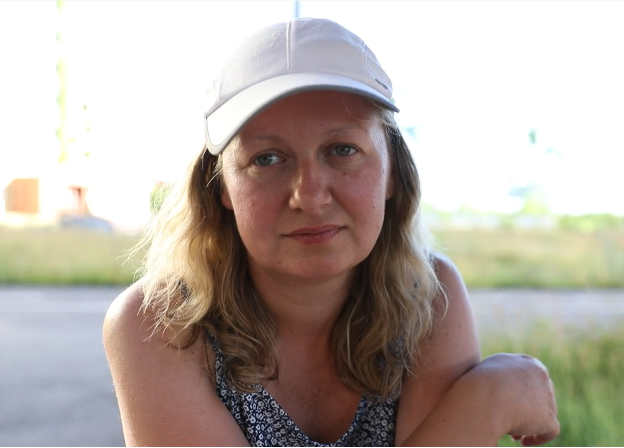
Back in Kharkiv, we meet a young couple, Volodymyr and Tatyana. They recently returned to their home in Saltivka, a neighborhood in northeast Kharkiv. In the spring of 2022, Saltivka was the most dangerous place in Kharkiv, relentlessly shelled day and night for over three months. Entire sections of the neighborhood burned to the ground.
Volodymyr and Tatyana woke up on February 24th to what they first thought were fireworks. Their confusion quickly passed as they realized they were under attack – a war they never thought possible had come directly to their doorstep. Volodymyr and Tatyana were fortunate; their apartment building was untouched, while the one directly next door burned down. The next day, they evacuated to a town 170 kilometers (106 miles) outside of Saltivka. They have since returned home.
For many Ukrainians, the economic impact of the war has been devastating. Two days after Ukraine’s invasion, Volodymyr’s office shut down. He was left without an income and never received payment for work completed. Today, he struggles to find steady work and picks up odd jobs where he can to cover daily expenses.
Tatyana, previously a manager at an IT company, was in the midst of a career change. She was slated to begin classes in March 2022. The war upended all of her plans, though she hopes she will soon be able to resume her studies.
Volodymyr and Tatyana’s “new normal” consists of overcoming many challenges. Grocery stores are closed, roads are damaged, and traveling to and from Saltivka is difficult. Tatyana and her friend Ira walk over three miles each day to buy groceries and other goods. When asked about how challenging their life has become, Volodymyr smiles and says, "You know, we are fortunate. We still have our home. So many don’t have one anymore.”
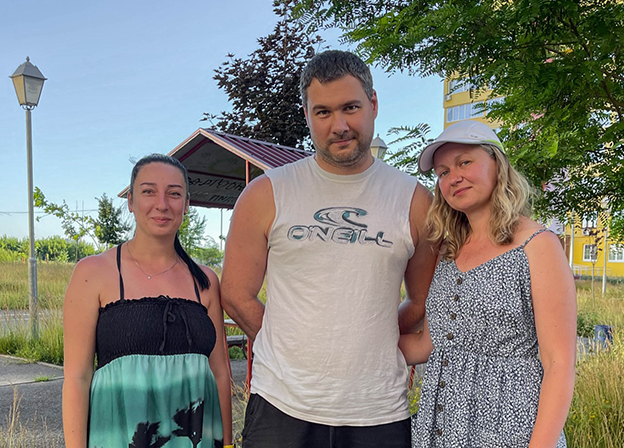
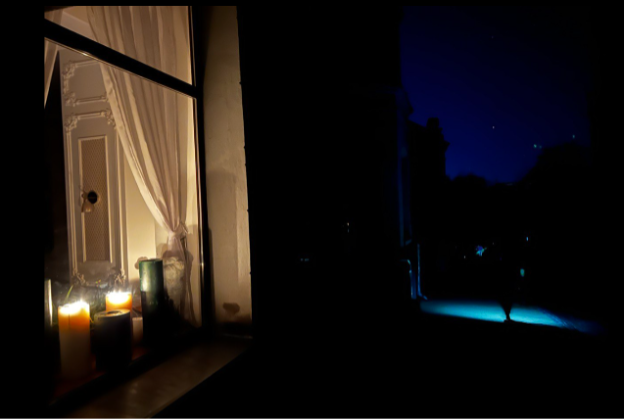
These families, like all Ukrainians, brace for a long, cold winter ahead. Ukrenergo’s CEO expects blackouts to last until at least March 2023.[7] Air strikes increase weekly, with more casualties and damages mounting throughout the country. Many Ukrainians live without power for even longer stretches of time. Yet despite all this, most Ukrainians are choosing to stay in their country, endure the cold winter, and build back a stronger Ukraine. When asked why, Tatyana from Saltivka explains it best: “It’s my home. I have to stay.”
[1] https://www.grid.news/story/global/2022/11/03/the-ukraine-war-in-data-power-outages-have-millions-of-ukrainians-living-in-and-out-of-the-darkness/
[2] https://www.grid.news/story/global/2022/11/03/the-ukraine-war-in-data-power-outages-have-millions-of-ukrainians-living-in-and-out-of-the-darkness/
[3] https://www.reuters.com/business/energy/ukrainians-likely-live-with-blackouts-until-march-end-energy-provider-2022-11-21/
[4] https://www.ipsos.com/en-us/news-polls/ukraine-resilience-monitor
[5] https://bank.gov.ua/en/monetary/report
[6] https://www.crisisgroup.org/europe-central-asia/eastern-europe/ukraine/picturing-humanitarian-response-western-ukraine#:~:text=Many%20continued%20to%20Poland%2C%20while,schools%2C%20sport%20stadiums%20and%20dormitories.
[7] https://www.scmp.com/news/world/russia-central-asia/article/3200590/ukraine-blackouts-could-last-months-residents-brace-grim-winter-amid-russian-strikes