
The Shift and the Stretch
The Shift and the Stretch
A decade or two ago, turning thirty often meant being married, having children, and settling into a stable family life. Today, in India's Urban cities, many thirty-somethings are still exploring careers, relationships, and personal ambitions. The timeline of adulthood is being rewritten - marriage, parenthood, and other traditional milestones are no longer arriving in a fixed sequence or at a predetermined age. The milestones have not disappeared, but they have shifted, reflecting a change in how urban Indians define success, stability, and fulfilment.
As education expands, careers demand longer commitments, and personal aspirations evolve, young Indians are choosing to delay major life decisions, creating new time-periods for how adulthood unfolds for them. The Ipsos Life Aspirations Report 2026 shows that having a stable, full-time job is more important than getting married or having kids. Career building often takes precedence over family formation – for both men and women. This “Shift” in the Milestones has “Stretched” the life stages, creating new opportunities and challenges.
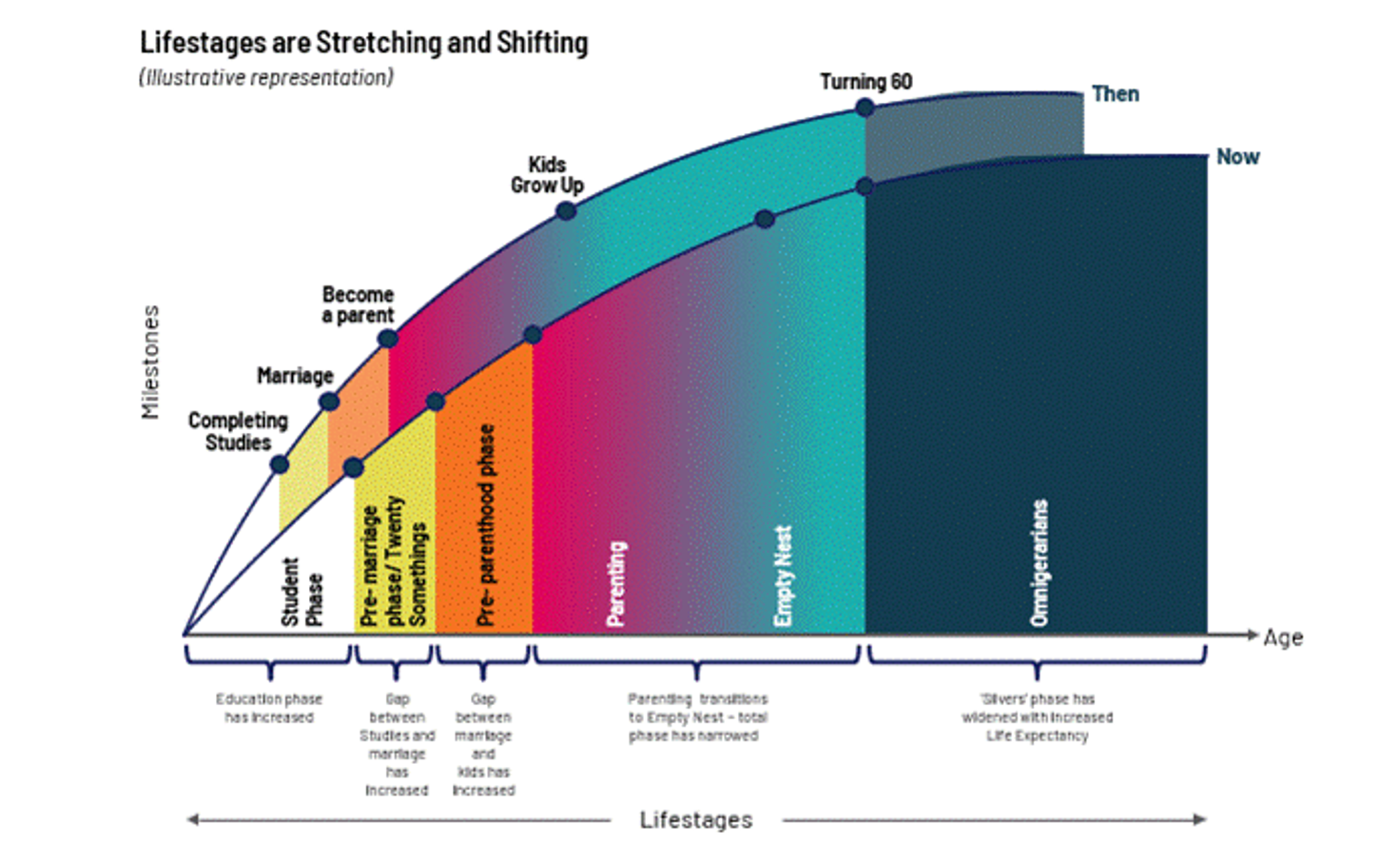
At the other end of the population pyramid, people are living longer, and the post-retirement life stage is extending. And between these two groups are middle-aged people, sandwiched between caring for young, teenage, or adult children on the one hand and ageing parents on the other. This double-ended squeeze carries with it both emotional and financial consequences. These two life stages, “Silvers” and “Sandwiched,” come with their own challenges and requirements.
Brands would do well to monitor these changing patterns and build these into their innovation and marketing activities:
• Changing family structures – Rise of Solo Living and smaller households
• Expanded phases of “Self- consumption”
• Delayed Entry into “Family Basket” Categories
• Growth of “Chosen Family” and Pet Parenting
• Growing spending power of India's “Silvers”
• Need for Convenience for the “Sandwiched” Life stage
In an era of delayed milestones and diverse households, relevance will come not from targeting demographics, but from understanding how people's lives are being redefined.