Brits significantly less fearful than before the Reeves budget but say the state of British economy is just as poor
- 44% of the public report feeling more fearful about how announcements in the upcoming Autumn Budget might impact their own financial situation, down from 60% ahead of the 2025 Budget (November 2025).
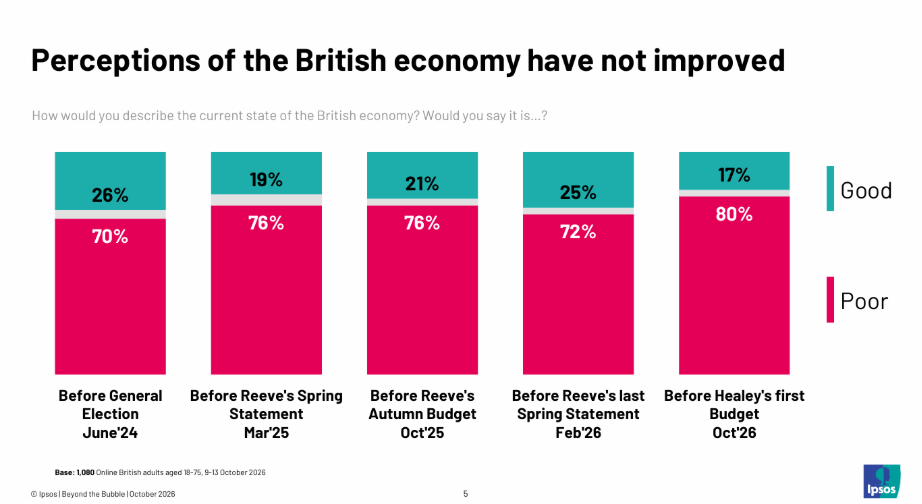
- However, 8 in 10 (80%) of Britons describe the current state of the British economy as poor, higher than before Rachel Reeves’ 2025 budget (76%).
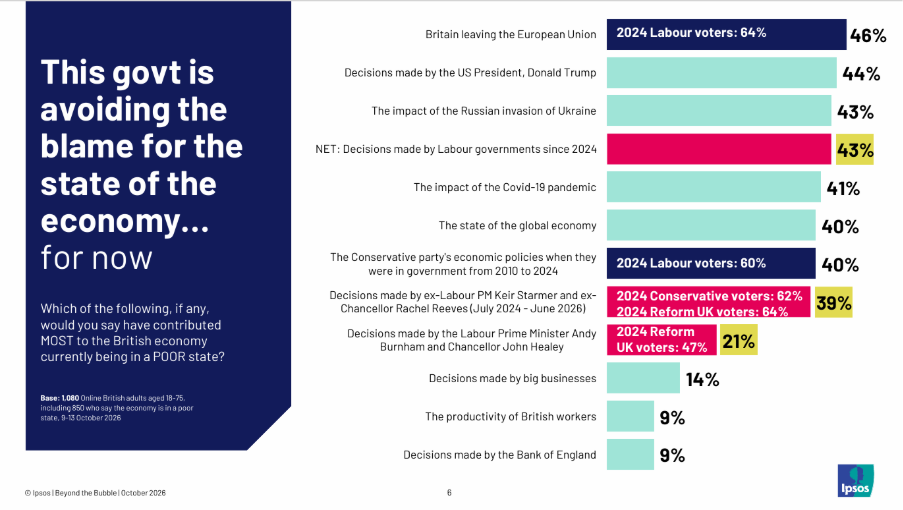
- Brexit tops the range of factors blamed for the poor state of the economy (46% of those who say the economy is in a poor state), including decisions by US President Trump (44%) and the war in Ukraine (43%).
London, UK. New polling data from Ipsos in the UK, conducted between 9–13 October 2026, reveals that despite a slight political honeymoon period for Prime Minister Andy Burnham and Chancellor John Healey, public economic pessimism remains deeply entrenched as the nation awaits the upcoming Autumn Budget on 28 October.
Commenting on the findings, Alex Bogdan, Research Director at Ipsos in the UK said:
The Burnham Bounce may have provided a temporary cushion for the new Government, but this goodwill is not yet translating into an improved economic mood or ‘hope’ among households and businesses just yet.
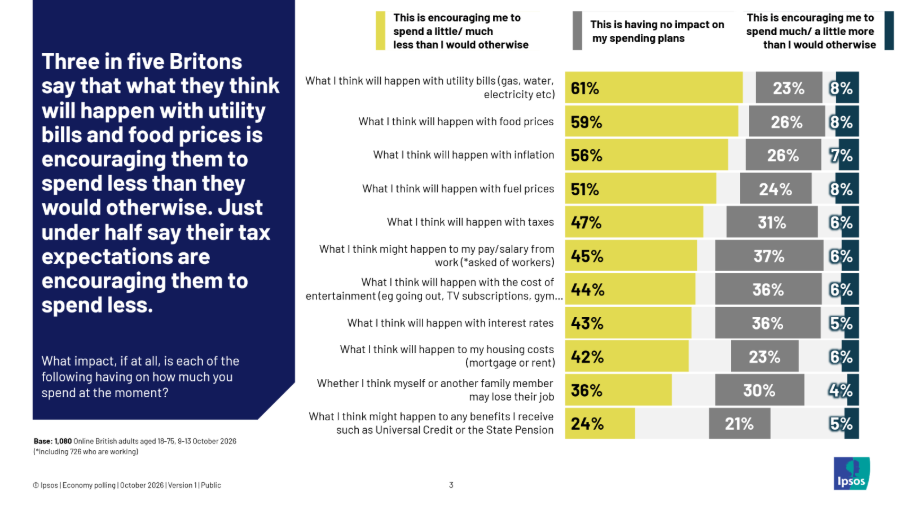
Brits remain deeply anxious about their personal finances and these underlying worries continue to dictate consumer sentiment where we see that expectations of higher energy bills and other cost of living factors already driving saving and spending decisions in people’s lives.
"While the Prime Minister and Chancellor enter their first major fiscal event with a degree of ‘breathing space’, voters simultaneously are demanding clear signals of improvement, without showing a clear willingness to accept painful compromises on tax, spending, or other economic trade-offs.
As the country awaits the details on 28 October, the honeymoon will have to, in part, give way to hard realities as the public, businesses and opposition parties mark the government's economic homework.
Stubborn economic pessimism
Public perception of the national economy remains overwhelmingly negative, showing little sign of relief heading into the autumn fiscal event.
- 8 in 10 (80%) of Britons describe the current state of the British economy as poor, slightly more than score recorded prior to previous to Rachel Reeves Budget (76% bad, 21% good, November 2026). Only 17% describe the state of the economy as good.
Who do Brits blame for the current poor economic situation?
Blame for the poor state of the economy is attributed to a range of factors including Brexit (46%), decisions by US President Trump (44%), the war in Ukraine (43%), the Covid pandemic (41%). 39% blame decisions by ex-PM Keir Starmer and former Chancellor Reeves, compared with 21% pointing at decisions made by Andy Burnham and John Heale.
However, there is a less fearful public ahead of next Wednesday.
- However, when asked about the upcoming Autumn Budget, 4 in 10 (44%) of respondent’s report feeling more fearful about its impact on their own personal finances, a dip from 60% in November 2025 before the Rachel Reeves budget.
- 45% of the public express apprehension regarding how the budget announcements will affect the broader British economy, also down from 59% in November 2025.
- That may in part be because expectations of fiscal tightening remain high, with 65% of Britons anticipating increased taxes, while 51% expect further government borrowing.
Growth or redistribution?
Britons display consistently complex attitudes toward economic strategy, balancing the need for growth against deeply held environmental and fiscal preferences.
- 53% of British adults believe more focus should be placed on improving the overall economy over redistributing improving the economy of specific regions and nations, which accounts for 24%.
- On tax and spend trade-offs, 35% favour cutting personal taxes even if it means spending less on public services, compared to 31% who support increasing public service spending even if it means paying more in taxes.
- 53% of the public agree that economic growth does more good than harm, with just 10% saying it does more harm, though divisions remain on how that growth should be pursued.
Notes to Editors:
- For media queries, please contact Alex Bogdan at [email protected] or [email protected]
- For the full findings, please visit the Ipsos website.
- Ipsos interviewed a representative sample of 1,077 online British adults aged 18–75, 9-12 October 2026 and a representative sample of 1,080 online British adults aged 18–75, 9-13 October 2026.
- Data are weighted to match the profile of the population. All polls are subject to a wide range of potential sources of error.