Young Britons place significantly higher importance on social class than older generations, new Ipsos and Politics JOE polling reveals
This data was featured on the 17 November 2026 episode of the Politics JOE podcast.
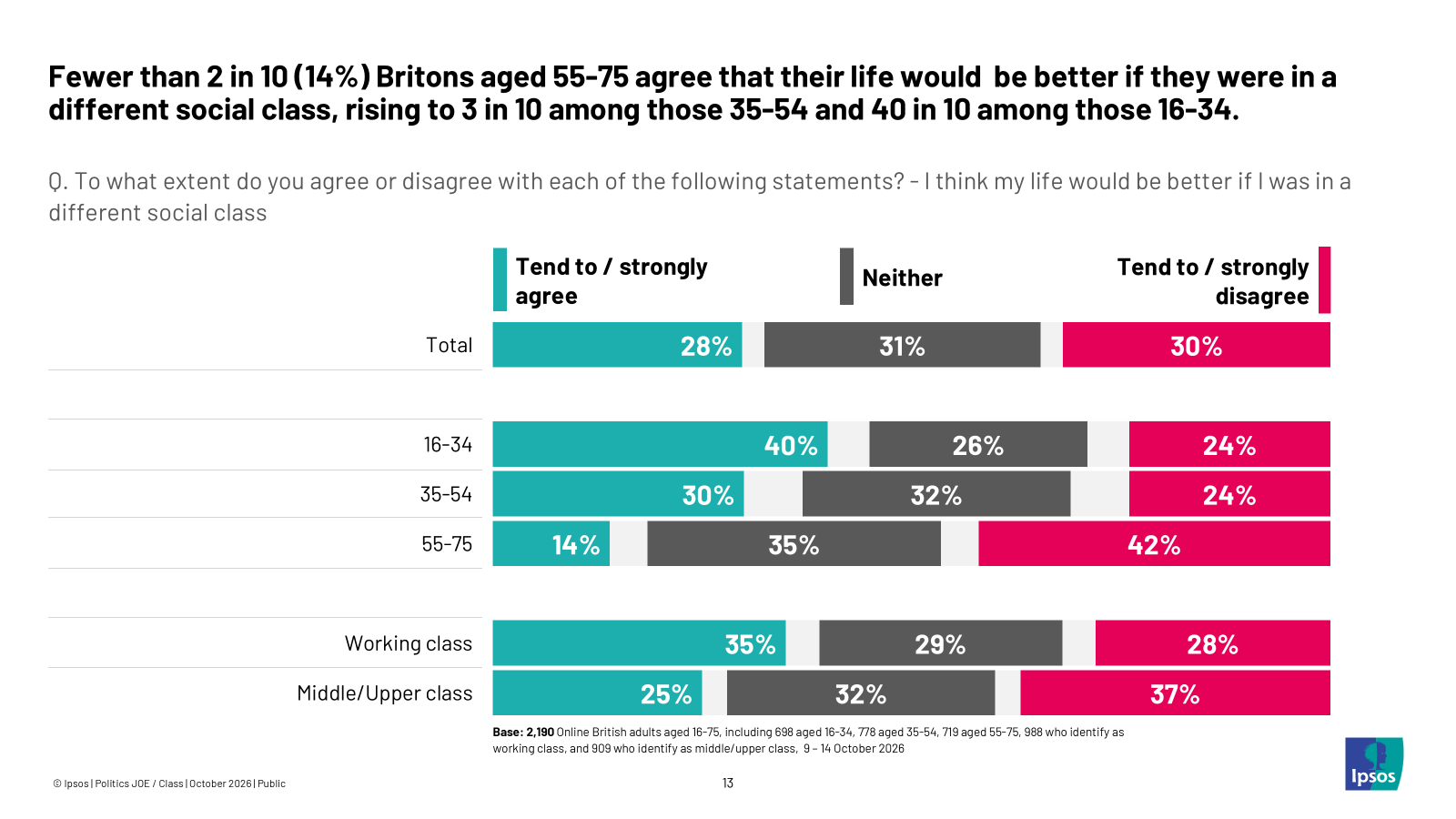
- 4 in 10 (40%) of Britons aged 16-34 agree that their life would be better if they were in a different social class, compared to just 14% of those 55-75 who say the same.
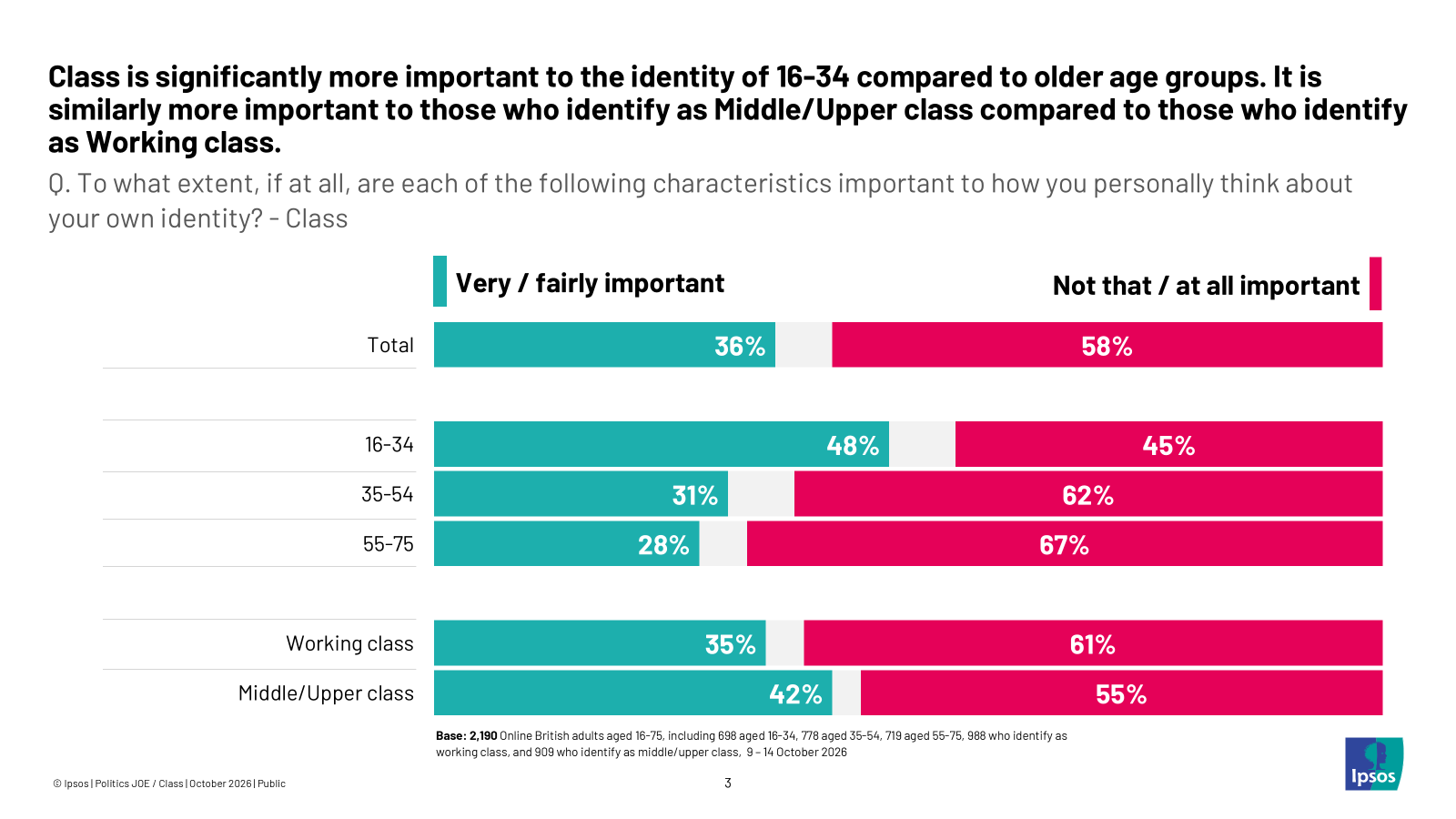
- Nearly half (48%) of 16–34-year-olds say social class is important to their personal identity, compared to just 28% of those aged 55–75.
- At a national level, over half (58%) say social class is not very or not at all important to how they personally think about their own identity, placing it behind characteristics such as gender (57% important) and nationality (56%).
- 51% point to their salary as the leading factor making them feel part of their social class, followed by their current housing (47%) and level of education (44%).
Class and personal identity across generations
The research shows that demographic and geographic traits carry far more weight than social class when Britons consider who they are, though stark generational and class divides persist beneath the surface:
- Nearly 6 in 10 (57%) say gender is very or fairly important to their personal identity, closely followed by nationality (56%), regional background (51%), and age (49%). By contrast, just 36% say class is important to their identity, ahead only of religion (30%).
- 48% of young Britons aged 16–34 view class as important to their personal identity, compared with 31% of those aged 35–54 and 28% of those aged 55–75. Similarly, 42% of those who identify as middle or upper class see class as important to their identity, compared with 35% of self-identified working-class adults.
- Looking back over the past two decades, half of the public believe race or ethnicity (50%), sexual orientation (50%), gender (48%), and nationality (48%) have become more important to the identity of the average person in Britain. Only 28% feel class has grown in importance, though this rises to 36% among 16–34-year-olds.
Social mobility and the markers of class
The findings highlight a notable shift in how British adults categorise their upbringing compared with their current status, alongside differing views on what defines class membership:
- While 61% report growing up in a working-class household, exactly half (50%) identify as working class today. Conversely, 34% now describe themselves as middle class, up from 26% who say they grew up in a middle-class home. Only 2% identify as upper class, matching the proportion raised in upper-class households.
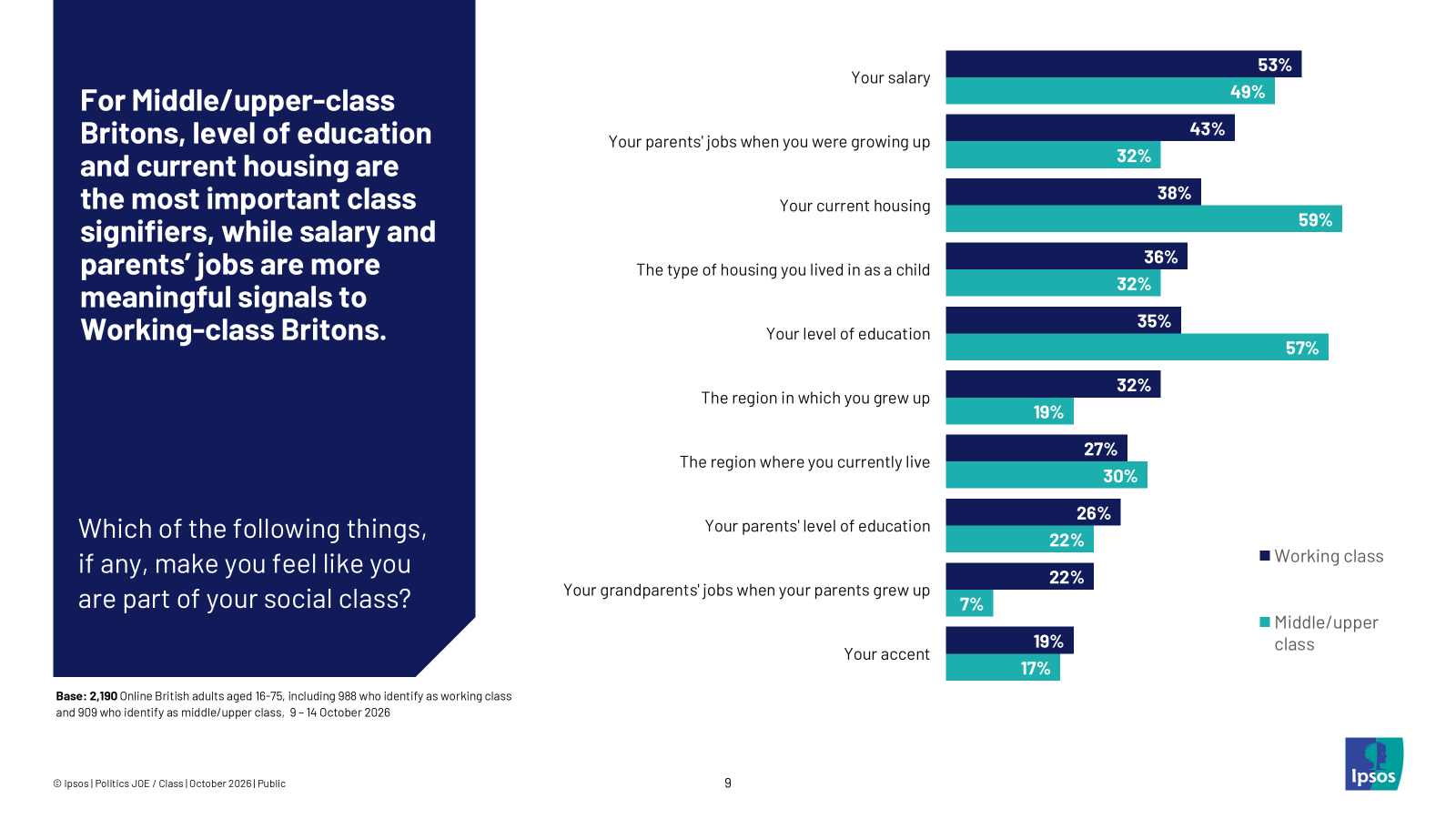
- Material and educational achievements lead as class signifiers, with 51% citing their salary, 47% their current housing, and 44% their level of education as factors that make them feel part of their social class. Family background plays a secondary role, led by parents' jobs while growing up (39%) and childhood housing (35%), while accent (18%) ranks near the bottom.
- Priorities differ sharply by social group: for middle and upper-class Britons, current housing (59%) and level of education (57%) are the primary markers, whereas working-class adults place greater emphasis on salary (53%) and their parents' occupations (43%).
Attitudes toward class fluidity and aspiration
Public opinion is divided on whether class background remains fixed when circumstances change, as well as how visible class divisions are in everyday life:
- Around 4 in 10 (39%) agree it is acceptable to continue identifying with your childhood class background even if your life circumstances have changed, while 18% disagree and 32% neither agree nor disagree. Opposition to retaining a childhood class label is higher among adults under 55 (22% of 16–34s and 20% of 35–54s) than among those aged 55–75 (13%).
- 35% agree it is easy to tell what social class someone belongs to, compared with 29% who disagree. Young people aged 16–34 are the most likely to believe class is easily identifiable (43%).
- Overall, 28% believe their life would be better if they were in a different social class, against 30% who disagree. However, this figure reaches 40% among 16–34-year-olds and 35% among working-class Britons, compared with just 14% of those aged 55–75.
Commenting on the findings, Richie Jones, Chief Client Officer at Ipsos in the UK said:
"These findings show that while Britain's relationship with social class is shifting, it remains a powerful undercurrent in how people experience everyday life. On the surface, class sits behind characteristics like gender, nationality, and regional identity, and more Britons now see themselves as middle class than grew up in middle-class households.
Yet beneath that broad picture, class is defined heavily through tangible economic pressures such as salaries, housing, and education, and resonates most acutely with younger generations for whom each of these milestones is increasingly out of economic reach. Four in ten 16-to-34-year-olds feel their lives would be better in a different social class, compared to fewer than one in five 55-75 year olds who say the same, signalling real frustration around social mobility and living standards.
For policymakers and brands, the challenge is clear: addressing economic insecurity and housing affordability will be central to convincing younger and working-class Britons that opportunity is genuinely open to all."