Can Reform rebound?
August 2026
Checking the pulse of the nation
-

Reform's run hits a speed bump
For the first time this parliament, Labour (28%) lead Reform (25%) in Ipsos' headline voting intention poll. Labour take a 3 point lead over Reform UK, and have risen 4 points since June. There is little change for the Conservatives, Green Party, and Lib Dems.
Click here -

A hot spell for green priorities
Nearly 6 in 10 Britons (59%) agree economic growth does more good than harm, compared with just 13% who feel it causes more damage. However, 44% of the public prioritise protecting the environment over economic growth, whereas 24% believe growth should take precedence over environmental protection.
Click here -

School's out for AI?
Half (52%) of Brits think AI should be banned in schools, placing Great Britain in the top 5 most AI-sceptical nations globally alongside Canada (59%), the US (56%), Ireland (57%) and Australia (52%).
Click here
Can Reform Rebound?
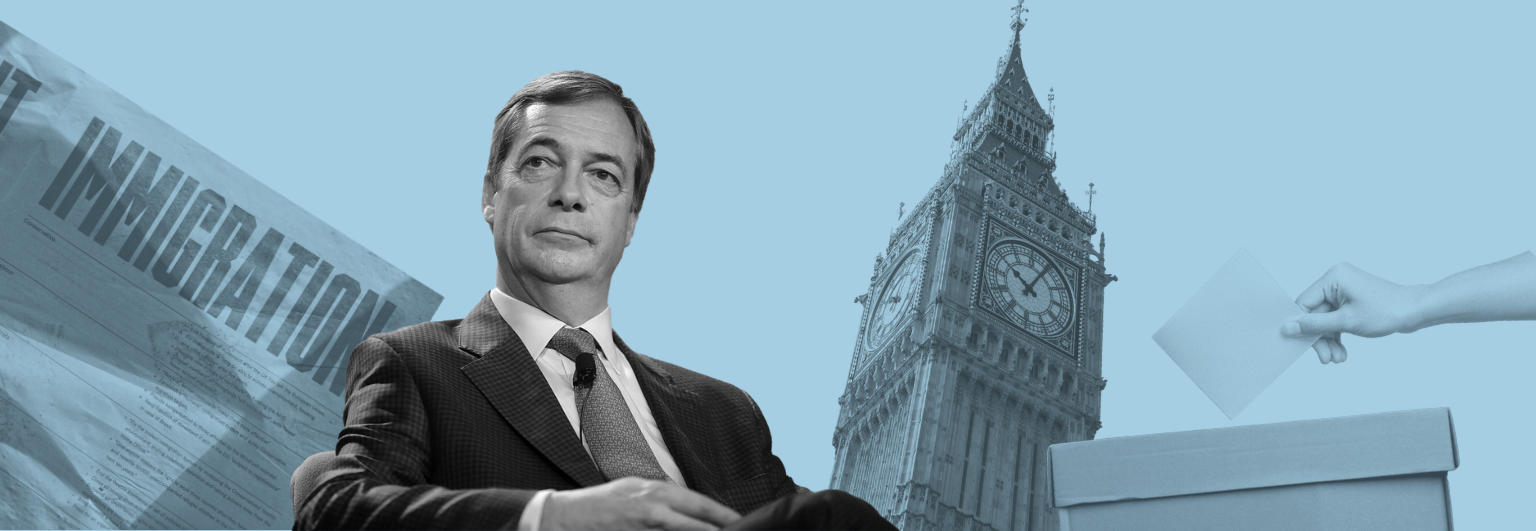
A year ago, Reform UK looked strong. Riding widespread dissatisfaction with the government and deep public concern about immigration, Nigel Farage's party established itself as the principal challenger to Labour.
A year later, as Reform kicks off its party conference next week, that momentum appears to have stalled. Our recent polling suggests Labour has benefitted from its change in leader and Prime Minister while Reform faces growing questions about its readiness for government, and the popularity and capability of its leader Nigel Farage.
Labour regains the lead
For the first time this parliament, Labour leads Reform UK in Ipsos' headline voting intention measure. Labour stands at 28%, four points higher than in June, while Reform has slipped to 25%.
And the rest of the data suggests that the narrative of Reform’s rise and Labour’s retreat may be changing:
- Only 21% of Britons believe Reform UK is ready to form the next government, and nearly two-thirds (64%) disagree that the party is ready for power.
- Nearly two-thirds of the public (65%) don’t believe Nigel Farage is ready to be Prime Minister, while only 21% think he is.
- And the public still back ongoing investigations into the Party Leader. In July we asked what should happen if Farage won in Clacton, and nearly three-quarters of the public said a standards investigation into him should continue (73%), compared with only 15% who thought it should be dropped.
Meanwhile, Andy Burnham has had a positive start as Prime Minister. When asked who would make the most capable Prime Minister, 36% of Britons choose Burnham, compared with 15% for Farage and 13% for Kemi Badenoch. The new Prime Minister also enjoys significantly stronger personal ratings than the opposition leaders - 50% of Britons say they like Burnham, compared with just 24% who say the same about Farage.
The limits of the Burnham bounce
But it's not all sunshine and roses for Burnham and Labour. Reform should take some comfort from looking beneath the headline figures.
- Seven in ten Britons remain dissatisfied with how the government is running the country, while just 18% are satisfied. Despite Labour's bounce in the polls, this is a more negative public starting point than the average for new governments in Ipsos records. It’s similar to the position when Liz Truss became PM in September 2022, and only slightly better than when Rishi Sunak took office in November 2022, and Boris Johnson became PM in July 2019.
- A majority (52%) disagree that the current government is competent, while only 19% agree. Notably, competence ratings have improved not because more people are now convinced, but because some previous critics have moved into the undecided camp.
- Burnham's personal ratings, while positive, are more modest than some of his predecessors. Just 29% are satisfied with the job he's doing as Prime Minister, below Keir Starmer's first-month score (37%) and well behind the honeymoon periods of Theresa May (54%), David Cameron (57%) and Tony Blair (65%).
In other words, Labour's current advantage looks less like overwhelming enthusiasm and more like the benefit of the doubt – for now. The public may prefer Burnham to Farage today but that could change.
Reform's enduring strength
Despite the recent dip in the polls, writing off Reform would be a mistake. The party retains the advantage that immigration remains the public's top concern.
- July's Ipsos Issues Index shows immigration remains the top issue Britons think the country is facing, ahead of the economy, inflation and the NHS. Concern has increased again in recent months, reaching its highest level this year.
- Almost half (48%) of Britons support strict limits on immigration even if doing so harms economic growth, while only a third prioritise economic need over tighter controls.
This remains the core issue that fuelled Reform's rise and the reason the party continues to pose an electoral threat.
What should Reform do at conference?
If Reform's conference is to mark the beginning of the party moving on from recent challenges it will hope to achieve three things.
- Look for ways to convince voters that it's a party that is ready to govern.
- Look to broaden the offer beyond immigration. Immigration remains a powerful issue, but voters are increasingly looking for credible plans on public services, welfare, living standards and defence.
- Try to present a strong leadership. Nigel Farage is very popular with Reform UK supporters but his personal poll ratings have fallen in recent months. He will want to move past that and project the image of a man ready to be Prime Minister.
The good news for Reform is that Labour's advantage remains shallow, public dissatisfaction remains extraordinarily high, and many voters have yet to make up their minds about Britain's new Prime Minister.
Whether Reform can use its conference season to broaden its appeal and demonstrate credibility as a potential alternative government will go some way to determining whether its recent dip in the polls proves temporary or the beginning of a more significant reversal.