
Concern about defence doubles to become as big an issue for Britain as the NHS and inflation
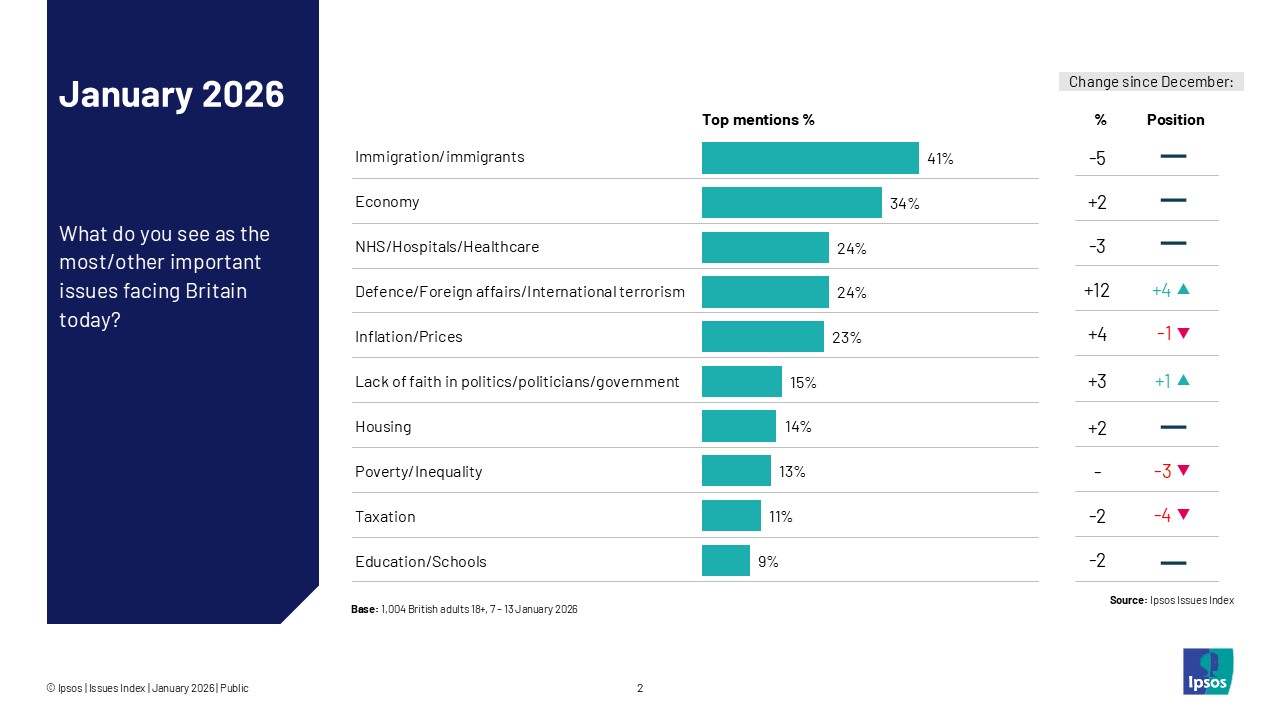
The January 2026 Ipsos Issues Index reveals a sharp increase in the level of concern for defence and foreign affairs. Twenty-four per cent of the public name it as an important issue for Britain, doubling its score since last month. Fieldwork was conducted between 7 and 13 January, during which time US President Donald Trump was making threats against Denmark and NATO over his demands for Greenland.
Concern about defence is higher among Lib Dem, Labour and Green party supporters (41%, 40% and 39% respectively), graduates (32%) and those in social grades AB (33%). People aged 18-24 are particularly unlikely to mention this as a big concern for Britain (6%), with supporters of Reform UK, private renters (12%), and those in social grades DE (16%) also less likely to see this as a concern.
Immigration remains the biggest issue facing the country this month. Forty-one per cent of the public see it as a concern, a fall of five points since December. It also remains the single biggest issue for Britons, mentioned by 24%. Concern remains more significant among Reform UK (78%) and Conservative (47%) supporters, those aged 75+ (52%) and people in social grades C2DE (46%).
The economy remains the second-biggest issue, mentioned by 34% and up two points on last month. The NHS and inflation are joint third-biggest issues this month, alongside defence: concern about the NHS is down three points from December, while worry about inflation has increased by four points.
Economic Optimism Index
Ipsos’ Economic Optimism Index asks Britons whether they think the general economic condition of the country will improve, stay the same, or get worse over the next twelve months, and has been tracking the economic mood of Britons since 1978.
The latest results show 12% think the economy will improve and 66% get worse, giving a net Ipsos Economic Optimism Index figure of -54. This is an increase from last month (when it stood at -66), however is still well below the long-term average of -18.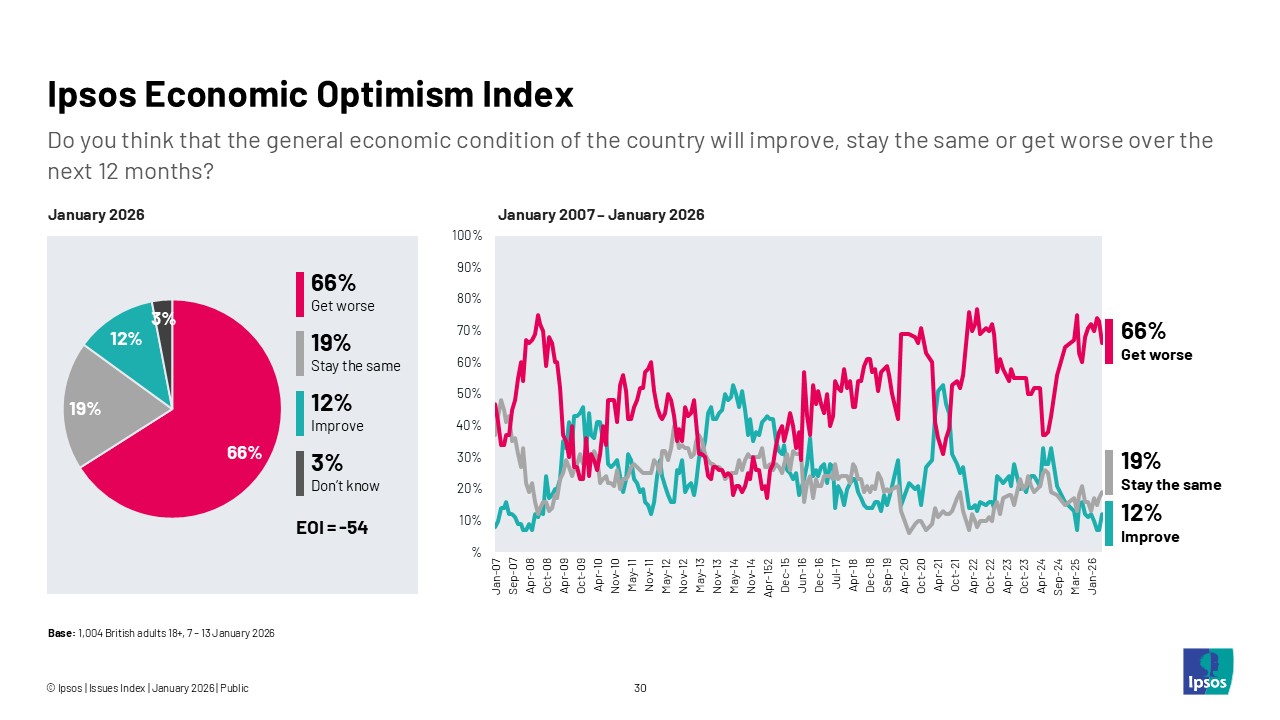
The improvement in optimism has been driven by an increase among Labour party supporters: this month, 41% say they expect the economic condition of Britain to improve over the coming year, 14 points up from their score in December (27%). However, the proportion who think the economy will worsen remains the same as last month, at 34% (32% in December).
The level of net economic optimism this month (eighteen months into Keir Starmer’s premiership) remains the lowest record for a new Prime Minister at this stage, similar to that of Margaret Thatcher in September 1979 (-53).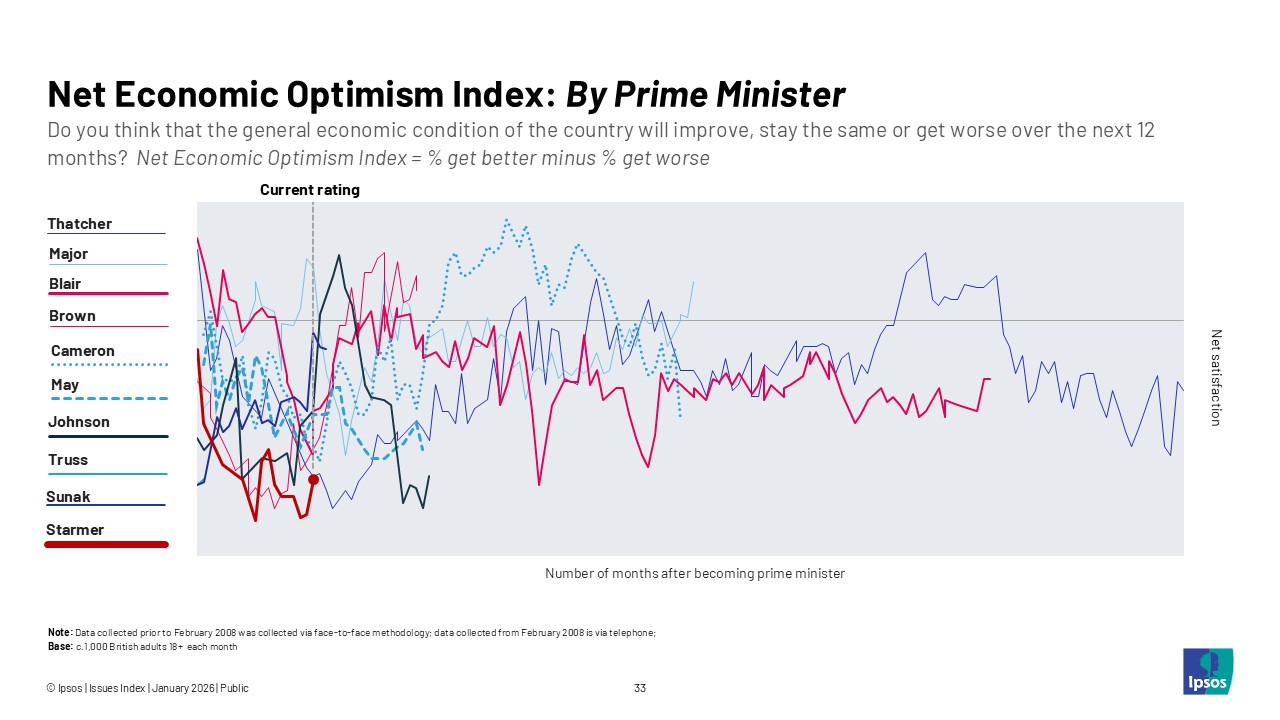 Mike Clemence, Research Director at Ipsos said:
Defence has unsurprisingly risen up the public agenda following US President Donald Trump’s recent actions in Venezuela and his threats against Greenland, Europe and the UK. But immigration and the economy are still seen as bigger issues facing the country.
Economic optimism has shown some signs of a thaw since December; however the public remain deeply glum about the UK’s likely economic performance over 2026 – with pessimism highest among older people, non-graduates and Reform UK supporters.
Technical note:
- Ipsos' Issues Index is the longest-running gauge of British public concerns. It is conducted monthly and has provided an overview of the key issues concerning the country for over 50 years. The answers are spontaneous responses, and participants are not prompted.
- Ipsos interviewed a representative sample of 1,004 adults aged 18+ across Great Britain. Ipsos’ telephone omnibus was used for this survey. Interviews were conducted between 7 – 13th January 2026. Data are weighted to match the profile of the population. All polls are subject to a wide range of potential sources of error.


