
Discord on business rules

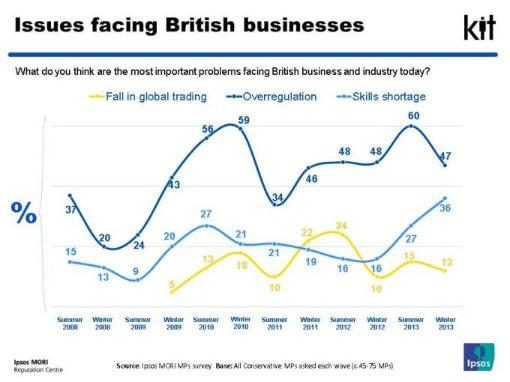
In January, David Cameron announced that he was slashing the red tape that affects businesses. This may be music to the ears of his party, as well as the businessmen and women who run some of the UK’s leading companies, but he could find that his tune doesn’t play so well among the general public in the run up to 2015. Overregulation has been a perennial bugbear for Conservative MPs, with prominent backbenchers like David Davis calling for a “bonfire of regulations” to boost growth and lift Britain out of the recession. Whether or not they would have chosen his turn of phrase, other Conservative MPs agree with Davis. Our poll of MPs from Winter 2013 shows that nearly half of Conservative MPs think that overregulation and bureaucracy are the top issues facing British businesses at the moment – for them, a more important issue than the skills shortage, lack of investment in businesses or a fall in global trading. Indeed, overregulation has been a top concern for Conservative MPs since before they took power in 2010.
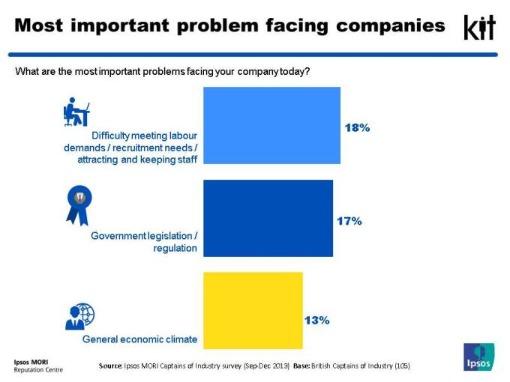
Too much regulation has also been a concern for business leaders at some of the UK’s top companies. Our Captains of Industry survey from 2013 shows that government legislation and regulation is one of the most important problems that companies face, more so than the state of the economy in general. One business leader, when asked what are the most important problems facing their company today, said “Regulation and the economy. Regulation is just killing us.”
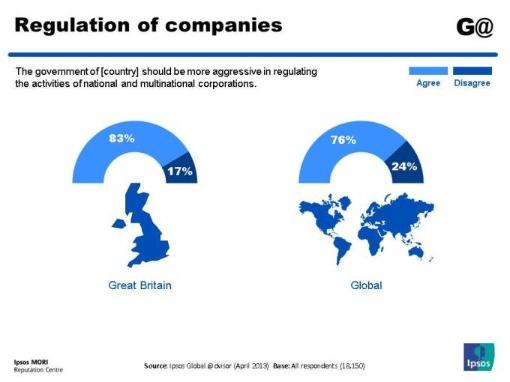
Cameron’s announcement should come as welcome news then, reducing part of the burden that regulation can place on business dealings in the UK. But while Conservative MPs and business leaders are in harmony about the effect of regulation on the UK economy, as the 2015 election approaches Cameron may find himself under pressure from another group: the British public. Our Global @dvisor survey of 24 countries around the world found that British people want to see the government be more aggressive in its regulation of corporations, not less. Indeed, the proportion of the British public who want more aggressive regulation is higher than the global average.
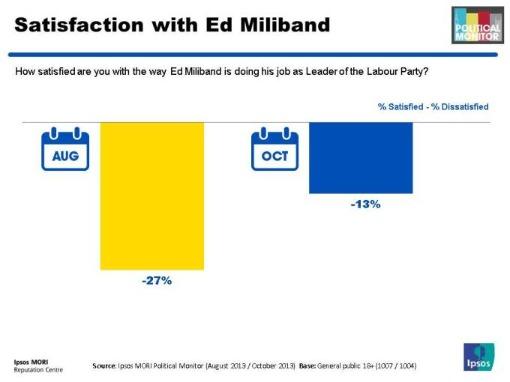
This may come as no surprise: the British public has not been particularly favourable towards ‘big business’ since the recession struck. And in the meantime, in the face of rising prices from the ‘Big Six’ energy companies, Ed Miliband has proposed people-pleasing measures such as a cap on energy bills. His gamble paid off, winning support from a majority of the general public and helping to raise levels of satisfaction with Miliband personally to one of the highest we’ve seen (Cameron’s satisfaction levels for the same period remained consistent).
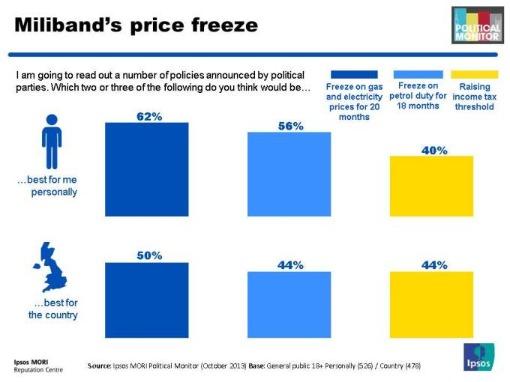
All in all, Cameron may find that the public is less disposed to welcome deregulation than Conservative MPs or business leaders. In the next year, his task will be to convince the British public to align their thinking with Conservative MPs and business leaders – to believe that excessive bureaucracy can harm British businesses and scare off investors from setting up in the UK. From the looks of our research, it may be harder than he anticipates to get everyone singing from the same hymn sheet.
Ipsos’s MPs survey runs twice annually, interviewing a representative sample of c.100 MPs from the UK House of Commons. Interviews are conducted face-to-face.
Ipsos’s Captains of Industry survey runs annually and interviews c.100 of the UK’s top business leaders. Interviews are conducted face-to-face.
Ipsos’s Global @dvisor is a multi-country, online, monthly syndicated research service among the general public.
Ipsos’s Political Monitor is a monthly telephone survey among member of the British general public aged 18+.


