
Opposition to ID cards doubles since July, Ipsos poll finds
New data from Ipsos in the UK shows that more people now oppose than support a national identity card scheme, with opposition roughly doubling from July 2005.
Key findings
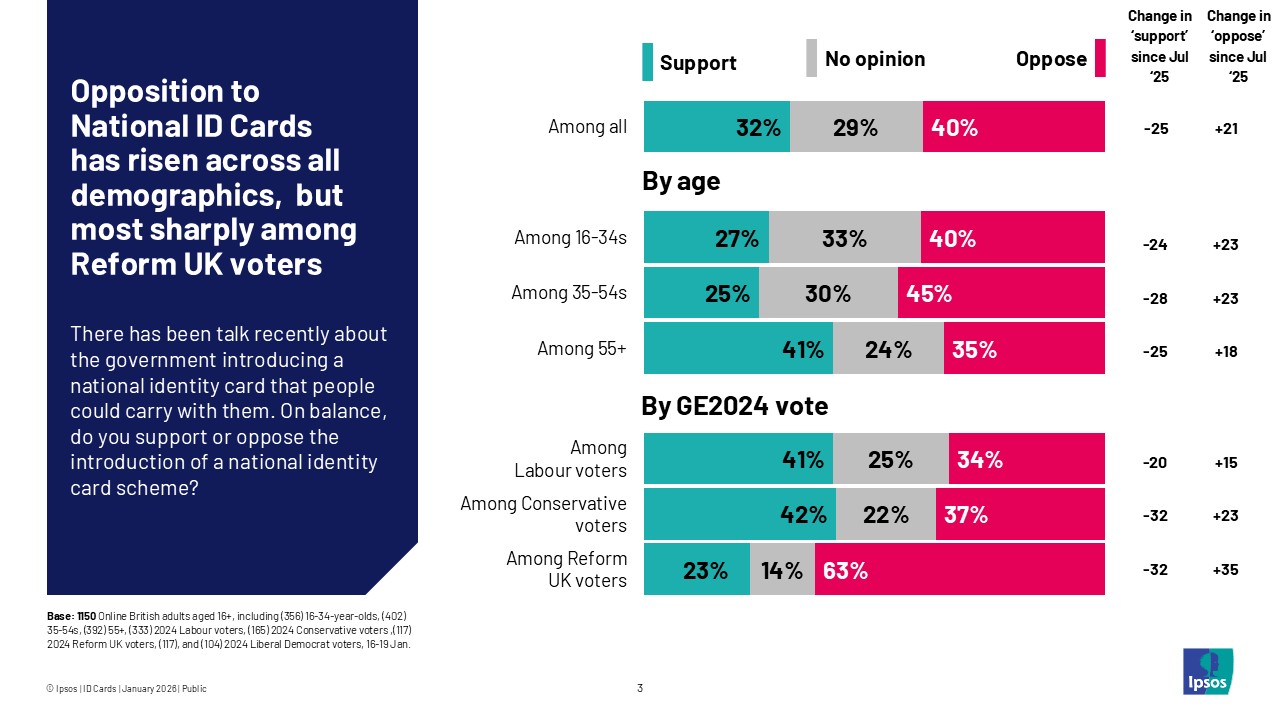
- Levels of opposition: Four in ten (40%) now oppose the introduction of a national identity card scheme, with 32% in support. Levels of opposition have roughly doubled from July 2025, when 19% opposed the idea and 57% were in support. Opposition to National ID Cards has risen across all demographics, but most sharply among Reform UK voters.
- Reasons for support: Those in favour see practical benefits to an ID card. The most popular reasons for supporting the scheme include being good for general security reasons (53%), having one card to act as ID, passport, and driving license (52%), and making it easier to prove one's identity (50%).
- Concerns centre on need, privacy and lack of trust: Among those who oppose an ID scheme, three in five (60%) don’t think they are necessary as they already have identification. 52% say they do not trust the government, with 48% believing it would be the start of a police state/big brother.
- Concerns around civil liberties: Over two in five (43%) are now concerned that the introduction of ID cards could negatively impact their civil liberties – up slightly from 39% last summer.
- Lack of trust in government: Over half of Britons lack confidence in the government to hold personal information securely (56%, up from 51% last year). Furthermore, the public continues to lack confidence in the government to introduce national identity cards smoothly –72% say they are not confident, increasing 11ppts from 61% since last summer.
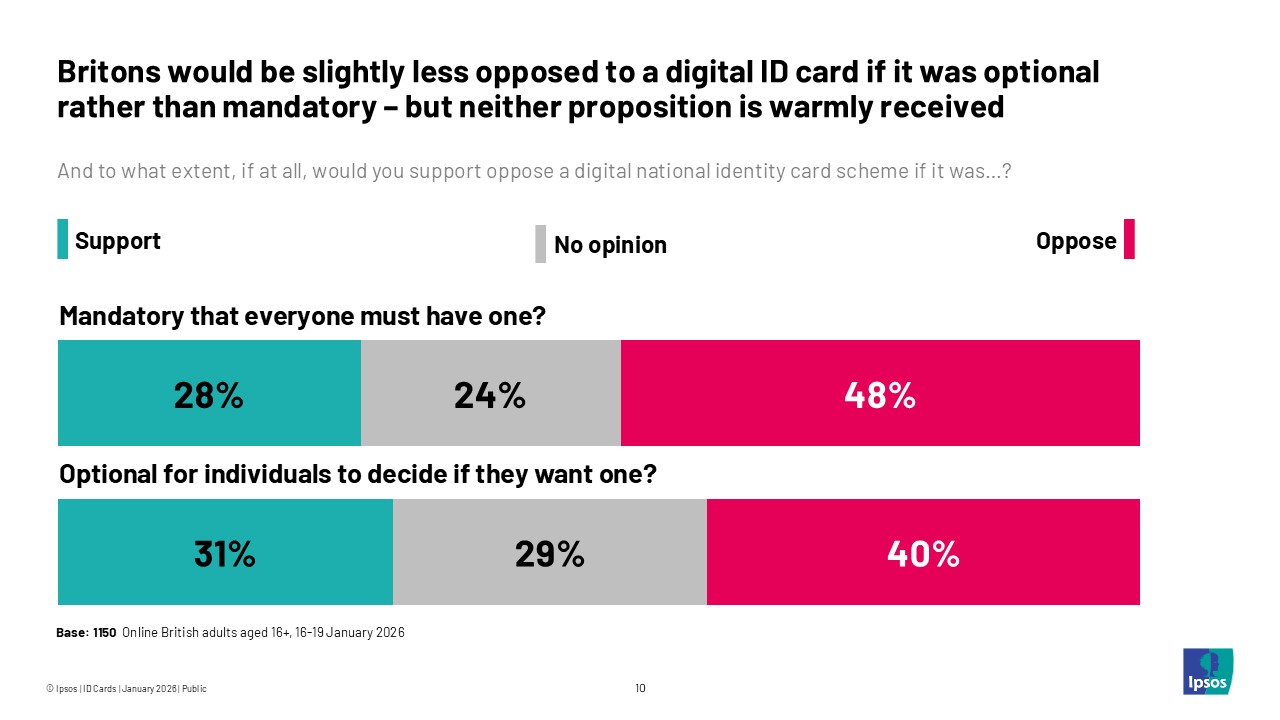
- Opposition to Digital ID surges: 46% of Britons say they would oppose a digital national identity scheme, up from 32% in July 2025. Following a government U-turn on its original plans for mandatory digital ID, Ipsos polling finds that the public would be slightly less opposed to a digital ID card if it was optional (40% opposed) rather than mandatory (48% opposed). However, neither proposition is warmly received, with only around 3 in 10 supporting each option.
Commenting on the findings, Gideon Skinner, Senior Director of UK politics at Ipsos said:
Our latest findings confirm how much the public mood has become more sceptical towards a national identity card scheme, since it was first rumoured last summer. Before the policy was officially announced, in principle most were in favour, reflecting a long-standing pattern in British public opinion – but even then there were latent concerns over the impact on privacy, a lack of confidence in government, and whether ID cards were needed in the first place, and the narrative since then has focused much more on these negatives rather than any potential benefits.
While security and convenience remain attractive features, there's an undeniable increase in public scepticism rooted in these privacy concerns and a lack of trust in government to run the scheme. This growing apprehension is seen across all demographics and emphasises the need for Labour to transparently address these worries and regain the initiative in the narrative if they want to encourage take-up of their proposed scheme.
Technical note:
- Ipsos interviewed a representative sample of 1,150 adults aged 16+ across Great Britain. Polling was conducted online between the 16th-19th January 2026.
- Data are weighted to match the profile of the population. All polls are subject to a wide range of potential sources of error.


