Long waiting lists/times seen as biggest issue facing the NHS
New research by Ipsos shows long waiting lists/times is currently the most concerning issue facing the NHS among Britons. Around 6 in 10 (62%) say they are most concerned about this, increasing to 78% of 55-75-year olds.
Other concerning issues facing the NHS include a lack of staff such as doctors or nurses and overworked staff (both 57%), while almost half are worried about poor pay for NHS staff (47%). Around 4 in 10 are concerned about poor emergency response/ambulance times/999 service (44%), shortage of beds (40%) and lack of resources/investment (40%).
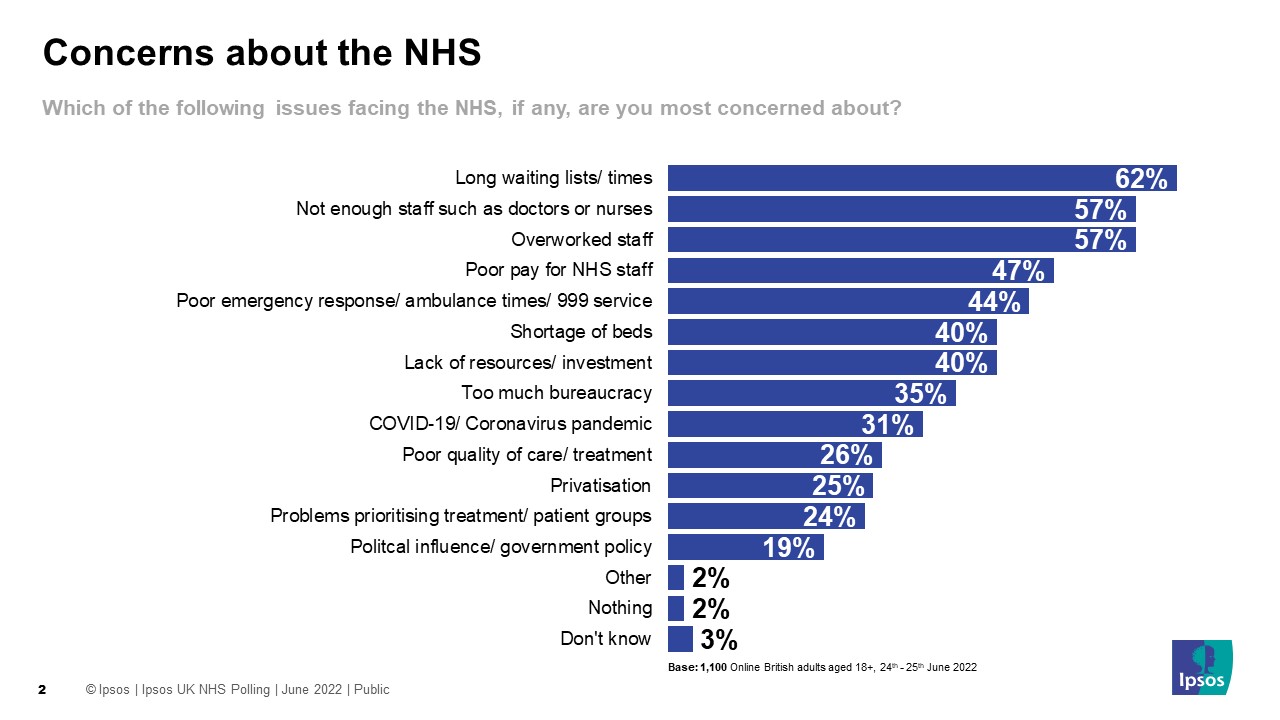
Of options given in the survey, Britons are least likely to be concerned about political influence/government policy (19%), problems prioritising treatment/patient groups (24%) or privatisation (25%).
It may come as a small comfort that only around a quarter (26%) are concerned about poor quality of care/treatment from the NHS.
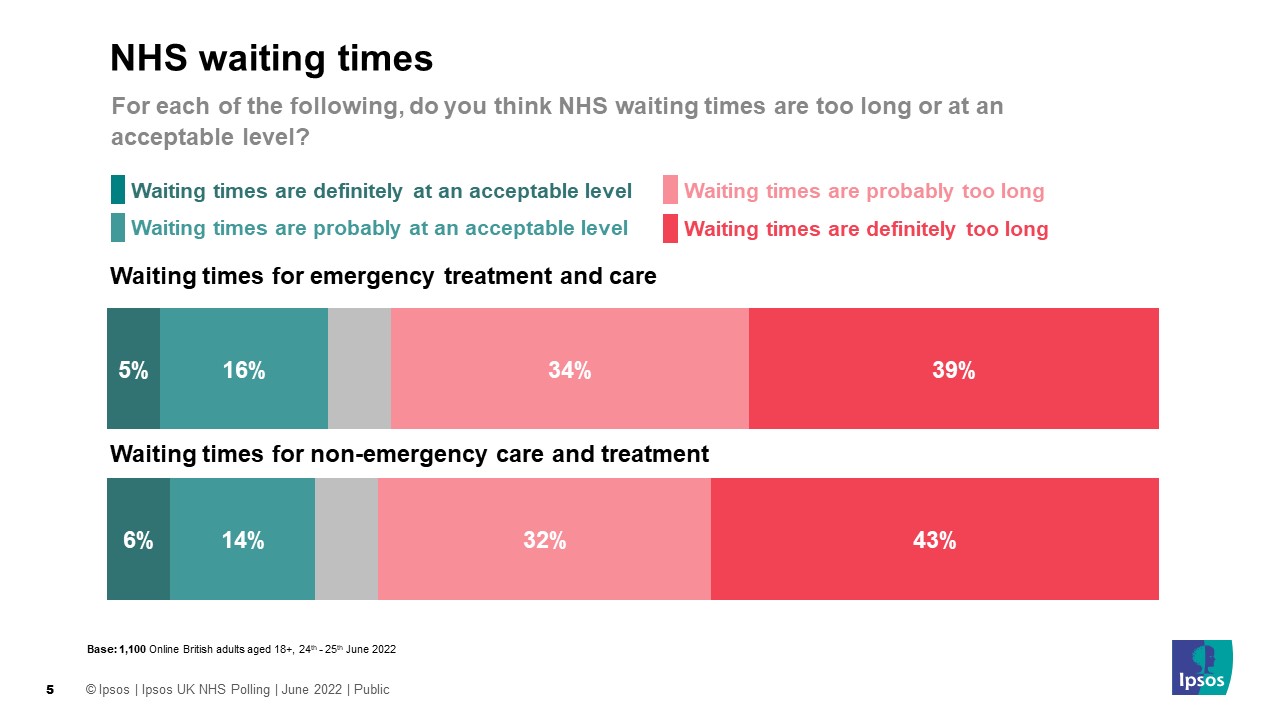
Currently, around three-quarters say waiting times for both emergency and non-emergency care and treatment (74% and 75% respectively) are too long. Only around 1 in 5 say timings are at an acceptable level.
With high levels of concern about long waiting lists/times, it may come as no surprise that few Britons are confident in quick emergency treatment. Around two-thirds (64%) say they are not confident that they would be seen quickly if they needed emergency care in A&E while a similar proportion (61%) are not certain an ambulance would arrive quickly if they needed one. Only around a third are confident of either situation (32% for A&E and 33% for an ambulance).

Six in 10 (59%) say they are not confident they could get a GP appointment at a time that suits them, while 39% are. Confidence is significantly higher among men (47% compared with 31% of women) and younger Britons aged 16-34 (47%).
Britons from ethnic minorities are significantly more confident in the NHS’s response capabilities. Around half have faith in their ability to get a GP appointment (54%), get an ambulance quickly (51%) and be seen quickly in A&E (50%), compared with around a third of white Britons (37%, 31% and 30% respectively).
Anna Quigley, Research Director at Ipsos, said:
These results show that the public are aware of the challenges facing the NHS at the moment. While they may have faith in the quality of care provided by the NHS, they are worried about being able to access that care when they need it. The public also worry about the staff who provide that care – concerns about overworked, underpaid staff show the sympathy the public has for those that are trying to address the backlog.
Technical note:
- Ipsos UK interviewed a representative quota sample of 1,100 adults aged 16-75 in Great Britain. Interviews took place on the online Omnibus between 24th and 25th June 2022. Data has been weighted to the known offline population proportions. All polls are subject to a wide range of potential sources of error.