Britons expect success for Reform UK and the Greens at upcoming local elections in England
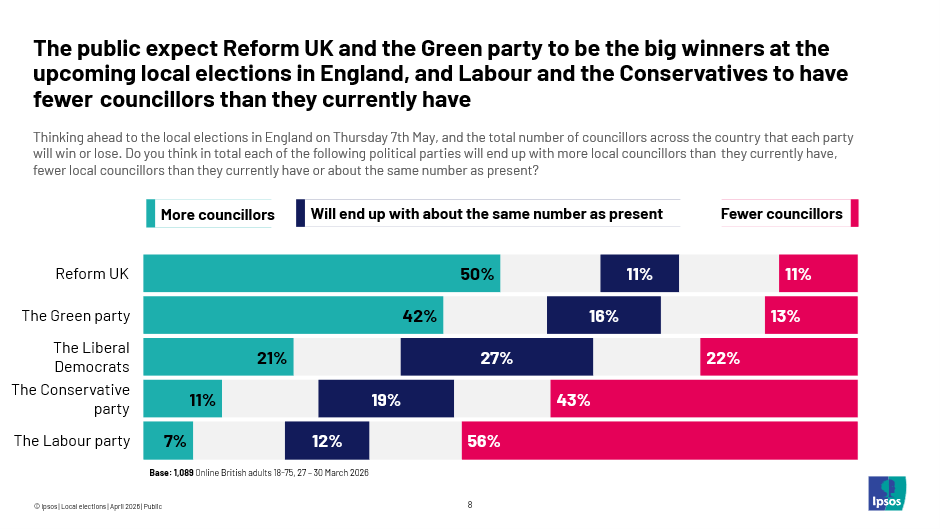
- 50% of Britons expect Reform UK to have more councillors than at present after the local elections
- 56% expect Labour to have fewer councillors than they currently do after the local elections
- National and local issues are key to the public when considering who to vote for at local elections
The rise of Reform UK and the Greens
The public expect Reform UK and the Green party to perform well and anticipate losses for Labour and the Conservatives.
- Half of Britons (50%) expect Reform UK to have more councillors than they do at present after the local elections.
- 42% of Britons expect the Green party to gain more councillors, 16% expect them to have about the same number as present, and 13% expect them to have fewer councillors than present.
- 56% of Britons think Labour will have fewer councillors after the local elections, 12% expect them to have about the same number as present, and 7% to have more.
- 43% expect the Conservatives to have fewer councillors, 19% to have about the same amount, and 11% to have more.
- Britons are split on the Liberal Democrats’ expected performance. 21% expect them to have more councillors, 22% expect them to have fewer, and 27% to end up with about the same number as present.
However, despite these expectations the public are not convinced that local councillors from any of the main parties are more likely to perform best on a series of key issues. This includes listening to the views of local residents, delivering high quality local public services and making their local area a better place to live.
What issues matter?
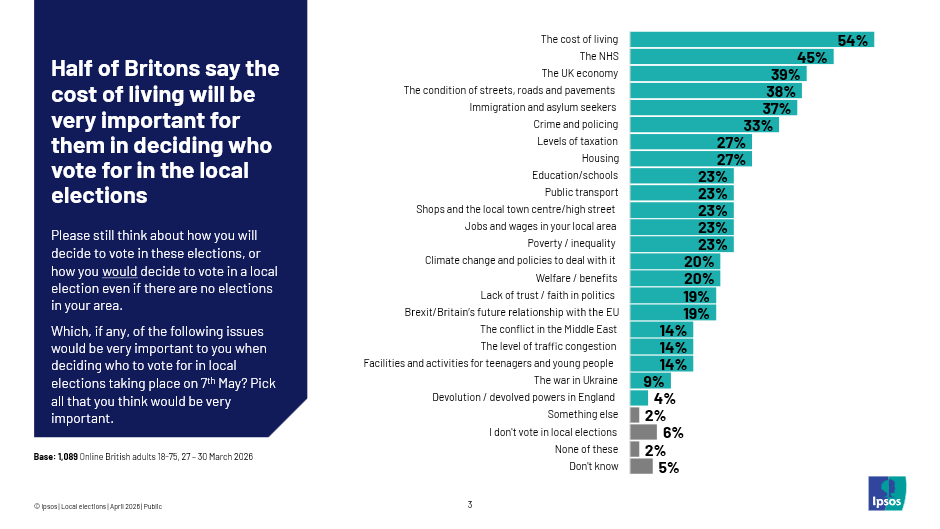
Both national and local factors are key to voters when it comes to deciding who to vote for at the upcoming local elections.
- National and local factors are of equal importance to voters when deciding how to vote. 56% said a national factor is very important to them, whilst 54% said a local factor is very important.
- Party policies on national issues (38%), how well their local council has run things recently (34%), and what political parties promise to do specifically in their local area (33%) are key factors when deciding who to vote for.
When it comes to key issues:
- National issues like the cost of living (54%) and the NHS (45%) are very important when deciding who to vote for. This is followed by the UK economy (39%).
- However, local issues such as the condition of streets, roads and pavements (38%) are also very important to the public.
State of local public services
- Britons are split on the state of public services in their local area: 48% think they are in a good state (No change from Apr ’25) and 46% think they are in a poor state (+1 from Apr ’25).
- Britons are slightly more likely to think that their local economy is in a poor state (51%) than a good state (41%).
Ipsos Director of Politics Keiran Pedley said of the findings:
The public agree with the conventional wisdom that the local elections will be a bad night for the two main parties and a good one for Reform UK and the Greens. A mix of local and national issues are at play but what is clear is a large number of voters are dissatisfied with the pace of change in Britain and many are looking to insurgent political parties for answers. A significant increase in councillors will provide Reform UK and the Greens with a platform to target parliamentary seats in the future – but will also bring local scrutiny too if those councillors are unable to deliver.
Notes to editors:
- Ipsos interviewed a representative sample of 1,089 adults aged 18-75 across Great Britain. Polling was conducted online between the 27th-30th March 2026.
- Data are weighted to match the profile of the population. All polls are subject to a wide range of potential sources of error.