One in four Britons impacted by food allergies or intolerances: Ipsos poll highlights prevalence and self-diagnosis trends
Ipsos in the UK, in partnership with the Daily Mail and Times, has released new polling on food allergies and intolerances in the UK.
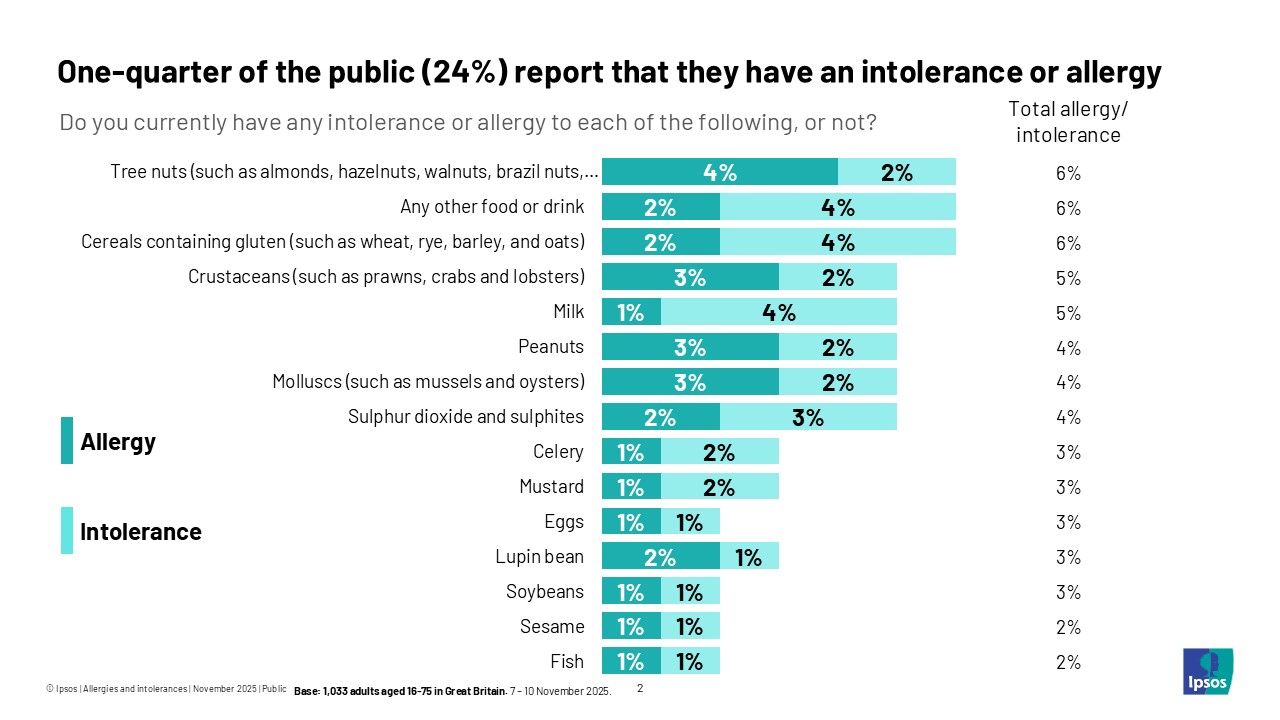
- Prevalence: One in four Britons (24%) reports having a food or drink allergy or intolerance.
- Diagnosis:
- Allergies: Half (49%) of individuals with allergies have been clinically diagnosed by a healthcare professional. Two in ten (21%) say that they diagnosed themselves by researching their symptoms, while 14% diagnosed themselves with a home allergy testing kit purchased online, and 12% diagnosed themselves with a kit purchased from a shop.
- Intolerances: Two in five (39%) of those with an intolerance diagnosed themselves by researching the symptoms. 31% were clinically diagnosed by a healthcare professional, and 14% diagnosed themselves via an allergy home-testing kit purchased online.
- Symptoms: The most commonly reported allergy symptoms include rashes or skin problems (42%), itchy or watery eyes (27%), and sneezing, runny or stuffy nose (26%). For intolerances, gastrointestinal symptoms such as nausea, vomiting, and diarrhoea are most common (46%), followed by itchy and watery eyes (34%).
- Consumer behaviour: Concern around undeclared ingredients leads those affected to avoid food and drink from market stalls (31%), takeaways (29%), or home delivery services (29%) due to potential allergens.
- Milk consumption: A majority (75%) of Britons consume cow or dairy milk. However, younger people aged 16-34 are particularly likely to drink alternatives to cow or dairy milk (26%, compared with 17% overall).
Commenting on the findings, Anna Quigley, Research Director at Ipsos said:
Our latest findings reveal a complex and evolving landscape when it comes to food allergies and intolerances in Britain. With one in four individuals reporting they are affected, this is a widespread issue. What is particularly striking is the degree of self-diagnosis, with nearly half of those with an intolerance, for instance, relying on their own research rather than consulting a healthcare professional. This reliance on self-diagnosis, often using online resources and home-testing kits, has significant implications for both public health and the food industry. Furthermore, we are seeing a generational shift in dietary habits, exemplified by the higher uptake of milk alternatives among younger Britons. This trend, coupled with the broader allergy and intolerance findings, underscores the need for clear communication, reliable diagnostic pathways, and greater transparency from food businesses to build and maintain consumer confidence.
Technical note:
- Ipsos interviewed 1,033 online British adults aged 1 8-75 from the 06th-07th November 2025.
- Data are weighted to match the profile of the population. All polls are subject to a wide range of potential sources of error.