Review of the siting process for a Geological Disposal Facility
As part of the Managing Radioactive Waste Safely policy, DECC is currently revising the Geological Disposal Facility (GDF) siting process. This report explores the public’s attitudes to the proposed revised process.
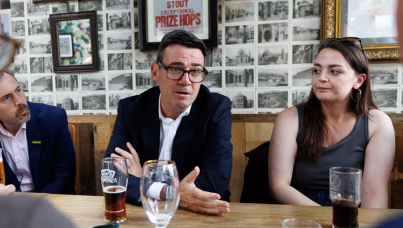
The report presents findings from a number of reconvened public dialogue workshops held with the public in November and December 2013. These workshops formed part of a wider consultation and engagement programme around the revised GDF siting process.
The public dialogue workshops showed a very low level of awareness of the issues, but an acknowledgement that this was an important issue in which communities, rather than just politicians, needed to be engaged. Five key principles appeared to underpin participants’ opinions of the revised GDF siting process and emerged throughout the discussions:
- Awareness and education – This was a key requirement for nearly all participants, workshop participants felt they initially knew very little (if anything) about radioactive waste and the agreed policy of managing it. They felt that if voluntarism (asking communities to come forward to host a GDF) was to succeed then the wider public needed to understand the challenges of managing our radioactive waste, and what the impact of a GDF might be for a community.
- Transparency and openness – Participants felt that it was important that Government was open and transparent about the need for a GDF, including what the potential risks could be from implementing it (or not). They wanted the siting process to be run in a similar vein with community representatives sharing the information on the potential impacts of a GDF and taking any decisions in the open.
- Local – In all the discussions participants referred back to the importance of ensuring the views of the “local community” and “local people” were heard.
- Efficiency – There was a clear call from participants for the process to be run as efficiently as possible. They were keen to find efficiencies which could lead to cost savings. In particular this principle underpinned responses around the calls for screening and targeting resources on specific communities (if possible) as well as queries around the timeline for the siting process.
The events were supported by Sciencewise and engagement with the public during this process was conducted in accordance with the Sciencewise “Guiding Principles” for public dialogues on science and technology.
Technical note: Ipsos conducted reconvened public dialogue workshops between 16 November and 7 December 2013 in Nottingham, Bridgwater, London and Penrith. The workshops lasted from 10am to 4pm on two consecutive Saturdays. Participants were recruited to represent a broad mix of local residents in the four locations; in total, 63 members of the public attended. In addition to the Ipsos facilitation and notetaking team, experts from DECC and the Radioactive Waste Management Directorate (RWMD) were present to answer participants’ questions and observers from DECC, RWMD, Sciencewise, Environment Agency, CoRWM and ONR were also present.