
Scots optimistic about the economy in Scotland over next ten years, but expect cost of living to increase
In the latest release from our poll for STV News to mark 20 years of Ipsos’s permanent office in Scotland, Scots are more optimistic than pessimistic about the economy in Scotland over the next ten years. However, most think that the cost of living will increase in the same period.
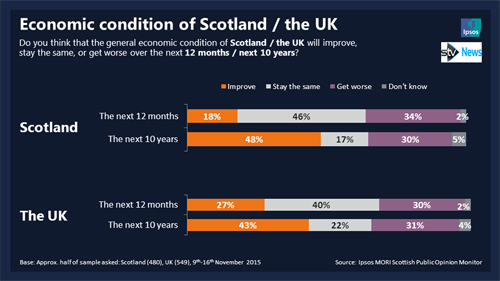
Although around one in twenty (18%) think the general economic condition of Scotland will improve over the next 12 months, around half (48%) think it will improve over the next 10 years. It is a similar picture for the UK economy, with 43% thinking it will improve over the next 10 years.
In terms of prospects for household finances, opinion is mixed. Around a third (35%) think their household financial situation will improve, while 38% think it will stay the same and 24% think it will get worse.

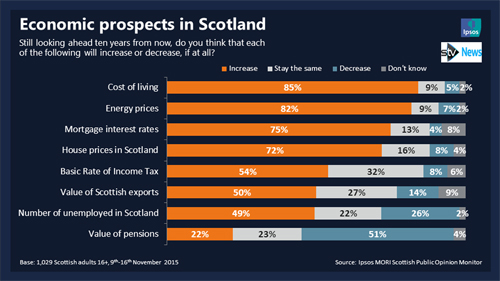
On other economic measures covered in the poll, Scots have more clear views and are generally pessimistic. Most Scots think that the cost of living will increase, as well as energy prices, mortgage interest rates, and house prices. Around half anticipate an increase in the basic rate of income tax and the number of unemployed in Scotland.
Mark Diffley, Director at Ipsos Scotland said:
‘It is clear that most Scots don’t anticipate much improvement in the economy in the short term, but they are most positive about the overall economic condition of Scotland over the next decade. This echoes earlier findings from our poll which showed that Scots are generally optimistic about the future for Scotland as a whole. When we look more closely, however, Scots foresee increases in the cost of living over the next years and other areas that affect their personal circumstances, including energy prices, mortgage rates and income tax.’
Technical details:
- Results are based on a survey of 1,029 respondents (adults aged 16+) conducted by telephone
- Fieldwork dates: 9th November to 16th November 2015
- Data are weighted by: age, sex and working status using census data; tenure using Scottish Household Survey data; and public-private sector employment using Scottish Government Quarterly Public Sector Employment series data
- Where results do not sum to 100%, this may be due to computer rounding, multiple responses, or the exclusion of “don’t know” categories
- Results are based on all respondents (1,029) unless otherwise stated


