Share of Britons backing personal tax cuts grows, particularly among Conservative and Reform voters
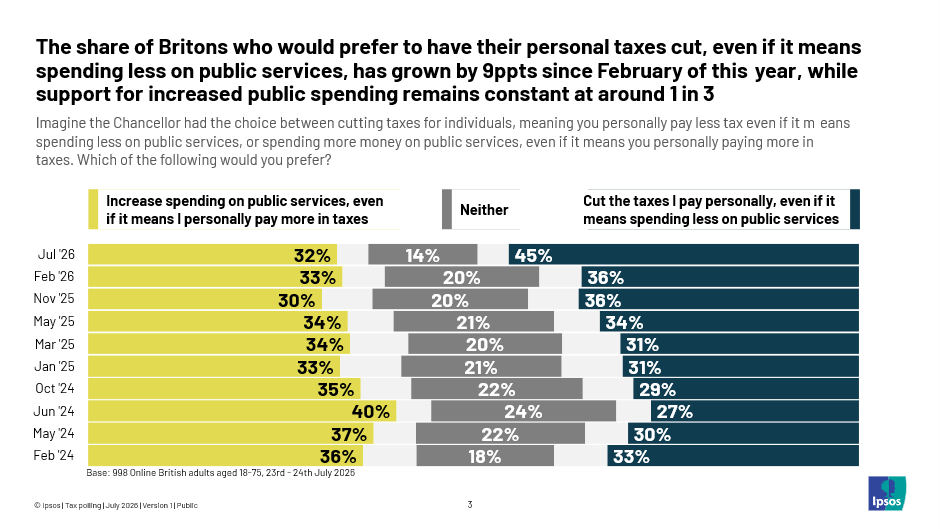
- 45% of British adults prefer personal tax cuts even if it means spending less on public services, up from 36% in February 2026. A third, 32%, want to see higher spending, little changed over the year.
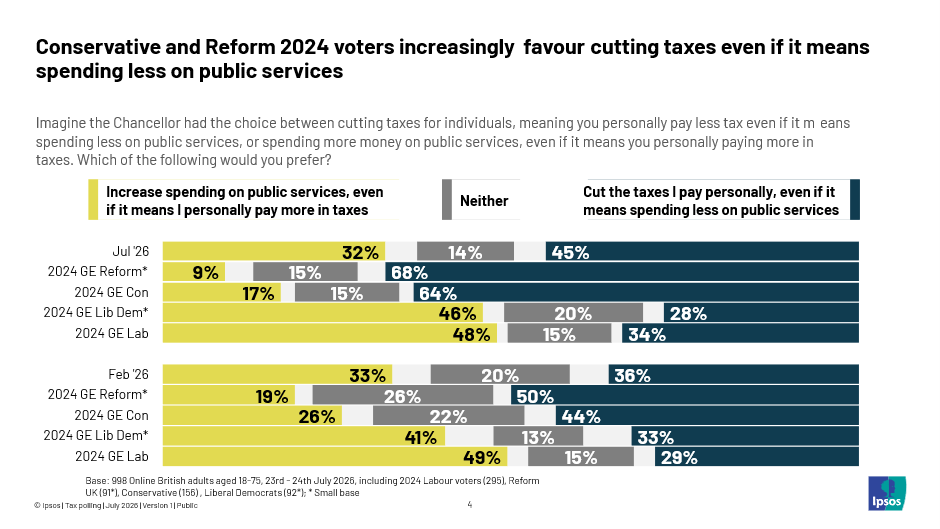
- Growing support for tax cuts is driven by Conservative and Reform 2024 voters increasingly favouring tax reductions (now around 2 in 3 of these voters prefer tax cuts), while nearly half of Labour and Liberal Democrat voters continue to prefer increased public spending instead
- 7 in 10 Britons (70%) think it is likely that the Labour government will increase personal taxes over the next year, though this has dropped from 77% last October.
Rising demand for tax cuts and debt reduction
Public appetite for personal tax cuts has strengthened since the start of the year, while support for increased spending on state services funded by taxation or borrowing has stayed relatively stable.
- 45% of British adults would prefer the Chancellor to cut taxes they pay personally, even if it means spending less on public services (up 9 percentage points from 36% in February 2026 and up from 27% in June 2024).
- Conversely, 32% of Britons would prefer increasing spending on public services even if it means personally paying more in taxes, similar to February 2026 (33%), but down from 40% in June 2024.
Differences by party support have widened: 2024 Reform voters (68%, up from 50% in February 2026) and 2024 Conservative voters (64%, up from 44% in February 2026) prefer cutting taxes; 2024 Labour voters on the other hand prefer increased spending on public services even if it means higher taxes for them personally (48%, -1 since February 2026), while 2024 LibDem voters also lean towards increased spending (46%, +5 since February 2026).
- When choosing between borrowing and spending on public services, 44% of the public prefer reducing borrowing to cut the national debt (+5ppts since February), even if that means less spending on public services, compared with 33% who prefer increasing borrowing to spend more (+2).
The public also remains cautious regarding trade-offs involving long-term capital investment when pitted against tax relief or borrowing limits.
- 43% of Britons would prefer cutting personal taxes or reducing borrowing to cut the national debt, even if that means reducing spending on long-term investment (such as hospitals, schools, roads, or energy infrastructure).
- By contrast, 1 in 3 (34%) prefer increasing long-term investment spending if it requires paying higher personal taxes or increasing borrowing and national debt. This means Britons’ relative preferences on this choice are little changed since February.
When asked what they think is actually likely to happen, 7 in 10 Britons (70%) believe it is very or fairly likely that the Labour party will increase the taxes they personally pay over the next year, although this is down from 77% in October 2025.
Commenting on the findings, Gideon Skinner, Senior Director of Politics at Ipsos in the UK said:
These latest figures show the challenges that will face Andy Burnham’s new government as household budgets remain under sustained pressure. Demand for better quality public services has been a consistent theme over recent years, but we are also seeing a growing proportion of Britons prioritising direct tax relief and national debt reduction over higher state spending funded by taxes or borrowing. Having said that, Labour’s base – and the wider bloc of left-leaning voters – do continue to prefer increased public spending, but there are signs of growing political divisions on this issue as Conservative and Reform UK supporters increase their calls for tax cuts.
As the new Chancellor balances long-term infrastructure needs against immediate economic pressures, the government faces a key challenge in convincing the public that any potential tax or spending decisions can be aligned with families’ day-to-day financial realities.
Notes:
- Ipsos interviewed a representative sample of 998 online British adults aged 18–75. Polling was conducted online between 23–24 July 2026.
- Data are weighted to match the profile of the population. All polls are subject to a wide range of potential sources of error.