The 2026 Olympics and American exceptionalism
For the U.S., the Olympics have never been just about sports. It is exceptionalism as a spectacle. A stage for American greatness on a global audience.
However, younger Americans aren't watching the same way previous generations have. Recent Ipsos polling shows they're less interested in the 2026 Winter Olympics, and when they do tune in, patriotism isn't as big of a draw.
This is more than cord-cutting or short attention spans. It's a cultural signal that mirrors what polling has shown for years: the belief that America is exceptional is eroding among younger generations.
Below are five charts on how younger generations view the 2026 Olympics and what this tells us about American exceptionalism and the future of U.S. foreign policy.
1. Younger Americans aren’t as interested in the Olympics. Interest in this year’s Winter Olympics lags among Americans under 50, even when taking in account for younger Americans’ media viewing habits.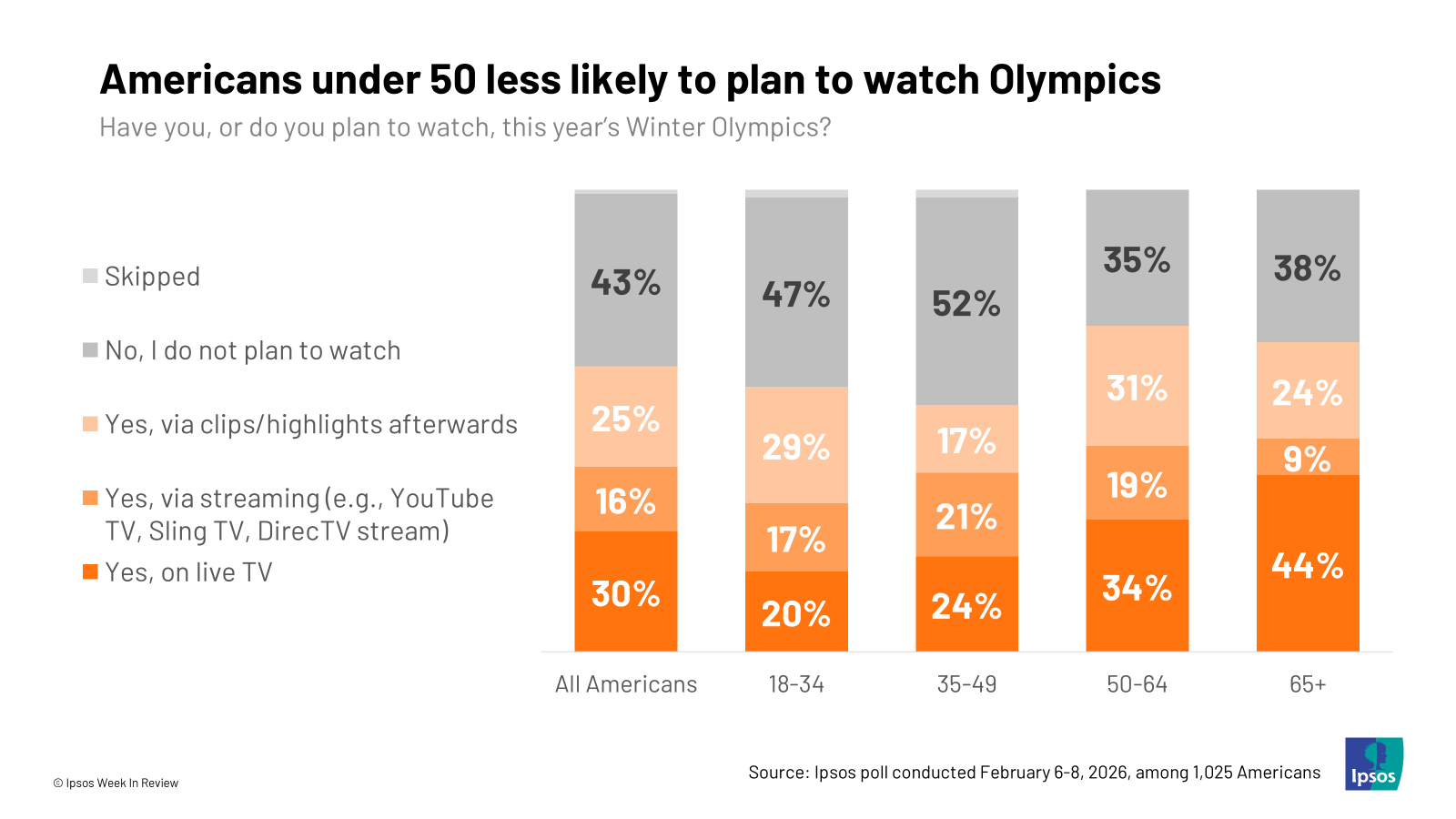
2. And it’s not just because they don’t like curling. Among the younger Americans who do plan to watch the Olympics, it’s more about the sport and less about national pride.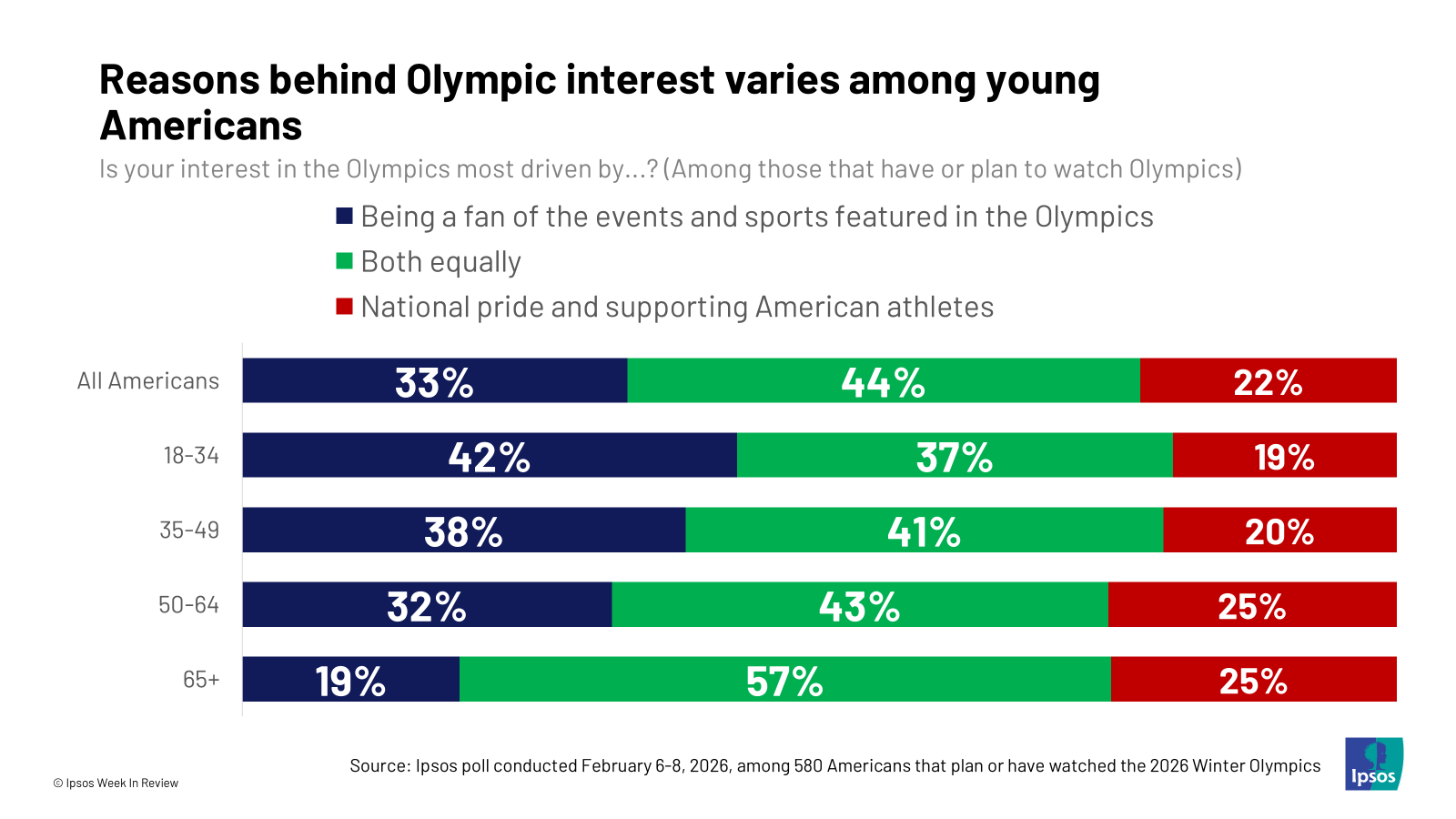
3. The Olympic spirit. Younger Americans just don’t feel the same level of American pride when it comes to the Olympics. There’s something deeper going on.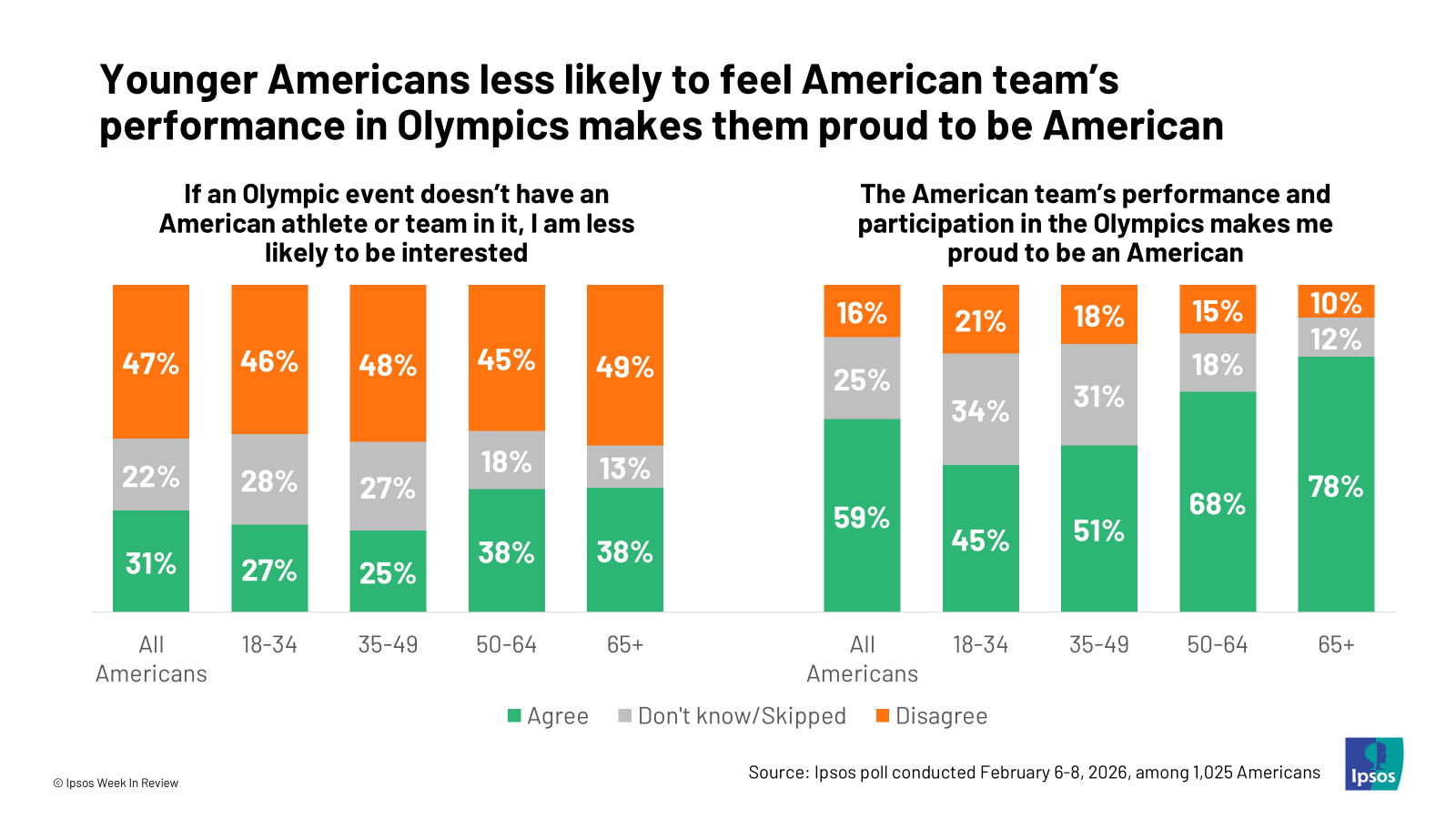
4. America itself – no longer a shining beacon on the hill? Zooming out, younger Americans don’t view the U.S. as the moral leader of the world. In addition, less than half of Americans under 35 think the U.S. should be the moral leader. Younger Americans aren’t just skeptical about the U.S.’ position in the world. They're beginning to reject the aspiration of being the shining beacon on the hill.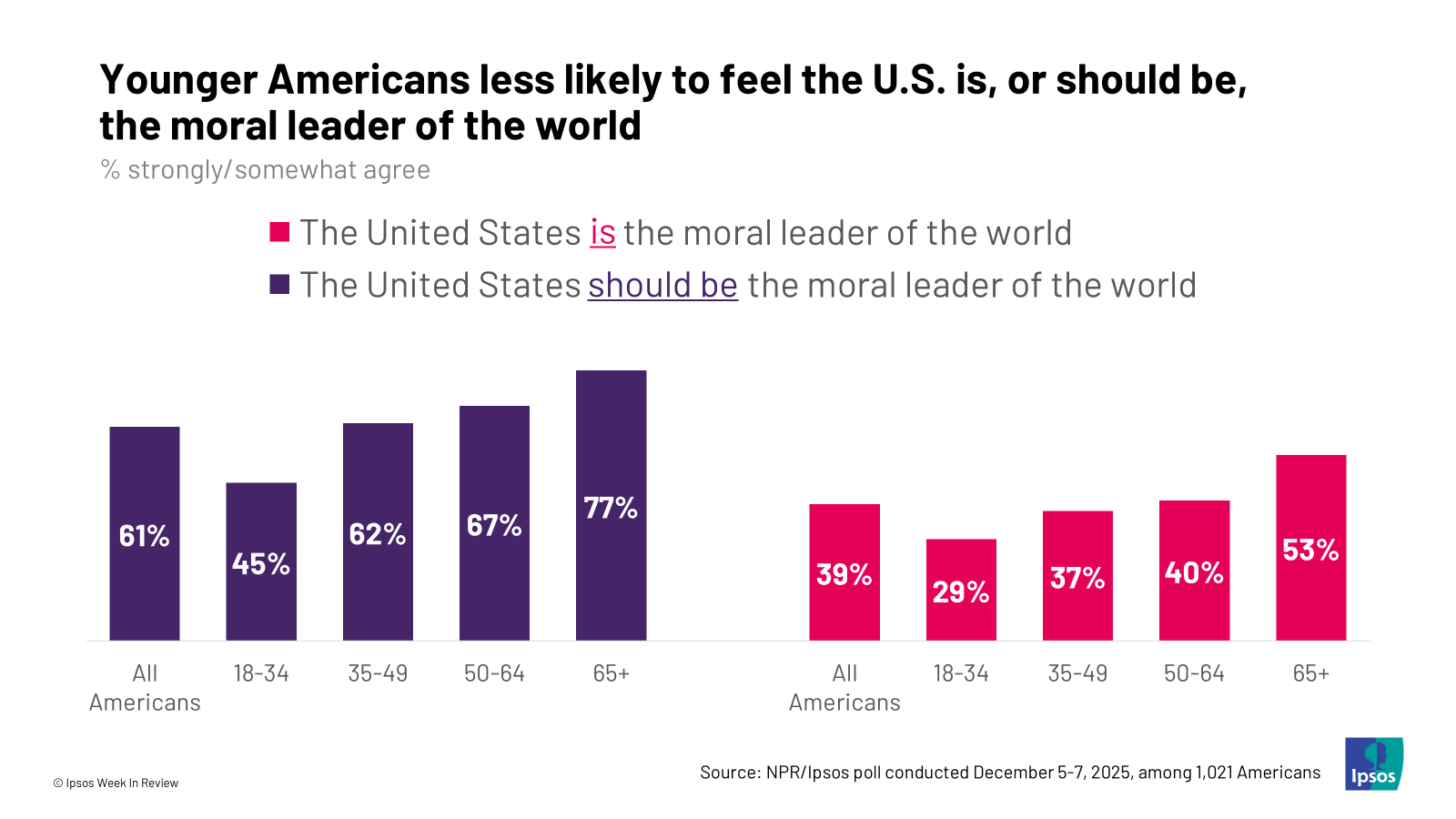
5. Policy attitudes are similar, but the underlying belief in America isn’t. Younger Americans’ preferences on broad philosophy on foreign policy aligns with older generations: Isolation over intervention, American interests over idealism. The difference between young and old on foreign policy isn’t necessarily policy. It’s the idea of American greatness underneath it.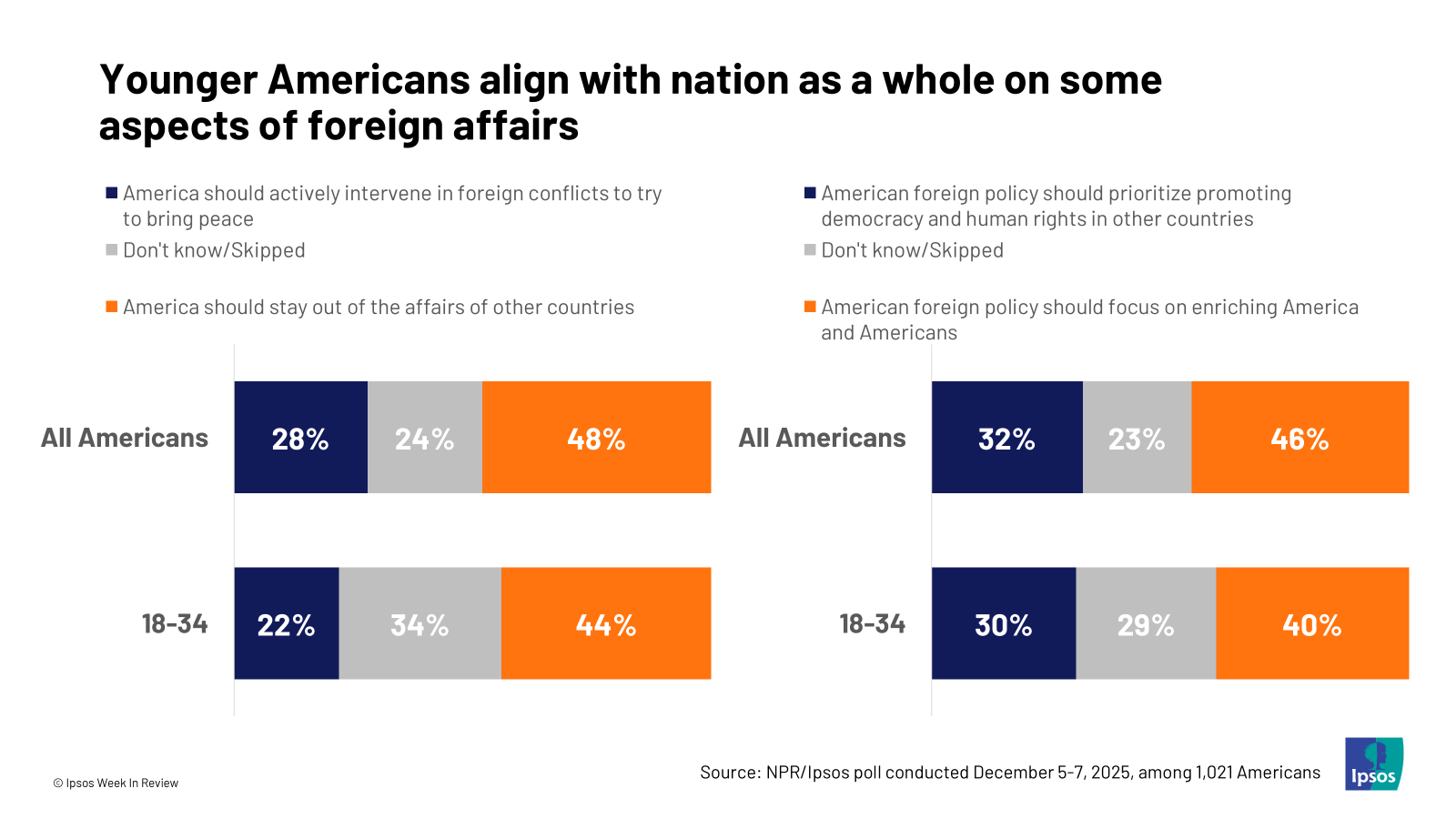
Younger Americans aren’t watching the 2026 Winter Olympics through the same red, white, and blue-tinted lenses of older generations. This isn’t happening in a vacuum. It's a cultural signal that confirms what the polling has been telling us for years: that younger Americans are slowly abandoning the belief that America is exceptional.
Even though younger generations’ broader views on foreign policy have some similarities to previous generations, the underlying philosophy driving foreign policy among future generations will be vastly different.
Policymakers still operating on old assumptions should take note. The shining city on the hill is dimming. Not because the young have turned off the lights, but because they never believed it was that bright to begin with.