

Americans’ appetite for functional foods varies widely
Here’s what we know today from the Ipsos Consumer Tracker, fielded on the Ipsos Omnibus:
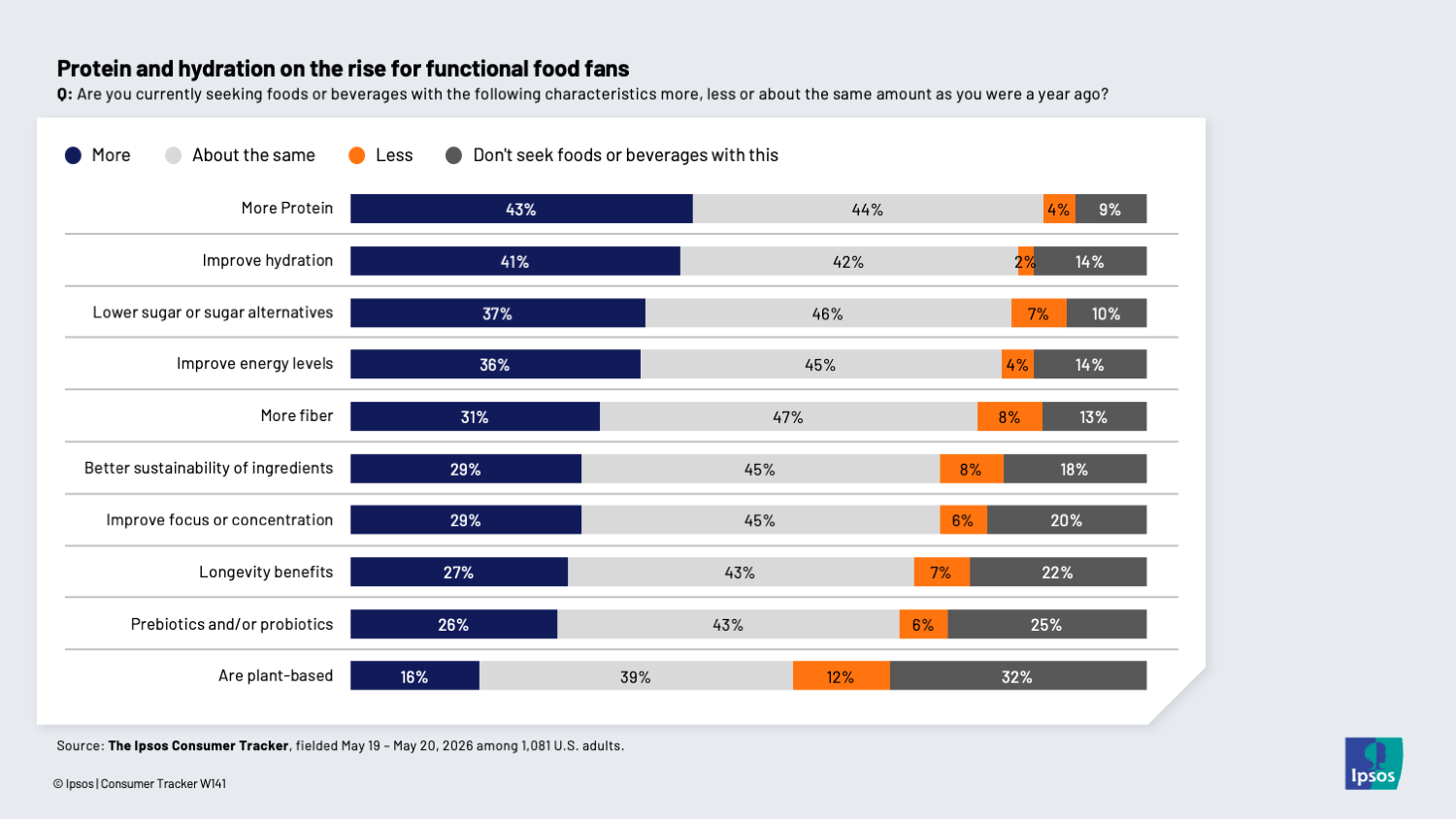
Why we asked: Between the MAHA movement and the continued growth of GLP-1s, consumers are making changes to their diet to achieve health and wellness goals. We wanted to dig deeper into what they are seeking more of, and why.
What we found: Our results show strong impacts of GLP-1s and MAHA messaging on consumer choices.
What kinds of products do Americans want more of: Compared to last year, Americans are seeking more foods and beverages with increased protein (43%), reduced sugar/sugar alternatives (37%), and higher fiber (31%). In the next tier are sustainable ingredients (29%) and probiotics (26%).
Surprisingly, only 16% seek more plant-based options, 12% seek less, and 32% don’t seek plant-based options at all.
What Americans seek to achieve: Americans seek more foods and beverages that improve hydration (41%), energy levels (36%), and focus/concentration (29%), and 27% seek more products that provide longevity benefits.
Why it matters:
- Seeking more protein and improved hydration comes along with GLP-1 adoption. Dietary guidelines suggest GLP-1 users are particularly intentional about managing protein and water intake
- The FDA’s new dietary guidelines, with their focus on protein, fiber and reduced sugars, may also be influencing Americans’ intentions and choices
- There is a missed opportunity for better connecting plant-based foods and beverages to Americans’ dietary desires. Fruits and vegetables are a key part of MAHA’s food pyramid, and they are good sources for hydration, fiber and protein to support those on a GLP-1 or seeking a healthy lifestyle. Yet this hasn’t led to the increased interest in plant-based products relative to others.
More insights from this wave of the Ipsos Consumer Tracker:
Americans are warming up on summer plans, despite high gas prices
More Americans say AI tools are being used at work
More people feel threatened by hantavirus than COVID
The Ipsos Care-o-Meter: What does America know about vs. what does America care about?


