A newly inflationary world
Thanksgiving is around the corner; the holiday season is just about to get into full swing. But this year, the arrival of the holidays coincides with seemingly endless news stories about inflation and rising prices.
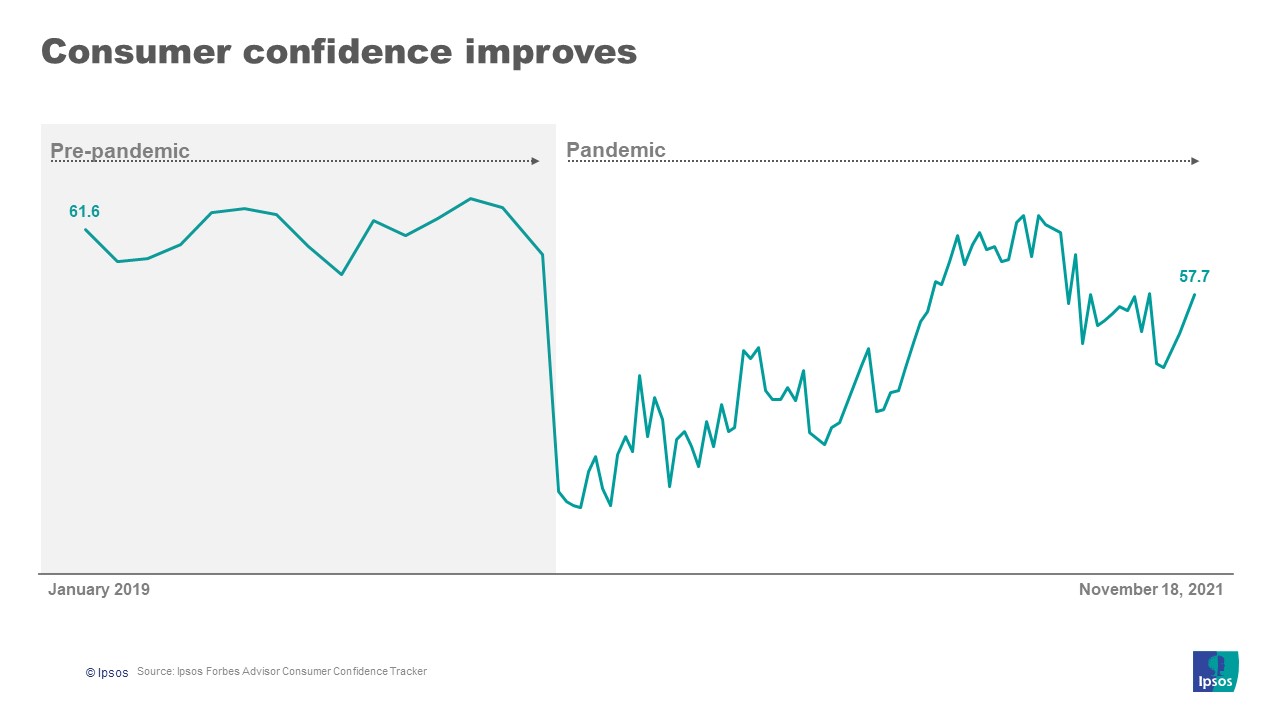
Despite these negative signals, consumer confidence appears to be on the upswing. COVID has distorted much of our world, including our behavior as consumers. Mixed signals are the common thread throughout our polling on this topic.
Beyond the implications for how much purchasing power households will have this holiday season, perceptions of the economy will be pivotal as we approach the midterms. Increasingly, Americans are analyzing President Biden and the Democratss’ job performance through an economic lens.
Lately, the president and his party has been judged poorly on that score, although Biden had undeniable success this week. The Build Back Better Act – Biden's “social infrastructure” bill– got through the House. Now it’s on to the Senate. Victory for the moment. The question, of course, is whether it is too little too late.
This week, we’re taking a broader look at economic sentiment.
- Attenuated confidence. Consumer confidence continues to zig-zag. We are still in the midst of a pandemic, after all. Delta and broader fears about inflation (prices are now up 6.2% compared to last year, the biggest jump since 1990) did not help matters. For now, sentiment is on the upswing but still depressed relative to 2019.
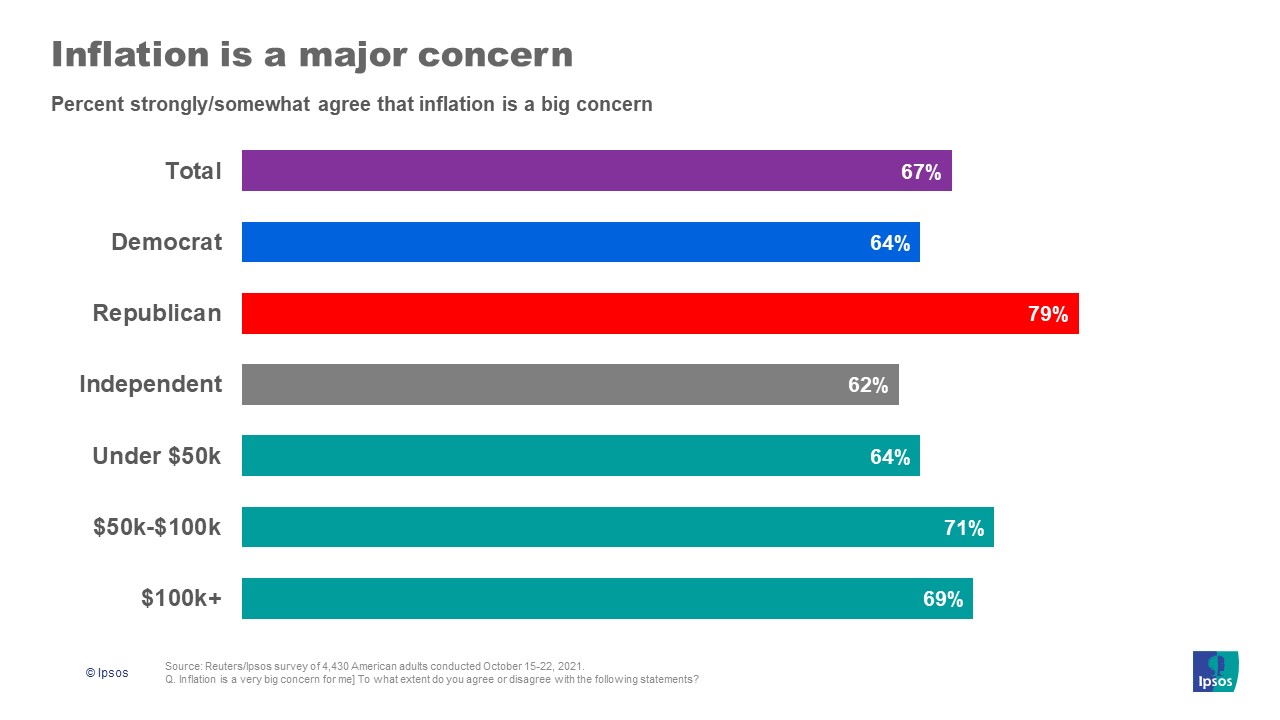
- Inflationary fear. That aside, most Americans are concerned about the looming specter of inflation, regardless of party affiliation or income.
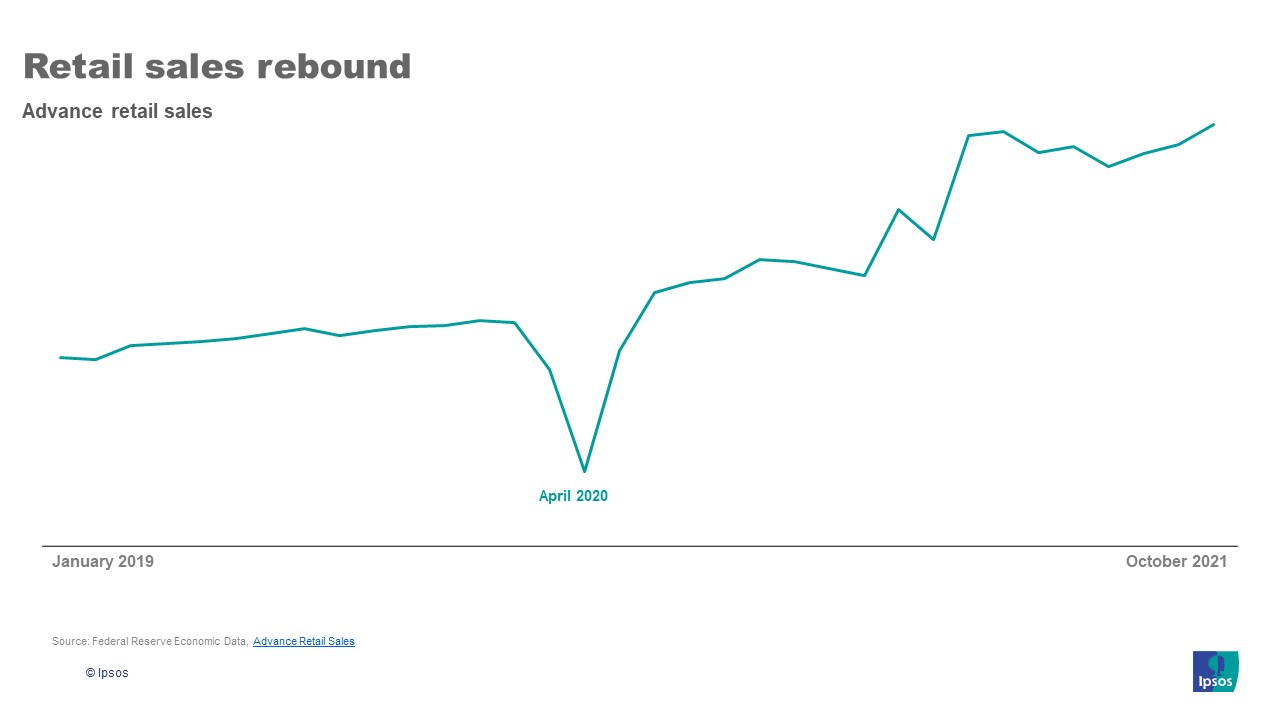
- Bullish spending. Despite the relatively gloomy outlook and reported concerns about inflation, retails sales keep climbing. All signs would typically point to spending being lower than usual. Yet it is not. Why?
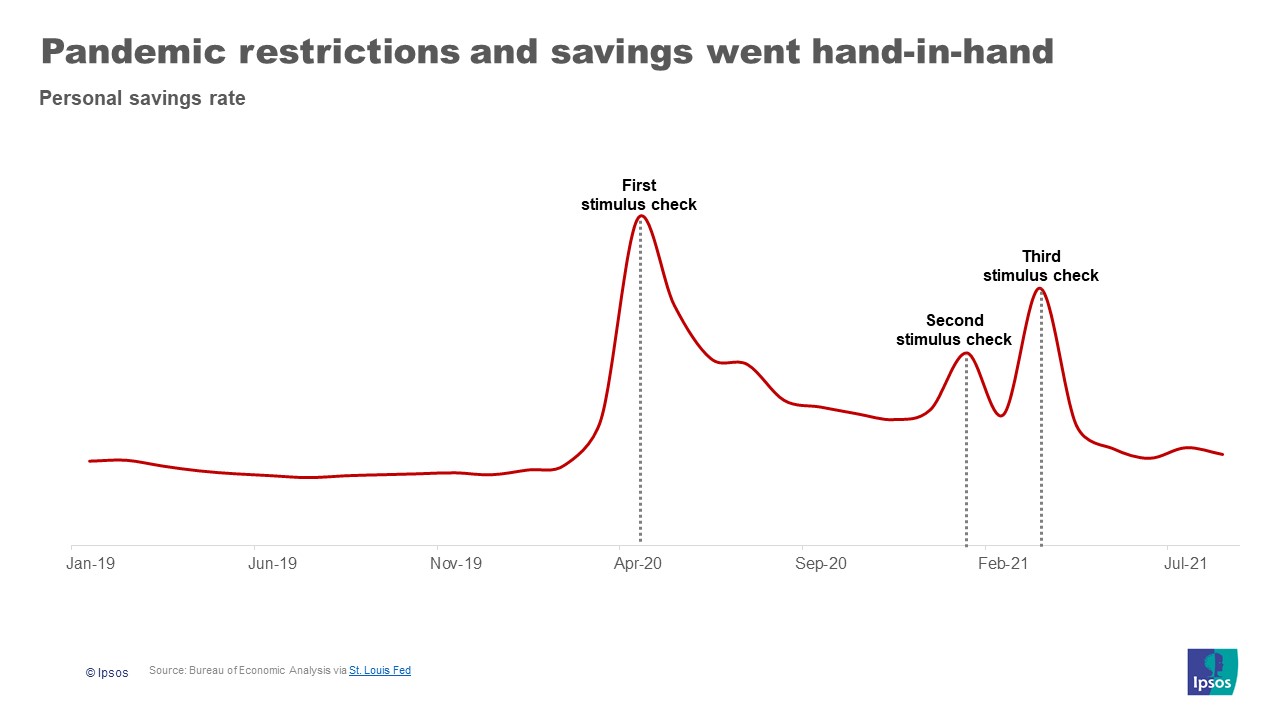
- Distorted market. Part of the above comes down to the fact that after a year of isolation and limited travel, people have an unusual amount of cash to burn. This is particularly true for the affluent. Not only were households spending less in 2020, they also received periodic transfusions of money from the government. For the many Americans who lost their jobs during the pandemic or faced other financial hardship, these were a lifeline. For others, it helped pad their savings or investment accounts.
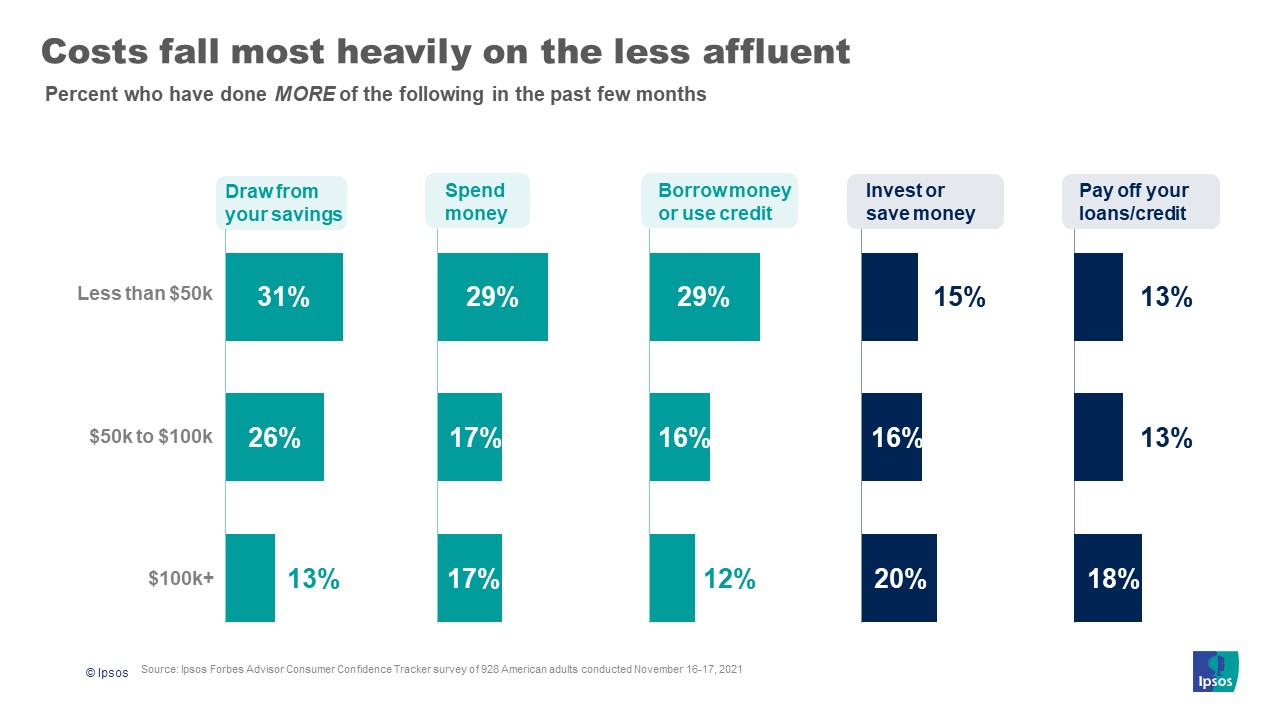
- Status quo. But how much of a buffer do those savings really offer against rising prices? In the aggregate, Americans appear to be in something of a holding pattern. We asked Americans how they feel their spending and saving has changed over the past few months. On average, they mostly feel it’s stayed the same. But look a little closer. It’s not the same situation across income brackets.
We are at a strange moment in time, still grappling with certain pandemic realities that have shifted our consumption patterns, leaving bottlenecks in the supply chain and sending prices higher. While these trends will dissipate as we leave COVID behind us and (if all goes well) resume our pre-pandemic way of life, we’re not there just yet.
What we’re seeing in the economic data right now is what we call COVID decoupling. Typically, how free people feel to spend and consumer confidence are linked, but the pandemic appears to have set the old rules askew, as it has in so many other areas of life.