
The issue that defined 2024 is becoming a toss-up
In a Reuters/Ipsos poll conducted in the days after President Donald Trump’s inauguration, the Republican Party enjoyed a 40% to 23% margin on the economy over the Democratic Party.
A lot has happened since then.
Now, as the war in Iran continues to affect the global economy, the latest Reuters/Ipsos polling shows that Democrats have pulled even on the economy, marking a dramatic 17-point shift in less than a year and a half.
Below are five charts on how Democrats pulled even on the economy and what it means for Trump and the Republican Party heading into the midterms.
1. Democrats pull even on the economy. The issue that was once the biggest advantage for Republicans is now close to even. The Democrats are polling better on the economy than they have at any point in the second Trump administration – especially since the start of the war in Iran.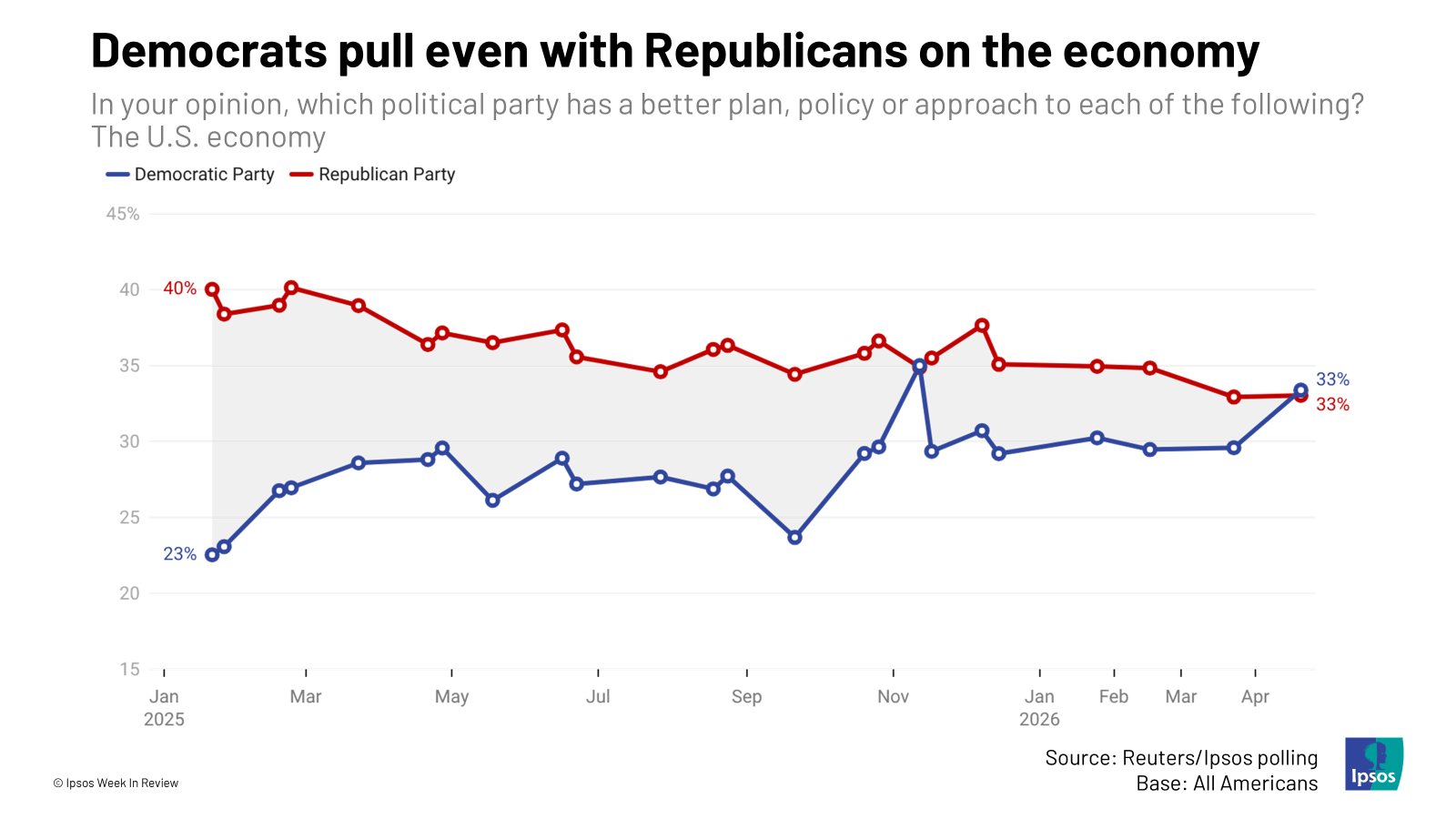
2. Democrats regain momentum across the board. The shifts are particularly pronounced among Democratic-leaning demographics like college-educated and Hispanic Americans. But even Republican-leaning demographics, like non-college educated and White Americans, have inched toward Democrats on the economy.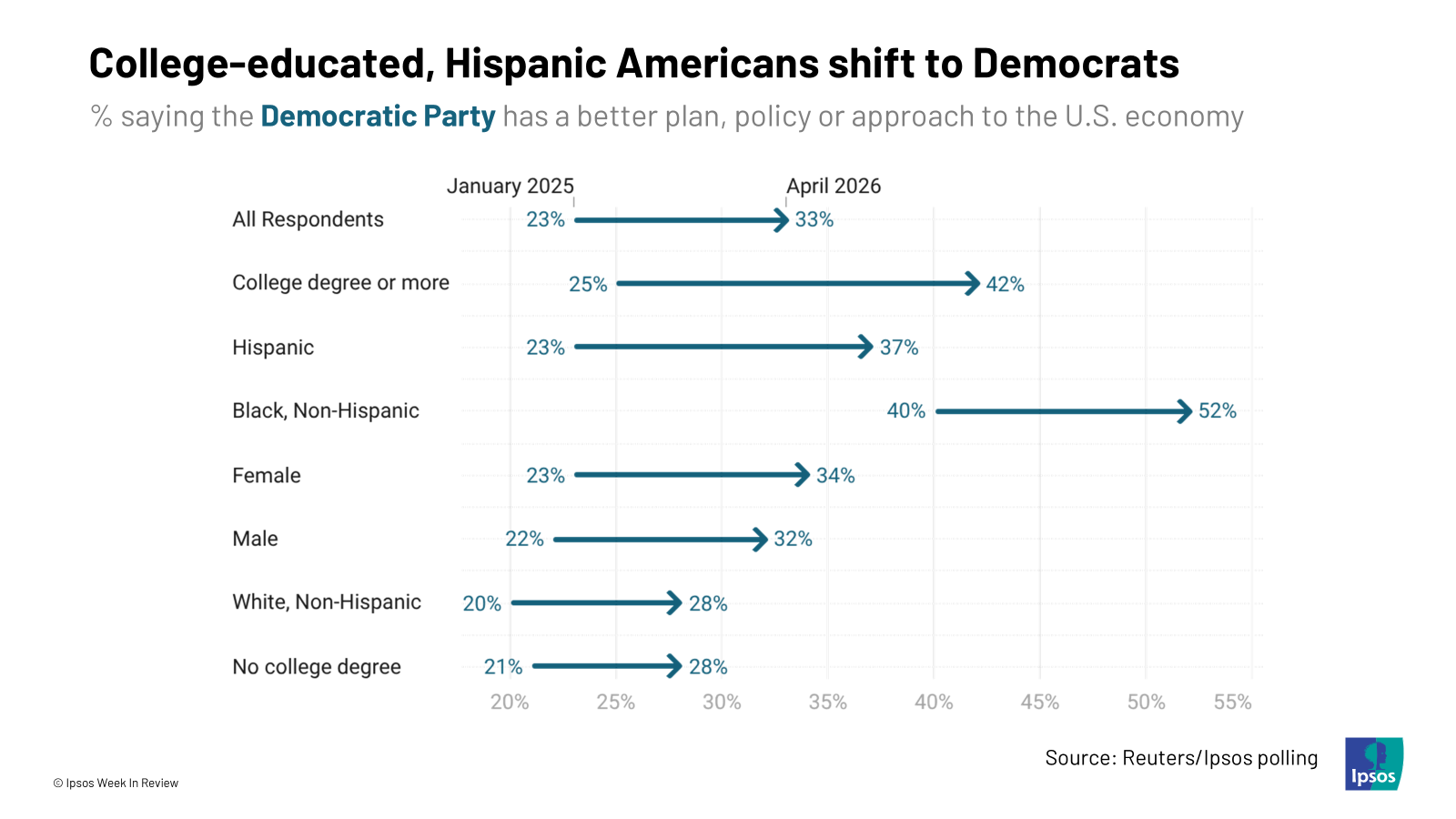
3. Trump loses ground on the economy, cost of living. As the Iran war continues to weigh on household budgets, Americans are increasingly disapproving of the President's handling of the economy and cost of living.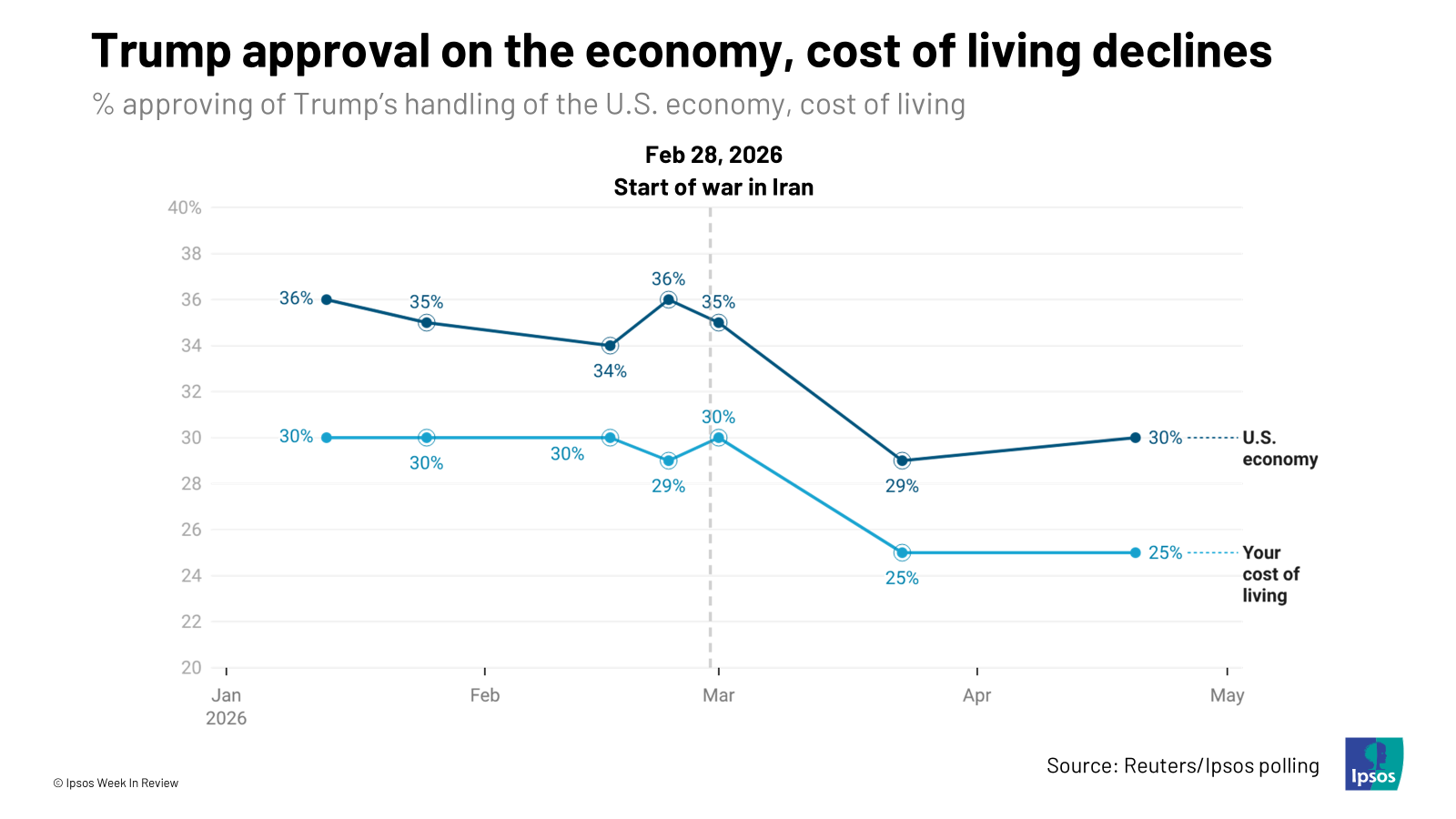
4. Gas prices. As the Iran war drives gas prices higher, Americans are attributing the pain to the conflict — and to the Trump administration. That includes a majority of Republicans.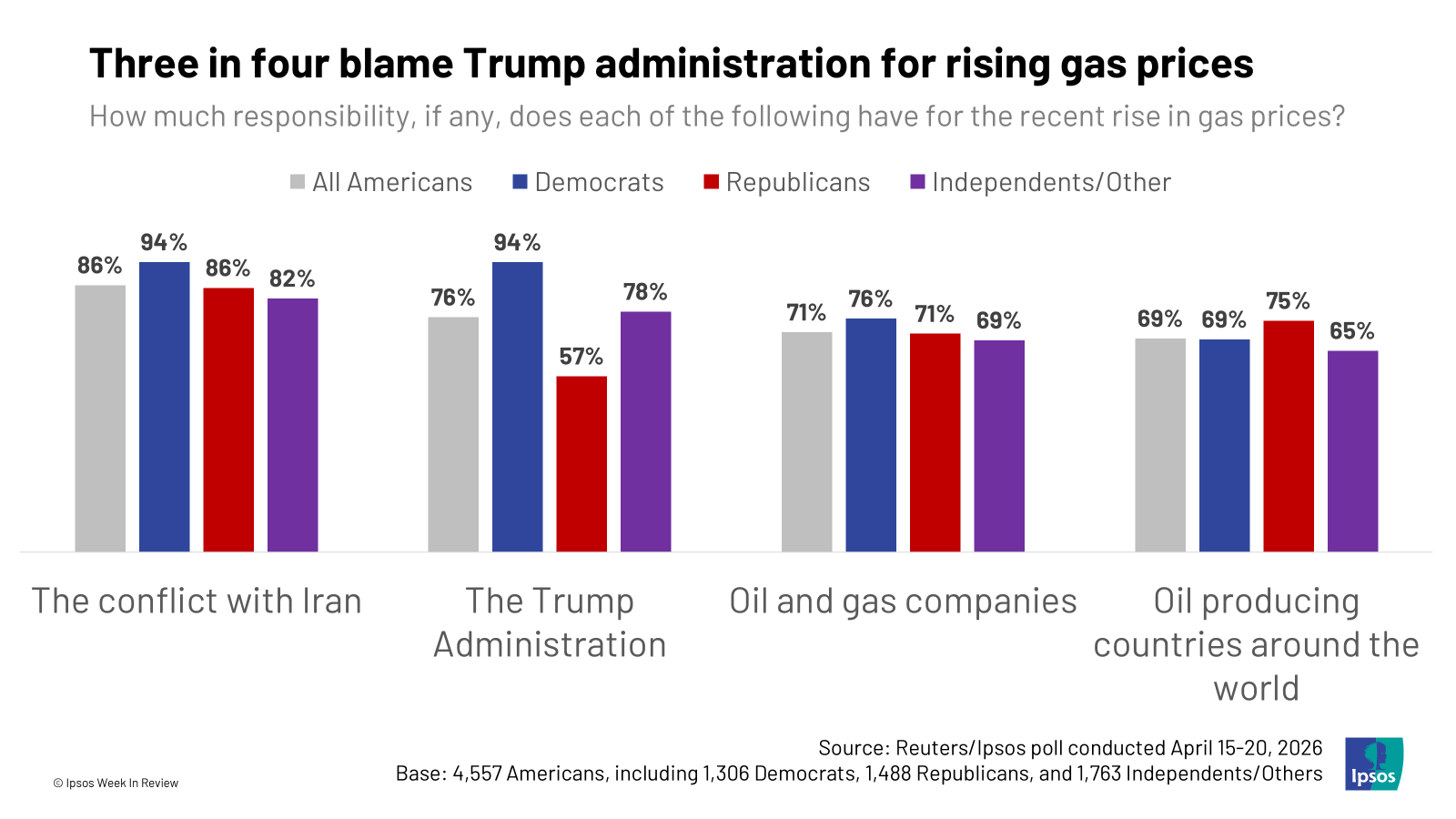
5. The stakes. The candidate that performs better on the main issue wins the election roughly 85% of the time. With the economy and cost of living remaining the top concern heading into the midterms — the same issue that powered Republicans' 2024 success — and with historical trends already working against the incumbent party, the Republican Party’s uphill battle just got steeper.
Recent polling suggests that the Iran war has softened Trump’s approval rating – even among Republicans, who had otherwise stayed consistently loyal to the President.
This should be a major point of concern for the President. Based on Ipsos analysis of hundreds of international elections, dipping further into the 30s would make it extremely difficult for Trump’s successor to win in 2028 – and would significantly increase the odds of him being forced out of office before the end of his term. Watch this space.