It’s still the economy
On Thursday, President Donald Trump addressed the nation in a primetime speech broadcast on most major TV networks.
The speech was likely an attempt to reset the political conversation ahead of the 2026 midterms. Indeed, Trump’s speech might help fire up the core Republican base and apply pressure on Republican lawmakers to pass the SAVE America Act.
But Trump’s speech is unlikely to change what has been the most dominant force in public opinion for the past several years: America’s dissatisfaction with the economy.
Below are five charts on where Americans stand on election security, the top issues facing the nation, and America’s sour mood on the economy.
1. Americans agree that attempts to overturn election results are a major concern. However, Democrats and Republicans disagree on whether fraudulent mail-in ballots or eligible voters being prevented from voting is more problematic. There’s a good chance one side of the political spectrum will leave the midterms feeling robbed.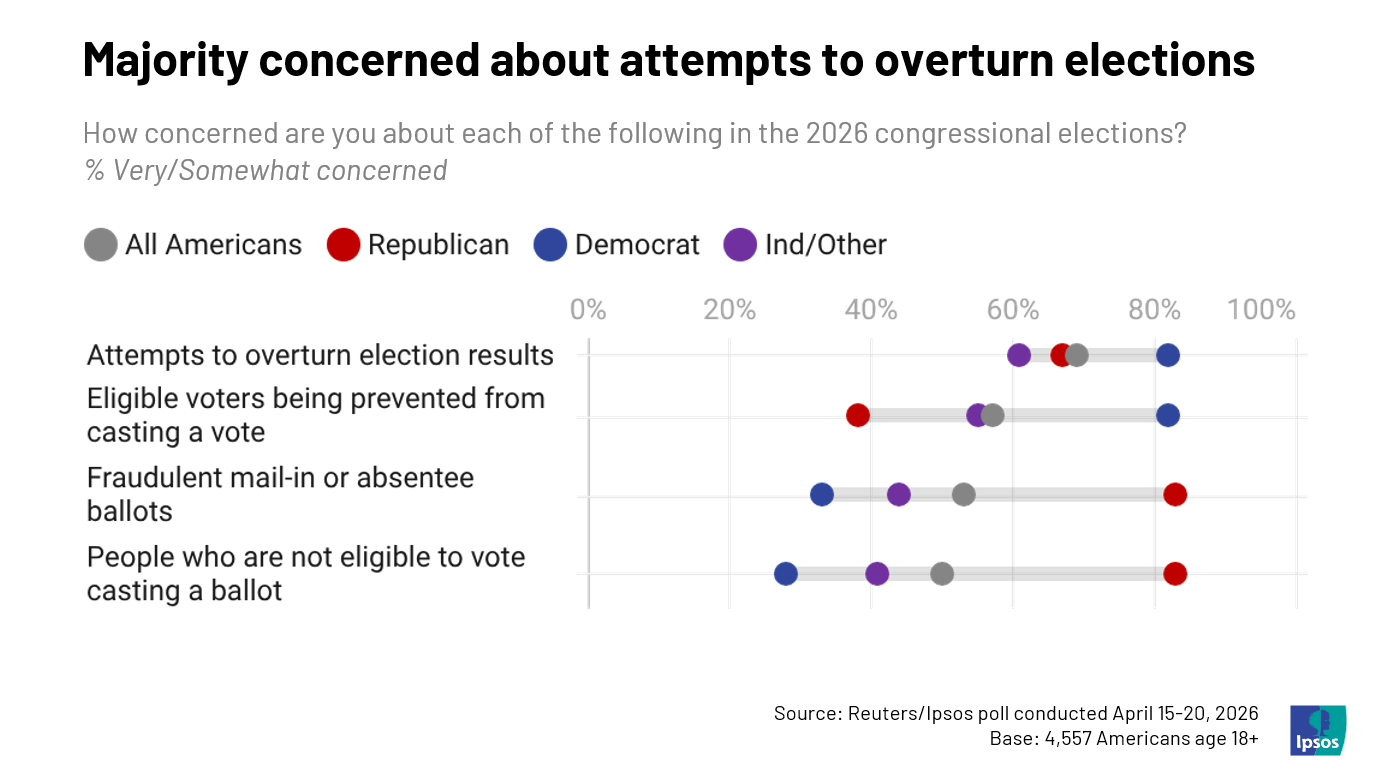
2. The economy is the nation’s top concern. While Trump’s speech might help rally the base, it likely won’t dethrone economic frustrations from the top of the nation’s issue landscape. This is what will matter most come November.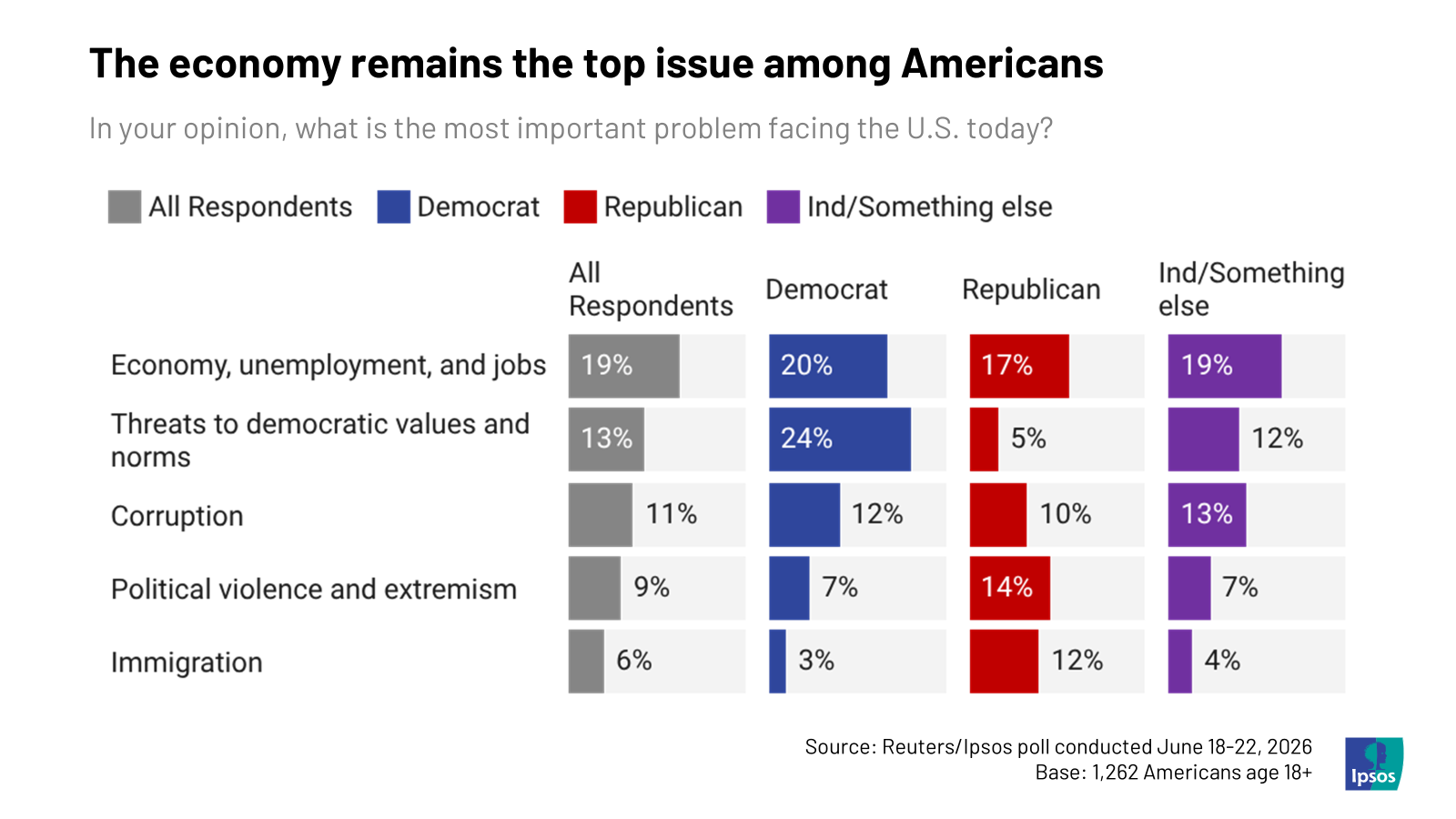
3. Struggling with everyday costs. Americans evaluate the economy primarily through everyday costs, like groceries, gas, housing, and household bills, more so than stock market performance. And right now, the average American is struggling on that front. Case in point: Two-thirds of the nation find groceries unaffordable.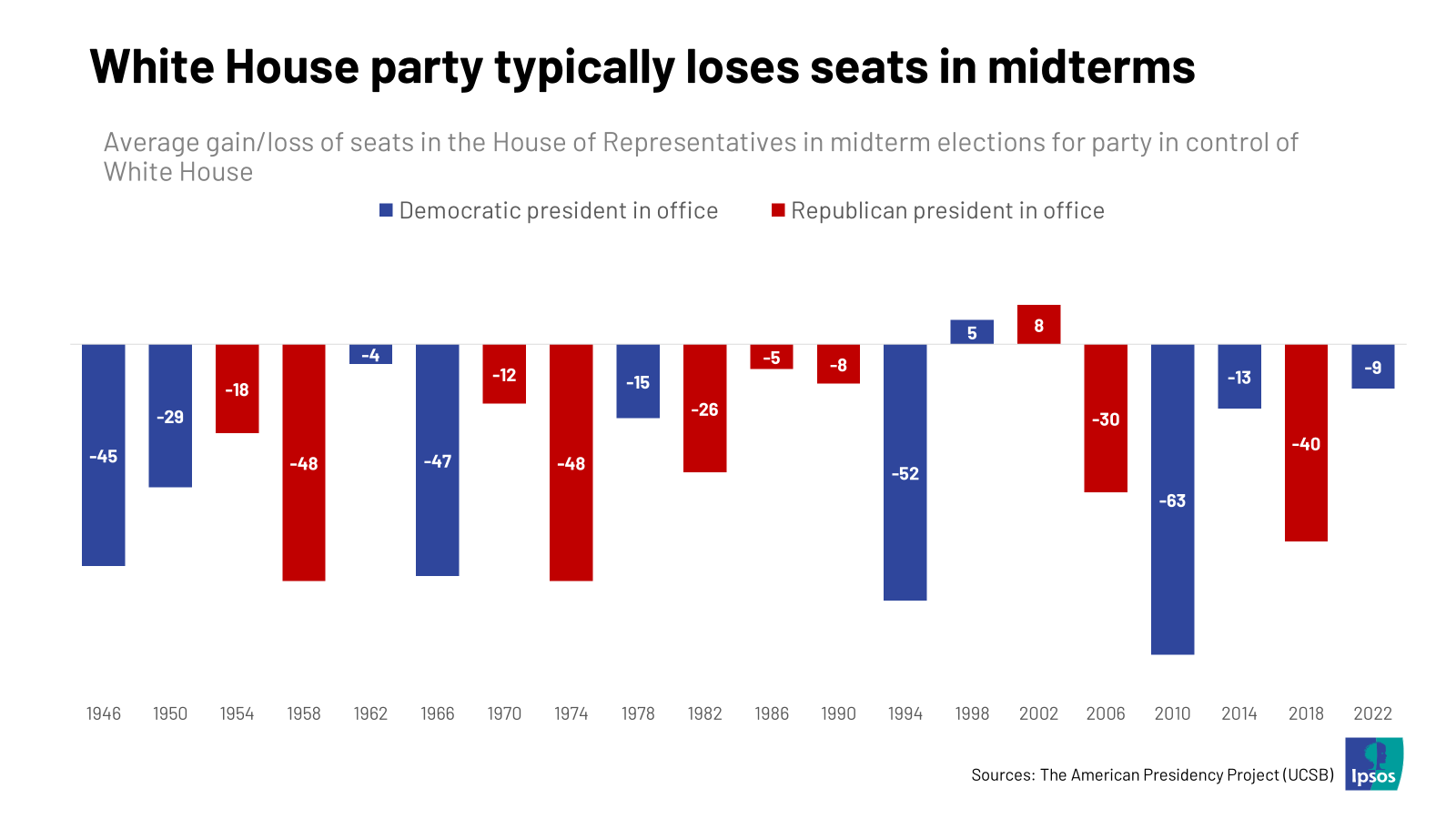
4. Neither party has an advantage on the economy. Trump began his presidency with a slightly positive net approval rating on the economy. Now, it’s dropped below negative 30 percentage points. Similarly, the Republican advantage on the economy has evaporated. Democrats haven’t been able to eke out a clear advantage on the U.S. economy broadly (but they do have a slight edge on the cost of living).
5. History is also working against Republicans. It wouldn’t take much for control of the House to flip, and the president’s party rarely gains seats in the House in a midterm election.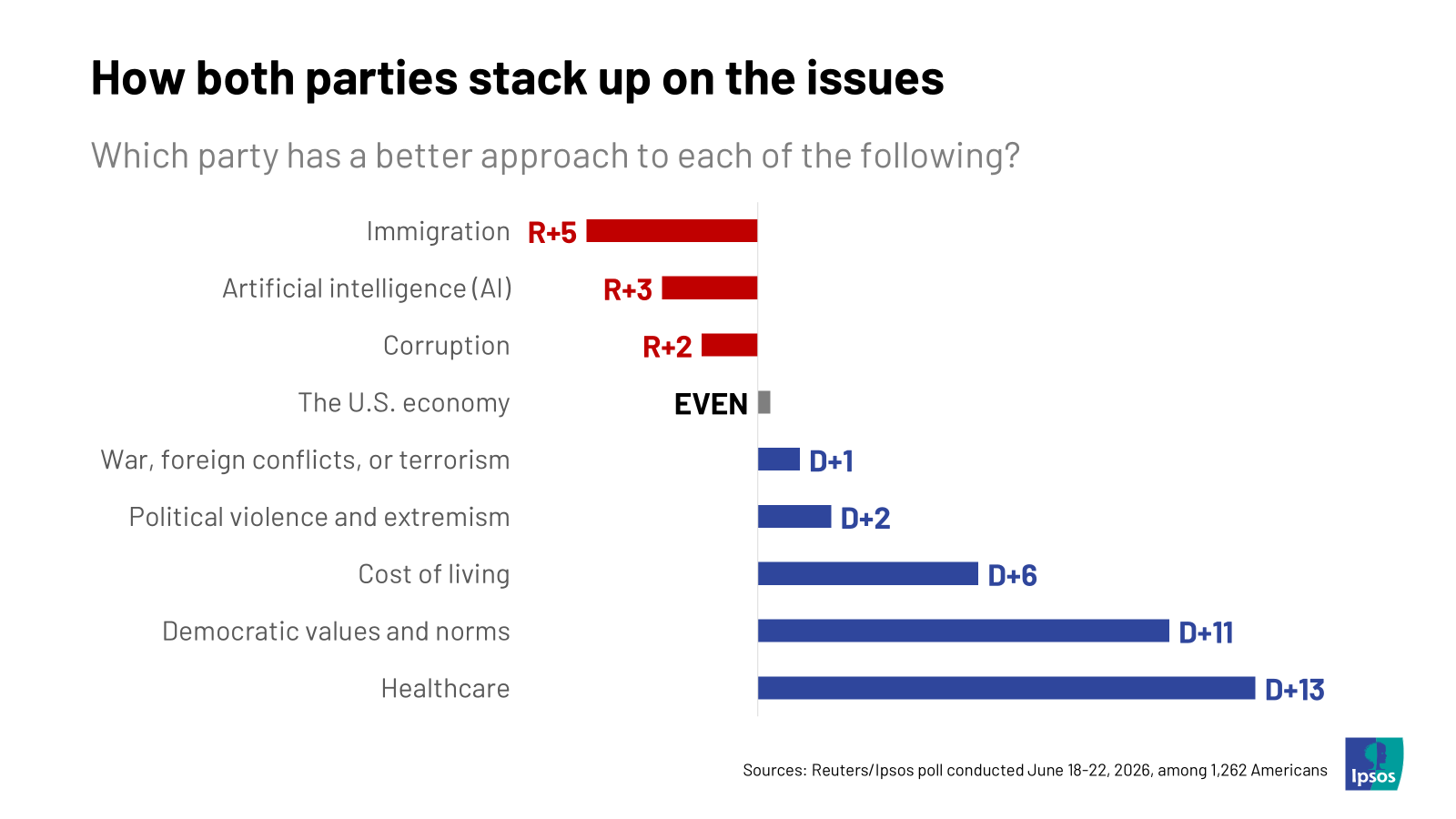
All told, Trump and the Republican Party are facing a number of headwinds heading into the November midterms. Some are structural (historic trends opposing the president’s party), while others are situational (the widespread negative outlook on the economy).
Of course, Republicans’ chances at success this November aren’t zero. While the Republican Party currently lags the Democratic Party in both horserace polling and voter enthusiasm, there are many weeks between now and November for those gaps to close. And any number of “black swan” events could also reshape the electoral landscape as it stands today.
More broadly, November is unlikely to fully resolve America’s economic frustrations. And as long as Americans see the economy as rigged for the rich and powerful, they will keep searching for a solution until they find one.