
How can grocery brands make the hybrid evening commute simpler?
For many workers, the evening commute weighs heavily on dinner meal planning, especially for busy families managing evening activities. This is a make-or-break opportunity for brands to position their solutions to ease this transition and retain brand loyalty.
Depending on which mode workers are in on a given day, brands will need to communicate which dinnertime problem they’re solving and why they do it better than the alternatives.
Nearly two-thirds (64%) of households reported they were spending more at grocery stores during the pandemic, per a recent Ipsos survey. However, as the pandemic subsides, nearly half (49%) expect to decrease their current grocery store spending for meals. For households with children, the impact is even more pronounced, as 60% will spend less; 43% by $160 per month or more. It will be critical for grocery retailers to minimize their revenue impact as shoppers revert to pre-COVID-19 meal spending habits.
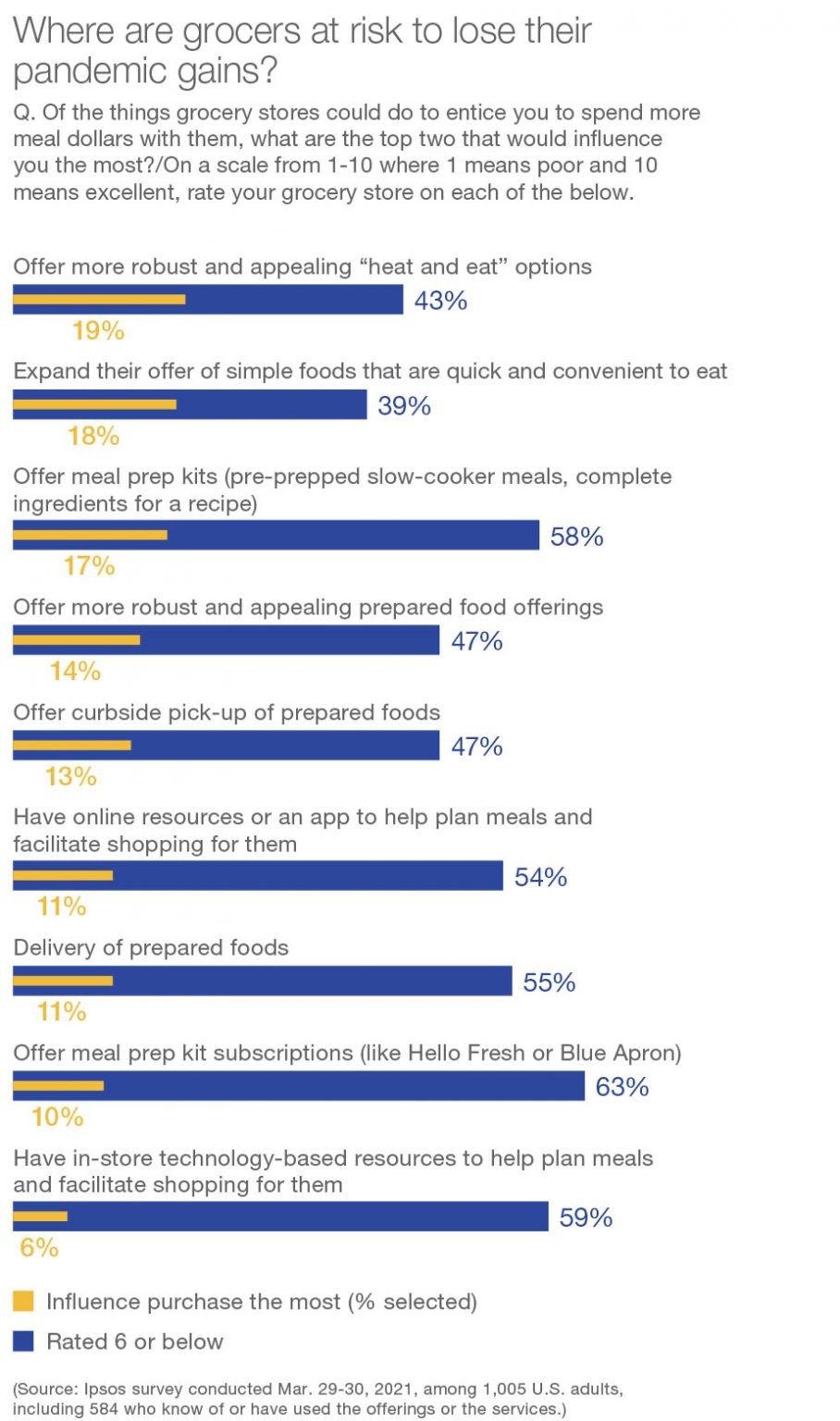
Ipsos research reveals ways for brands to reserve space in home commuters’ minds. Along with continuing investment in curbside and delivery, nearly 20% of consumers cited three things as top influencers in maintaining their spend with their grocer. Current industry performance in these areas leaves plenty of opportunity to improve:
• Offer more robust and appealing “heat and eat” options
• Offer an array of simple foods that are quick and convenient
• Offer meal preparation kits
Grocery retailers face major decisions in terms of prioritizing investments. Consumers have made it clear they want convenience and quality. There are increasing options available to them to have both, from delivery to newly enhanced drive-thrus at QSR restaurants to their favorite local restaurants going above and beyond to get their customers back. By making investments now, grocers will have a better chance at staying in the commuter dinner game.
This article was originally published in What the Future Commuting, a research magazine by Ipsos exploring the changing dynamics of business travel, hotel stays, the points economy, and virtual technologies will shape our future getaways. Download the magazine here.


![[WEBINAR] Global Voices of Experience 2026](/sites/default/files/styles/list_item_image/public/ct/event/2026-02/thumbnail-global-voices-experience.jpg?itok=NN6W-9Ft)