America the Uncertain: July Briefing Highlights
COVID is no longer seen as the main issue facing the country. In its place, a range of issues – some old, some new – are rising to the fore.
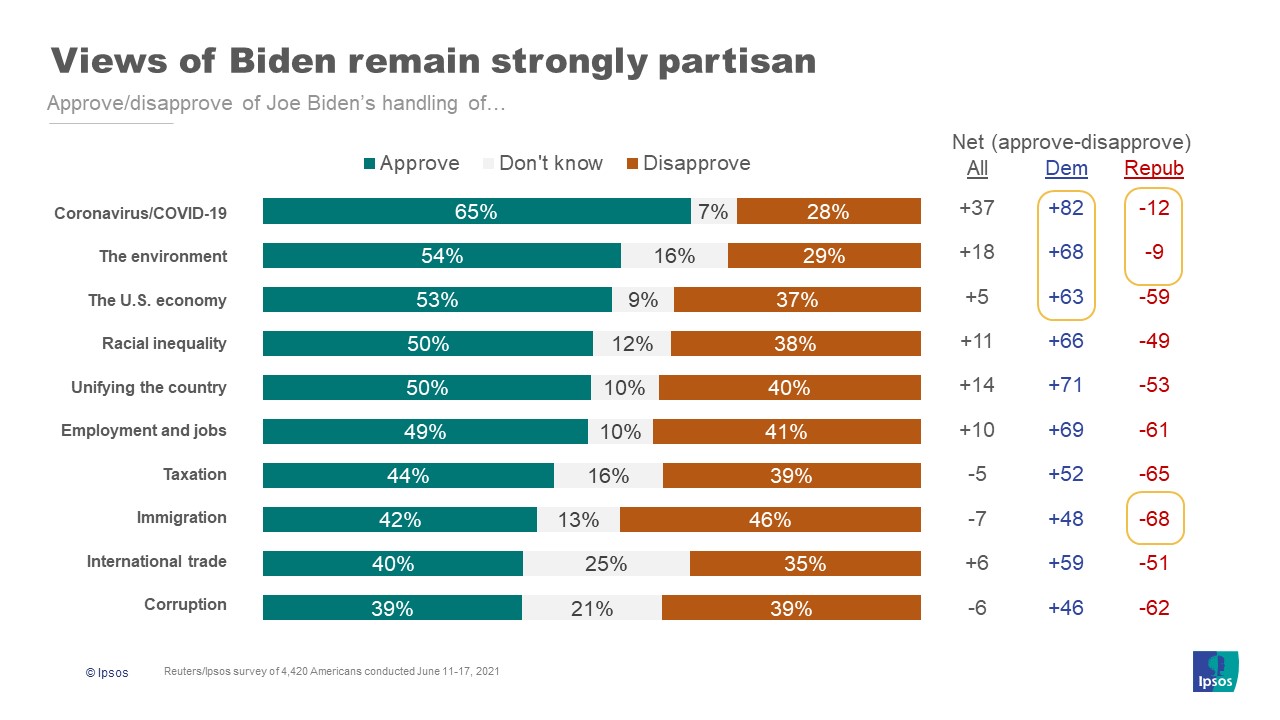
- President Biden’s approval rating will now rest less on perceptions of his performance on handling COVID, and more on other areas, like the economy or immigration. Meanwhile, the pace of vaccinations has ground to a standstill as vaccine hesitancy holds steady.
Despite rising inflation, consumer sentiment remains robust. American workers also indicate that they now feel more confident about leveraging their experience and talent into higher pay or a more amenable work environment.
- Nearly one in three American workers say they are looking for a new job or have recently started one.
Americans also indicate they are more about crime and gun violence, reverting back to 2018 levels of concern.
- But how they think about crime and policing looks different after a year of protests against racial injustice.
Cultural divisions reemerge in the form of the public debate around critical race theory (CRT) and whether it should be adopted in K-12 school curriculums.
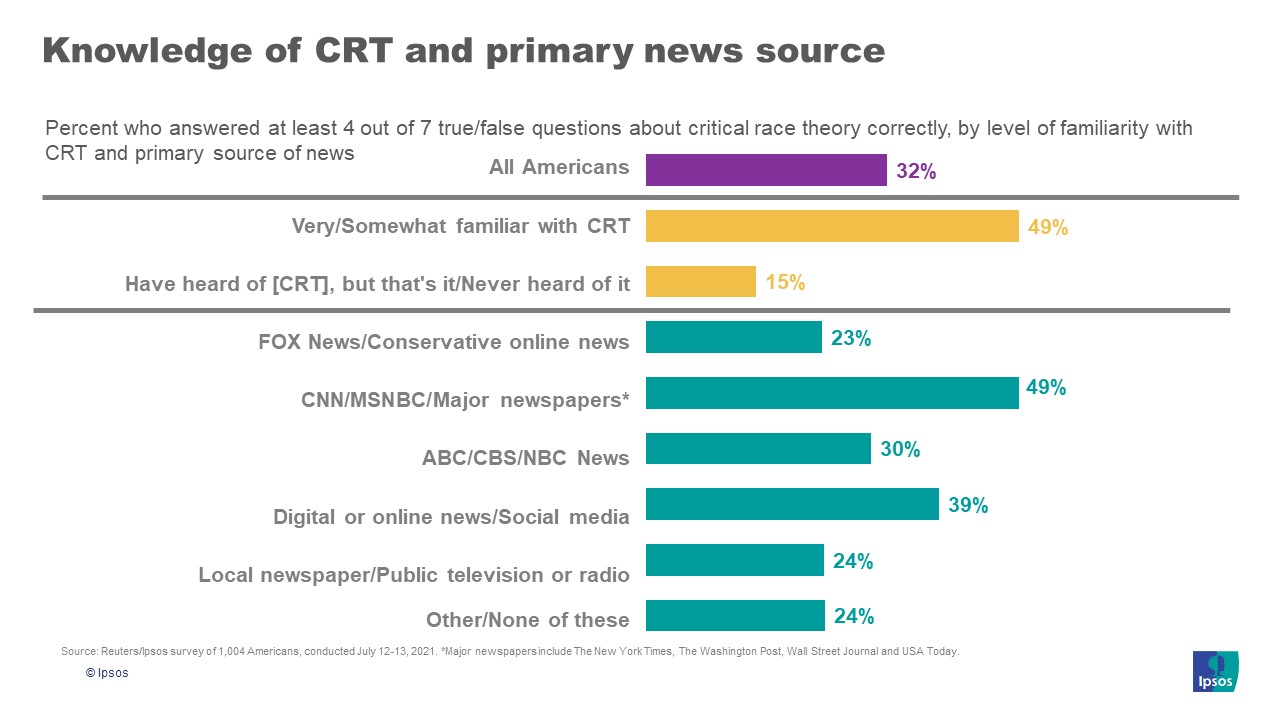
- Despite the vociferousness of this debate, a majority of Americans have only glancingly heard of CRT. Misinformation about it is widespread, particularly among Americans who primarily get their news from cable and conservative news.
Deep dive:
The economy supplants COVID as the main issue facing the country
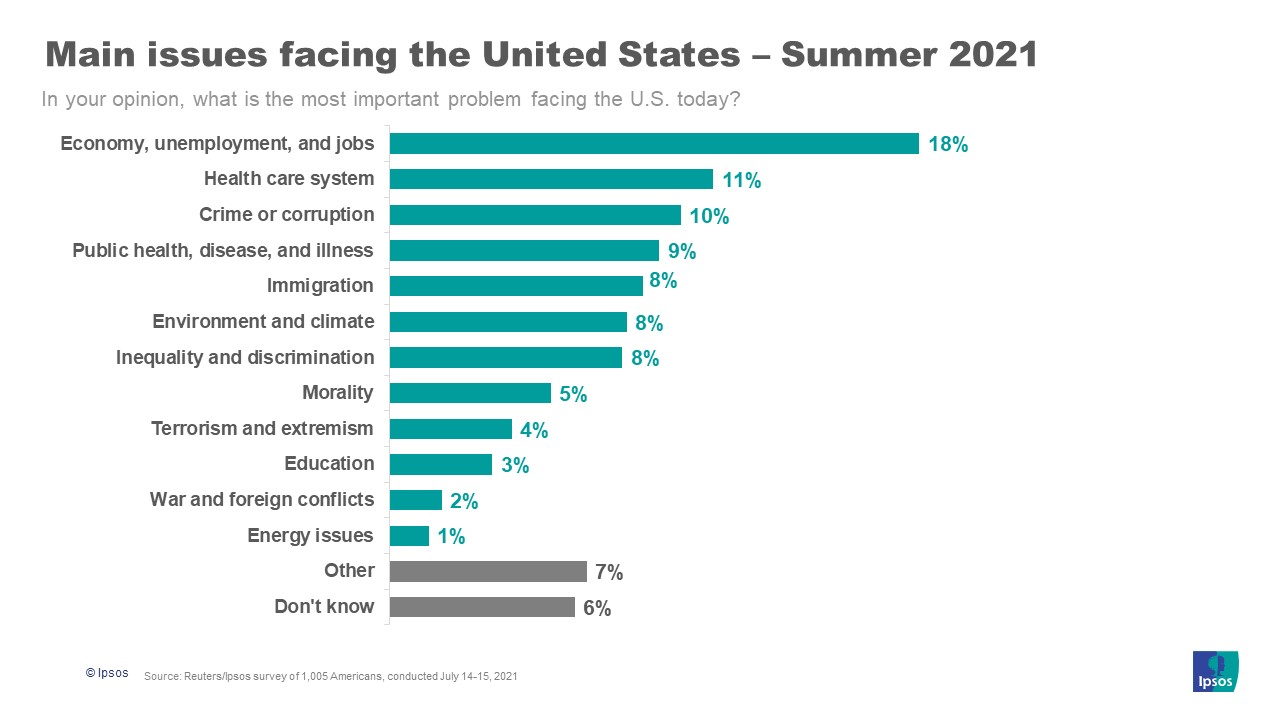
With the country’s reemergence well underway, a plurality now see the economy, unemployment and jobs as the main issue facing the country. Beyond this, the American public’s attention span is split across a range of issues, speaking to the absence of a unifying, national focus as COVID recedes in importance.
Consumer confidence remains strong despite rising inflation and broad perception that prices for household items – like groceries and gasoline – are spiking. Americans are divided on what is driving the surge in prices, with partisans attributing the rise to different sources. A plurality of Democrats think inflation is due to supply chain issues, while a plurality of Republicans pin it to government policies and trade agreements.
American workers are on the move
As businesses reopen, workers find themselves in a new position of strength. After a year of stagnant wages and few distractions, the prospect of higher wages and a feeling of burnout are inspiring a plurality of job hunters to look for new opportunities.
Young people, who came of age in a challenging economic climate, are particularly likely to be on the hunt for a new job. Among Gen Z, this at least in part comes down to the fact that some of this cohort is entering the labor market for the first time. But among millennials, burn out and wanting better pay are disproportionately significant drivers.
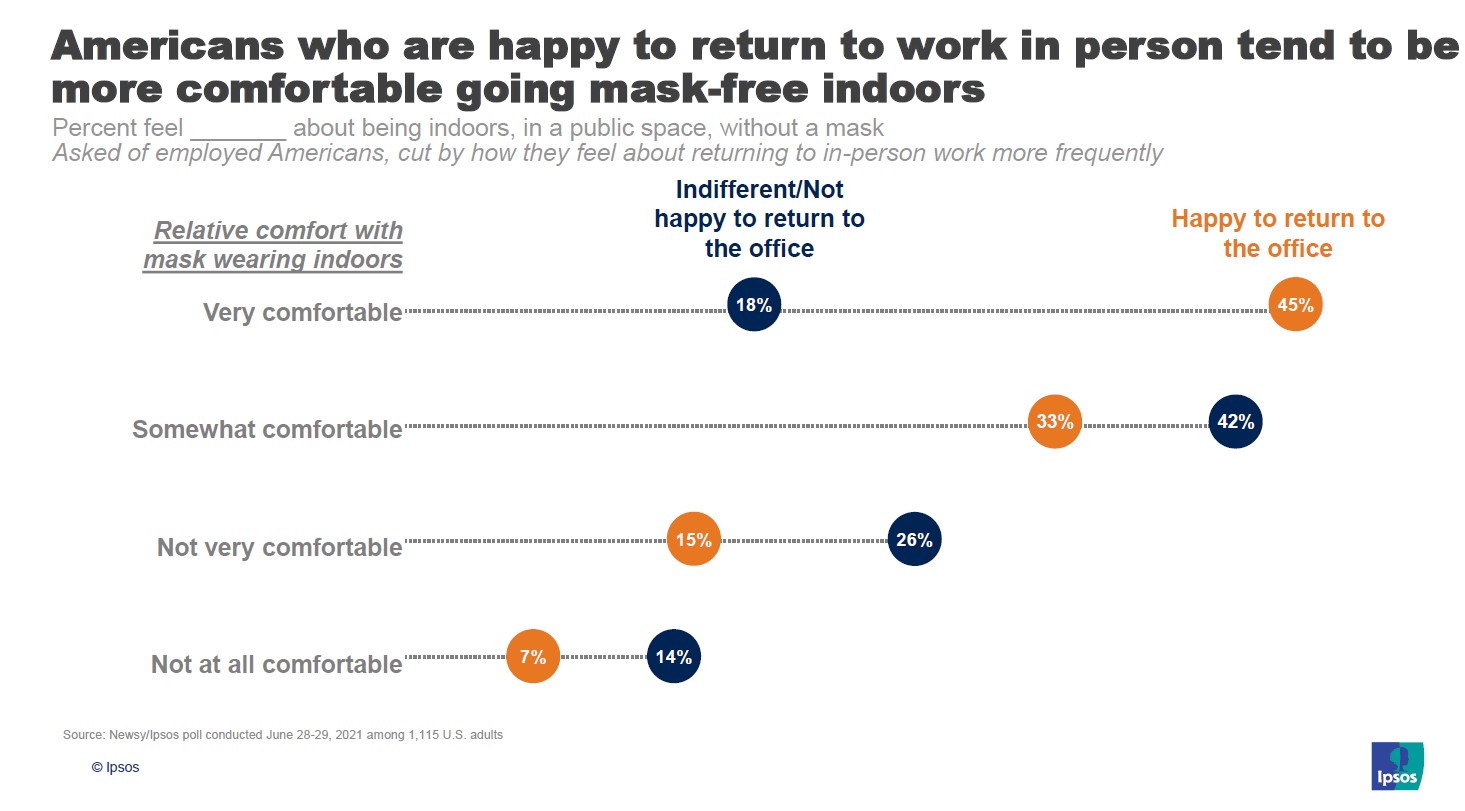
At the same time that some workers are looking for something different, not all Americans are feeling happy about the prospect of returning to work in-person more often. This diffidence is particularly striking among Americans who feel uncomfortable with being mask-less indoors, in public spaces. In other words, concern about COVID is still a factor for some American workers and may be a driver for some to seek out new opportunities elsewhere.
Vaccine hesitancy holds strong
The country’s reemergence continues, but the pace of vaccinations has stalled out. Those likely to get the vaccine increasingly already have done so.
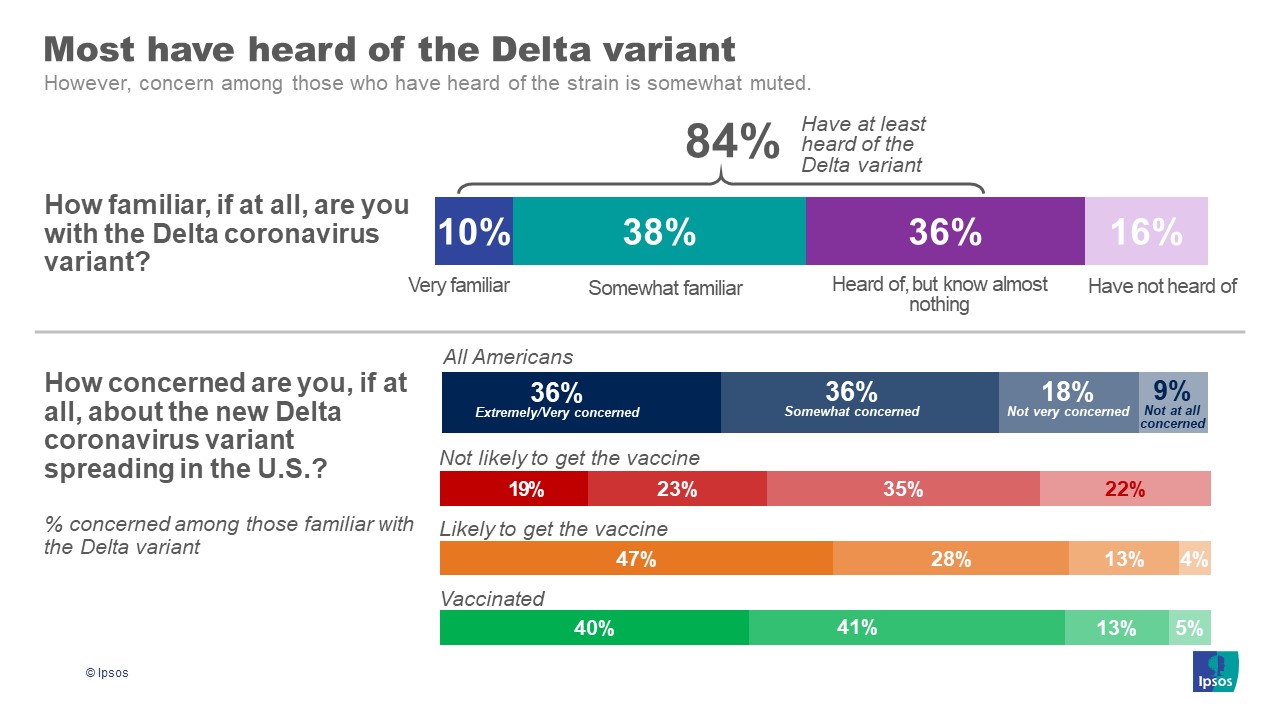
Vaccine hesitancy is particularly prevalent across certain demographic groups, with partisanship being a leading driver of how likely Americans are to get the vaccine. Where Americans consume their news is another driver, linked to partisanship.
This group appears unlikely to convert to acceptance of its own accord. Even the Delta variant is not prompting much concern among the vaccine hesitant. As a consequence, vaccine mandates may become necessary to persuade them to get the vaccine and push the nation towards herd immunity.
Americans grow more concerned about crime and gun violence
Though they are on an overall downward trajectory from the 1990s, crime rates rose in the U.S. in 2020. Accordingly, crime and gun violence has reverted to 2018 levels of concern.
But the way Americans talk about crime is different now. There is a new awareness that not all Americans receive the same treatment by police and the criminal justice system. This reality is what fed some of last summer’s protests.
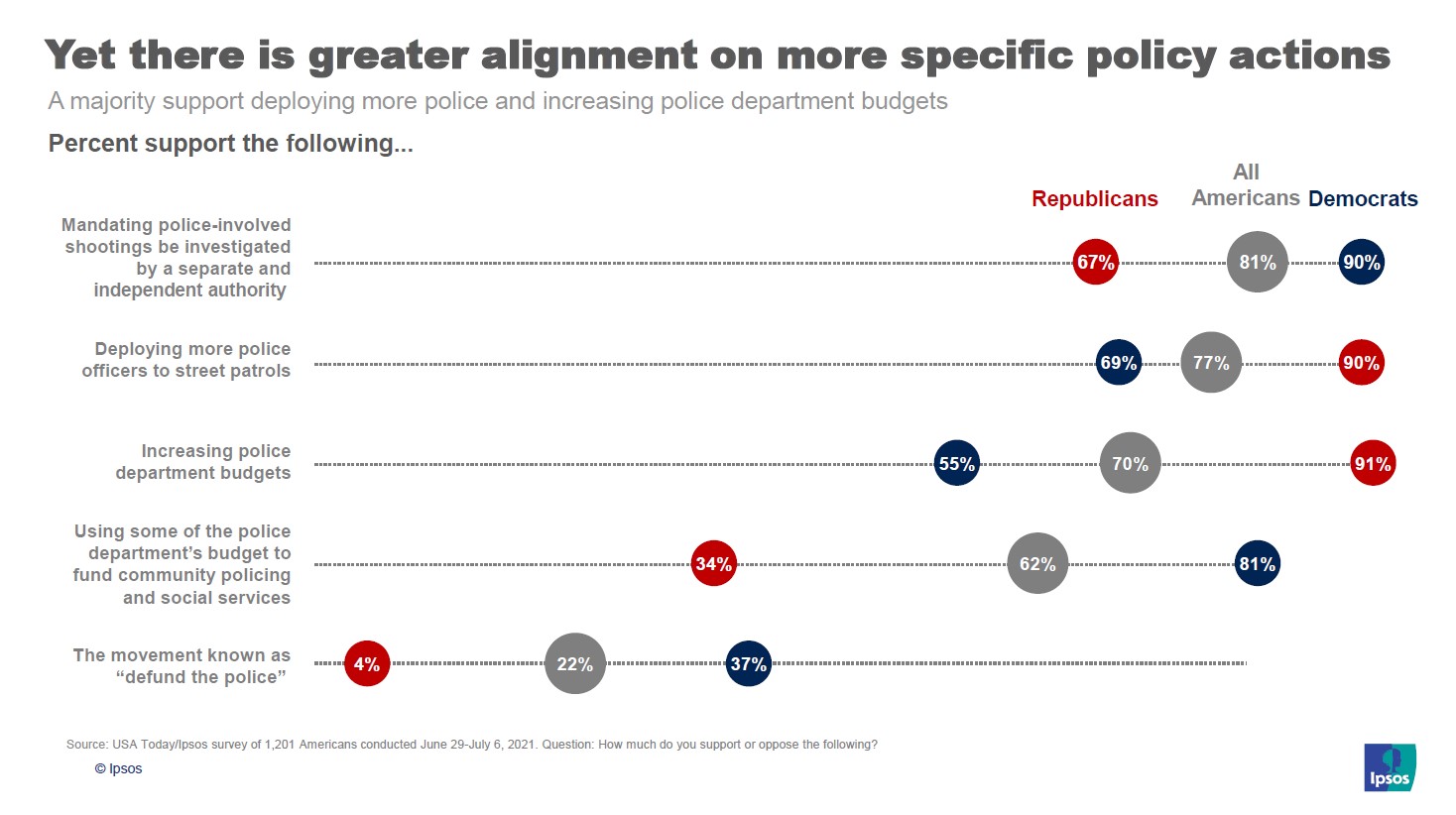
At the same time, Americans are not opposed to the police per se, and even show some bipartisan consensus around policing priorities. They want to see more police on the streets and bigger budgets for police departments – but they also want investigations of police shootings by independent authorities.
Culture wars are here again
As the nation moves on from COVID, new points of cultural tension rise to the fore. The current public debate around critical race theory (CRT) is one such example.
Despite the prevalence of references to CRT in the news, most Americans are glancingly familiar with it at best. Even among those who are familiar with CRT, misinformation abounds, particularly when viewed by news consumption.
Biden’s approval rating slide
President Biden performs strongly on COVID, less well on other issues. With COVID moving into the background, Biden’s approval ratings have becoming more middling. On the issues Americans care about most now, like the economy and immigration, he is not seen to be as effective.
His approval ratings will likely continue to trail off as COVID still declines as issue.