America the Uncertain: November Briefing Highlights
America the Uncertain: November Briefing Highlights
Key highlights from November’s America the Uncertain webinar, a briefing from the Ipsos political polling team on data and trends shaping American politics.
Post-COVID life feels far off for many.
- After the Delta surge over the summer, many are still uncertain about what the future holds.
Consumer confidence is muted.
- As a consequence of the delayed return to “normal”, consumers are in a mixed place and expectations are volatile.
The environment is growing as an issue Americans care about.
- Over the past decade, Americans increasingly rate the environment as their main issue but many still aren’t changing their behavior because of climate change.
Most Americans feel safe in their communities, but crime and gun violence remain concerns
- Partisanship and race drive opinion on how to combat gun violence.
Trust in teachers declines
- Teachers have become a focal point of the culture wars, from masks and online schools to how schools talk about and teach racism.
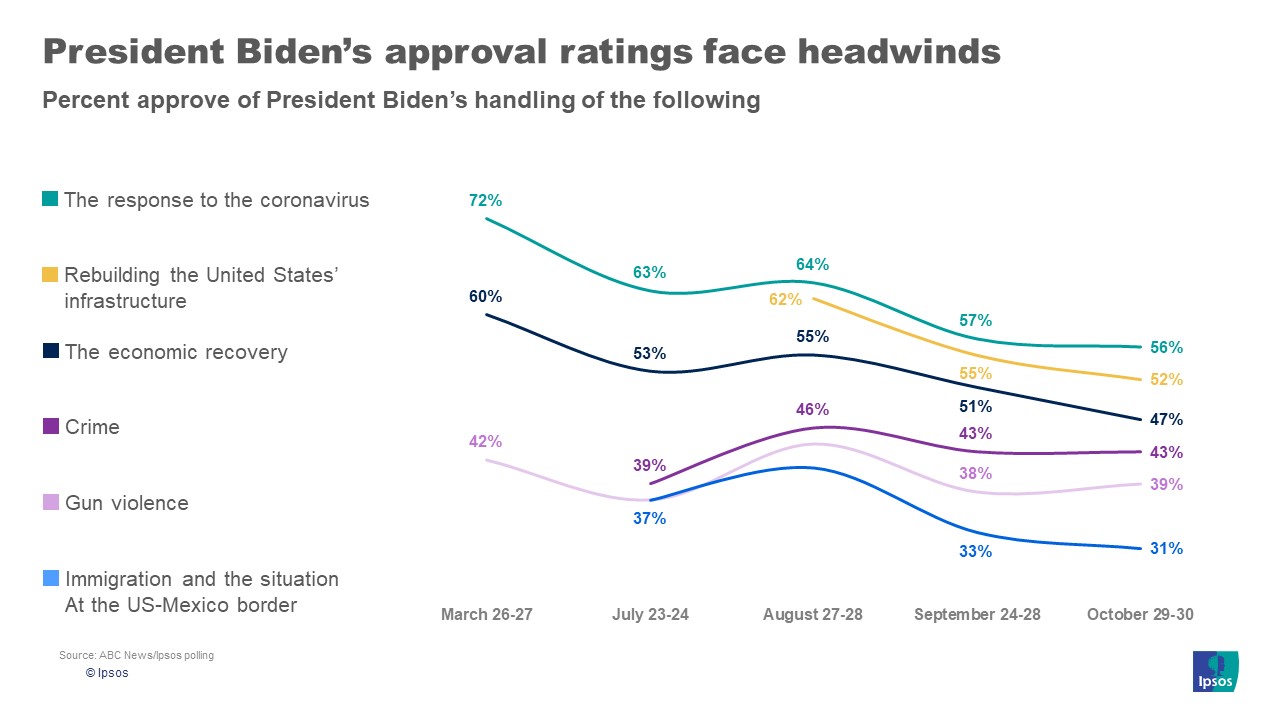
President Biden’s approval ratings face headwinds
- President Biden’s approval ratings drop across many issues as he struggles to convince the public he is making progress on major issues.
Deep dive:
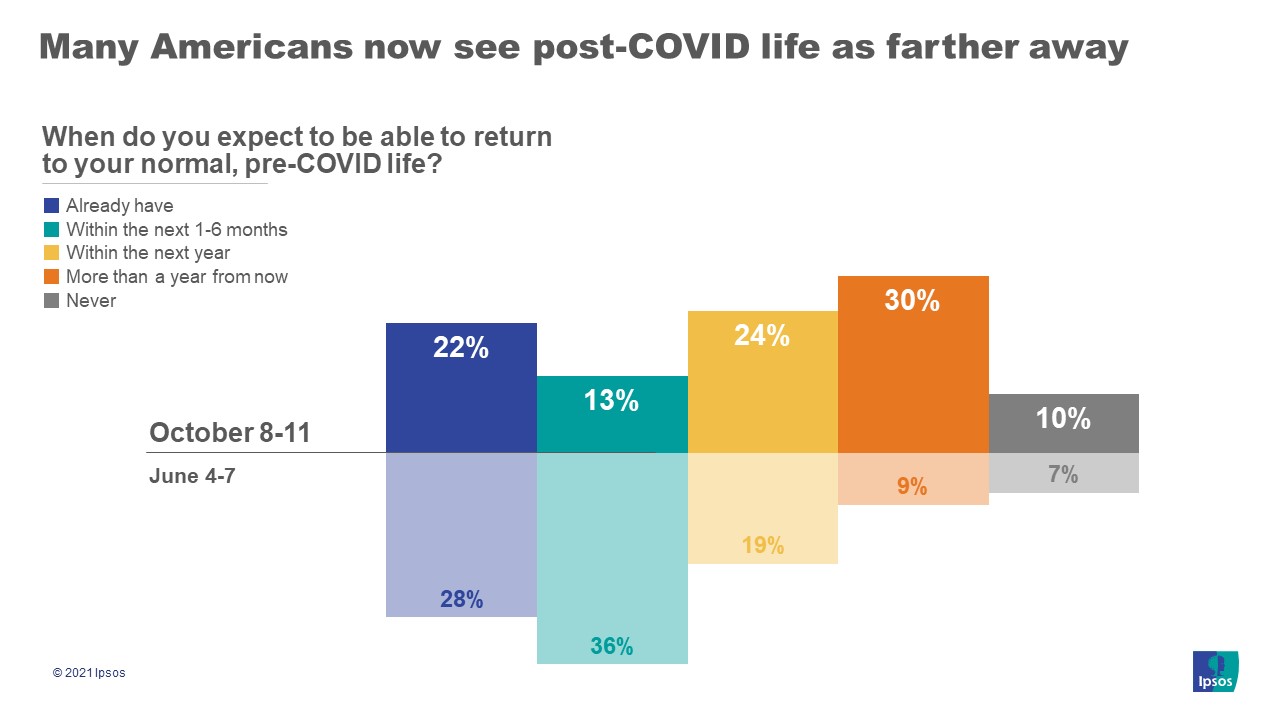
Many now see post-COVID life as farther away
Compared to earlier this summer, more Americans now see post-COVID life as farther away. Two in five Americans (41%) feel post-COVID life coming in more than a year or never. Back in early June, 16% of people felt the same.
The Delta surge over the summer fueled a lot of this renewed uncertainty among the public. Out-of-home behaviors subsided relative to the spring, and expectations for the future grew more uncertain.
With the CDC approving the vaccine for kids between the ages of 5 to 11, more Americans are eligible for protection against the virus. Though, it remains to be seen how many parents will get their kids vaccinated. Recent polling shows that about two in five parents remain opposed to the vaccine for their children.
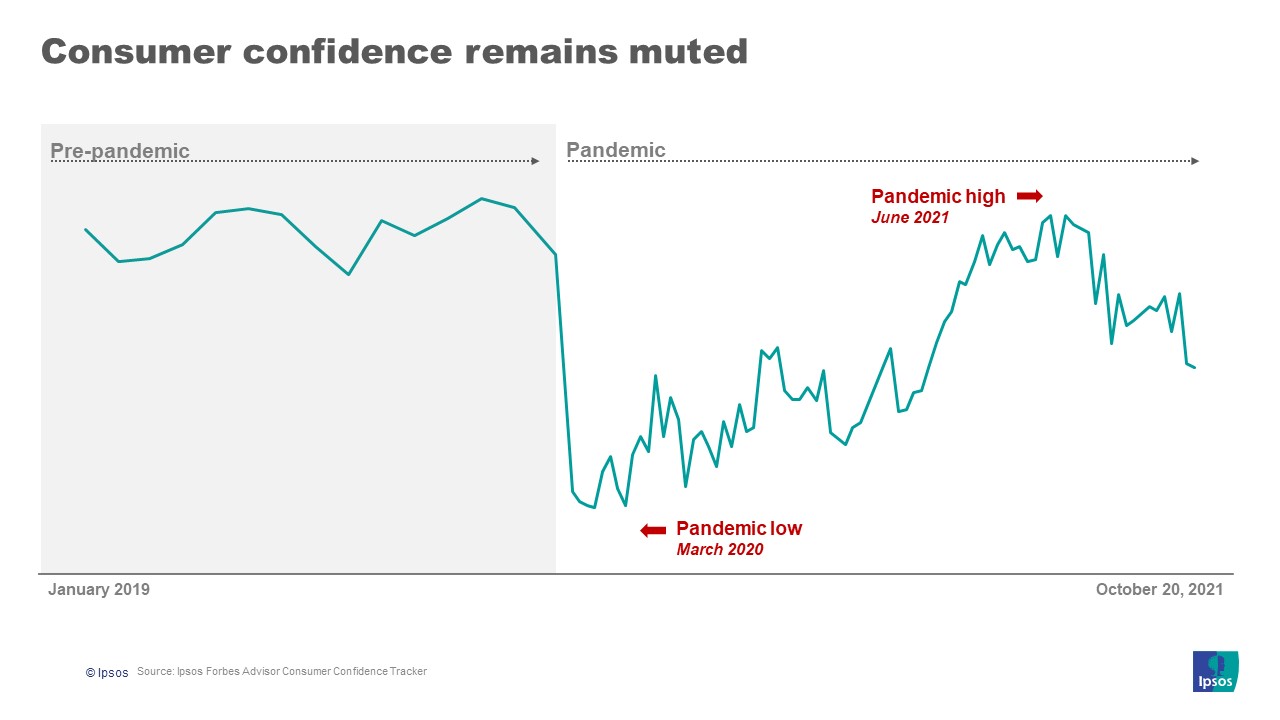
Consumer confidence remains muted
Throughout the pandemic, the state of the public health crisis was intimately connected to the state of the economy. Now, with uncertainty still lingering around COVID, this pattern continues. While consumer confidence remains much higher than at the nadir of the pandemic in spring 2020, it’s still lower than when it achieved its pandemic high back in June. At that point, it seemed consumers had returned to a pre-pandemic level of confidence.
Relatedly, many other parts of the economy are still experiencing some pandemic fueled pains. While unemployment approaches pre-pandemic levels, businesses are struggling to fill open job positions. In part, that’s because there are fewer working-age people in the workforce. Compared to before the pandemic, there are about 5 million fewer people working today. COVID upended life for many, causing many people to leave the workforce for various reasons.
The environment is increasingly seen as a prominent issue
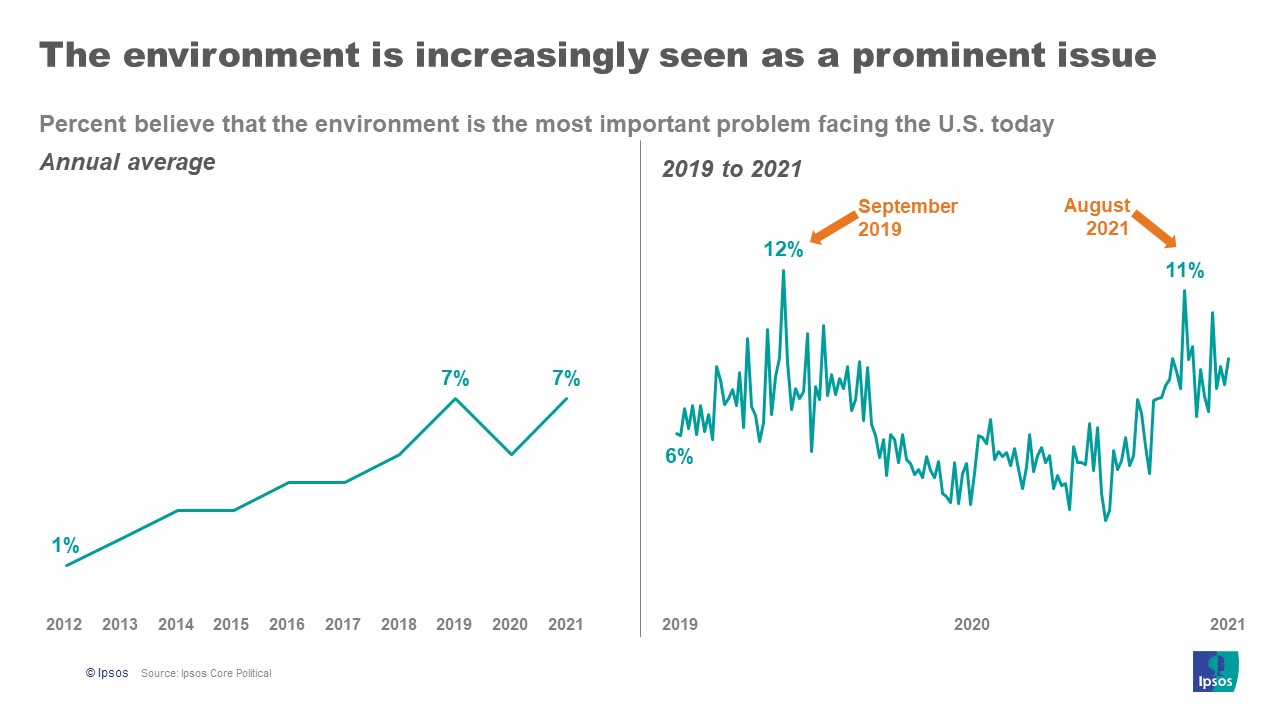
As President Biden and many world leaders meet this week in Scotland for COP26, the environment is top of mind for many. Increasingly, more Americans cite the environment as their main issue, tracking from Ipsos’ Core Political finds. During the pandemic, the environment took a backseat as other issues, like COVID and the economy, surged in importance. Yet, this past summer, as wildfire and hurricane season got underway, the environment surged to the levels of importance it saw at roughly the same time in 2019.
Still, many Americans aren’t necessarily changing their behavior because of climate change. If people are modifying their behavior in what they buy, groups like Democrats, the young, higher educated, and more affluent people are the ones more likely to do so.
 Crime and gun violence concerns many, but there is no common agreed-upon solution
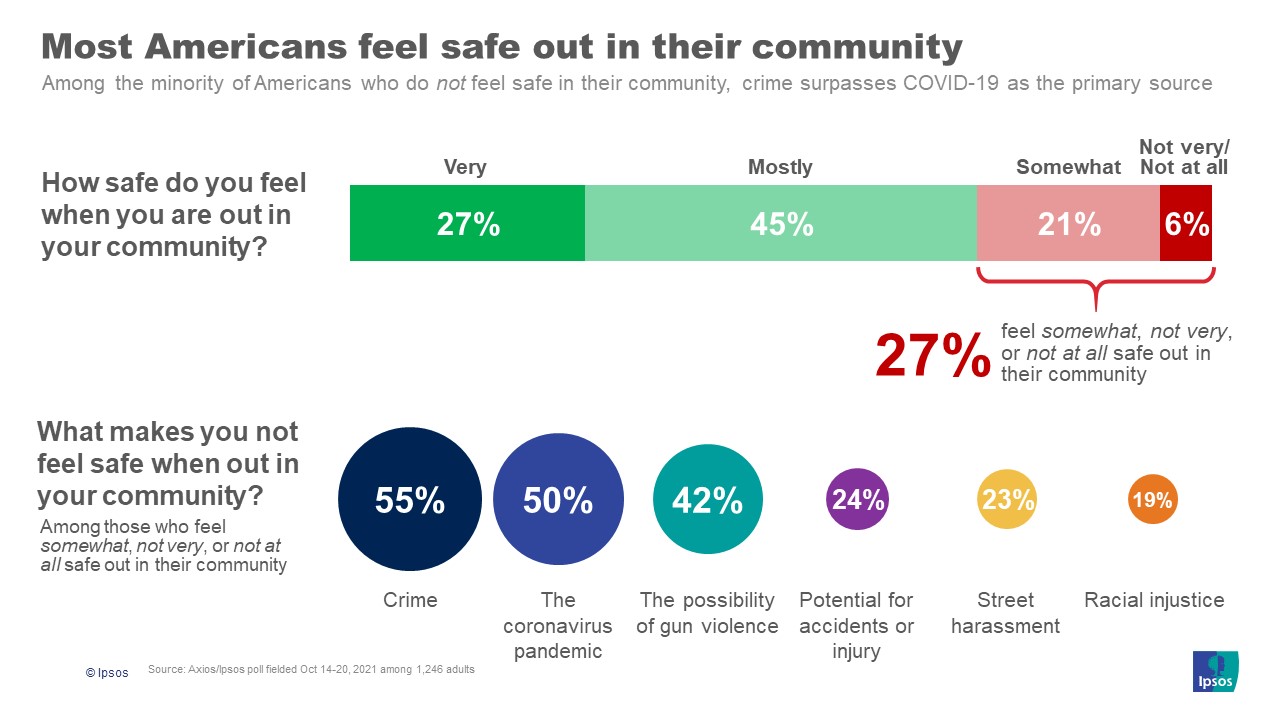
Crime and safety have emerged as a significant focal point in many local elections. Yet while concern about crime is high, most Americans generally feel safe when they are out in their communities, according to Axios/Ipsos polling.
However, among the 27% who do not feel safe when out in their community, crime is the most-cited reason why, at 55%. This is closely followed by the coronavirus pandemic, at 50%, with the possibility of gun violence in a more distant third at 42%. Americans who say they feel unsafe in their community are more likely to live in urban areas, be people of color, Democrats, and less affluent with a lower level of reported education.
When it comes to combatting violence, Americans do not see eye to eye, with stark differences emerging across racial and partisan lines. Democrats and people of color tend to favor greater gun control regulations and putting more money into social programs; Republicans favor increasing police budgets and encouraging gun ownership.
Trust in teachers declines
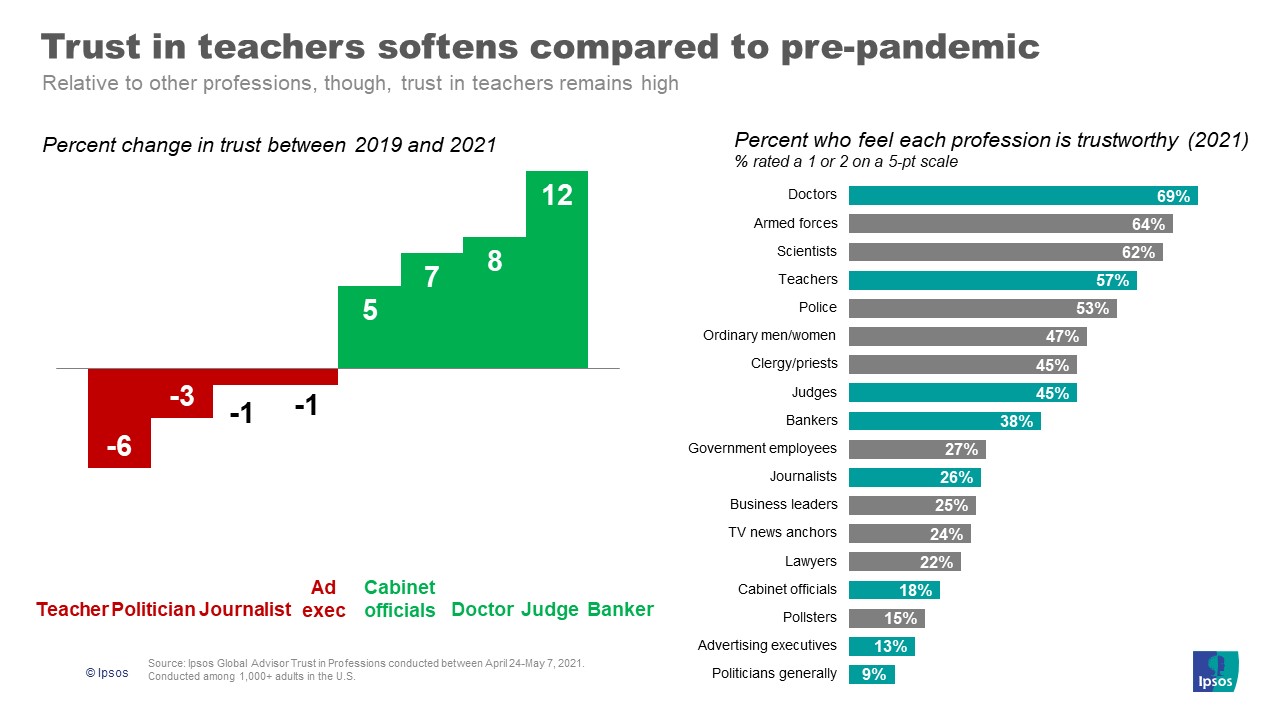
Teachers, who have inadvertently found themselves at the center of culture war issues, are less trusted by Americans now than they were in 2019, according to the Ipsos Global Trustworthiness Index. Schools became a focal point for many of the more divisive aspects of daily life during the pandemic, such as masking, vaccine requirements, and online schooling.
Parents’ patience with online schooling dwindled during the pandemic, while earlier polling suggested they were initially open to giving schools and teachers the benefit of the doubt. However, parents express concerns about the impact the past year of online learning had on their children's educational progress.
Other educational issues, such as critical race theory, have also generated profound divisions across political lines. Taken together, these various issues have contributed to a softening in trust in the profession overall.
President Biden’s approval ratings face headwinds
After enjoying positive approval ratings early in his term, Biden and the Democratic party now face major headwinds heading into 2022. More Americans approve than disapprove of Biden’s job performance overall, according to Ipsos Core Political polling.
This is because Biden’s approval rating is strongly linked to how he is perceived to be managing the coronavirus pandemic and the related economic recovery. His ratings fell during the summer Delta surge, but Ipsos polling conducted with ABC News underlines that Biden’s standing has weakened across all issues.
The same polling underlines that Biden has not fully sold the public on the contents of key legislation, such as the infrastructure and social programs bill currently passing through Congress.