How COVID has changed (most of) us
Americans are reentering a more expansive state of mind. COVID seems less threatening. More of us are resuming our normal lives. But this raises the question – what is “normal” after two years of a global pandemic? Hard to say. COVID will leave its imprint long into the future.
One of the more obvious ways it has changed us is in our collective approach to health risk mitigation strategies. Most of us will now be more open to wearing masks, more mindful of washing hands and occupying public spaces going forward. Our data suggests that masks are lagging indicators – donned as the perceived risk of COVID rises, set aside as it diminishes.
Another, less positive outcome is the extent to which the public remains divided (or simply confused) about what level of threat COVID represents. As we’ve written before (here and here), media habits tend to dictate what people believe, along with partisanship. This pattern is engrained and unlikely to change anytime soon.
- Back to normal. Americans are distinctly more hopeful that we can get back to normal life sometime relatively soon. Or they’ve already picked back up with their old habits. This is a pattern we’ve seen before. Hope rises as COVID cases fall. A new variant could change this calculus. The predictability of uncertainty.

- Mask-less. About half of the public still reports wearing a mask at least sometimes when they’re out and about. While mask use might be falling along with COVID, a majority are primed to put them back on again if there’s another surge in cases. Again, mask use will outlast the pandemic.

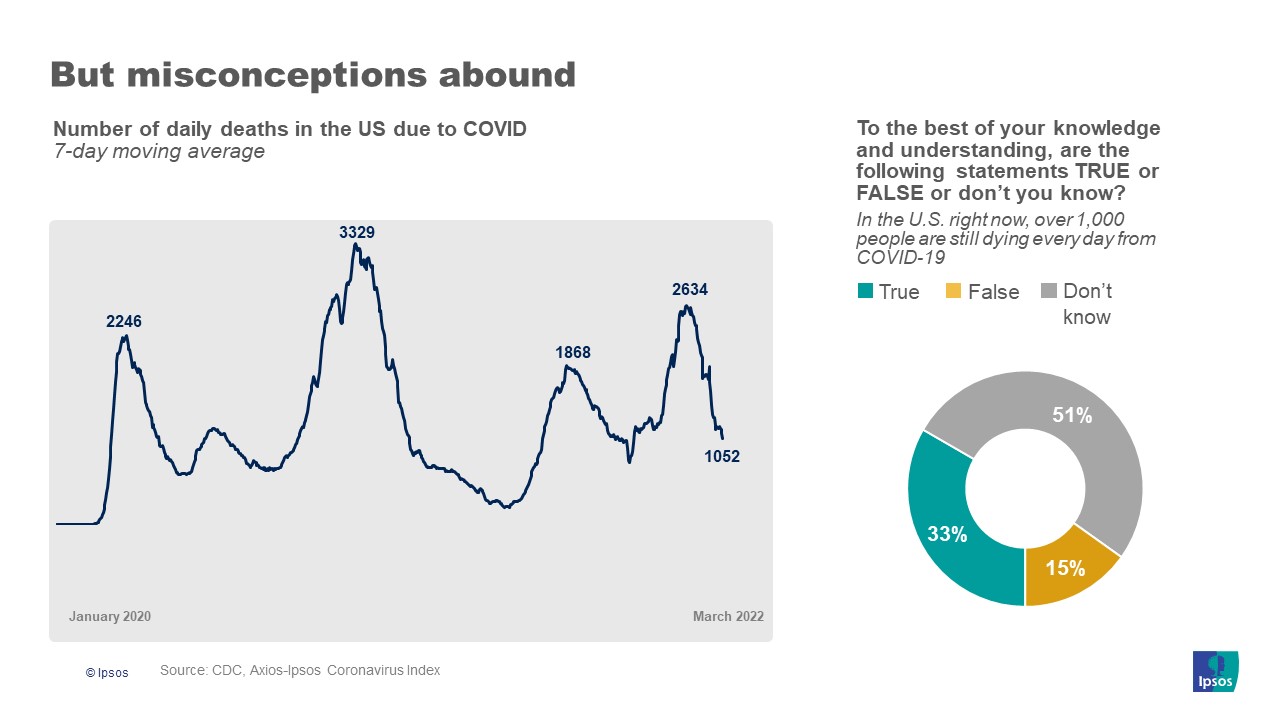
- COVID’s toll. Although the perceived risk of COVID may be on the decline, our research highlights broader confusion about the ongoing impact of the pandemic. According to the CDC, the daily death toll is still approximately 1,000. Yet just one in three Americans can correctly identify this as true. Reality versus perception—they don’t always cross paths.
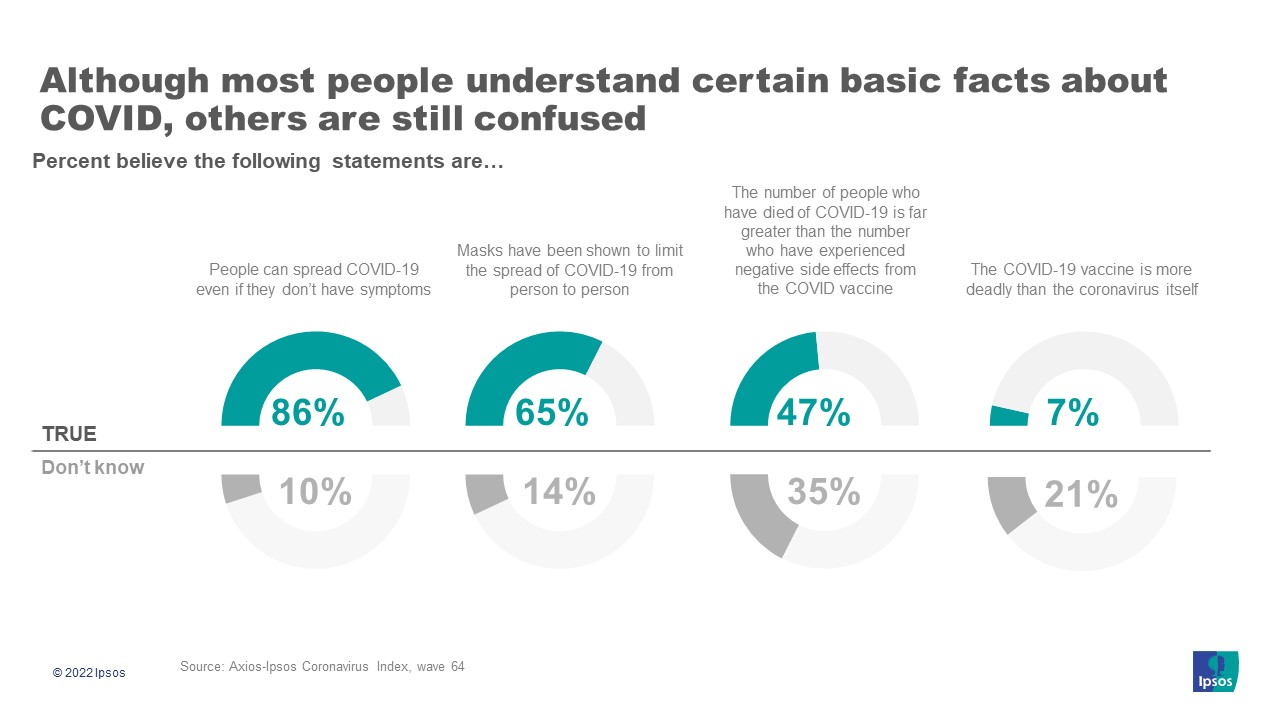
- COVID’s misconceptions. The confusion is more global, extending beyond just the current death toll. While most agree that COVID can be transmitted even by the asymptomatic and that masks are useful in limiting the spread of the disease, others are uncertain. People who believe misconceptions about the pandemic are more likely to be unvaccinated and to not practice other mitigating strategies, like wearing a mask in public. The negative implications for public health are obvious.
Most Americans have adapted to the virus, and will continue to do so. But it’s important to also understand where and how attitudes haven’t changed. It's not clear yet whether we have truly have moved past COVID or if this is just an interregnum. We will see.