Nine trends that explain 2025
As 2025 draws to a close, Ipsos looks back at what was an eventful year. While many events helped shape the year, Ipsos identified nine big picture trends that defined 2025.
1. The main issue of 2025. Affordability concerns drove the economy to the top of Americans’ issue list to start and end the year. High prices and cost of living pressures define today’s national landscape. Having helped power President Trump to his 2024 popular vote electoral win, these same concerns are now a major driver of his sagging approval ratings hovering around 40%.
The economy also took center stage in the New York City mayoral election. Zohran Mamdani capitalized on these concerns with an affordability-focused campaign, emphasizing policies aimed at making life more affordable for everyday New Yorkers. The polling showed that Americans were drawn toward policies that speak directly to their daily financial anxieties – from groceries, to rent, and consumer prices.
Looking ahead, affordability is shaping up as the top issue of the 2026 midterms with the two major parties competing to be seen as best able to address the issue in Washington.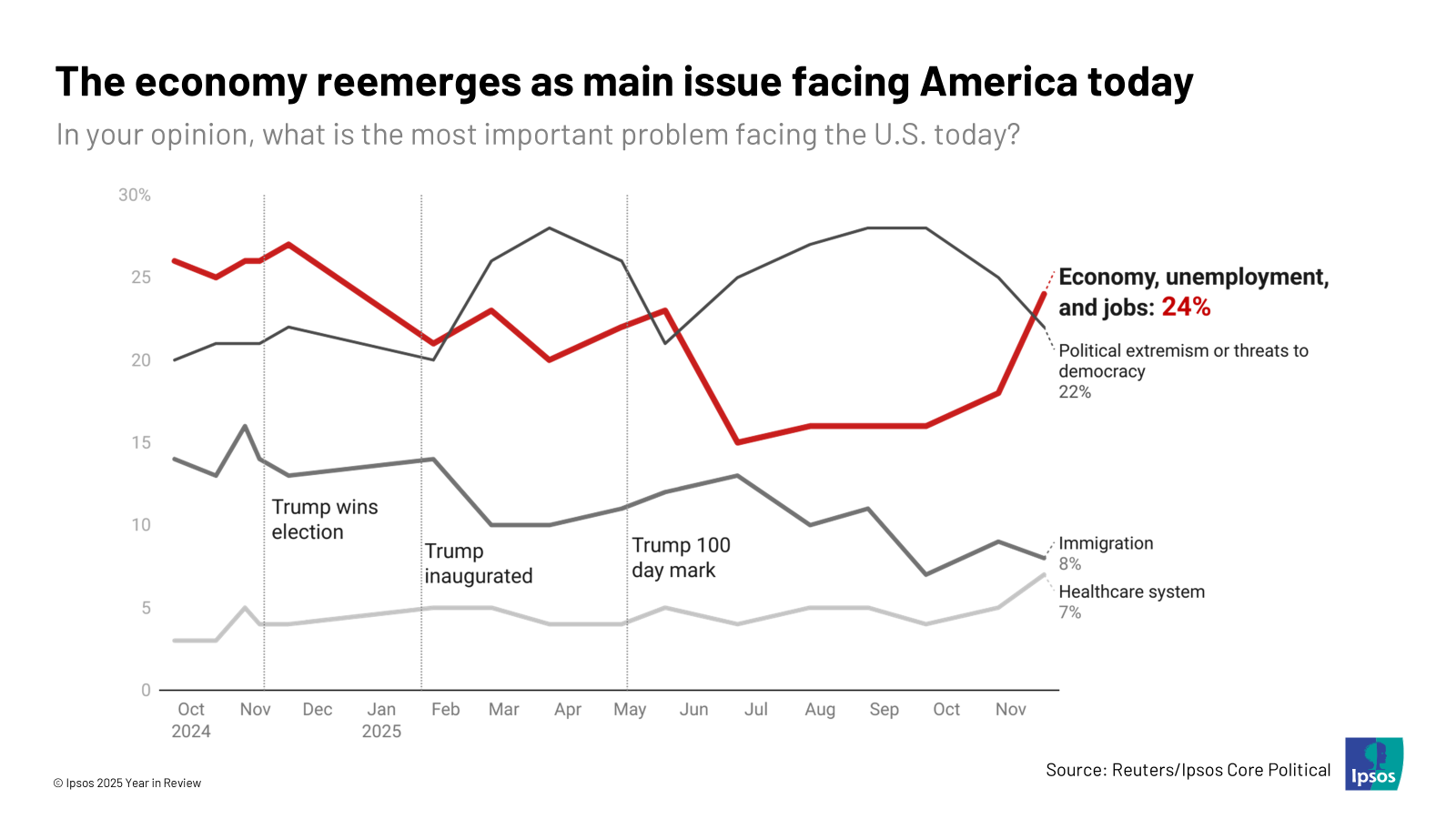
2. Tale of two economies: Macro trends and personal outlook. In 2025, consumer confidence dipped to its lowest point since 2022, approaching levels not seen since the pandemic-era recession. But the drop in personal outlook happened even as macroeconomic indicators – including the unemployment rate and GDP growth – held fairly steady.
It’s an economy Americans found hard to trust. Take tariffs. Whatever the long-term impact of tariffs on the U.S. economy, they only exacerbated the challenges everyday Americans were facing this year.
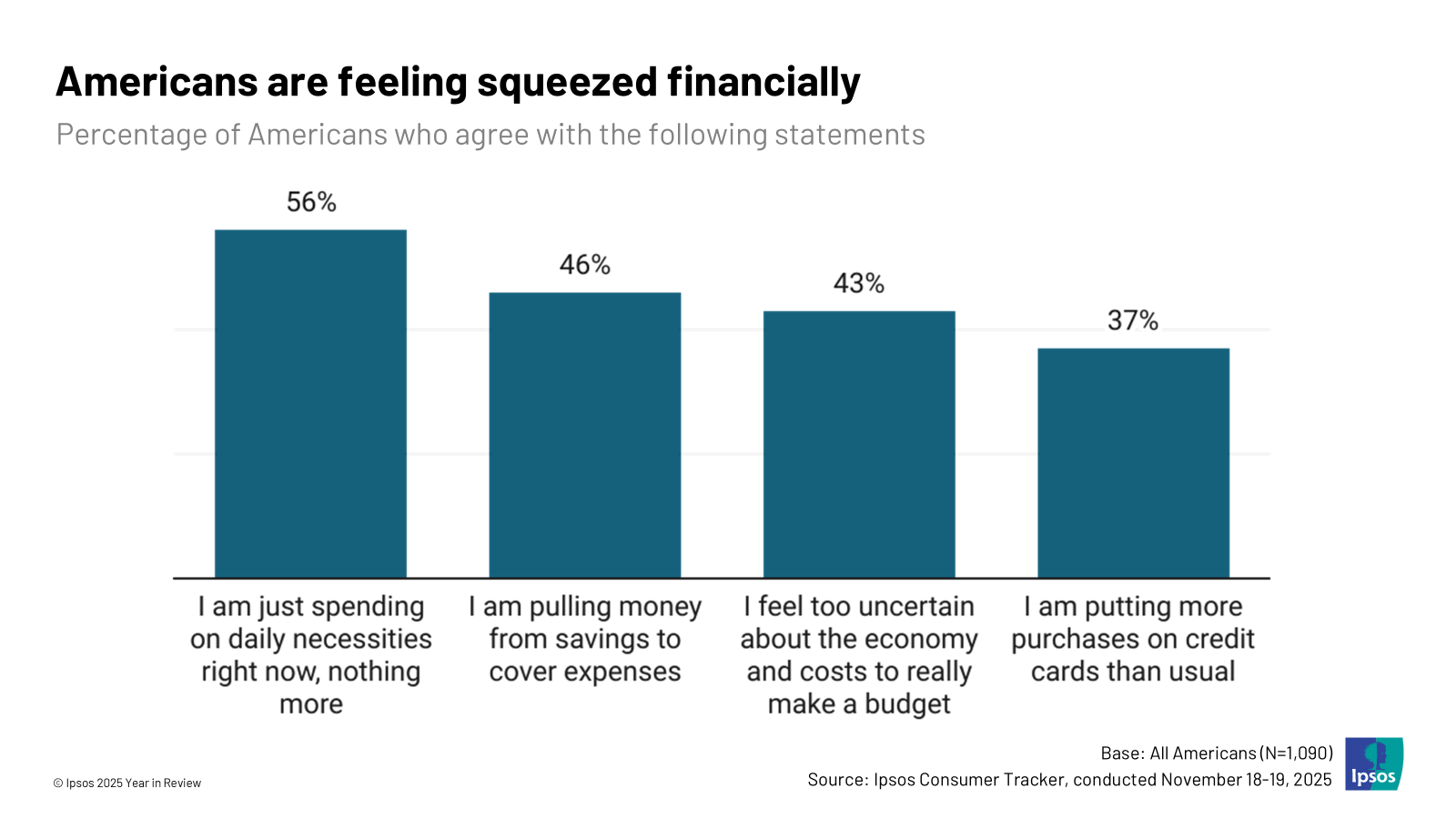
A strained personal economic outlook was seen across Ipsos polling. In November, 56% of Americans said they were only spending on daily necessities, and nearly half (46%) said they were pulling money from savings to cover expenses.
The trend of consumer sentiment lagging macroeconomic trends has been a staple of the 2025 economy and seems poised to carry over into 2026.
3. Immigration debates reveal a nuanced outlook among Americans. Enhanced federal immigration enforcement sparked fierce national debate over how the country should deal with immigrants in the U.S. illegally.
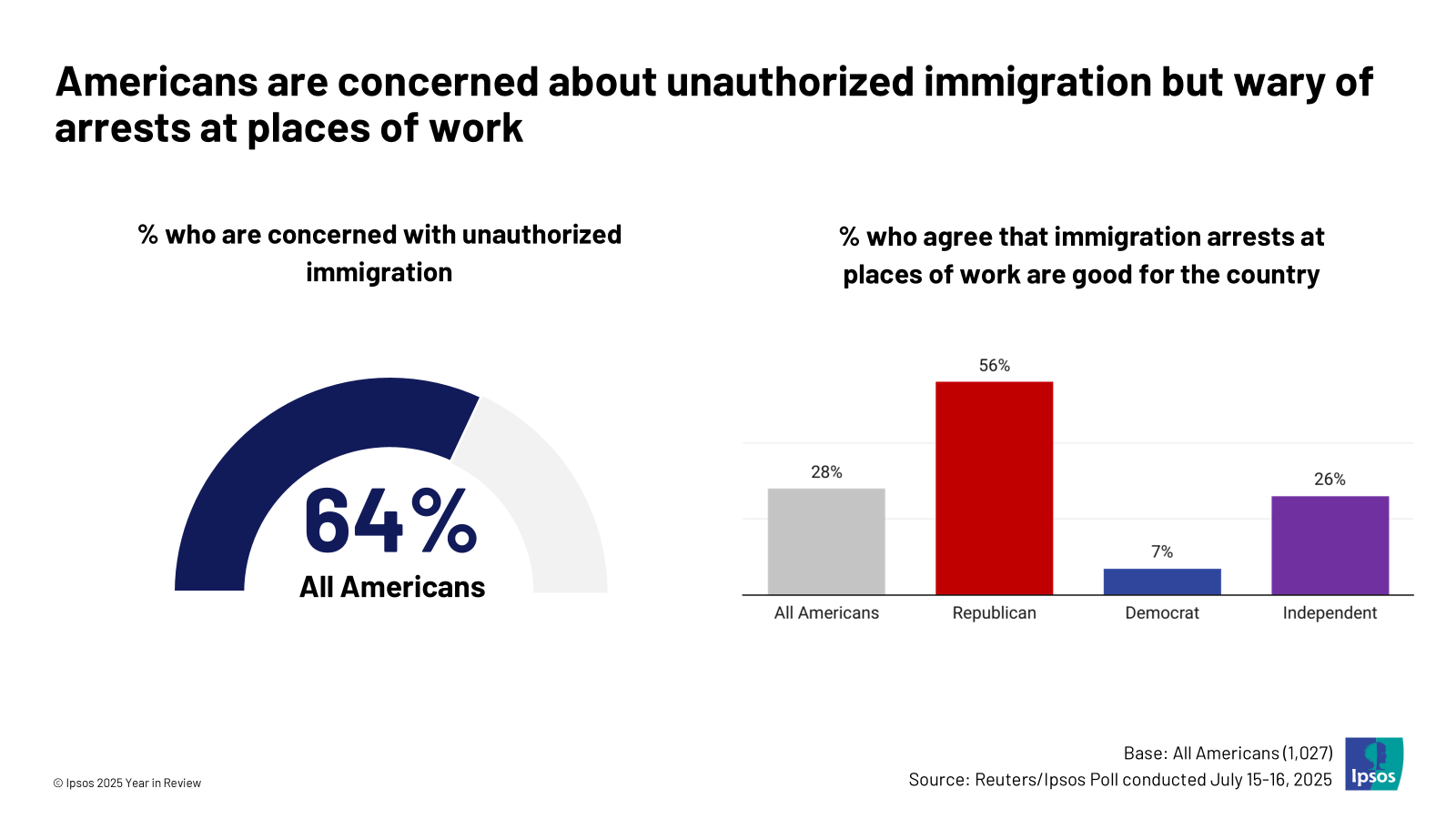
It’s a complex issue for Americans whose views are multifaceted. On the one hand, two thirds were concerned about unauthorized immigration and large majorities backed deportation for immigrants here illegally with a criminal record. On the other hand, Americans lined up against the idea of deporting immigrants who came to the country illegally as children and generally supported protections for DACA recipients.
Immigration has been an area of relative strength for President Trump. But administration actions this year tested the limits of public support. Americans largely opposed the idea of ending birthright citizenship and a majority expressed opposition to ICE arrests in places like schools, churches and places of work. A Reuters/Ipsos survey in July found more Americans agreed than disagreed that Trump had gone “too far” with arrests of immigrants at their place of work.
4. Tears in the social fabric: Political violence and national unity. This year saw concerns over political extremism and violence remain one of the top national concerns. In the summer and fall, the nation was rocked by a spate of politically motivated killings targeting Minnesota state leaders and conservative activist Charlie Kirk.
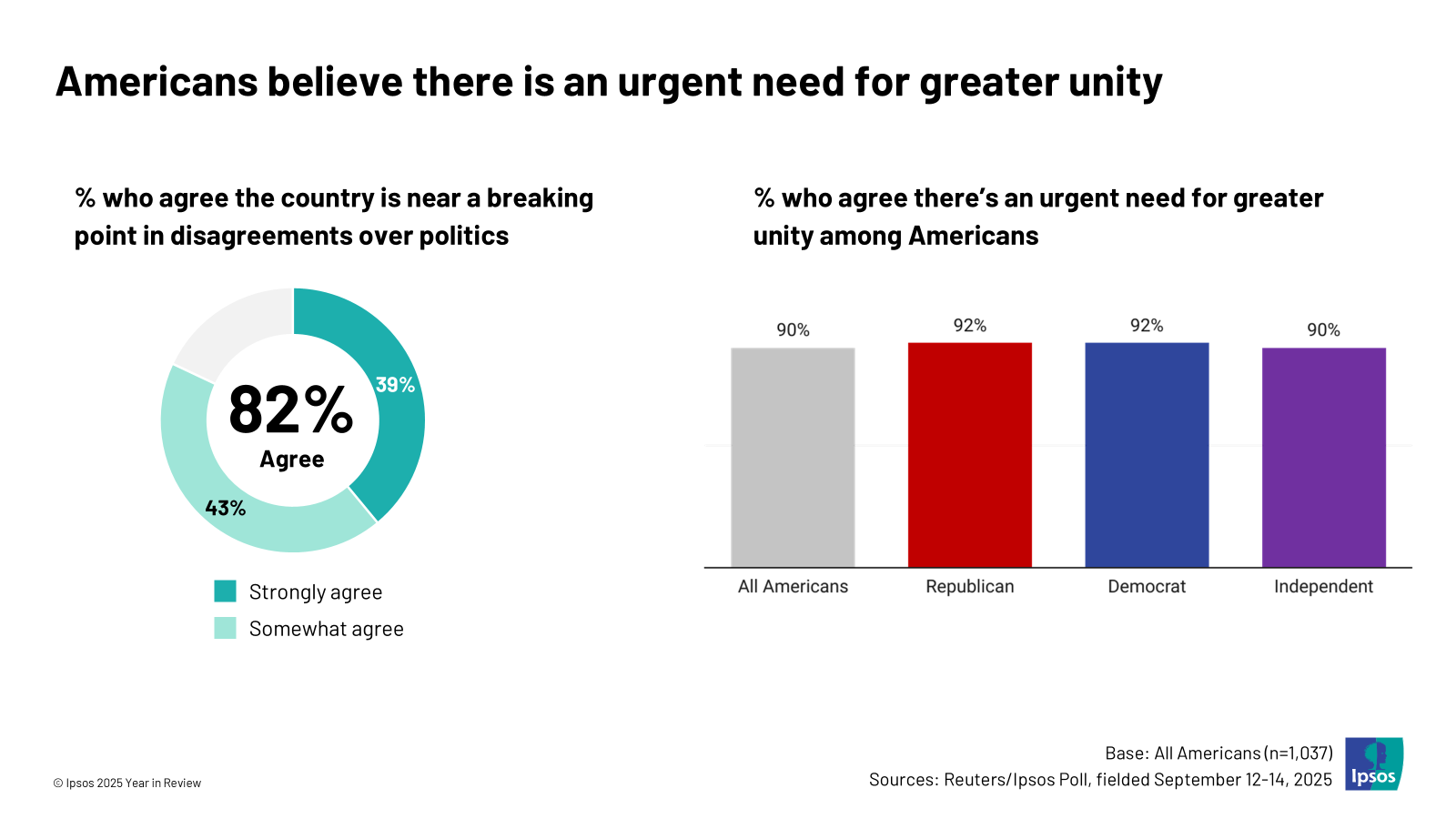
A September Reuters/Ipsos poll found a public on edge: 82% expressed the view that the country was near a breaking point in its disagreements over politics. The poll showed that this feeling went beyond red-blue polarization: 74% said that not only were Americans divided on the issues but that they felt the country was splitting apart.
It was clear that the public rejected violence as a means to achieve political goals: 90% felt there was urgent need for greater unity among Americans. What remains unanswered is whether national leaders can answer the public’s call to tone down divisive rhetoric and begin to bridge the divides that animate our politics in 2026.
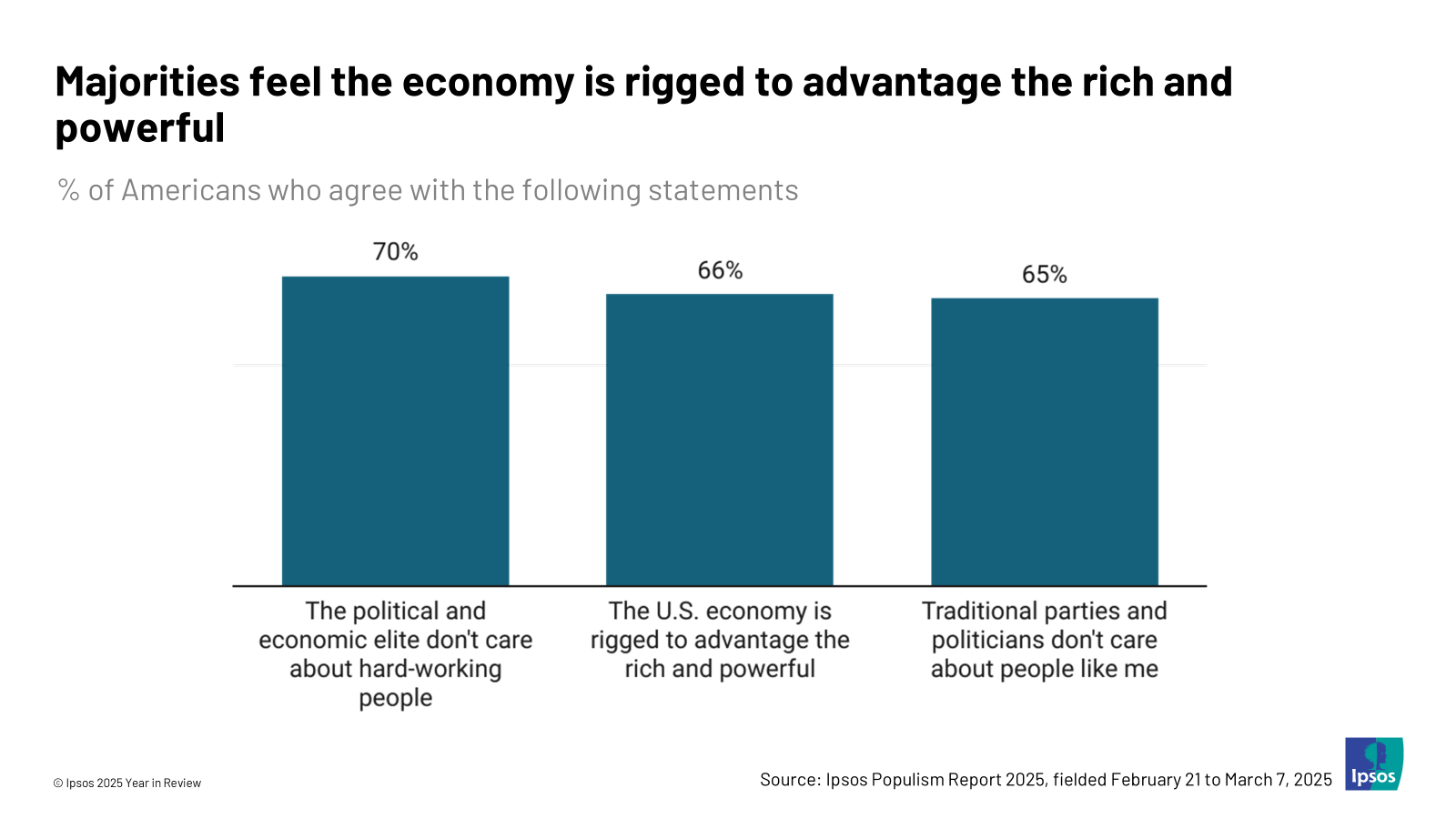
5. Populism is here to stay. Whether driven by the belief that the system is broken, the perception that the economy is rigged in favor of the rich and powerful, or the sense that parties and politicians don’t care about ordinary people, populist sentiment ran through American public opinion in 2025.
President Trump has tapped into these currents for over a decade in his role as leader of the Republican Party. On the Democratic side, this year saw signs that both emerging leaders like Zohran Mamdani as well as stalwarts like Bernie Sanders were leading a sharper focus from the party on populist economic messaging.
6. MAHA puts a spotlight on health in America. The administration’s Make American Healthy Again campaign led by Robert F. Kennedy Jr. reignited debate about health and wellness in America.
Some of the views and policies put forward by the administration were at odds with public sentiment. For instance, criticism of the childhood vaccine schedule runs counter to the public’s belief in the safety and effectiveness of childhood vaccines.
Other areas of emphasis aligned with public concerns on topics including the safety of the food we eat and preventative health practices. A majority of both Democrats and Republicans agreed the government should do more to ensure food safety, such as updating nutritional guidelines and reducing exposure to pesticides. And efforts to improve nutrition, limit exposure to environmental toxins and boost physical activity among children were popular ideas.
At the end of the day, the administration seemed to further strain public confidence in federal health agencies, which were still recovering from the COVID-19 pandemic. An Axios/Ipsos October survey found that trust in both the CDC and NIH had declined significantly since early 2025.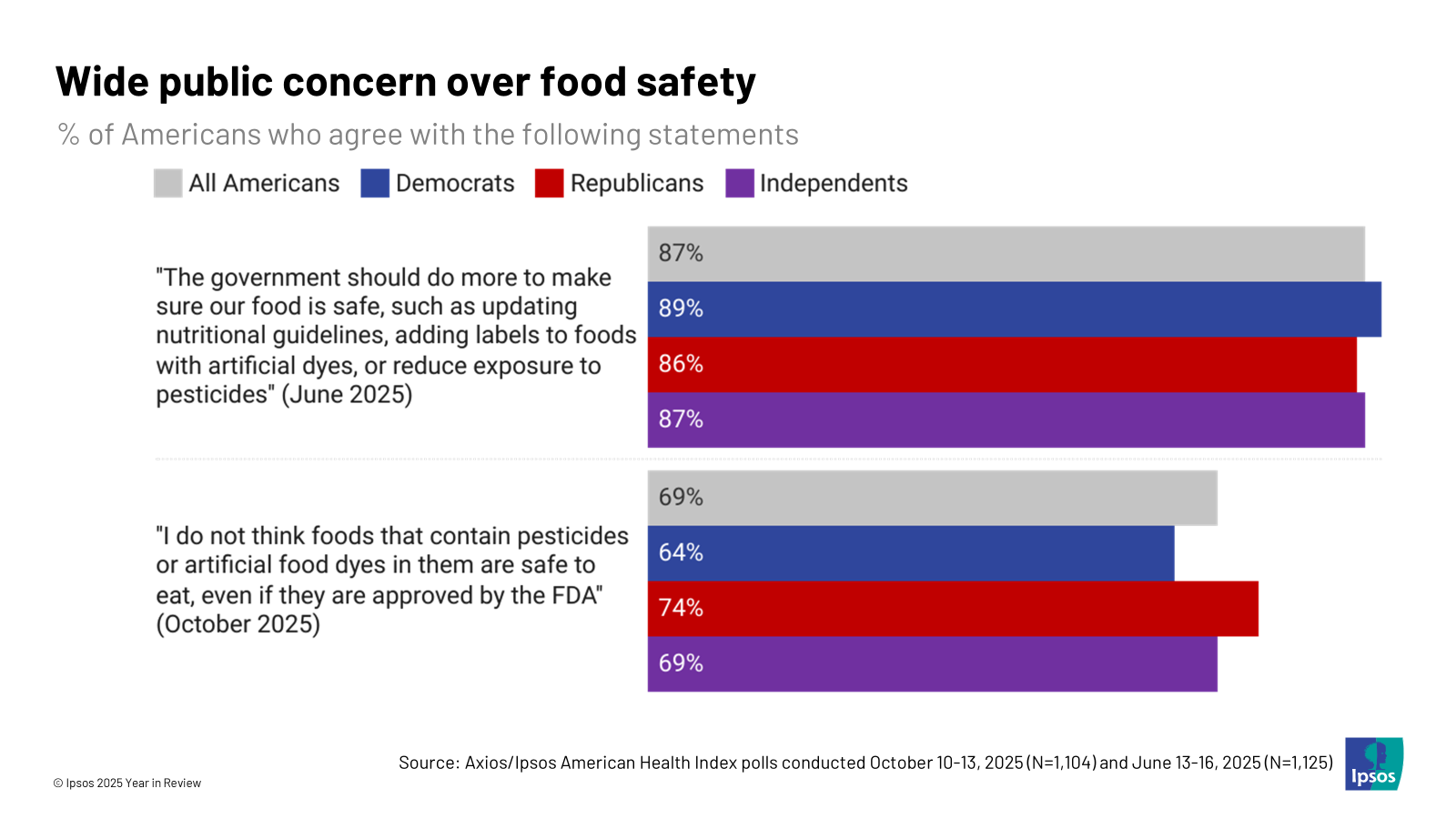
7. International Affairs: Public wants to keep the focus at home. In an active year for international affairs, the public held constant in their desire to keep the focus on domestic issues.
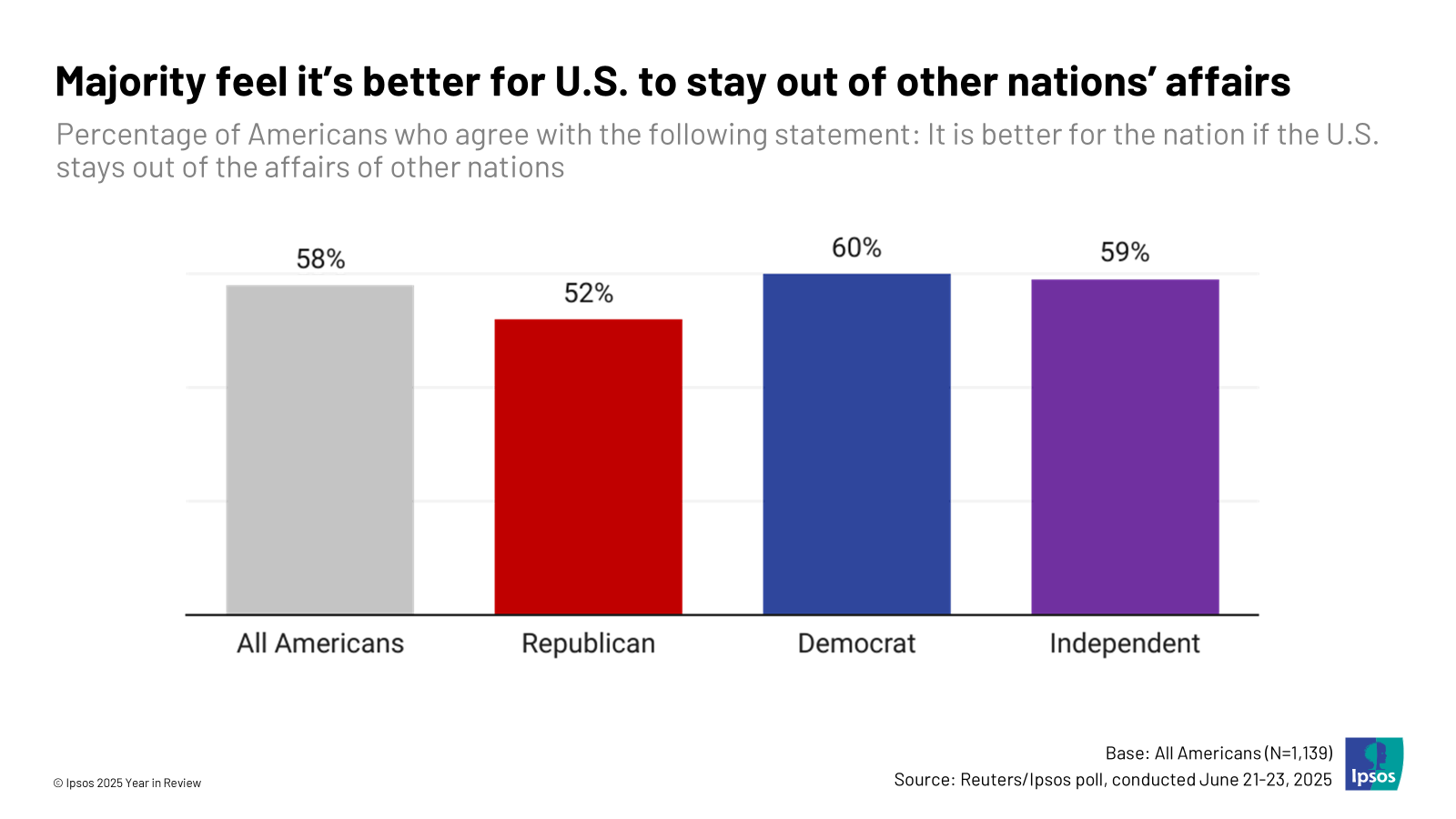
A Reuters/Ipsos poll from June found 58% of Americans said its better for the U.S. to stay out of the affairs of other nations. This viewpoint was held across the political spectrum. Skepticism towards American involvement in foreign affairs was especially pronounced among younger Americans.
This outlook was evident in a number of foreign policy flashpoints in 2025. For instance, when it comes to U.S. efforts to combat drug cartels in countries like Mexico and Venezuela, Americans were nearly 20 points more likely to say the risks of military action outside U.S. borders outweigh the benefits.
8. AI and society: Surging adoption rates yet to win over a cautious public. AI adoption reached a inflection point in 2025 with Ipsos surveys showing nearly half of Americans had used a generative AI program recently and overall usage rates continued their steep upward climb.
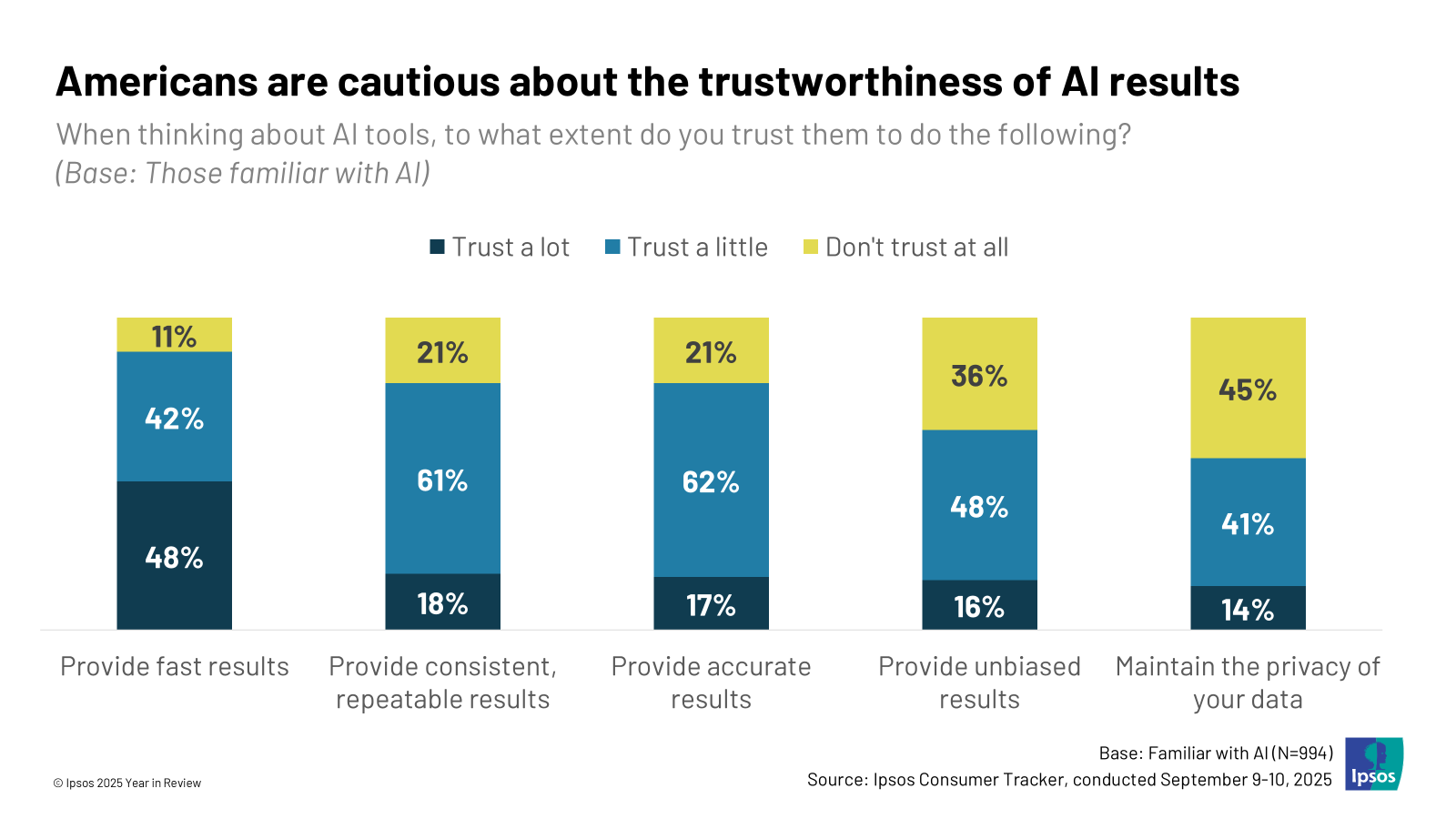
But usage does not equal trust. Americans remained wary when it came to whether AI tools could provide accurate and unbiased results and maintain user privacy.
More broadly, Americans had big concerns about the impact AI could have on jobs: 7 in 10 worried that AI could put too many people out of work, and as many as half of workers thought AI would reduce opportunities for employment in their field.
Bottom line is that Americans aren’t yet comfortable with the transformational change AI represents – and widespread concern remains that adoption could have unpredictable consequences for society.
9. 2026 outlook. What’s next? After a tumultuous year, what do Americans see in store for 2026?
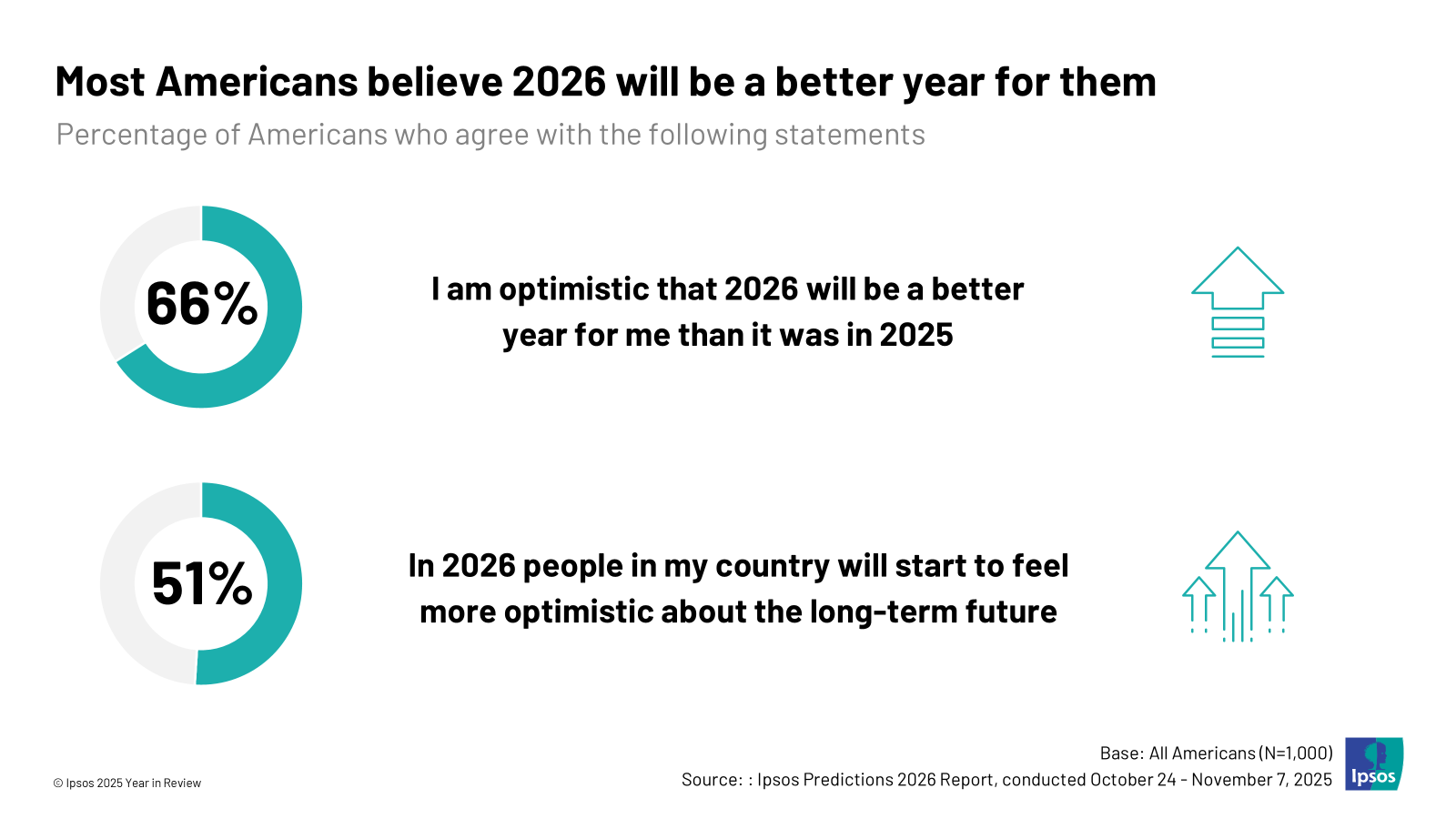
Many Americans are turning inward and focusing on the factors within their control, amid a national backdrop of uncertainty and disruption. Most Americans are optimistic that next year will be better for themselves personally, and about half believe Americans will start to feel more optimistic about the long-term future as well.
Some are planning to kick off 2026 by committing to New Year’s resolutions, with the most popular being saving more money, exercising more, eating healthier and drinking more water. A majority also plan to express more gratitude and be more present.
Ultimately, it won’t be Americans’ New Year’s resolutions that turns the tide of national sentiment. Americans will be watching for a more affordable economic environment and for signs that elected officials are listening to their concerns as they work to address societal challenges across tech, health and the ways in which the country bridges its political disagreements.