AI jitters
In recent weeks, Microsoft Outlook went down, planes were grounded nationwide, and the NSA’s internal network failed, among other technological and cybersecurity mishaps, each seemingly occurring one after another. Only some had anything to do with AI, but that didn’t stop people from asking “Was this AI?” after each incident.
As 2026 comes to a close, AI is a story that isn’t going away, and the data suggests the world is on edge about AI and what lies ahead.
Below are five charts on sentiment on AI and some of the factors that could shape how Americans perceive what’s on the horizon for AI.
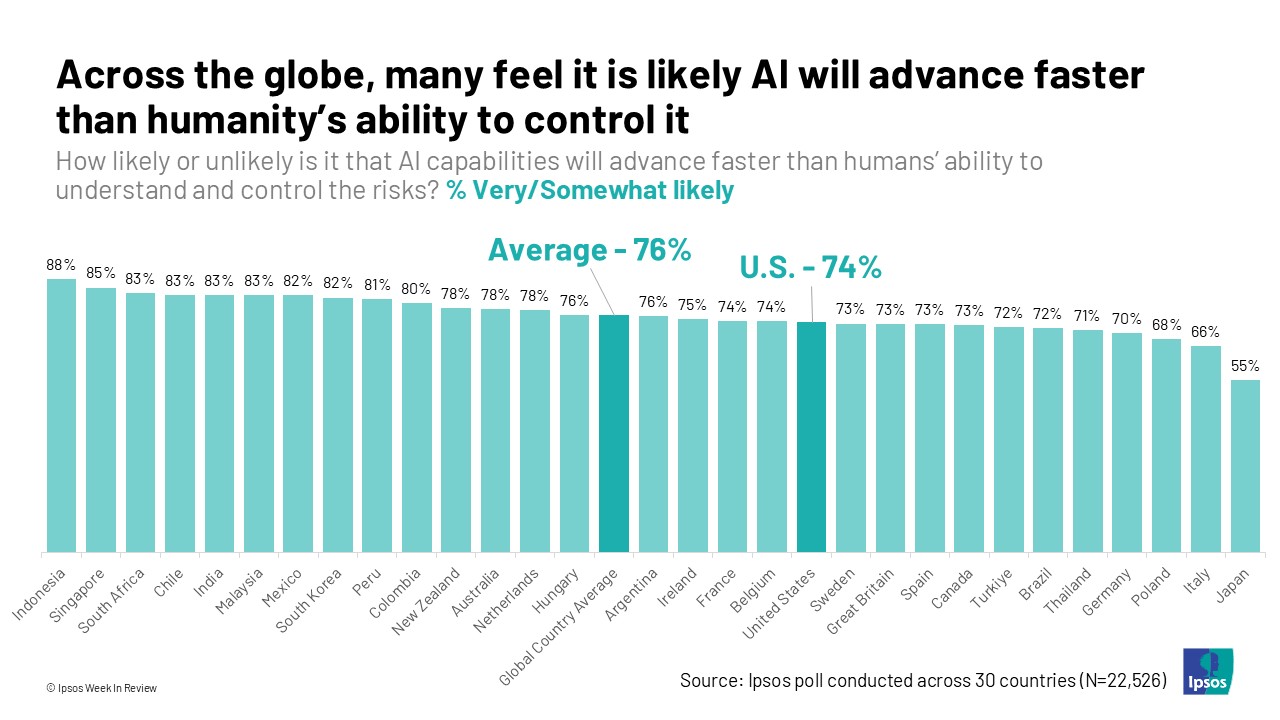
1. The world wouldn’t be surprised if things spiral out of control. In a 30-country survey, an average of 76% said they think it is likely that AI capabilities will advance faster than humans’ ability to understand and control the risks, including 74% in the U.S.
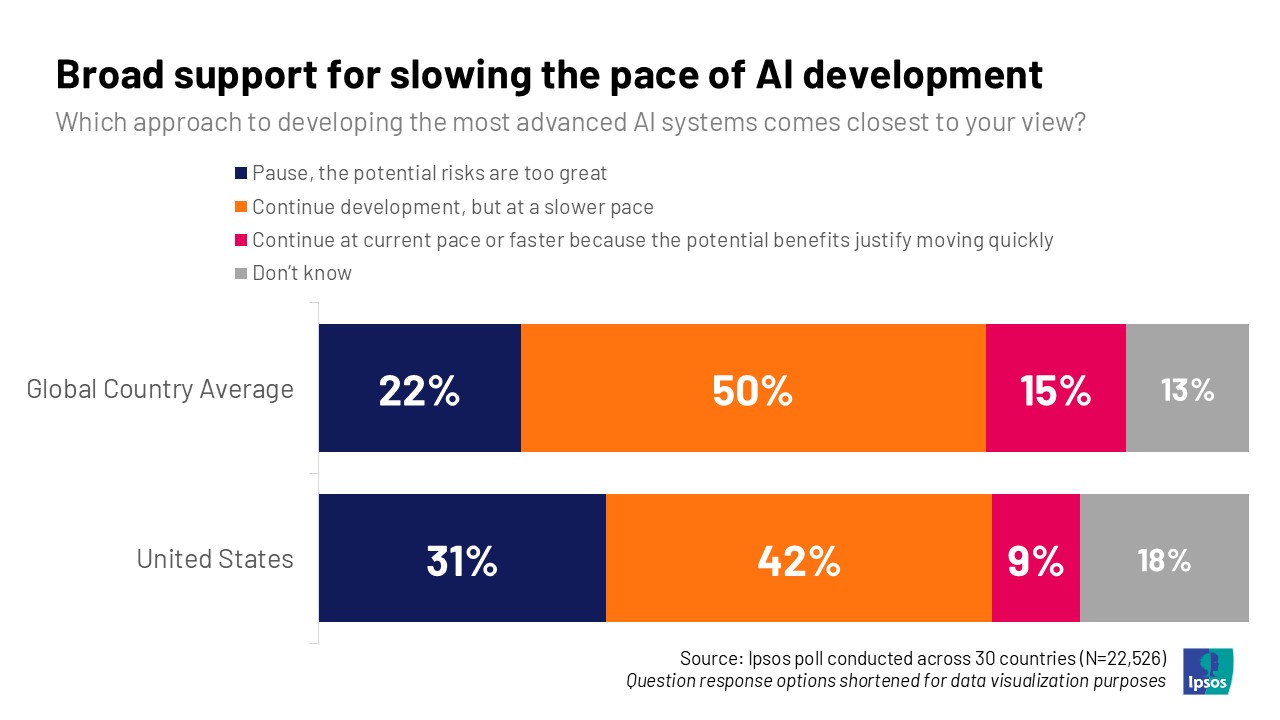
2. AI slowdown? Americans still have a wide range of concerns related to AI, including job loss, data centers, and the threat AI could pose to humanity as a whole. Americans, along with the world, are more supportive of either a slowdown or a full pause in AI development as opposed to proceeding at the current pace or faster.
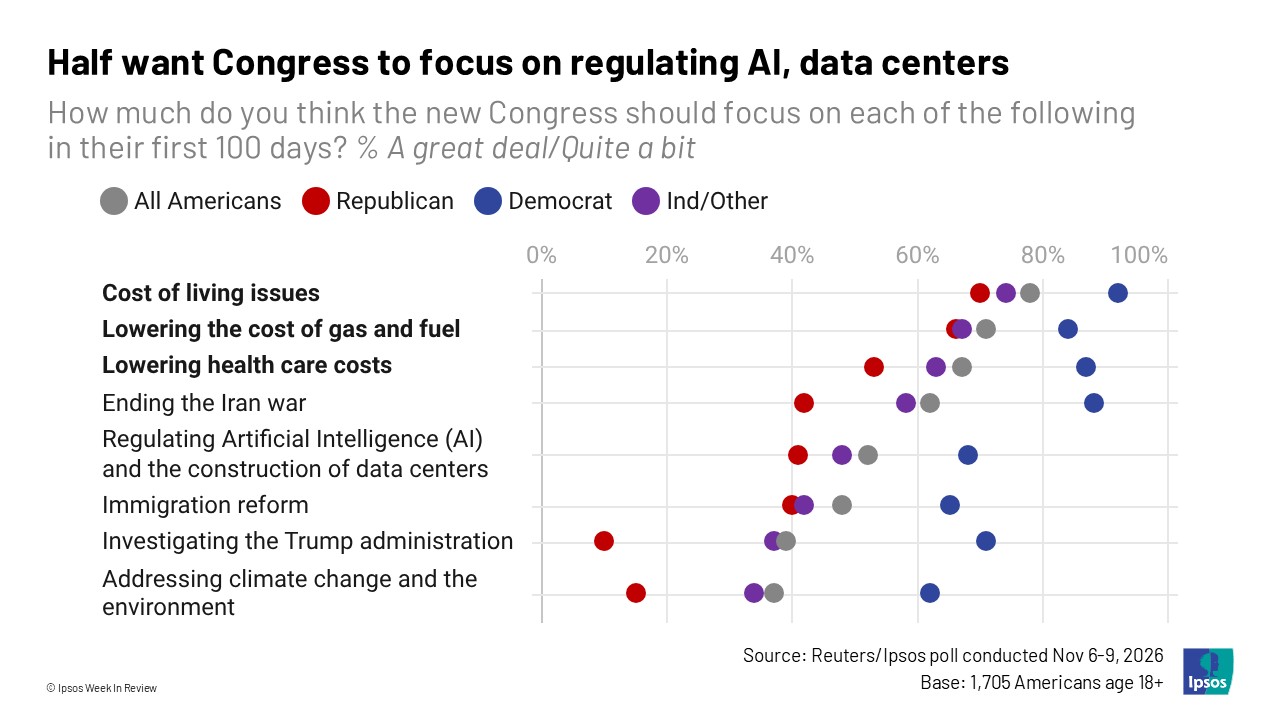
3.Regulating AI is a priority for many. Make no mistake. The 2026 midterms were an election defined by the cost of living. But AI was more than an afterthought in the minds of voters: 67% of registered voters said AI would be an important factor in their vote heading into the election. Now, 52% of Americans think regulating AI and data centers should be a focus for the next Congress. This is an issue growing in importance.
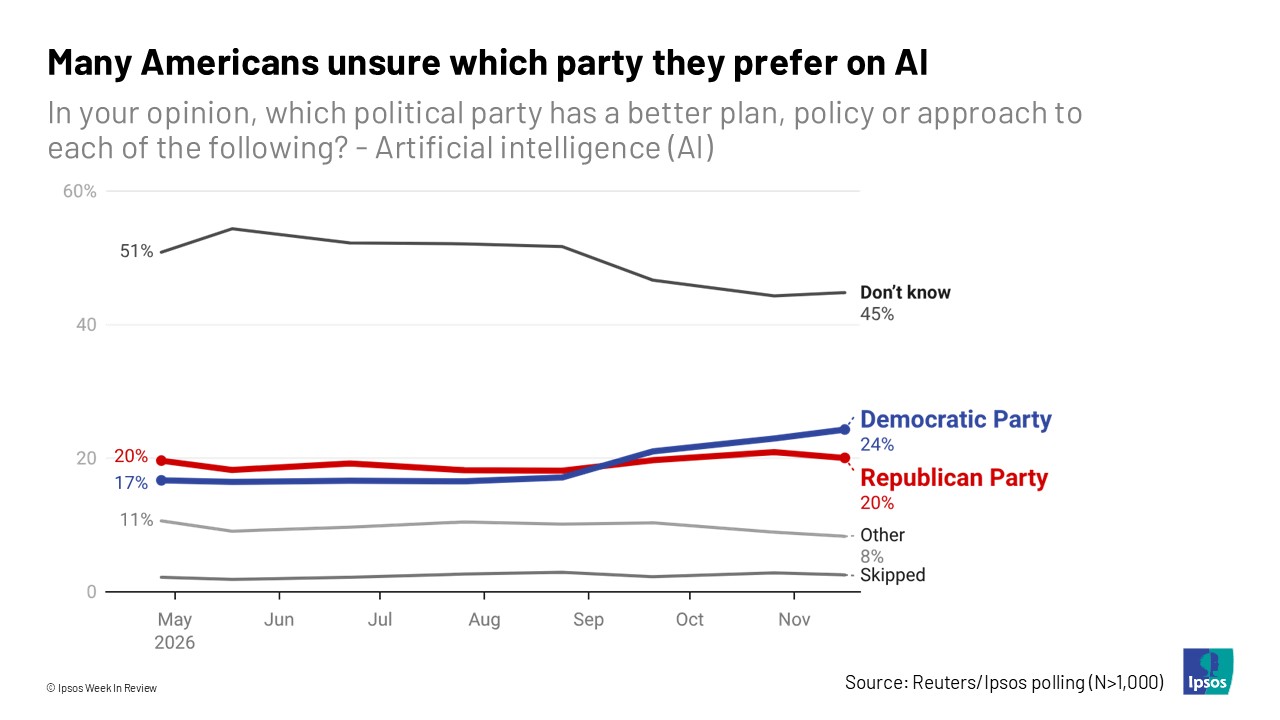
4.The party of AI? Right now, there is no clear “winner” on the issue of AI. It’s worth noting that, while the momentum seems to be moving toward Democrats, a majority of Americans aren’t sure who to trust or don’t trust either party.
5.The AI revolution will stand on fragile social foundations. America’s unease with the system is well-documented. In the case of AI, if people believe the wealthy and powerful will be the ones benefiting while everyone else absorbs the disruption, AI could become the defining symbol of a system they already think is rigged. That could bring together voters who otherwise have little in common and could reshape everything we think we know about the political landscape.
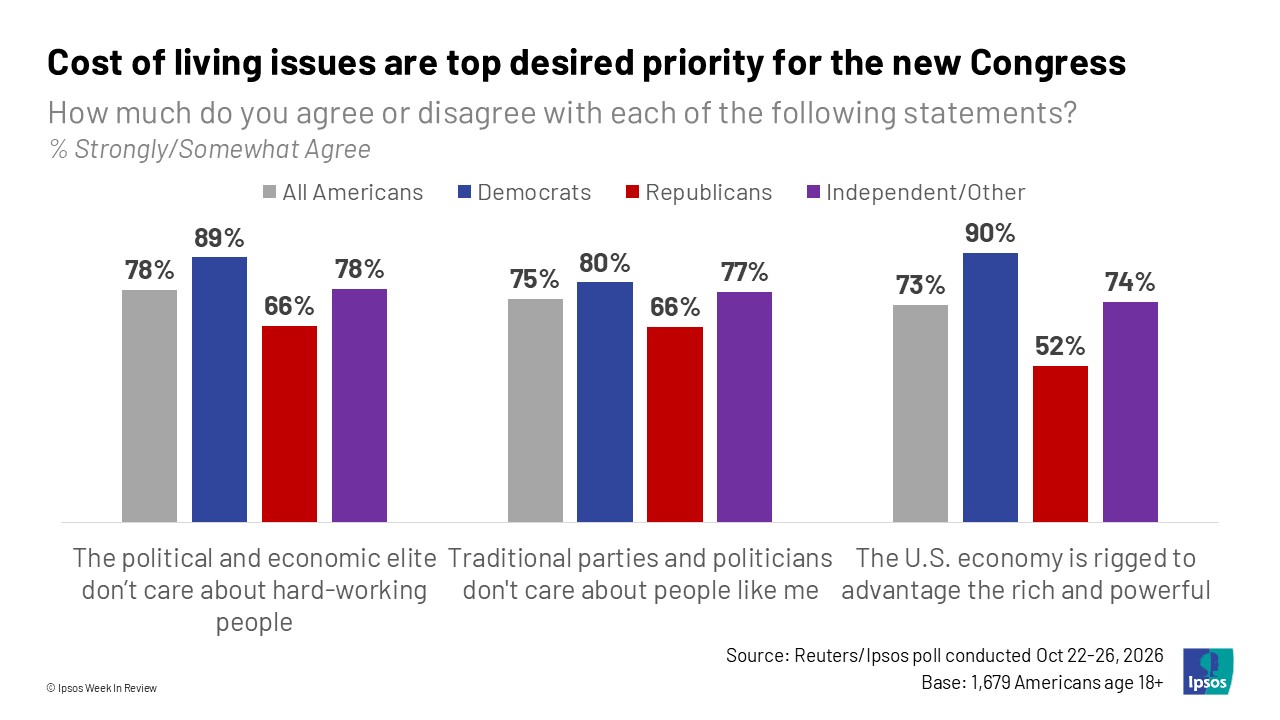
Earlier this month, voters judged the president’s party on their promise to make life more affordable. The next election could put our grand bargain to its greatest test. Who captures the gains from AI? Who bears the costs? Who gets a say in how the future is shaped? The stem cells of a healthy society — trust, reciprocity and a belief in a shared future — are already in short supply.