
To Launch or Not to Launch New Draw Games

Launching a new draw game or modifying an existing game significantly can cause great apprehension. That is because it comes with significant risk to a Lottery’s on-going sales, and ultimately its contribution back to the State and good causes. How do you minimize such risk while ensuring resources allocated to product mix changes are used most efficiently? Ipsos has created a relatively simple and cost-effective approach to tackling this issue. The Pre/Post Spend Analysis—PPSA will test new products, estimate product trial impact and its potential cannibalization of existing games.
PPSA, on new or revised concepts, will:
- Evaluate the overall potential by examining: appeal of concepts and individual concept features, concept understanding, intent to purchase, and general willing-ness to spend on concept.
- Understand if concept will encourage greater participa-tion among player groups.
- Review potential to establish research-based annual spending projections per concept.
- Determine potential for cannibalization within current product mix.
- Examine all results within different contexts (i.e. by player type, frequency, segment, potential among very light/non-players who are not morally opposed, etc.).
Determining Sales Projections and Cannibalization Estimates
Ipsos has vast experience researching and understanding these types of objectives, as we have tested a multitude of draw game concepts for lotteries over the years. Ipsos’ PPSA approach is implemented in a ‘concept spend sim-ulation’ format to measure relative spend levels, as well as examine if and to what extent cannibalization of existing games will occur. This method will produce a measured “projection” of anticipated spend on each game in relation to the other lottery games, including Instants as a category.
A Spending Simulation is a way of assessing how people might change their spend behavior after a new product is introduced. We do this by asking how they typically spend their money before and after a new game is presented or modified.
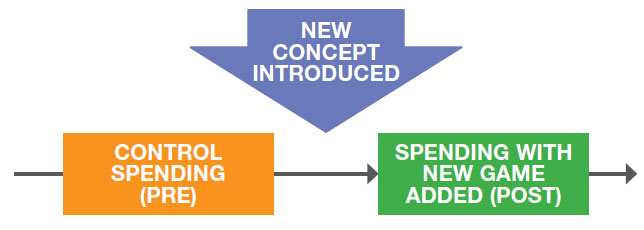
This exercise produces a Simulated Economy, where total dollars spent on a product is a direct reflection of the number of cases in the sample data. Therefore, total dollars spent is only a part of the real value in the analysis—what we look for are the Shifts in spending from scenario to scenario, and the Percent of total spending that each product contributes.
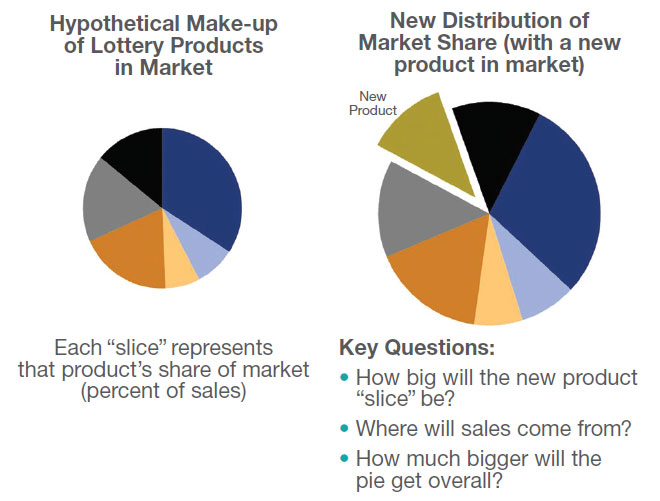
A Simulated Economy helps us analyze potential shifts in spending. But in a controlled research environment there is universal awareness of all products, and particularly all NEW products to the market, therefore spending will be inflated. Sometimes what people say in a research setting and what they do in real life can be different. In anticipation of this variance, Ipsos applies proprietary discount factors taken from years of conducting this specific type of research in the Lottery sector.
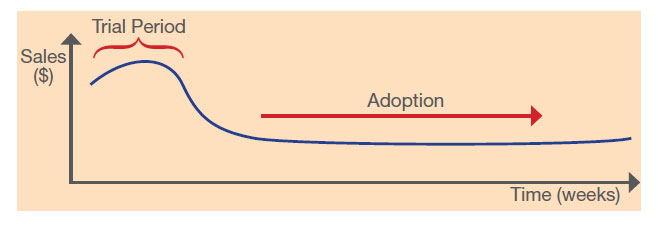
We also take into account there is a difference between the “trial” period of a new lottery game as opposed to the ongoing sales level it may generate over the long term. We refer to this as the trial/adoption curve.
The results we typically get from a research study are projections of “trial.” We can attempt to estimate “adoption” by applying other data to this.
The Adoption Curve
To calculate our sales and cannibalization estimates we undertake the following analysis:
Multi-Step Approach to Determining Sales Projections of New Games —Based on Existing Sales
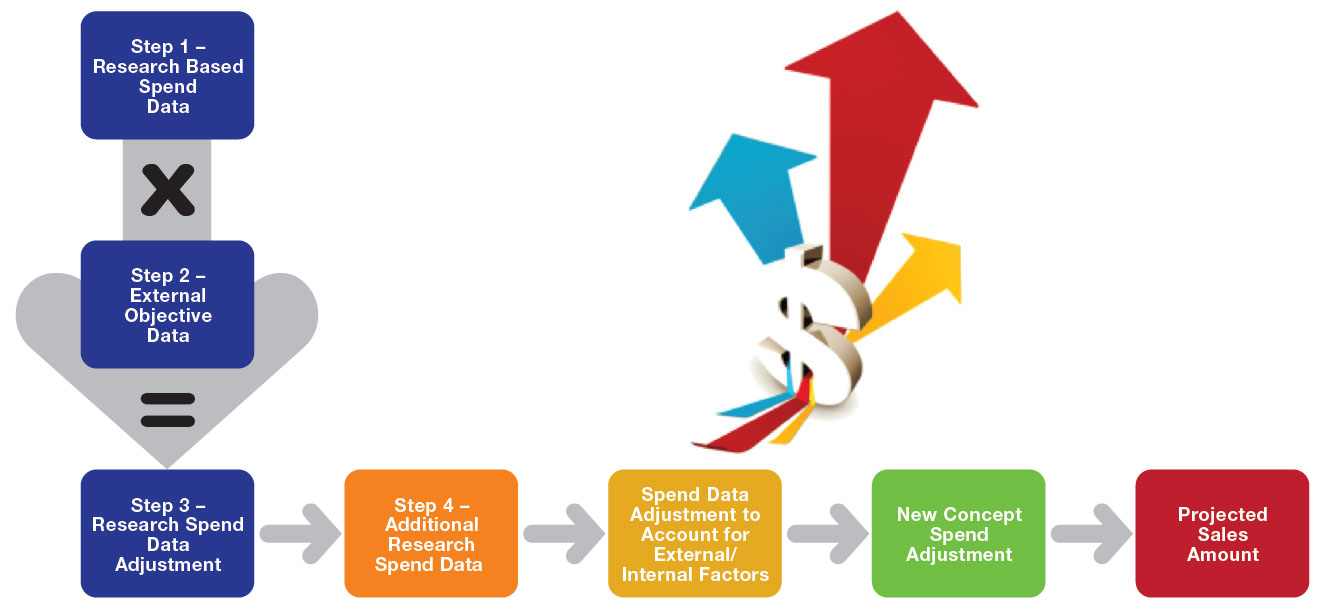
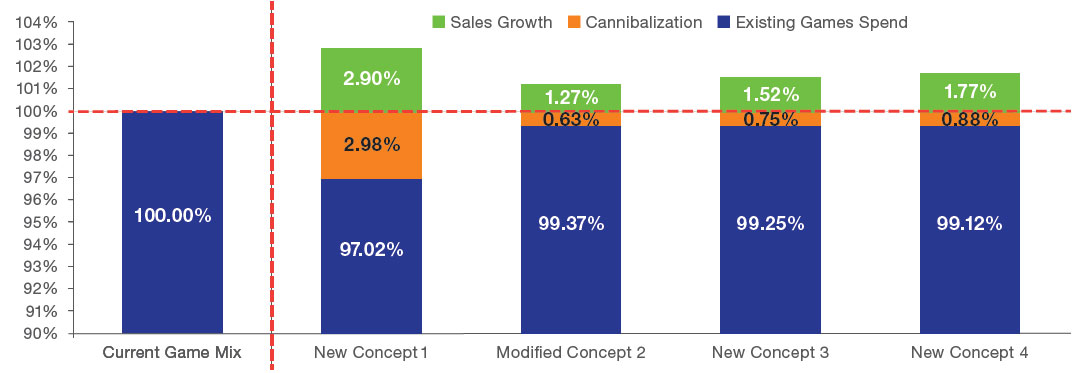
One of the key deliverables from the Ipsos Pre/Post Spend Analysis approach is the visual representation of the simulated financial performance of the individual concepts being tested, its cannibalization effects, and ultimately its impact on overall sales.
Cannibalization Analysis of New Concepts
Contact Us
Ipsos in North America has a solid team solely dedicated to research in the Lottery and Gaming sector.
To learn more, please contact:
Paul Lauzon
Senior Vice President, Lottery & Gaming
Ipsos Marketing • 587.952.4871 • [email protected]
Visit our website to view upcoming events, read articles, press releases and more at:
https://www.ipsos.com/en-ca/solutions/marketing/lottery-gaming-research


![[WEBINAR] TOAST 2026: Under Pressure - Fewer, Fragmented, Fought-For](/sites/default/files/styles/list_item_image/public/ct/event/2026-07/thumbnail-templates_1_0.png?itok=MxL-wPJW)
