
Five ways brands and BeSci can help you nail your New Year’s goals.

Beyoncé and Jay-Z want their fans to try going vegan in this new year. Blogger and mom Stephanie Ortiz plans to be more patient with her kids. People across the U.S. plan to make similar changes in 2019, according to a recent Ipsos survey. Yet, creating new habits and sticking to them is challenging. The good news is that the science that brands use to sell new products can help people accomplish their New Year’s resolutions.
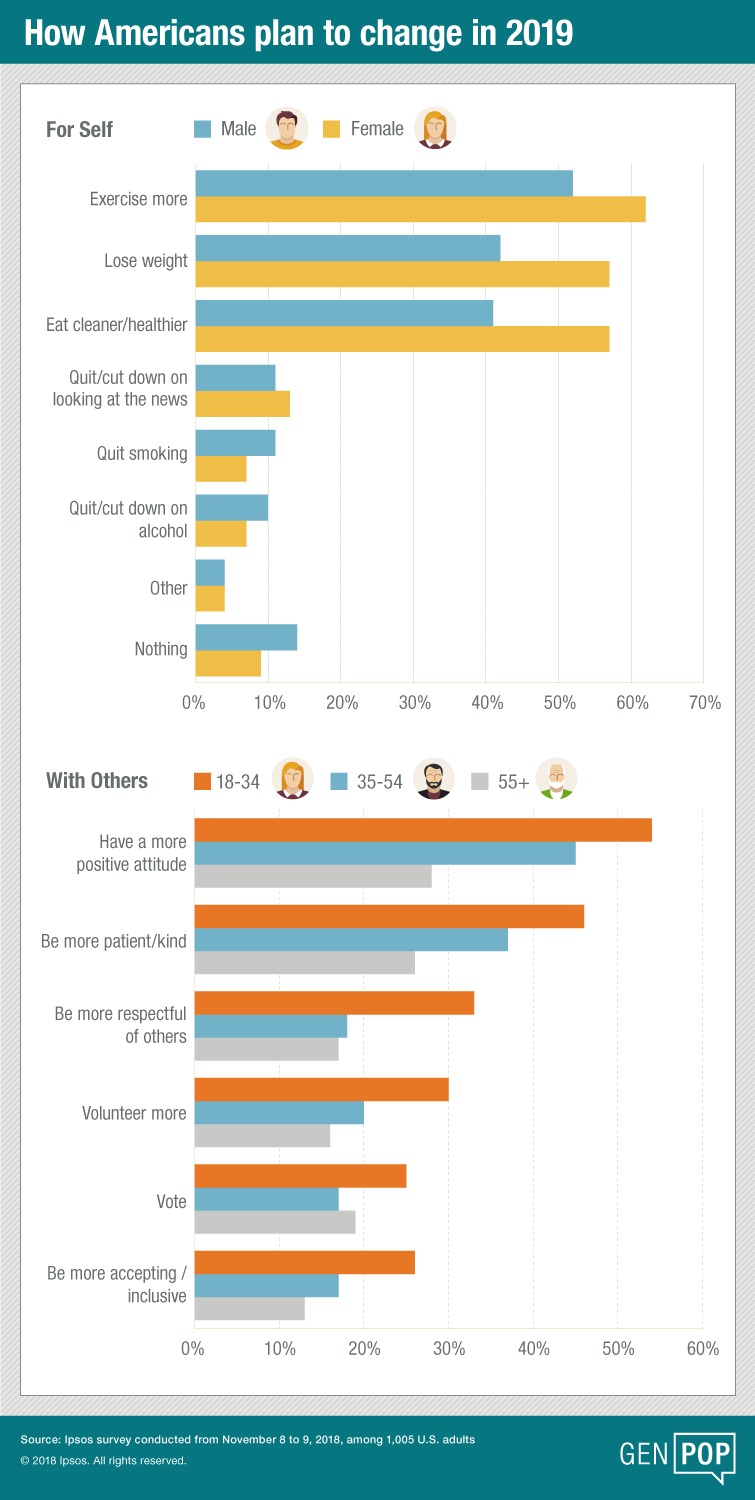
Among Americans’ top goals, they vow to exercise, lose weight and eat healthier. They also plan to be more positive, kind and respectful to others. More women and Millennials than men or other generations plan to make changes for themselves and how they relate to others.
Fewer Baby Boomers than younger adults say they want to make changes in how they relate to others, except for voting where they eclipse GenX-ers. Men and Boomers are more likely to make no resolutions at all. The survey did not ask if they think they have nothing to change.
To be sure, the first day on the calendar is one of the disruptive moments of behavioral change. Time-based landmarks like New Years, birthdays, and anniversaries are scientifically linked to people wanting to end their willpower-dependent “bad” habits. Behavioral scientists call this the “Fresh Start Effect.”
Making new behaviors stick
To create long-term behavioral change, people need to repeat their new behavior over and over. This means that when they are first trying to diet, exercise, or put their phones down, they need lots of reminders to do so. The Behavioral Science Center at Ipsos created the Ipsos Habit Framework for creating strong triggers and cues that operate consciously and non-consciously.
Brands can use these tips to help people stick to their goals and initiate more habitual consumption of their products. Here’s how:
Make it concrete: Give physical reminders of the behavior. Typically, people store floss in the medicine cabinet, out of sight. A more effective method, and one where an oral care company could help, would be to print a message on the toothbrush that says, “remember to floss!” or even create a decorative countertop dispenser. These examples make the reminder more concrete.
Make it specific: Triggers work best when they are targeted. For flossing, this means that specific reminders about flossing are more effective than ones about general oral health or hygiene.
Embed the behavior: People’s scripts and routines serve as very powerful triggers. Humans typically have well-established patterns for many of their behaviors. Each step of these patterns reinforces the behavior that comes before and reminds them of the step that comes next. It’s easiest to tie a new habit to an existing routine that shares a common goal. For example, it would be easier to add flossing into a current oral or personal care routine than it would be try to remember to floss after walking the dog.
Reward, repeat, reinforce: For any single behavior to become a habit, people need to be repeat it. This is especially difficult for behaviors that depend on willpower, like flossing or losing weight. That’s because the negative effects are immediate (they need to do one more thing, they don’t get to eat the cupcake). But the rewards of the behavior are very long term (not losing their teeth, eventually losing weight). To help start this behavior, brands need to make sure that there are immediate rewards to performing the new behavior.
Use multiple senses: The rewards for people’s behaviors are also important. Eating a cupcake or not flossing feels good at the time. To counteract this, brands need to also give rewards on a sensory, System 1 level. They can do this best by creating products, packages, and experiences that give rewards on multiple, pleasurable aspects. How can brands make the floss feel better in people’s hands? Can they make it taste better (or even taste good)? How can they make the package as beautiful as possible so people spark joy when they hold it? Each one of these gives a reward by itself, but the multi-sensory aspect magnifies them and makes the reward even more memorable.
By using these hacks, brands can become a trusted partner in helping people achieve their goals.
This article was originally published in GenPop, a new online magazine from Ipsos about people and what makes them tick.Click here to read other articles equally as great.

![[WEBINAR] TOAST 2026: Under Pressure - Fewer, Fragmented, Fought-For](/sites/default/files/styles/list_item_image/public/ct/event/2026-07/thumbnail-templates_1_0.png?itok=MxL-wPJW)
